fbpx

Surgery Prompts Examination of Jewish Concept of Soul

Surgery is wrong. This was what I convinced myself over a two-year stint of excessive holistic health care. Thanks to an imbalanced reliance on acupuncture, I neglected a herniated disc until it ruptured somewhere between Washington, D.C., and Salvador, Brazil. When I found out I needed surgery, I was forced to evaluate what, exactly, I saw wrong with cutting a human open and realigning her interior.
[additional-authors]
March 16, 2010

Surgery is wrong. This was what I convinced myself over a two-year stint of excessive holistic health care. Thanks to an imbalanced reliance on acupuncture, I neglected a herniated disc until it ruptured somewhere between Washington, D.C., and Salvador, Brazil. When I found out I needed surgery, I was forced to evaluate what, exactly, I saw wrong with cutting a human open and realigning her interior.

In my case, I was sliced open near the jugular, a clear 1-inch incision along the front of my neck. The doctor slid my muscles and esophagus to one side, sucked out the ruptured disc with a vacuum, and inserted a dead man’s hip bone, molded to the size of my previous disc. To finish the job, two titanium screws were attached; I was stuck back together and sent on my way.

What was wrong with surgery, I decided, were the negative effects it might have on my Jewish soul. If the body is a temple, what happens when you slice it up and insert foreign particles into its infrastructure? And what about the new disc I was given: Whose bone was it? Most likely, based on statistics, I was convinced I housed a Christian man’s hip bone between my C5 and C6 vertebrae.

I chose my neurosurgeon based on a number of factors — his capability, his reputation, whether his hands looked trustworthy. I also noted how, when I worried out loud about this dead person’s body part taking over my spirit, he did not laugh; rather, he entertained my ideas. The neurosurgeon explained that the energetic body of the bone he would use was negligible, thanks to serious reshaping and a year, at least, sitting in formaldehyde.

This sufficed to keep me on the operating table, but I was not convinced. Images of Whoopi Goldberg in the movie “Ghost” flashed through my head. I imagined myself being overtaken by the spirit of the bone donor, just like a medium channeling the dead. For answers to this conundrum, I contacted rabbis far and near. I wrote the following in an e-mail:

Dear Temple Israel of Hollywood,

I am looking for a rabbi who might be able to help me answer the following questions:

What is the Reform Jewish perspective on using cadaver bones in surgery?

Often when people get spinal surgery they need a cadaver bone placed in their body. What is the rabbinical take on the spiritual entity of skeletal matter? What happens to a Jew when a Christian bone is placed in their body? Is there a piece of someone else’s soul in the new bone? Or is the bone just bone, the body just body, the spirit left intact?

The synagogue was very helpful and sent me on to a professor, who they insisted was an expert on “this topic.” This topic, I am guessing, would be the spiritual entity of bones and their handling. I wrote the suggested professor a letter. It read:

While I am aware of the importance, in lieu of Jewish law, of the preservation of the cadaver and the burial laws therein, I am most curious about the so-called “spiritual entity” of the bones themselves.

What happens when a Jewish woman has a Christian man’s bone surgically placed in her neck to keep her from paralysis? Is there a spiritual shift in the individual? What does a bone hold, energetically, religiously, that may alter the system of the living individual? Is she still a Jew, even with a Christian bone and, in some cases, titanium in her neck?

I received a near immediate response from the professor. The initial answer was glib:

Dear Ms. Gerson:

The subject you raise is of no interest to me and I have never explored it.

But this was followed with the insightful: I believe that when a bone or other organ is transplanted, it becomes part of the host’s body and thus thoroughly and completely part of that
person.

This left me to believe that I was, in fact, channeling the dead Christian man I imagined to have donated my neck bone. Only according to this, he did not visit my body like in “Ghost,” or take it over; he sort of wed my spirit, in the biblical sense. I am no longer alone, or he isn’t; we exist together from my C5-C6 vertebrae on.

What the rabbis I encountered revealed was really the issue not of my soul, but that of the dead person whose hip graft was living in my neck. Reb Nadya Gross of Pardes Levavot, a Jewish Renewal congregation in Boulder, Colo., politely suggested I burn a yahrzeit candle for this person, hoping to unite the soul with the now-dismembered body. This dismemberment of human form was the fundamental issue: Jewish burial law insists a body be buried intact. This means, sans hip-bone chunk, my bone donor was in some sort of Judeo-Christian limbo purgatory.

According to a Central Conference of American Rabbis responsa regarding liver transplants: “The harvesting of organs from deceased persons might well conflict with another central Judaic value, that of kevod hamet, the obligation to respect the dignity of the dead.”

The Halachic Organ Donor Society (” title=”AskYourYenta.com”>AskYourYenta.com and

Did you enjoy this article?
You'll love our roundtable.

Editor's Picks

Latest Articles

Troubled Marriage

As Netanyahu visits Trump, Israelis look to Washington with wearier eyes. What does the future hold for the relationship?

Tu b’Av and Redemption

On Tu b’Av, the full moon rises. The same people who mourned begin to dance. The same nation who splintered begins to seek one another out again in the vineyards, in the fields, in the moments of vulnerability and return.
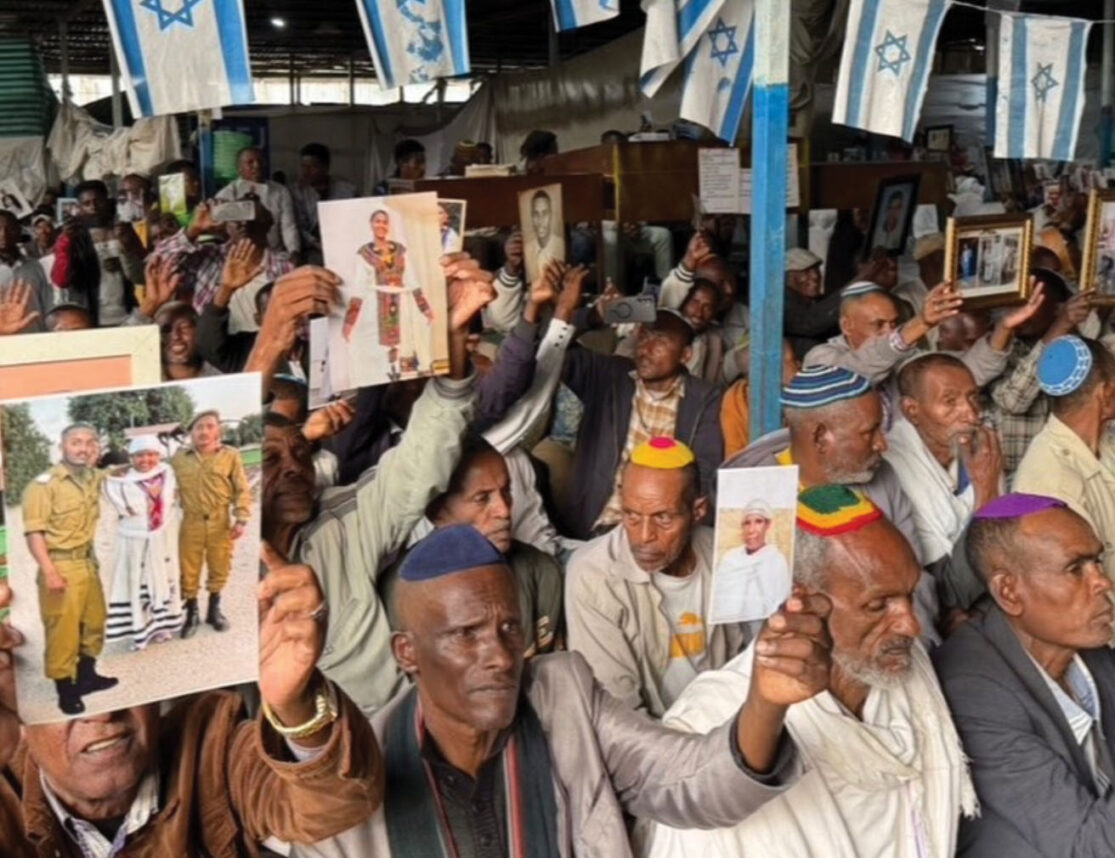
Mission to the Jewish Community of Ethiopia

I didn’t even know that there were still Jews left in Ethiopia, but what I encountered there firsthand was a thriving Jewish community, with some very significant struggles.
The Myth of the Marxist Mishpacha

The Jewish immigrant who organized for a 40-hour work week did not do so to give his grandchildren a politics that asks them to feel guilty for their education, their professional success or their attachment to a Jewish state.

Framing the Faith of Maimonides

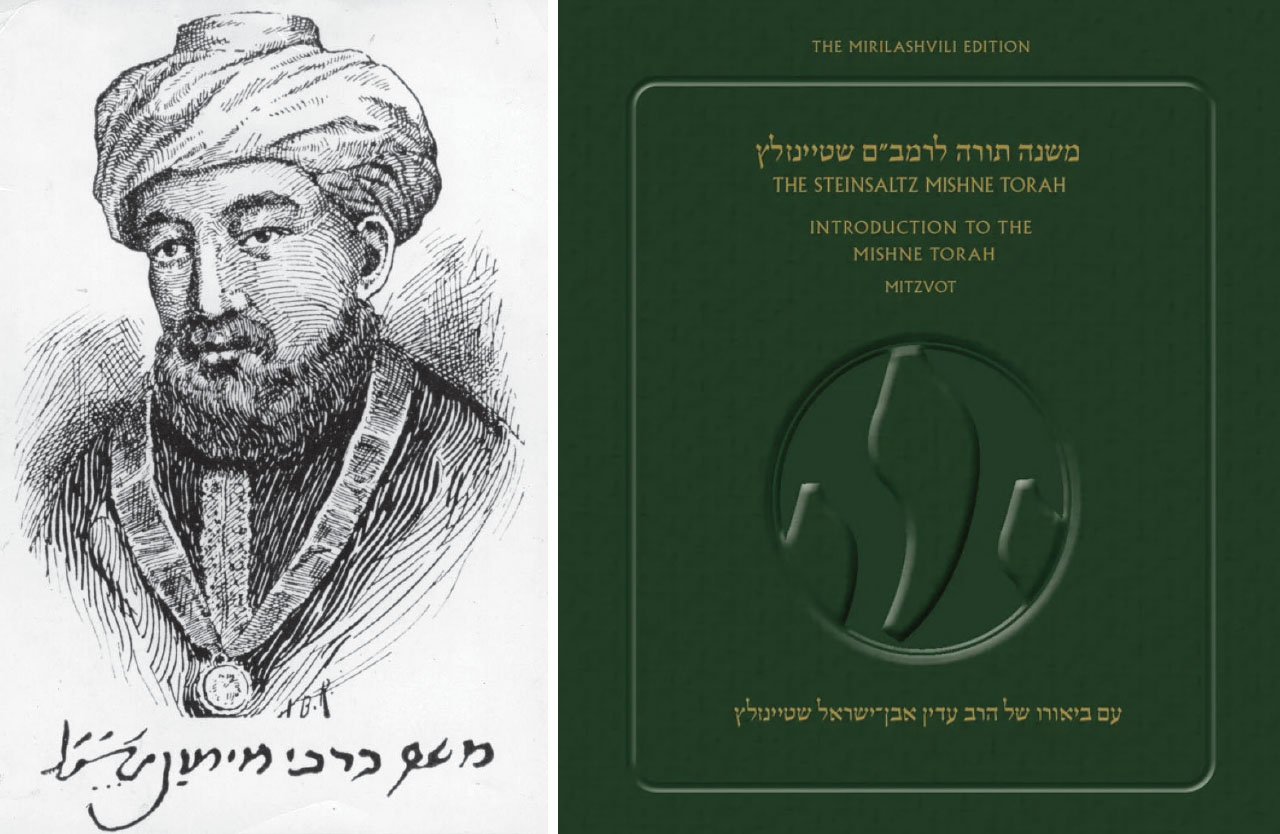
In this enriching new edition of the classic code of Jewish law, readers can delve deeply into the mind of Maimonides, from his analysis of the commandments to the controversies that have accompanied his writings, offering a window into the wisdom of one of our tradition’s preeminent thinkers.

Finding Communal Comfort

In the book of Isaiah, God calls the prophet to comfort the Jewish people. But we know this is really something we must do for one another.
Leaving Behind a Better World

The America my generation seems to be leaving our kids and grandkids is not safer nor saner, and it breaks my heart.

Was Our Golden Age Fool’s Gold?

We didn’t think that we were living in a “Golden Age,” because it did not occur to us that what we were experiencing was only a temporary respite from centuries of animosity and intolerance.
Genocide Shmenocide

Since Israel evacuated Gaza in 2005, the Palestinian population has grown from 1.3 million to 2.1 million. In the West Bank, it has grown from 2.4 million to 3.4 million. If the Israelis were hellbent on committing genocide, it’s one of the most epic failures in military history.

What Will It Take?

An open revolt for Jewish rights and protections is going to have to come from Jews finally making demands and fighting back—or not at all.
More news and opinions than at a Shabbat dinner, right in your inbox.