Thousands of Israeli students are learning what it means to
be good Jews. To help Israeli teenagers better understand Jewish values and the
foundations upon which their religion is built, six secular Tel Aviv-area high
schools have injected their curriculum with a dash of Torah, Talmud and other
classical rabbinic texts. The goal: to help pupils find meaning in ancient
texts that could help shape their actions in the present.
The three-year-old program, partly underwritten by an annual
$50,000 grant by The Jewish Federation of Greater Los Angeles, has become so
popular that schools throughout Israel have expressed interest in it, said
David Zisenwine, a professor of Jewish studies at Tel Aviv University and the
father of the program.
And why should Jews at public schools in the Holy Land need
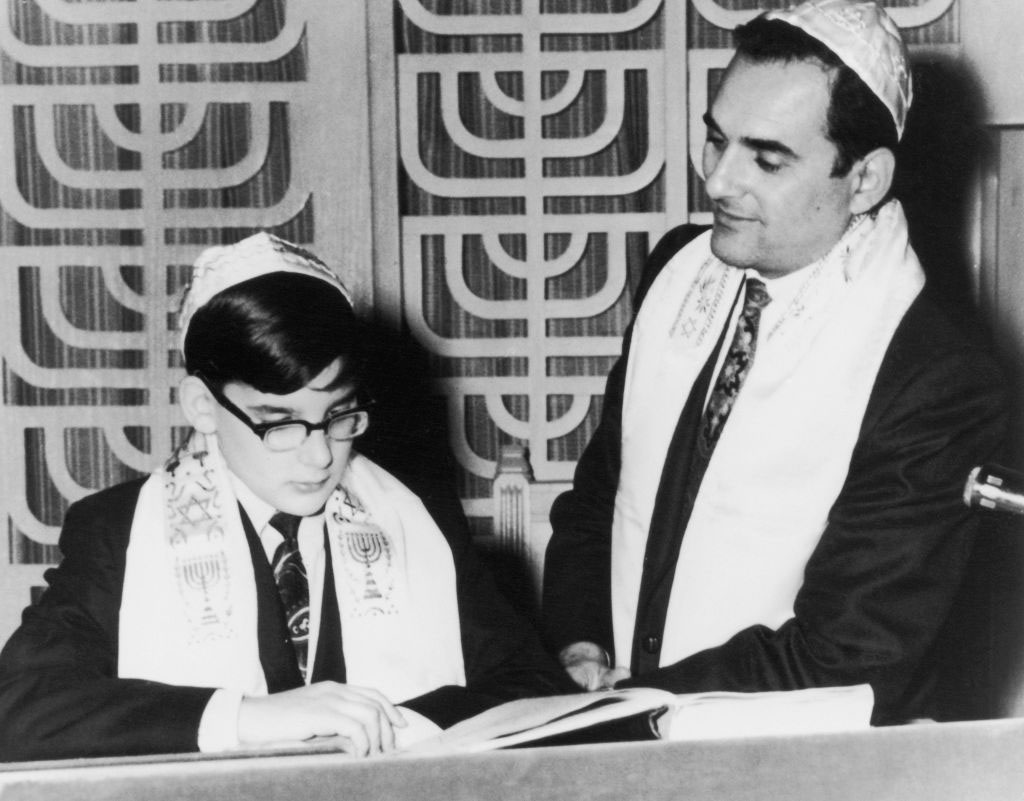
to study such things as the meaning and history of Bar Mitzvah? Zisenwine said
that without such training children risk losing their identity, the glue that
holds the Jewish State together.
“In Israel, as in America, we’ve seen students moving
farther away from their roots,” Zisenwine said. “We’ve created a Jewish
nationalism, but we’ve left behind, in many cases, Jewish values.”
To Zisenwine, Israeli students reading classical Jewish
texts is akin to young Americans perusing the Federalist Papers. In both
instances, they gain a window into their societies, and, by extension, into
themselves, he said.
Aryeh Barnea, principal at Herzlia Hebrew Gymnasium in Tel
Aviv, said students receiving the training at his school feel more connected to
their roots.
“In Israeli society, we’re seeing a lot of ignorance and a
weakening of the emotional linkage to Judaism and to Jews in the Diaspora,” he
said. “It is our educational obligation to reinforce Jewish identity in our
youth. We don’t trust the media, friends and the Internet to do it for us.”
Students in the program receive at least one hour of formal
Jewish education per week from seventh grade on. The school’s regular teaching
staff, not rabbis, oversee the classes, which have so far educated an estimated
12,000 students.
About three-quarters of Israeli schools are nonreligious,
giving most students little or no exposure to rabbinical literature. Classic
Jewish texts, such as the Bible, are studied in historical and literary, rather
than religious context, Zisenwine said.
Herzlia seventh-grader Ben Peleg said the bar mitzvah course
has taught him the importance of human rights. “We’ve learned that everyone is
equal, that it doesn’t matter whether he’s a king or slave, rich or poor,” the
12-year-old said.
Peleg’s teacher, Avivit Ronat, said her goal is to connect
the Jewish religion and human values. In the bar mitzvah class, for instance,
she teaches her students how the human rights codified by the Israeli
Declaration of Independence mesh with values embodied by being a bar mitzvah.
Isca Mayo, an 11th-grader who also attends Herzlia, said a
course she took two years ago about values and Jewish holidays encouraged her
to behave less selfishly. She used to play the piano at all hours without any
regard to her neighbors, but she now practices only in the late afternoon.
“With all this Western culture around me, I didn’t
understand the importance of Judaism and Jewish values in my life,” the
16-year-old said. “Now, I see how they apply.” Â