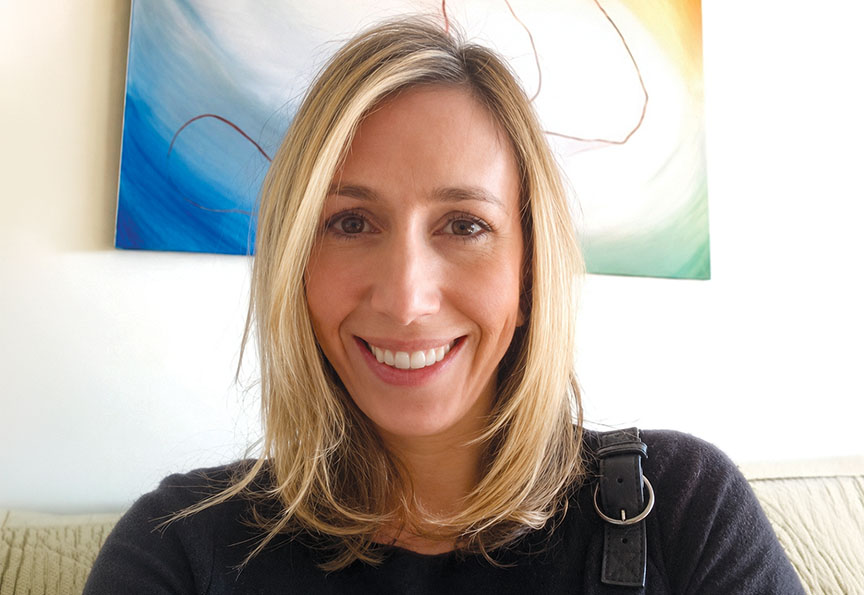
“I Wanna Feel Good,” Indie singer Alyssa Joseph’s new single, captures the daily pressure she faces “from society, my unconventional career path and my perfectionism.” she said, describing it as a “‘fake it till you make it’ song about manifesting what I want while navigating how hard it is to get there.” Her voice carries the grit and raw emotion that made rock legends like Joan Jett iconic, but with a modern indie edge. Like Jett, Joseph delivers her lyrics with fearless intensity, blending vulnerability with strength.
Joseph, who grew up in Voorhees, New Jersey, is the middle of three siblings and attended Temple Beth Sholom. She also founded the South Jersey BBYO chapter, Tovah BBG.
In an interview with Jewish Voice NJ, Joseph shared that her older brother Mitchell’s special needs played a significant role in drawing her to music. Mitchell lives with Familial Dysautonomia, a rare genetic disorder that prevents him from producing tears, sensing pain or temperature, and regulating his blood pressure. “Because of my brother, I know firsthand the impact that music has on people,” she explained.
She recently moved to Nashville in order to pursue her music career.
The Journal sat down with her for a candid conversation about her journey and the music that fuels it.
How has moving from New Jersey to Nashville influenced your sound and the way you write?
“South Jersey was a lot of coffee-shop open mics, which honestly was a really beautiful way to grow up as a young songwriter. It was such a safe space to try things out, share new songs and listen to better writers, to inspire me to work on my craft. Then I moved to Philly and got into the basement show scene, which was a whole different energy, super raw and DIY, but really fun. And now being in Nashville, it’s really about the songwriting and professionalism, which has definitely sharpened my skills in a new way. Each place has shaped how I write and how I think about music. It’s like I picked up little pieces from every stop along the way.”
“I Wanna Feel Good” feels deeply personal yet widely relatable. Was there a specific moment or experience that sparked it?
“I actually started writing this song a few years ago when I was in a pretty intense cycle of being way too hard on myself. I have this massive drive, but sometimes I forget that it’s not just about the end goal. It’s about actually feeling good while you’re trying to get there. So, this song came from a place of trying to find that balance between wanting more and learning how to enjoy where I am right now, even with all the external and internal pressures to “make it.”
You’ve mentioned that the song reflects the mental gymnastics many women go through just to appear “okay.” Why do you think that pressure still exists so strongly in our culture?
“Yeah, it’s wild to me that we’re still here, but for some reason, women are still treated as inferior. Women constantly need to prove themselves, that they deserve to be there, that they’re capable. That’s been my experience at least, from being a woman and watching the women in my life.
“And if you’re someone who wants kids someday, especially as a woman in music or any entertainment industry, that pressure gets even louder because the window for ‘making it’ feels so much smaller. How many women do you know who had a big break after they had kids? How society views moms is a whole other conversation. It’s exhausting. And I want to talk about it – in spaces like this and in my music.”
This single marks the start of a new creative era for you. What does this new chapter mean to you personally and musically?
“This is definitely the best music I’ve ever made. I started working with Jared Corder (of *repeat repeat) at Polychrome Ranch, and it’s honestly the first time I’ve really let go of some creative control. But working with the right people changes your music, in the best possible way.”
What are some of the biggest lessons you’ve learned trying to build a sustainable career in such a challenging industry?
“Financial sustainability is honestly the biggest lesson that I am still learning. It’s tricky to carve out time for creativity while also making enough money to live and then somehow also having money to invest back into making and releasing music. It’s something I have yet to crack the code on.”
Do you find songwriting to be more of a therapeutic outlet, or a way to reach and support others?
“When I’m actually writing a song, it’s definitely more of a cathartic thing. It usually starts because I need to get something off my chest. But when it comes to recording and releasing music, that’s when it becomes about connection. I want to be an honest voice that people can relate to, especially around the stuff that tends to make us feel the most alone. That’s really the goal for me: to make music that can sit with people through the hard stuff whether that’s grief, anger, anxiety, heartbreak.”
In a world full of social media filters and “highlight reels,” how do you personally define success as an artist?
“Success is different for everyone. For me, it’s about being able to consistently do the creative work I love and make a living from it – being financially sustainable without losing the joy or authenticity in what I create. It means having the freedom to express myself honestly, even if it’s not always perfect or polished for social media. At the end of the day, success feels like growth, connection, being true to who I am as an artist, and being able to pay all my bills.”
How do your values — like mental health advocacy, veganism and authenticity — shape your creative work?
“A lot of my songs come directly from my own experiences with anxiety and depression, so mental health is definitely a big part of my music. My veganism might not show up explicitly in the lyrics, but it’s there behind the scenes, in the way I approach everything I buy for my craft, always trying to be mindful and sustainable. That value extends to my merch, too. For example, for my song ‘another year,’ I created merch that included seeds from my garden, which ties into my value of sustainability. Gardening has been a big part of my life for the past few years, and it’s really shaped how I think about care, growth, and authenticity in everything I do.”