Alesia Weston, associate director of the Sundance Institute’s Feature Film Program, where she has worked for the past nine years, will take over as executive director of the Jerusalem Film Center, known in Israel as the Cinematheque, in June. During her tenure at Sundance, Weston worked extensively to nurture Middle East cinema, heading film labs in India, Turkey and Israel and a screenwriting program in Jordan. Raised in the United Kingdom, Switzerland, France and Israel, Weston began her film career at Ron Howard and Brian Grazer’s Imagine Entertainment. She talks about what she learned growing up in Israel, the country’s reputation on the international film scene and why Israel hasn’t won an Oscar yet.
Jewish Journal: In its mission statement, the Jerusalem Film Center declares that it is a place where Palestinians, Jews, Christians and Muslims from all backgrounds can meet and work together. Given the current political climate, aren’t those intentions a bit of a reach?
Alesia Weston: I think art allows people to come together in ways that politics doesn’t. Politicians are not always the best representatives of people and what is possible between people. Stepping into a film, you can step into very, very different shoes and feel as close to that experience as somebody who’s lived it. It doesn’t mean you’ll agree on everything or that you want the same things, but it does mean you’ll see the “other” as less dangerous. It’s one of the ways we can increase our tolerance and understanding. I am that idealistic when it comes to the arts.
JJ: Hollywood has trained American audiences to consume highly formulaic films that tend to dazzle, but lack depth. What type of film experience do you seek when viewing for leisure?
AW: I look for something I haven’t seen before. I look for an original voice that is telling a story outside of the formula I’ve become used to. I obviously love it when there’s high quality of craft, but I’m also very forgiving when that’s still being worked on; I’m very forgiving about clumsy, I’m not as forgiving about lazy. I’m looking for something that expands my understanding of the human experience. For me, I come out of the Dardenne brothers’ films, and I feel better about being in the world. There’s so much humanity in their work and so little ego.
JJ: The film center has historically included and awarded Palestinian films as part of its program, even at times of great resistance. With such splintering between cinemas, how would you characterize Israel’s national cinema?
AW: I think Israel’s national cinema reflects the diversity of the people who live there. Israel’s cinema tends to be quite realistic; it’s a very personal cinema. The nice thing about films outside of Hollywood and outside of big systems is that it’s individual voices and individual filmmakers telling their stories. Israel has a growing relationship with Hollywood, but also a very strong relationship with Europe, and I think Israeli films are much more influenced by French and European cinema.
JJ: Do you think Israel’s relationship with Hollywood will move a cinema known for its artistry more toward the commercial?
AW: I’m hoping that it doesn’t become one or the other, but that there’s everything. U.S. national cinema includes really fun big animated movies and some really good commercial fare like “Raiders of the Lost Ark” and good thrillers. I love going to those movies. I need them. I don’t think that any country is just one thing or should be represented by one film. Can you imagine if Israelis had “Raiders of the Lost Ark” that took place in Jerusalem, all in Hebrew, and was made for them, to go with their families to see themselves on screen? Not at checkpoints, and not having to read subtitles or have it dubbed.
JJ: One of the main reasons audiences and critics praised Joseph Cedar’s “Footnote” — nominated this year for the foreign language Oscar — was that it wasn’t about “the conflict.” Is that the gauge for what makes an Israeli film fresh?
AW: Filmmakers don’t want to be saddled with every film having to be about the conflict. When [Nir] Bergman’s “Broken Wings” was made, it was essentially about a dysfunctional family, and he was a given a hard time because the conflict was completely absent. [But Israelis] are going to the market and then going to take their daughter to ballet class, and then they’re going to a birthday party. That’s their day. There’s a lot of life going on.
JJ: Many think Israel’s film industry has been undergoing a renaissance — which Hollywood has recognized with a total of 10 Oscar nominations, four of those in the past five years. Why haven’t they won yet?
AW: Who knows? Oscar nominations are wonderful, but they’re not the only measure of successful films. I don’t think there’s any reason in particular that an Israeli film hasn’t won, but the fact that they’ve been nominated as much as they have shows that they get an extraordinary amount of recognition and generally what [the Academy is] saying is that there are high-quality films coming out of [Israel] on a regular basis that deserve this recognition. Then you give it up to the voting process. Sometimes, when things are very political, like with “Waltz With Bashir,” that’s complicated. I think that’s when politics comes into play.
JJ: Do Jews or Israelis have a unique gift for storytelling?
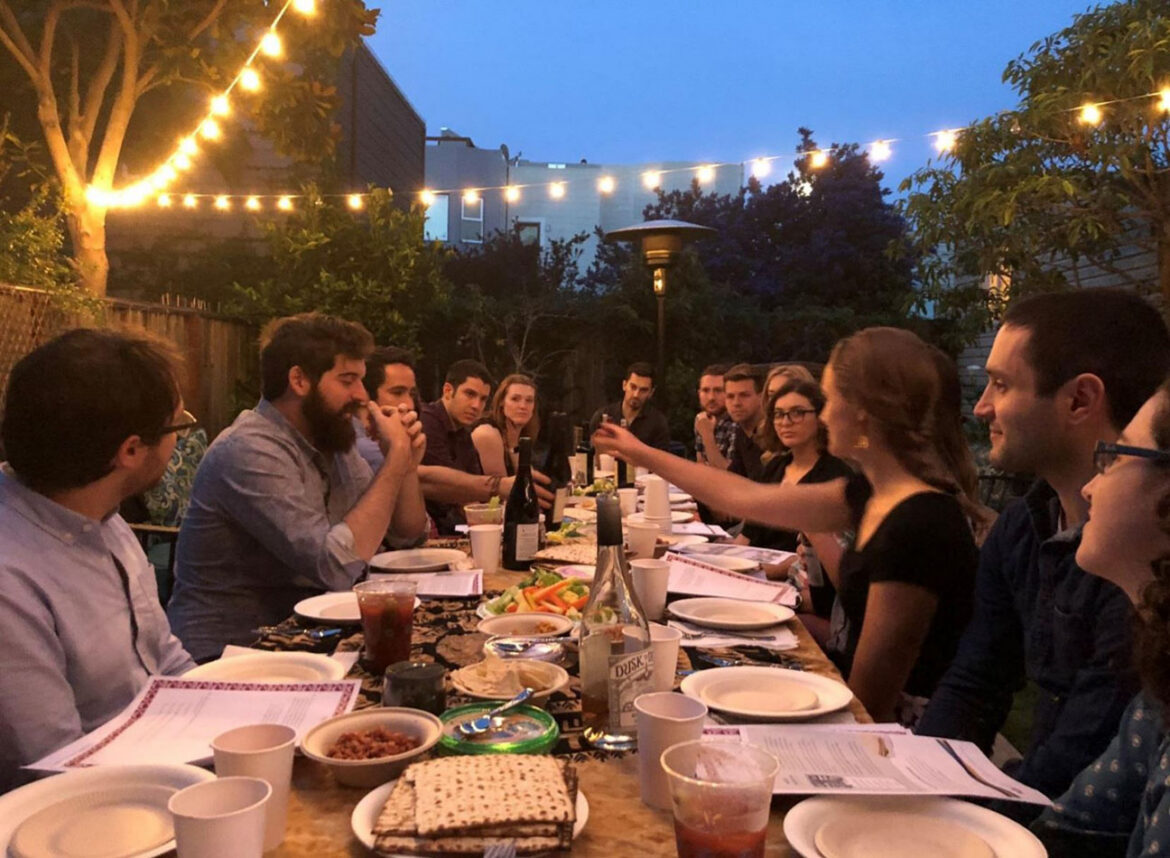
AW: I think that we have a very evolved and developed history and tradition of storytelling, so it’s part of something we grow up with and is a natural way of being. I don’t think that it’s like a God-given gift, no. But I think it’s absolutely a skill we develop. Everything about our culture — like [the Passover seder], where we sit down and retell the story every year — is part of our ritual, part of what we do. And it’s hard-wired into your system at a certain point.
JJ: Growing up, you lived in four different countries, including Israel.
AW: When I was 8 years old, I was living in Switzerland, in the Alps, with my mother. My parents had gotten divorced, and my dad lived in France, across the border, so we’d go back and forth every few weeks. My mother comes from East Flatbush in Brooklyn. My maternal grandmother lost her whole family in the Holocaust, and my mother was concerned that I was being raised without any other Jewish kids around, without it being comfortable [to be Jewish]. So it was important for my mom to create a space for me where I could be part of a community. She said to me when I was 8, ‘We’re moving, and we can either move to America or we can move to Israel.’ I had a funny thing about America — it felt very big to me; sneakers felt big, cartoons felt big, food portions felt big. I couldn’t conceive of living there.
JJ: At Sundance you did a lot of work internationally, heading screenwriting labs throughout the Middle East. Did the international film community accept Israel as part of its family or treat it as a pariah state?
AW: Israel is an incredibly huge part of the international film community and much more accepted in the film community than [in] any other realm — and not just accepted, but celebrated and respected. When I first started at Sundance, I used to help my friends with the Israel party that they would put together in Toronto — I would give out a lot of fliers — because they were trying to get people to come to their event, and it was not well attended. Now, it’s hard to get in.
JJ: But what about the infamous 2009 protests at the Toronto International Film Festival, where several high-profile artists boycotted the festival’s spotlight on films about Tel Aviv?
AW: There are always going to be people who care deeply about human rights, as many filmmakers do, and they’re right to care about that. But I don’t believe in boycotting culture.
JJ: A lot of Jews are concerned about Israel’s image and hope that film, being one of the most influential mediums in the world, can change perceptions about the country. What should Israeli cinema tell the world about itself?
AW: I think it should represent everything about itself. The film that won the Sundance World Cinema Jury Prize this year, called “The Law in These Parts” — it also won best documentary at the Jerusalem Film Festival last July — is about the difference between upholding the law and upholding justice, and that they’re not always the same thing. Wrestling with that and suggesting that the Jewish ideal and the principles upon which the state was founded are such that we should care about how well everybody lives. It’s one of the things I love most about Judaism … it’s about really appreciating that this is good for me, and it may not be good for somebody else, so I’m not going to impose what I want on everyone else, but I’m going to listen. And that’s what film allows audiences to do: go and to listen. And we don’t do enough of that.