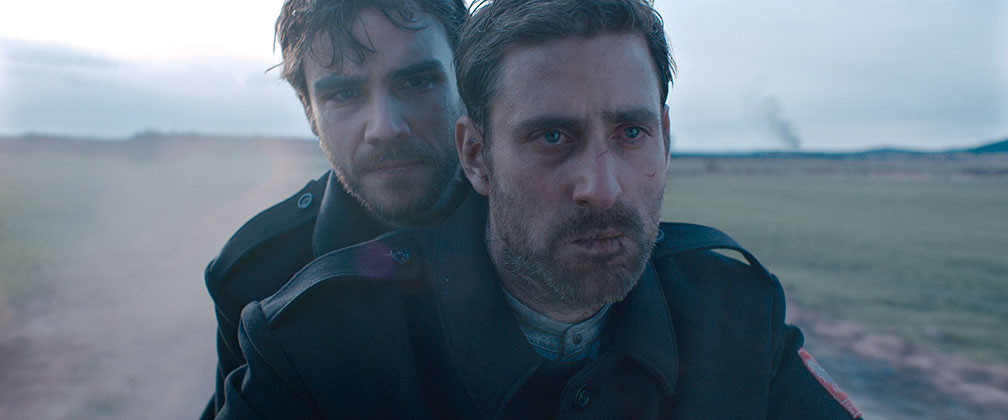
In one of the most shocking scenes in “The World Will Tremble” (currently streaming on Amazon Prime) a group of men stands inside a ditch, digging. They have been ordered to bury Jews murdered by the Nazis in a gas van. Helplessly, they remove the bodies from the truck and place them into the mass grave.
Then one of them screams. He recognizes his daughter.
It is almost impossible to grasp the horror of that moment. But it doesn’t end there. He discovers his other child’s body, and then his wife’s. They are all dead.
In desperation, he begs the Nazis standing above the ditch to kill him as well. They refuse. He is still strong, and they need him to keep working. They can kill him later.
This broken man was Mordechai (Michael) Podchlebnik, and he would survive to tell the story of the first Nazi death camp, Chelmno. He would recount the atrocities he had witnessed at the Chelmno trials of the SS officers in 1945, and he would recount them again in 1961 at the Eichmann trial.
Set in January 1942, “The World Will Tremble” tells the story of Podchlebnik and Solomon Wiener, who witnessed the mass murder of Jews at the first Nazi death camp. Realizing the world must learn the truth, the two men made a daring escape while being transported with other forced laborers to bury victims killed in trucks re-equipped as mobile gas chambers, or gas vans.
Seizing a moment when fellow prisoners distract the guards, they cut through the side of the truck and leap to freedom, beginning a desperate journey to warn others about the Nazis’ secret plan to annihilate European Jewry.
After reaching the nearby Grabów ghetto, they recounted their story to Rabbi Schulman, who initially struggled to grasp the scale of what Wiener was telling him but gradually came to accept the truth of his account. As Wiener spoke, the rabbi wrote down his testimony, which would become one of the first eyewitness accounts of the Holocaust to reach the outside world.
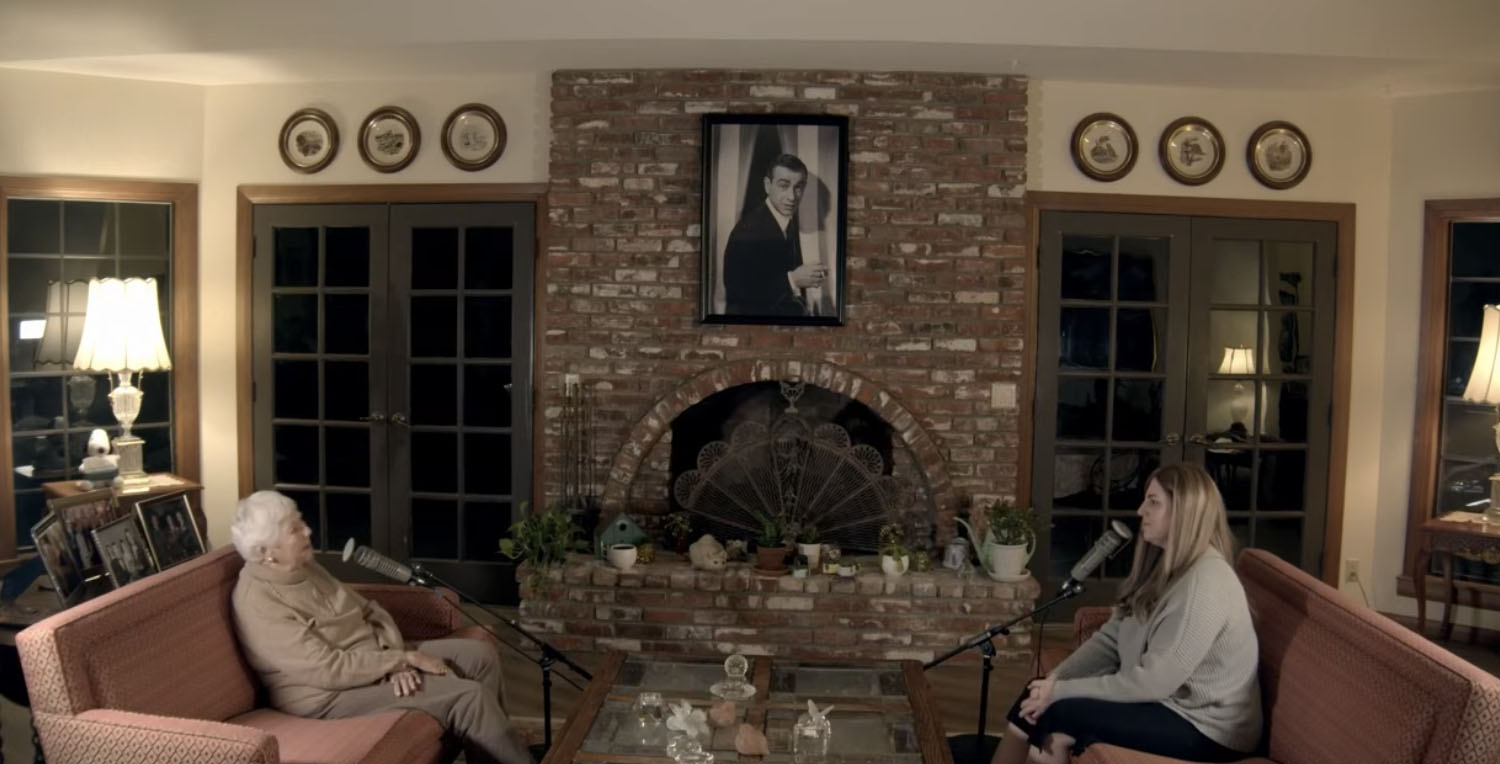
Lior Geller, “The World Will Tremble”’s director, told The Journal he was surprised to discover that no major film had previously been made about the two men. He only came across the story while researching his own family history after his aunt — the last Holocaust survivor in his family — passed away about 13 years ago. Wanting to learn more about his family and what they had gone through during the war, he began looking into the history of the Jewish community from which they came. “She was separated from her parents at a young age. They believed she had died, but two weeks after the war ended, they returned to their town in Romania and were reunited with her. My father was born later and didn’t know much about what his sister went through, because she didn’t like to talk about it.”
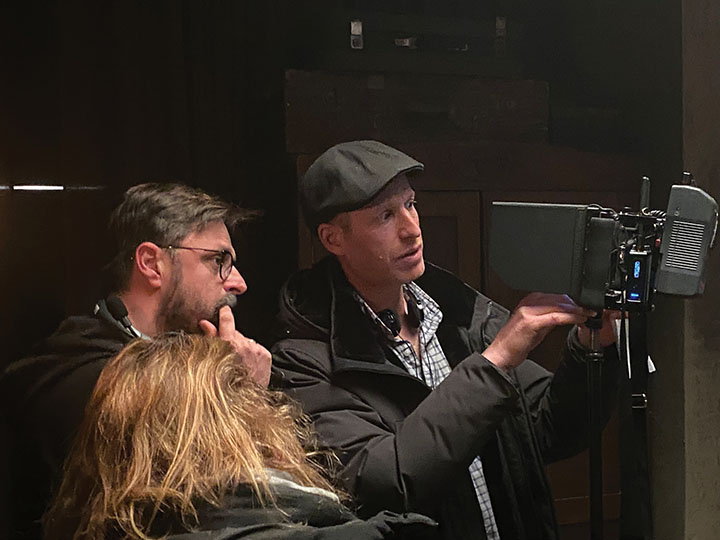
While researching his family’s past, Geller came across the story of the Chelmno death camp and became deeply absorbed in it. What began as a personal search turned into an 11-year investigation into the story of the two men who escaped and helped reveal to the world what the Nazis were doing to the Jews.
Geller said that tracing Podchlebnik’s family proved to be one of the most difficult parts of the research, largely because the family had changed their name after the war. Podchlebnik’s sons had changed their last name to Peled, which made the connection almost impossible to track down.
“There was no obvious link to Podchlebnik,” Geller said. “It took a lot of work — searching, contacting people on Facebook, even hiring a researcher. Eventually I reached out to many people with the name Peled until one of them said, ‘Yes, that’s my father.’ That’s how I finally found his two sons.”
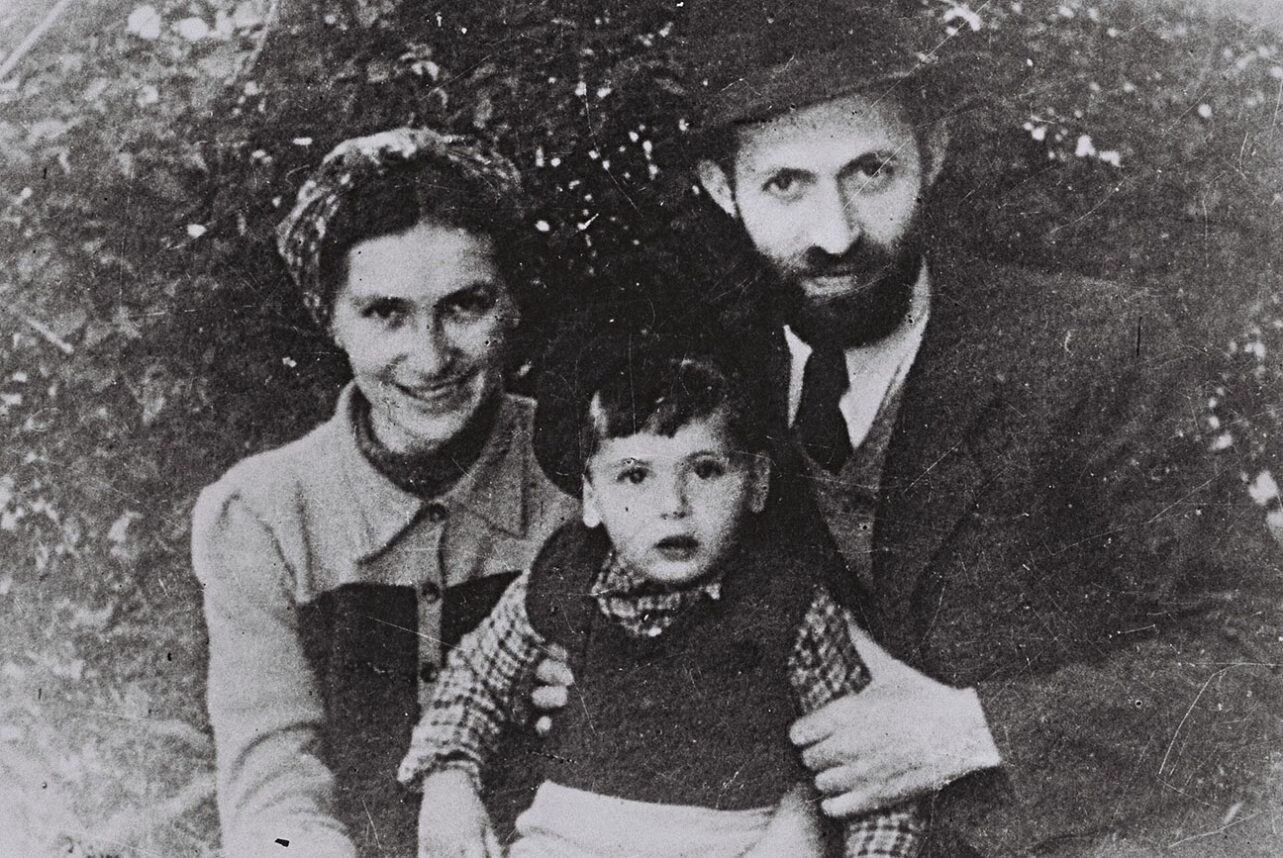
Podchlebnik remarried after the war. His eldest son, Jacob, who was born in a displaced persons camp in Frankfurt before the family made Aliyah to Israel, knew a great deal about his father’s story and helped Geller with the research for the film. Yona, the younger son however, knew very little — including the fact that his father had once had a wife and two young children who were murdered by the Nazis.
Geller said one reason Chelmno remains far less known than other Nazi death camps is the lack of surviving witnesses. Although the camp played a crucial role in the history of the Holocaust — Jews were murdered there months before gas chambers were built at Auschwitz — very few people survived to tell what happened. Out of the hundreds of thousands sent there between 1941 and 1945, only four men survived it. “They estimate that there were 220,000 people who were murdered there, but this is the lower end of the estimate. I believe that the number is more likely to be 320,000 people,” he said. “The Nazis destroyed the structures in the camp in January 1945 because they didn’t want to leave any evidence to what had taken place there.”
With the help of Podchlebnik’s son Jacob, Geller was able to put together the story and write the script. He even invited him to the film set in Bulgaria to meet with the man who would portray his father, actor Jeremy Neumark Jones, but just before he was scheduled to arrive on set, Jacob passed away.
Geller said he felt bad that Jacob didn’t get to see the film, but he is planning to watch it along with Yona once the film premieres in Israel on Holocaust Memorial Day, April 14.
As for how the testimony of the two men made it to London, Geller said it was another fascinating story—one he didn’t include in the movie because it would have made it too long. Their account took several months to make its way out. Movement at the time was extremely difficult, so the document had to be smuggled. It was ultimately carried with the help of Swedish diplomats who managed to reach London, where they connected with the Jewish underground leadership there. One of the leaders took it upon himself to expose the information and brought the testimony to the BBC and the press. In June 1942, the first reports based on that testimony were published.
“The Daily Telegraph and The Guardian were the first newspapers to report the story,” said Geller.
It was later published also by The New York Times, Chicago Tribune and The Los Angeles Times.
The Israeli director, who lives in Thousand Oaks, is already looking ahead to several new projects. One of them is a series about the Maccabees, and a political thriller set in Congo about the takeover of the U.S. consulate, as well as a planned miniseries about the Treblinka uprising.