Israel is much admired, even among its enemies, for the valor and acuity of its storied secret service, Mossad. Before there was a Mossad, however, and even before there was a State of Israel, a few brave young men and women were already at work in conditions of the greatest danger to serve a Jewish state that was still in the making.
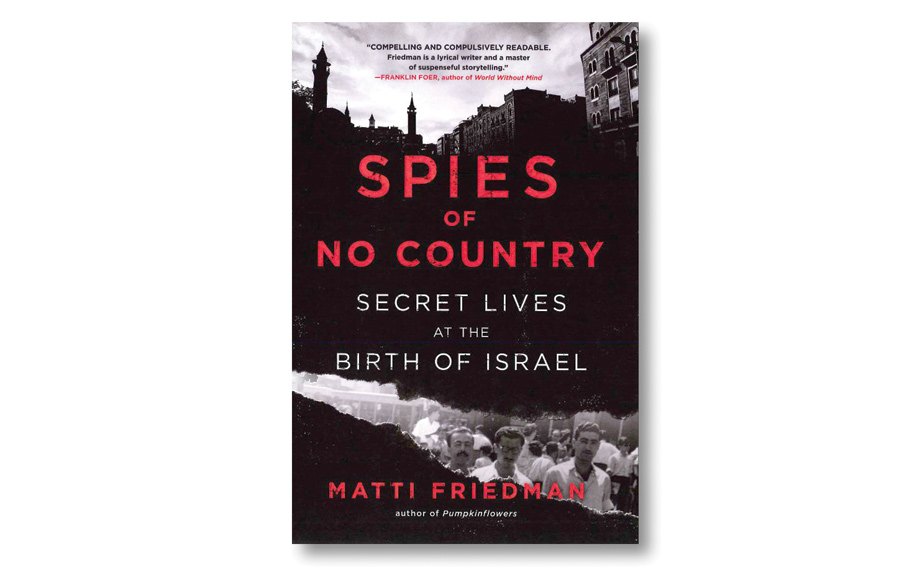
Among them were three young men who were all named Cohen but who were not related to one another — Gamliel, Yakuba and Havakuk — and a fourth man named Isaac Shoshan, whom author Matti Friedman befriended when Isaac was already a nonagenarian. Their exploits in advance of the War of Independence in 1948 are presented with the urgent episodic pacing of a spy novel in Friedman’s “Spies of No Country: Secret Lives at the Birth of Israel” (Algonquin Books of Chapel Hill). But the book is a work of history and biography, the untold tale of a unit of the Haganah known variously as “the Black Section,” “the Dawn Section,” “the Arab Section” or, more bluntly, “the Ones Who Become Like Arabs.”
Indeed, the four young men were all Arab-speakers, only one of whom was born in what was soon to be Israel. Friedman likens them to contemporary Israelis whose families also came from Yemen, Syria and other Middle Eastern corners of the Diaspora: “These were Israelis, but not the kibbutz pioneers of the old Zionist imagination,” Friedman explains. “These were people from the Islamic world, in the Islamic world, their lives entwined with the fate of Islam.” Their command of the Arabic language and their ability to disguise themselves as native speakers were weapons of war. “If Arab spies were needed, the Jews wouldn’t pay them — they would be them,” Friedman writes.
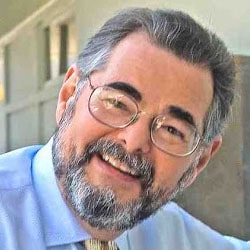
The author, a veteran Associated Press foreign correspondent who has reported from Israel, Lebanon, Morocco and Moscow, among other places, was born in Toronto and now lives in Jerusalem. His first book, “The Aleppo Codex,” won the 2014 Sami Rohr Prize and the American Library Association’s Sophie Brody Medal. His 2016 book, “Pumpkinflowers,” was chosen as a notable book by The New York Times and other publications. “Spies of No Country” already has been honored with the Natan Book Award.
As it happens, we learn more about what a real-life espionage agent actually does in “Spies of No Country” than in any mere thriller. To be sure, the members of the Arab Section trained in the use of firearms and explosives, and “when they could round up a few bullets, they held target practice.” But they also “slipped in and out of Arab towns, practiced dialect, saw what fooled people and what didn’t.” Their tradecraft sometimes consisted only of “sitting at a cheap café or smoking on the steps of the post office, looking around, asking a question of a passerby as casually as possible.”
Now and then, we are able to witness the daring and dangerous missions that we hope to find in a book about espionage. When Jewish agents discovered an Arab plan to detonate a car bomb in a Jewish neighborhood, for example, the members of the Arab Section went to work on a car bomb of their own, placing it in a stolen car, parking it next to the Arab car, and then blowing up both vehicles in a pre-emptive strike. The bomb was assembled in a classroom at Technion, the scientific university in Haifa, and the detonator was fashioned out of a condom, an ampul of sulfuric acid, and quantities of sugar and potash. An Oldsmobile was stolen for use as a getaway car, and Isaac was assigned to be the driver even though he had never driven a car before. “This wasn’t allowed to slow things down,” Friedman reports. “Yakuba taught him to drive the Oldsmobile in the streets around [Technion], gears on the first day, steering on the second.” On the day of the operation, Isaac left the car in first gear all the way to the target because he had not yet mastered the manual transmission.
“Their mission didn’t culminate in a dramatic explosion that averted disaster, or in the solution of a devious puzzle. Their importance to history lies instead in what they turned out to be — the embryo of one of the world’s most formidable intelligence services.” — Matti Friedman
At least one of the secret missions revealed in “Spies of No Country” is so exotic that it sounds like something out of the imagination of Ian Fleming. The armored yacht that had been built for Hitler during World War II ended up at anchor in the harbor of Beirut. To deny use of the vessel by Arab forces, the Arab Section was assigned the task of detonating a bomb under its hull. “Evidence of Nazi fingerprints on the Arab side always drew special attention from the Jewish intelligence services,” writes Friedman. “If later on [the attack] was remembered by the Arab Section as ‘the jewel of our operations beyond the border,’” as Friedman reports, “the appraisal was less about the results than about seeing whether the Jews could pull
off something like this at all.”
Friedman refuses to hype the heroes of his own book. “Their mission didn’t culminate in a dramatic explosion that averted disaster, or in the solution of a devious puzzle,” he writes. “Their importance to history lies instead in what they turned out to be — the embryo of one of the world’s most formidable intelligence services.” In fact, the author reveals a conversation between Havakuk and Isaac when they wondered aloud what would happen to them “if the Arabs really do capture Haifa, Tel Aviv and Jerusalem.” Havakuk jokingly told Isaac that “he wasn’t concerned, because he had a contingency plan for Jewish defeat: ‘We can always go back to Palestine as Arabs.’ ”
At the same time, Friedman’s book is animated by his conviction that respect must be paid to these overlooked heroes. “People trying to forge a Jewish state in the Middle East should have seen that Jews from the Middle East could be helpful,” he argues. “The newcomers might have been invited to serve as equal partners in the creation of this new society, but they weren’t. Instead they were condescended to, and pushed to the fringes; it was one of the state’s worst errors, one for which we are still paying.” Thus does Friedman rectify a moral and historical wrong when he calls our attention to the four young men whom we come to know so well and admire so much in the pages of “Spies of No Country.”
Jonathan Kirsch, attorney and author, is the book editor of the Jewish Journal.