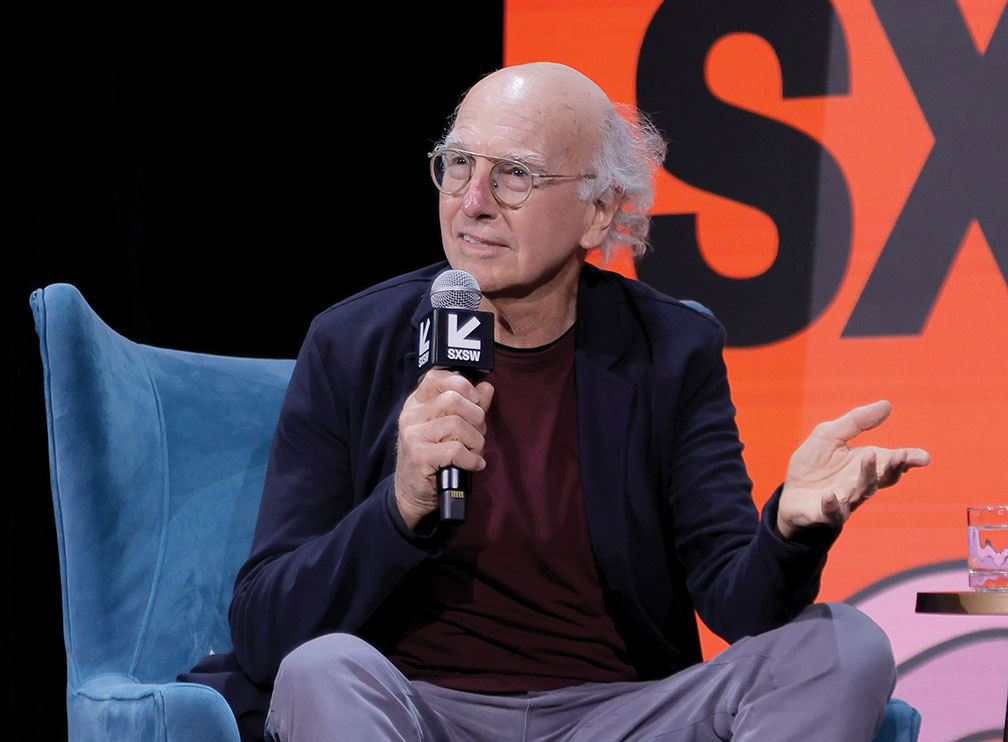
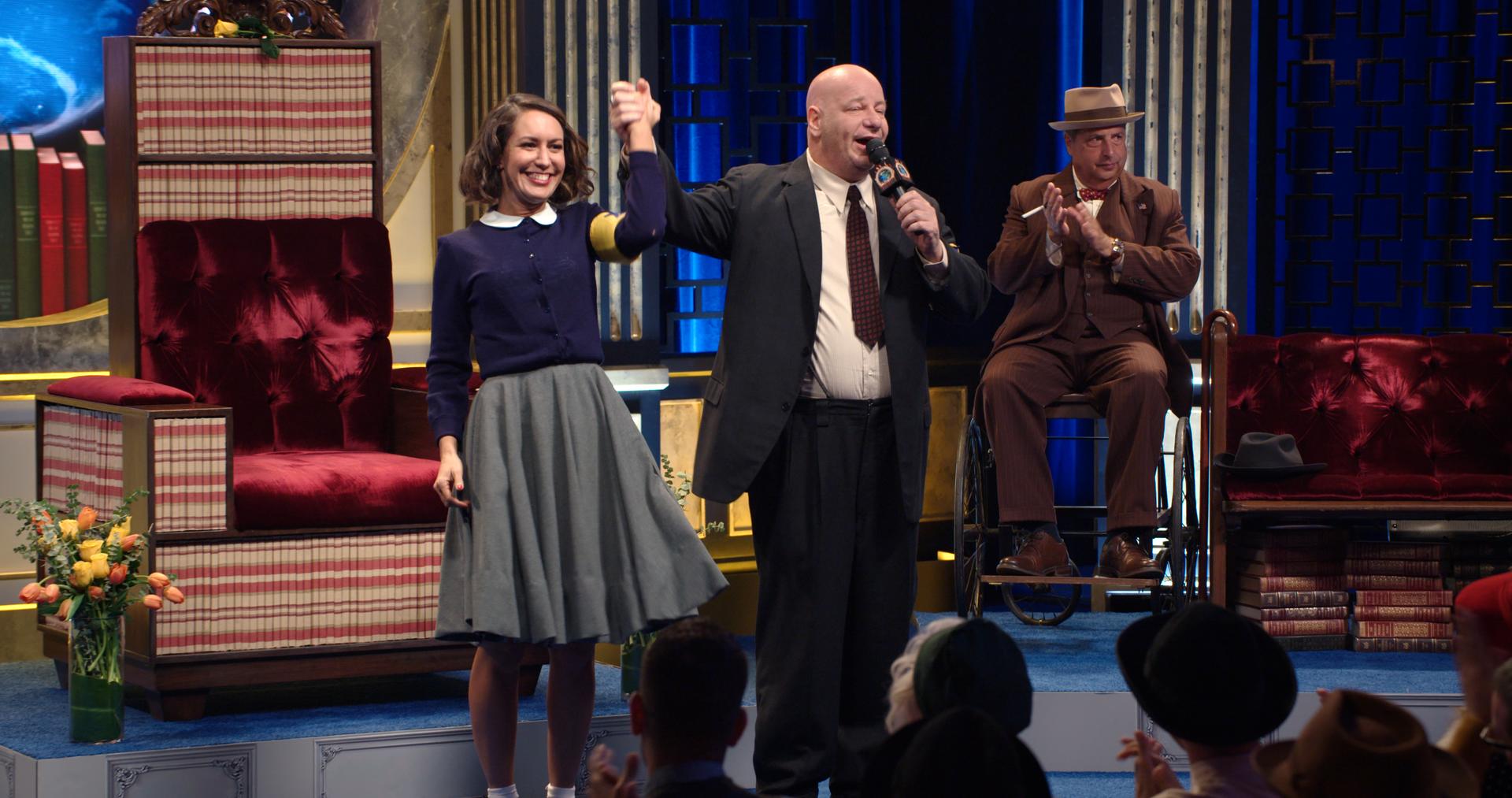
Jewish comedian Jeffrey Ross has spent most of his career making people laugh through his annual celebrity roast specials. Now the self-described “Roastmaster General” stars in a new six-episode Netflix series titled “Historical Roasts.”
In the series, Ross insults a handful of well-known historical figures, including Abraham Lincoln, Freddie Mercury, Martin Luther King Jr. and Anne Frank.
While the concept may sound like it’s in poor taste (roasting Anne Frank?), Ross and executive producer Michael Ratner say their intentions are genuine. Their goal is to educate young people by joking about what is uncomfortable.
“People always ask me who my dream roast is,” Ross told the Journal. “You kind of get that question your whole life. Roasts come from a place of affection, so I go, ‘Who are my heroes? Who are people that I admire and the world admires and I can tie, somehow, with what’s happening in the world today?’ You add a bunch of jokes and celebrities and you have one hell of a variety show.”
Ratner originally conceived the idea after seeing a live comedy experience of the same name and knew immediately he had to involve Ross in the project.
“Right off the bat, [Ross] was pitching ideas,” Ratner said. “I’ll never forget, he said immediately, ‘We should roast Abe Lincoln. I’ll tell him he should emancipate that mole off his face.’ And that’s when I knew we had something special.”
The duo recruited well-known comedians for the show. Comedian-actor Bob Saget plays Abe Lincoln while Natasha Leggero has the role of his wife, Mary Todd Lincoln. Jaleel White portrays Nelson Mandela and roast veteran Nikki Glaser plays Kurt Cobain.
Because Ross was going after everybody regardless of race, gender or sexual orientation, he wanted to make sure his writing staff mirrored the same diversity. He joked that he ended up being the only Jewish person in the “Hollywood” writing room.
“Roasting Anne Frank sounds outlandish, it sounds risky, but to me, the riskier move would be to ignore the most provocative and the most emotional stories. I use Anne Frank not just as a hero from World War II but as a cautionary tale of today and anti-Semitism.” — Jeffrey Ross
The creative team also made sure that every joke thrown during the roasts was factual. “I wanted to be a trusty narrator,” Ross said. “I want people to go, ‘Wow, really? I’m gonna read that book. I’m gonna watch that documentary.’ One of my proudest moments was my young writer taking home his copy of ‘The Diary of Anne Frank.’ It made me so happy to see cultures learning about each other and different races and religions mixing together and building something that they are all proud of.”
Ross asked fellow comedian Rachel Feinstein to portray Anne Frank. Both Ross and Ratner were particularly motivated to include Frank because of the recent wave of anti-Semitism in the United States.
“As a comedian, you do things that no one’s ever done, and roasting Anne Frank sounds outlandish, it sounds risky, but to me, the riskier move would be to ignore the most provocative and the most emotional stories,” Ross said. “People always talk about the Holocaust and they say ‘never forget,’ but young people, I’m sorry, they are forgetting. They need to hear these stories, and I use Anne Frank not just as a hero from World War II but as a cautionary tale of today and anti-Semitism.”
Ross said the Frank episode was taped following the attack at the Tree of Life synagogue in Pittsburgh in October.
Ross, 53, who was born Jeffrey Ross Lifschultz, also honors his uncles who fought during World War II by wearing their medals of honor in the show. He said it was important that the victims of tragedy get the final laugh and that the best way to “deflate the swastika” is with a “revenge-through-ridicule” mentality. Gilbert Gottfried, who plays Adolf Hitler, had family members who survived the Holocaust.
Ross and Ratner said their countless conversations led them to the show’s purpose, which was teaching history to a group of people who wouldn’t willingly study it.
“It’s really rough to go and figure out a way to get [young people] to listen, especially to a history lesson,” Ratner said. “What is the most unique way to force-feed a history lesson to this coveted demographic that you can speak to on Netflix and in 192 countries? We came up with a construct where people would be laughing the whole time and they would get these jokes and ultimately leave feeling smarter.”
For those who don’t believe historical figures, especially ones who died in the Holocaust, should be roasted, Ross said, “Follow the discomfort. You might learn something about yourself, you might learn something about the world.”
“Historical Roasts” is streaming now on Netflix.