When Gitty Salomon decided to take a challah-baking class in 2013, she had no idea that it would lead to a creative outlet imbued with deep, spiritual fulfillment.
“What I thought would be [a class on] how to bake challah was more of a why you should bake challah,” the Brooklyn, N.Y., speech therapist told the Journal by phone. The teachers, Ruchama Arbiv and Mira Baluka, were visiting from Israel, and they gave “spiritual insights into challah baking.”
Arbiv and Baluka lit candles and the class prayed for those in need of healing, Salomon said. “They closed the lights and everyone just tried to kind of connect with God and really get into the experience.” The group even danced with the challah bowl.
“I left the class and I was like, ‘Wow, I can’t wait to bake challah. But I don’t really know how to bake challah because we never learned how to bake challah in class.’ ”
After downloading a recipe, Salomon went onto YouTube to learn how to braid challah. “There was a little bit of trial and error,” she said, “but that definitely ignited the challah spark.”
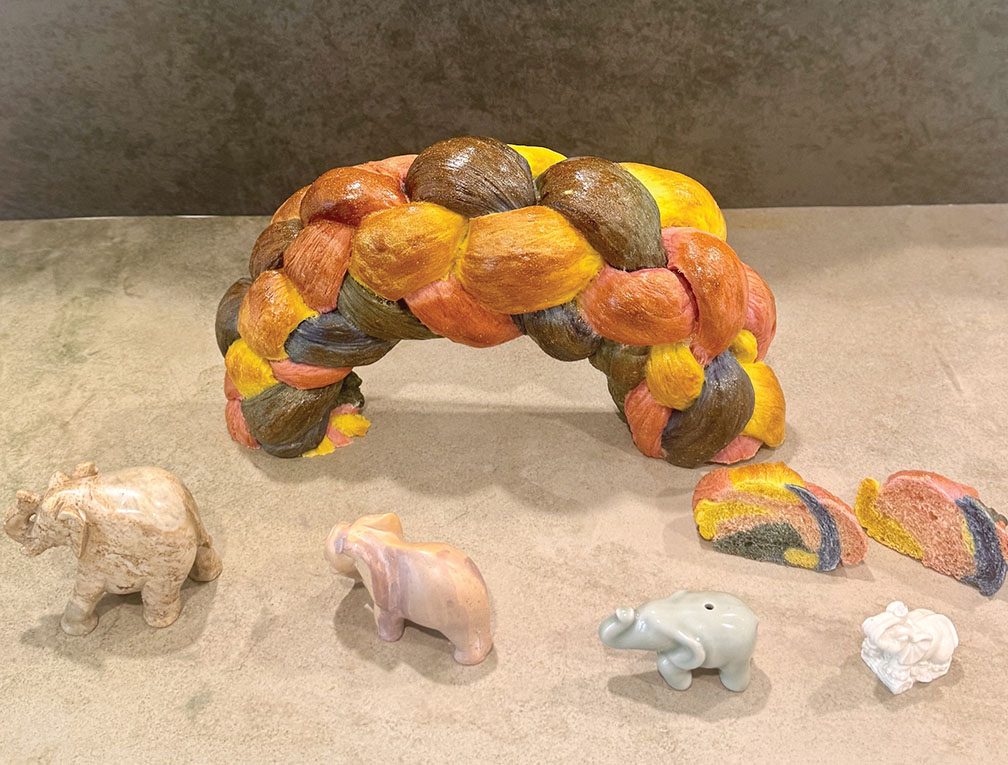
That spark included her decision to bake challah art. The inspiration came after she saw people baking shlissel challah — challah baked in the shape of a key on the first Shabbat after Passover. Shlissel is the Yiddish word for key and the challah is supposed to be a good omen for livelihood.
“What I thought would be a class on how to bake challah was more of a why you should bake challah. The teachers gave spiritual insights into challah baking.” — Gitty Salomon
“I went on Pinterest, got some inspiration and shaped out some keys,” she said.
Then, when Shavuot came along, Salomon saw a Facebook video of an Israeli woman demonstrating how to make challah in the shape of a flower. Salomon then created her own flower challah and “posted it on my Instagram page. People gave such great feedback. I just loved it. I loved the creative process.”
She then realized that she didn’t have to wait for a Jewish holiday to make special challot. Any Jewish theme will do, she said, and her inspiration comes from everywhere. “Sometimes I’ll look to see what the parsha is and see if there’s something that catches my interest,” Salomon said.
In one instance, she was inspired by Parashat Shelach and created a dancing man with tzitzit, inspired by the parsha’s commandment to wear tzitzit.
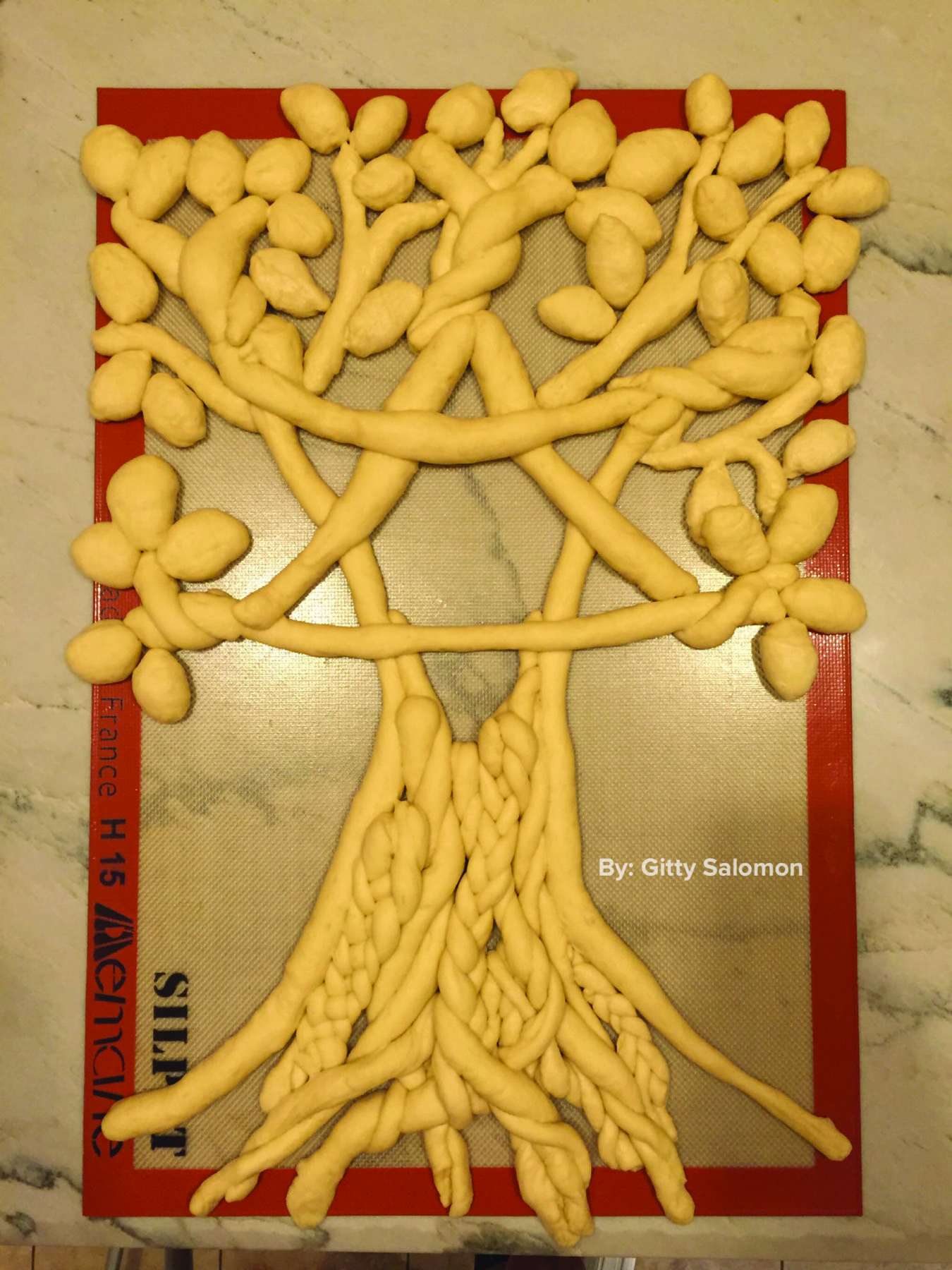
Since then, she has made challah art inspired by everything from “Fiddler on the Roof” to “The Tree of Life,” which included a Star of David inside. “Something about creating that was very moving,” she said.
When making her creations, Salomon said, “I’m just thinking about what I want to try to create and hoping that God will help me actualize the idea. I always ask him for help.”
Salomon always photographs her challot after she finishes baking them. “And then we eat [them],” she quipped.
When she first started her challah art creations, Salomon posted them on her personal Instagram and social media pages, and sites including Humans of Judaism and Challah Hub shared them. Now she has her own site on Instagram called Challah Art.
For those interested in making challah art, Salomon said it’s all about having fun. “Start small and go slow,” she suggested. “Maybe look at a picture for inspiration, and don’t try too hard with the braiding.” She suggests treating the dough in the same way you’d use play dough or clay.
Today, she is grateful for that class she took five years ago, which opened her world to the joy of baking challah art. “Maybe it was the idea that you take something physical and you elevate it to something spiritual, because you’re baking and you’re providing your family or the people that you love with this physical and spiritual nourishment,” she said.
Salomon also believes it is no coincidence that she landed on this path. “I was born on Shabbos,” she said. “So I think it was probably like a calling and a gift from God that I’m meant to share.”