“When We Were Bad” by Charlotte Mendelson (Houghton Mifflin, $24).
As a wedding is about to begin in North London, all eyes are on the mother of the groom. Claudia Rubin is tall, beautiful, brainy and voluptuous, a celebrated rabbi who leads a large congregation. She’s not officiating at her son’s marriage, instead letting the bride’s family’s rabbi, Nicky Baum, lead the rites. But the service never begins, for the groom runs off with the woman he loves, Rabbi Baum’s wife.
From this first scene, Charlotte Mendelson’s “When We Were Bad” repeatedly surprises the reader, as she deeply observes the life of an English Jewish family and community from the inside. While this family seems, at least on the surface, “doomed to happiness,” their story is unraveling to more doom than happiness. Mendelson is a writer who gets quickly to the truth of things, with prose that is witty, knowing and energetic.
“When We Were Bad” is British novelist Mendelson’s American debut, and she will appear in Pasadena on Nov. 8 as part of the Jewish Book Festival, a program of the Jewish Federation of the Greater San Gabriel and Pomona Valleys, which runs from Nov. 7-Dec. 8. She is the author of two previous novels, “Daughters of Jerusalem” and “Love in Idleness”; has won two awards acknowledging talented writers under the age of 35, the Somerset Maugham Award and the John Llewellyn Rhys Prize; and has been short-listed for the Sunday Times Young Writer of the Year Award.
“I wanted to write about a family full of secrets and lies, as any family is,” Mendelson said in an interview. “And I decided, too, that it was time to describe the strange and little-understood world of English Jews. Then, because the most interesting characters are those under pressure, I decided to make the family in question, the Rubins, under particularly close scrutiny — and so it made sense for them to be the children of a famous, glamorous, difficult woman. And who could be more scrutinized, more judged and cheek-pinched, than the children of a rabbi?”
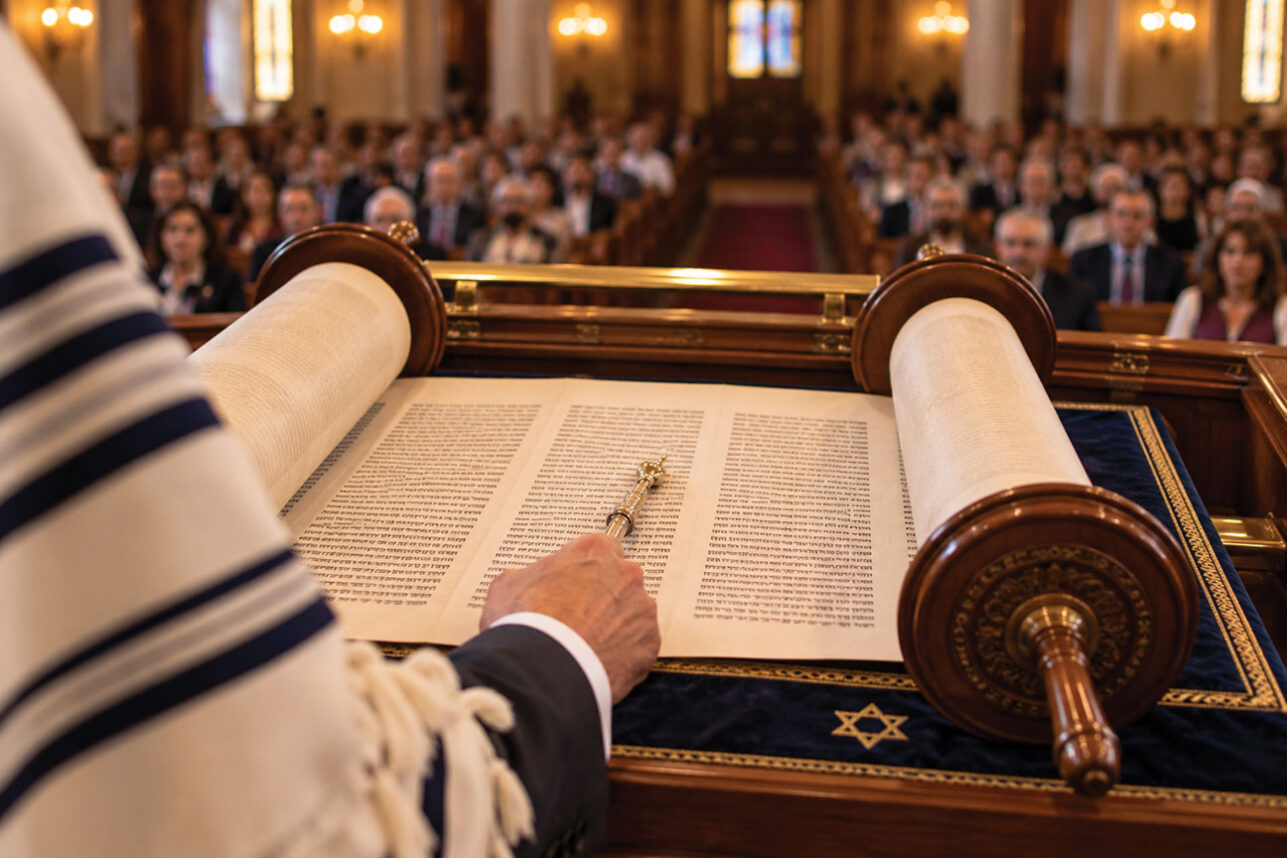
Rabbi Rubin is a rare literary being. While novelist Jonathan Rosen wrote of a young woman assistant rabbi in “Joy Comes in the Morning,” this may be the first work of fiction to focus on a woman rabbi at the height of her career. She’s a senior rabbi of a liberal shul “where famous authors come to Chanukah parties and the congregation seems to grow by the hour.” A woman of large ambition, she’s juggling her attention — devoted to her congregants, a public platform beyond the synagogue and her quirky family. She likes the way she’s doing her job, as much as she still likes her reflection in the mirror as she’s reached her mid-50s.
Her Shabbat table mixes family, loyal regulars and bold names she plucks from her Rolodex. Presiding, she makes her guests feel good and basks “in the flattering candlelight, the overlapping conversations, the speed at which the plates are being emptied.” It’s not the most traditional of settings, with her youngest son in dreadlocks charming the crowd, and a cheese course following the chicken.
While Claudia, who hides a large secret from the others, is at the center, the other characters also have conflicted inner lives, as revealed by the shifting voice of the narrator. Her overshadowed husband Norman, whose disappointments are relished by his family, has trouble revealing that he is about to publish a successful book that may eclipse his wife’s. The daughter, who seems most rooted, is unhappy in the married life arranged by her mother and is set off-kilter by her younger sister’s gay lover; the son who comes back home after leaving his bride on their wedding day struggles to leave home again.
By day, Mendelson is an editor at a British publishing house. She interviewed several women rabbis, “who are much harder to find in the U.K. than the U.S.,” she says, and stole newsletters from synagogues, trying to get the details right.
“So few Jews, so many opinions,” she writes, tweaking the aphorism to represent British Jewry.
When asked if the novel could have been set in Manhattan or Scarsdale, she replies, “Yes, and no. Which is a very Jewish answer. Yes, in that it’s about secret love and secret hatred, a son fleeing from his very public wedding and the ways in which his apparently happy family is about to fall apart; it’s about the shadow of the Holocaust; about food and death and sex. They are Jews, so it could be set anywhere there are Jews.”
“However,” she continues, “a strong undercurrent in the book is how it feels to be a Jew in Britain, the least Jewish country on earth. I don’t think that sense of tension, the constant awareness of possible hostility and editing of one’s speech and gestures, would make any sense at all on the Upper East Side.”
Mendelson points out that Jewish writing is very different in England and America. As she explains, “Jewish British writing is definitely ‘ethnic.’ There are very, very few British novelists who write about being Jewish, whereas in the U.S. ‘Jewish’ humor, whatever that is, is so thoroughly in the mainstream that writing about Jews is simply a version of all American fiction, which is about immigration, and difference and making one’s way in a potentially hostile environment.”
“The diversification of British fiction is thrilling, because suddenly we’re embracing difference too; I’m proud to be writing ‘ethnic’ fiction and, let’s face it, we’re all fascinated by what food other people have in their fridges, what embarrassing clothes their grandparents made them wear, how their community matchmakes them against their will.”
Mendelson’s grandparents came to England from Hungary, Czechoslovakia, Latvia, Poland and Ukraine just before World War II, and one was a cockney from London’s East End. She says that she was brought up to be proud of her Jewishness, although they weren’t remotely observant.