News of a then-upcoming film called “Pawn Sacrifice” about chess champion Bobby Fischer, played by Tobey McGuire, might have excited some who heard about it.
It devastated Eric Goldfarb.
It was 2012 and Goldfarb, an Emmy Award-winning television editor, had just finished his own screenplay about Fischer, the combustible Jewish figure whose celebrity at the height of the Cold War rivaled Muhammad Ali’s. Now, he decided, he had to scrap it and start looking for another subject.
“I just knew I wanted to tell the story of a champion, the making of a champion,” Goldfarb said.
One month later, through a family connection, Goldfarb met Daniela Barnea, a 72-year-old Israeli-born swimmer based in the Bay Area who holds world records for her age group.
According to Goldfarb, the words just came out, “Can I make a documentary on you?”
Barnea quickly accepted.
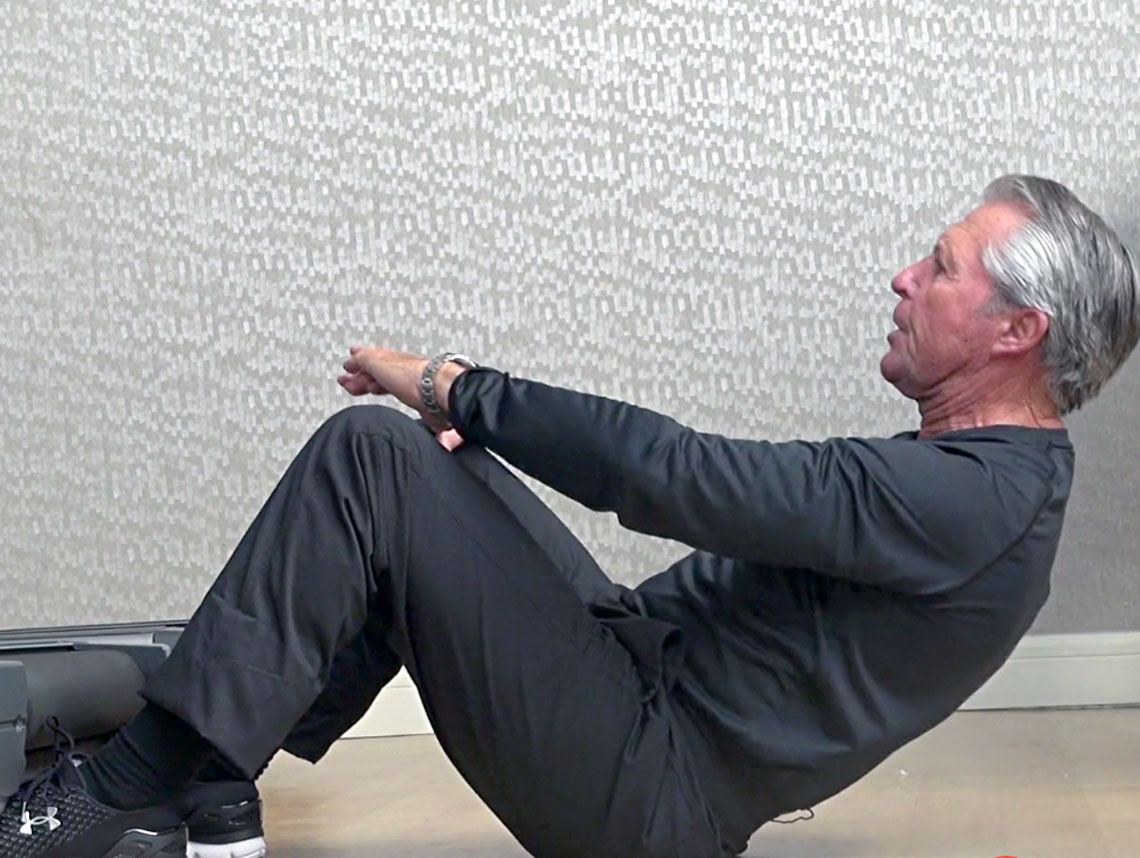
What followed was three years of Goldfarb filming and interviewing Barnea and other remarkable senior athletes he came across. There was a college professor well into his late 80s, sprinting at track and field events; a famous professional golfer working out in his early 80s; a legendary Jewish surfer, riding waves into his 90s; and a priest in her 60s, training to box after never throwing a punch in her life.
Earlier this year, “Impossible Dreamers,” Goldfarb’s first film, which he shot, directed, edited and funded, secured distribution. It’s now available on Netflix.
“In the landscape of today’s documentaries, there are a lot of social-political documentaries, which are important in their own rights,” Goldfarb said. “But today, people could also use positivity and a little inspiration. I thought senior athletes would be the best place to draw this from.”
In his search for a champion, Goldfarb found one within. The story of his filmmaking process also could be called the stuff of champions. He shot the movie over three years, all the while balancing a full-time editing gig on the show “Naked and Afraid.” He also got married in 2012 and became the father of two baby girls.
“It would’ve been very easy to let this project just not get finished, especially when you’re just doing it yourself,” he said. “But I just couldn’t stop.”
That notion is a recurring theme in the interviews from Goldfarb’s film — a drive from within, the need to prove something to your own reflection. Many of the athletes say what fuels them is competition not against others but with themselves, specifically younger versions of themselves.
“I always look and compare my times to what I did years ago,” said Barnea, the swimmer featured in the film. “It’s wonderful to see if you can beat it. I’m always looking for a new challenge.”
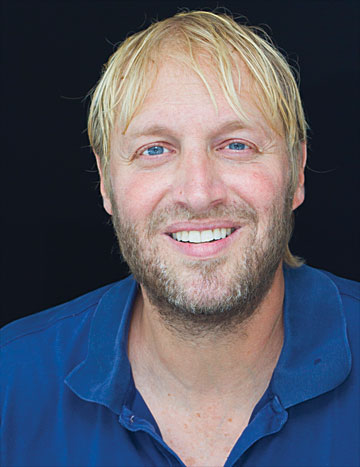
“They all share an outlook on life that’s far different than your average senior,” Goldfarb said of his film subjects. “They don’t see aging as a coming end. They never look back, only forward in life. I myself, as a filmmaker, was inspired by this.”
Born in Jerusalem, Barnea didn’t start swimming until she was 15, long after most professional swimmers begin competing. She gave up swimming for many years and returned to it in her 50s. When she’s not swimming or training, Barnea tutors Hebrew and German to students of all ages in Palo Alto, Calif., where she currently lives.
She sets aside time six days a week to swim, train with weights or do yoga. She won’t give up a workout for “lunch with a friend or any reason,” she said. That dedication has led to awards such as three times winning Pacific Masters Swimming’s “Swimmer of the Year.” (Pacific Masters Swimming is a governing body for organized adult swimmers in Northern California and Nevada.) She holds a world record in the 200-meter butterfly in her age group that was held by a former Olympian in her age group. She hopes the film will change some preconceptions people have about aging and finding renewed vigor later in life.
“What I hope people take away from the movie is that there is no age limit for starting something new or age cap to a championship,” she said. “Moreover, there is always more to a person than meets the eye.”
For Goldfarb, seeing people such as Barnea and 81-year-old Gary Player, a pro golf legend with nine major championships to his name and an idol of Goldfarb’s, train like 20-year-olds was deeply affecting.
His life in an editing bay, a sedentary reality, had long contributed to an unhealthy lifestyle. A few months into filming, he and his wife, Jenny, became vegetarians, then vegans, and are committed to running every day.
“I run and then go back to work and feel reinvigorated. Everybody should do it,” he said.
Since the film and the process of making it had such an impact on him, Goldfarb, 42, has plans to use the film as a means for advocating healthy and active living.
Goldfarb recently finished compiling an additional 20 minutes of footage of the athletes showcasing training regimens in more detail. He is planning to organize screenings of the new DVD in places such as universities and senior living facilities, where some of the athletes will be present to talk with audiences.
“We’re interested in going to old-age communities and showing the film and what these athletes represent. We see the film as not only finding an audience with older people, but younger people, too,” he said.
In the end, Goldfarb was even able to make a film with a bizarrely close connection to Bobby Fischer. One of the subjects in the film is a competitive weightlifting couple, Harry and Sarah Sneider, who train clients in their Pasadena home. Harry was Fischer’s personal trainer and close friend during the 1960s and ’70s. He was among just a handful of people who were close to the notoriously reclusive figure.
“What an amazing synchronicity it was,” Goldfarb said. “I saw Sarah Sneider at a competition in Van Nuys in 2012 and she said, ‘You really should be interviewing my husband.’ I quickly realized I knew who he was because of all my Fischer research.”
Harry Sneider died in 2014 during the making of the film. A touching storyline details his wife’s journey back to competition, partly to cope with the grief of losing her husband.
“I grew very close to Harry,” Goldfarb said. “We became really good friends during the course of making the movie. When he died, I guess, for him, I still wanted to track his wife’s resiliency. She developed her own overcoming-the-odds story. I just really loved all of the athletes in this film.”