Grab your children and your grandparents! A band of Yiddish heretics are zingen their way to Southern California!
Not that you should worry. These heretics, the Klezmatics, are happy and coming to share their zest for Eastern European Ashkenazi-inspired music.
What is so heretical about a long-established Grammy-winning group setting out on its 30th anniversary tour with December stops in Los Angeles and Costa Mesa? Along with the usual Yiddishe party music — which also includes songs by Woodie Guthrie — the band will perform songs from its new album, provocatively titled “Apikorsim/Heretics.”
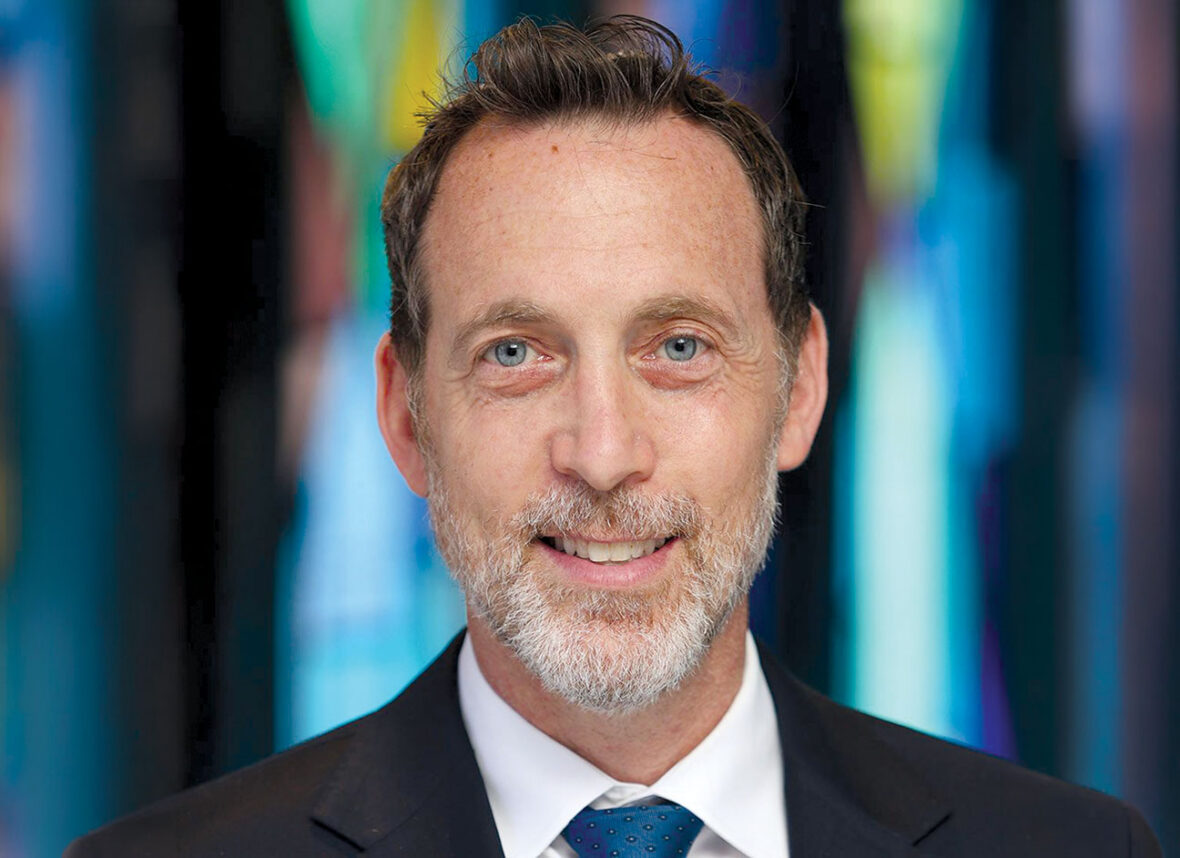
For many Jews, the Yiddish word apikorsim — used as a cutting term by one Jewish denomination to describe the perceived religious deficits of another — is mostly familiar through its use in Chaim Potok’s best-seller from the mid-1960s, “The Chosen.” But Lorin Sklamberg, the Klezmatics’ longtime lead vocalist and accordion, guitar and piano player, doesn’t see it that way. For him, the word’s meaning moves beyond a Jewish showing of disrespect to representing one of the joys of the Jewish world.
“It’s not unusual for us to take things that have a stereotypically negative connotation and turn them around,” Sklamberg said in a recent phone interview the morning after he had flown to New York following a Klezmatics performance in Poland.
As Sklamberg explained, the band likes to find a “positive aspect of something that might be somewhat controversial.” For instance, the title track of the new album, “Apikorsim,” represents the coming together of a traditional Yiddish dance tune by Klezmatics co-founder, vocalist, and horn and saxophone player Frank London with lyrics by contemporary Yiddish linguist Yuri Vedenyapin, who the band asked to write on the topic. “They just completely went to town on it,” Sklamberg said. And with lyrics like “Happy heretics don’t think about God … Happy heretics have no rabbi … Happy heretics don’t get circumcised,” it’s clear the writers not only had “gone to town,” they had left the shtetl.
“You could take it literally or you could take it metaphorically,” Sklamberg said when asked about the song’s provocative lyrics. For him, the song invokes the thoughts that “you don’t need to have all those strictures in your life to enjoy life” and that “you don’t have to abide by Orthodoxy,” he said.
“One of the nice things about the Jewish world,” he added, “is that there is a tacit acceptance that people allow everyone else to be Jewish in their own way.”
Sklamberg described the band’s following as comprising “everything from religious Jews with yarmulkes and beards to hipsters with tattoos and beards.”
“All of these Jewish worlds have been allowed to co-exist. I think that’s one of the delights of being Jewish,” said the musician, who had a Conservative upbringing at Temple Beth Torah in Alhambra.
Another song on the “Apikorsim/Heretics” album shows the group’s knack for turning around meaning. “Ver Firt Di Ale Shifn?” (Who Guides the Ships?) — with Yiddish lyrics by Zishe Landau (1889-1937) and music by Chava Alberstein — asks, in the form of a riddle, “Who plays with the children, and takes some of them away?”
Sklamberg said initially he was puzzled by the song’s lyrics. “As it turns out, Landau had lost a child, an infant when he was young,” and the poem “was kind of a lullaby for the child,” Sklamberg explained. But he sings the song with a broader meaning. It’s “for all parents who have had the tragedy of losing a child,” he said. “It’s one of the most well-received songs in our concerts.”
Growing up in Monterey Park, Sklamberg was in high school when he began playing accordion in a band called Rimonim that performed Israeli folk-dance music at weddings and bar and bat mitzvah parties.
“I didn’t know how the music was connected to my heritage and how the music I was hearing in shul was related to what we were playing,” he recalled. “There were people around I could have asked, but I didn’t think to do it.
“When I moved to New York and started studying Yiddish and getting involved with the Klezmatics, I started to see how all these things that I had grown up with were interconnected,” said Sklamberg, who as an original member has been with the band for 30 years.
His experience with listening to Chasidic music in shul and studying Hebrew at his synagogue’s school and Los Angeles
Hebrew High School helped ease his evolution to klezmer. “All these tools were really helpful in becoming proficient in Yiddish instrumental and vocal music,” he said, voicing a conclusion he laughingly acknowledged would make his Hebrew school teachers happy.
One of the ways the Klezmatics keep their audiences happy is when they conclude each show with “Mazel Tov,” a “little lullaby waltz” written by Yiddish singer, actor and impresario Boris Thomashefsky. The group plays it at the end to “wish everyone well and off into the night,” said Sklamberg, who sings it sweetly and innocently — without a heretical note.
“Every star that shines above us,” it begins, “should always shine on our future.”
The Klezmatics will perform Dec. 19 at the Pico Union Project in Los Angeles and Dec. 22 at the Segerstrom Center for the Arts in Costa Mesa. For more information, visit Segerstrom Center for the Arts in Costa Mesa or Pico Union Project.