You arrive at my office with your fiancé. You have never traveled together. You sit on a sofa and I turn off the lights. The projector shows the two of you dining in Paris, climbing Everest, crossing the Nile, zip-lining in Africa, paragliding in Australia. As you walk out, these become permanent shared memories.
This scenario, which sounds like science fiction, may become possible one day. Meanwhile, we do this type of programming to our children when we speak of departed relatives. We construct and reconstruct memories for those around us through tales, and for ourselves through the application of selective memory to a complicated past.
“Your uncle was a great man. Once, he saved a woman who was about to jump to her death from a skyscraper by talking to her. He was generous and donated to Leukemia and Lymphoma Society regularly.”
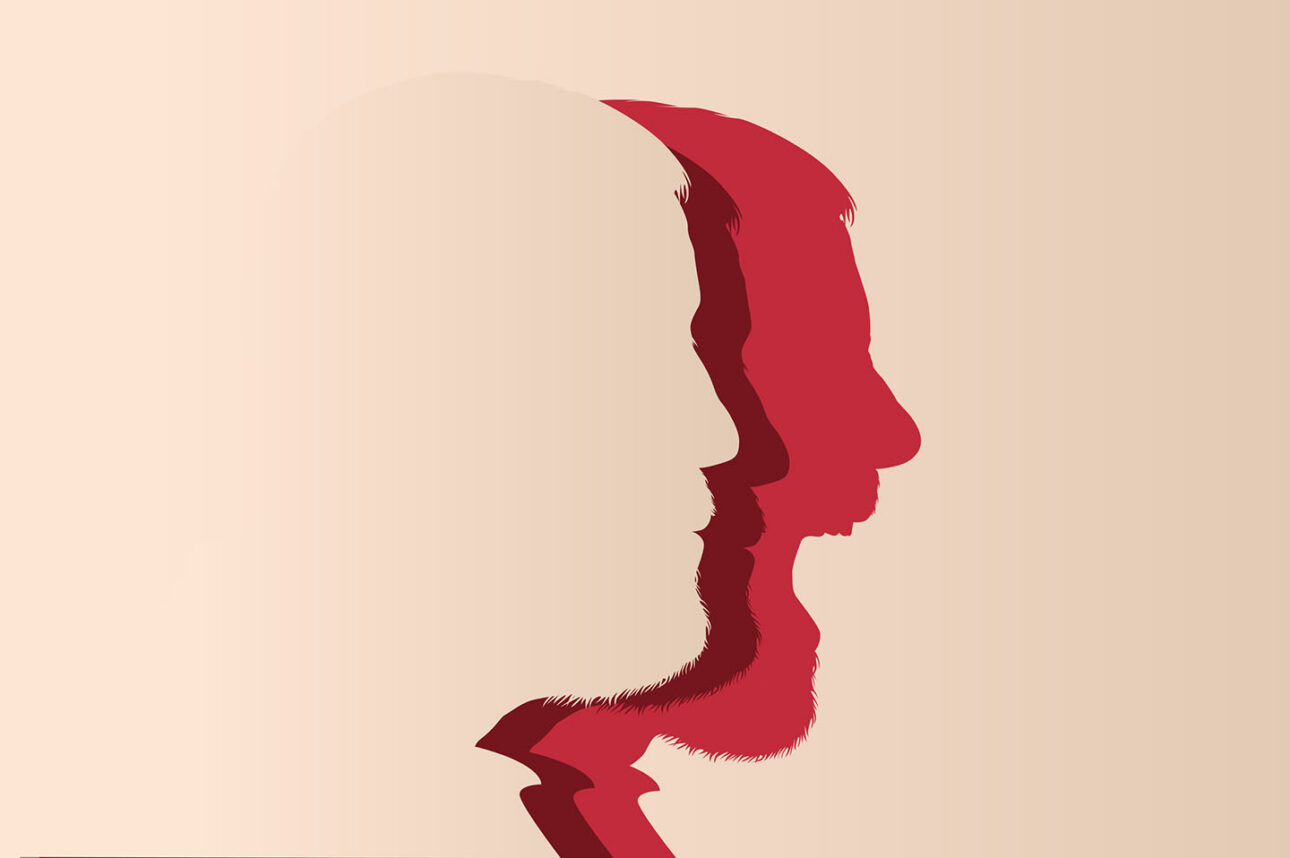
Our lives are messy, our memories muddy. Memory can be changed and updated like a page of Wikipedia- by us and by others.
“Your father was a lousy drunk. He never cared for you and left us in poverty.” A few words, at the right time, can define an entire life and influence how we treat others.
In the Torah, Numbers 20:14-16, Moses appeals to Edom's compassion based on family ties, so that the Hebrews can enter The Promised Land. But the wrong memories are elicited, causing anger over kindness.
On a macro level, there are those who wish to rewrite history. Pulitzer Prize winner and historian James McPherson describes the importance of historical revisionism: “…revision is the lifeblood of historical scholarship. History is a continuing dialogue between the present and the past. Interpretations of the past are subject to change in response to new evidence, new questions asked of the evidence, new perspectives gained by the passage of time. There is no single, eternal, and immutable “truth” about past events and their meaning.”
Deborah Lipstadt, Emory professor of Jewish and Holocaust studies, makes the distinction between revisionism and denial. She argues that Holocaust deniers such as Harry Elmer Barnes hide under pretence of revisionism to obscure their denialism. Legitimate revisionism, Lipstadt notes, requires the refinement of existing knowledge about a historical event, not the denial of the event itself. When we declare “Never forget,” there is a presumption that we can. When the last survivor dies, it will be up to us to tell their stories and allow them to live on.
In Alzheimer’s disease, the loss of memory first appears as a jokingly dismissive behavior and grows to mistrust as the patient loses the mind’s compass. He becomes like a ship in a stormy night, without a lighthouse. Panic sets in. On the opposite spectrum, individuals with hyperthymesia can recall almost every day of their lives in near perfect detail, reliving memories through vivid depiction of the date in their head, without hesitation or conscious effort.
Biologically, memory serves to avoid touching a hot stove twice, avoiding a burn. Taken to an extreme, such memory causes paralysis. Taking risks is essential to growth. Our lives are full of mistakes. Perhaps it is easier to forgive than to forget. Yet forgetting is such a blessing. It is what allows the mother to proceed with the next pregnancy, despite the pain. Forgetting also frees the slave from an anchor, allowing him to fly again.
Repeatedly, God reminds us that He brought us out of Egypt and slavery- effectively saying “remember I took you out of slavery so that you can walk to true freedom, not return to that comfortable, familiar place.” Rabbi Shai Held writes “When you are settled in your land, people who are hungry and exhausted may come looking for help. Treat them not as you yourselves were treated, but as you would have wanted to be treated. It would be all too easy for the past to teach you brutality; let it teach you kindness instead.”
“Collect memories, not things” we say. But memories can both warm us on a lonely night and tear us to pieces when misused. We don’t remember the past as it was; we remember it as we are. Even in memory, we have a choice to use the filter of optimism over harsh judgment, the filter of love over fear, the filter of kindness over cruelty. How we decide to remember our past, our parents, our friends, our country of birth, our history, can be a blessing or a curse both to ourselves and to our children.
For most of life, what matters is not what happens but how we remember it.