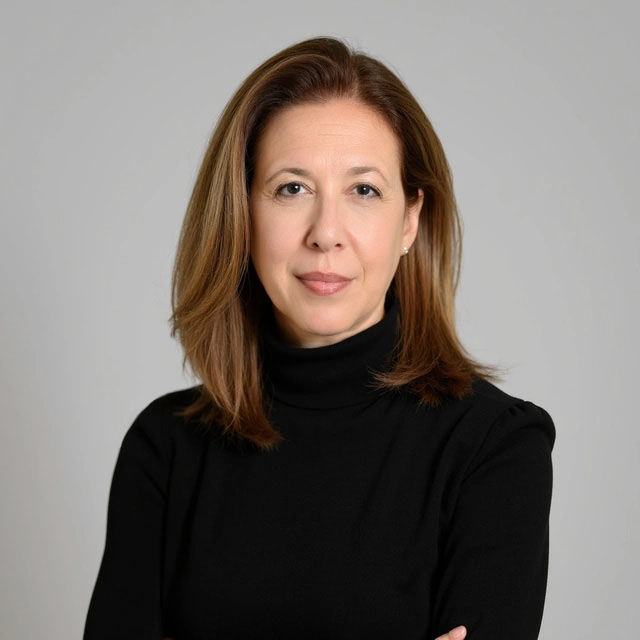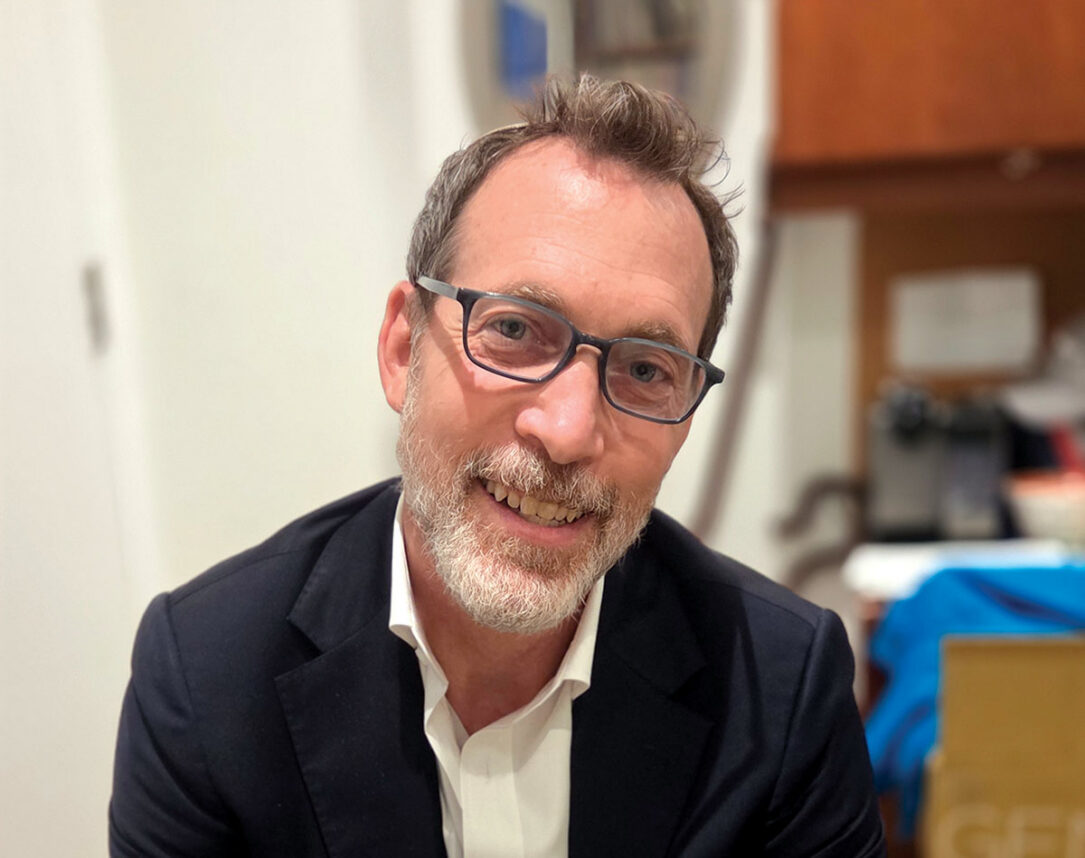
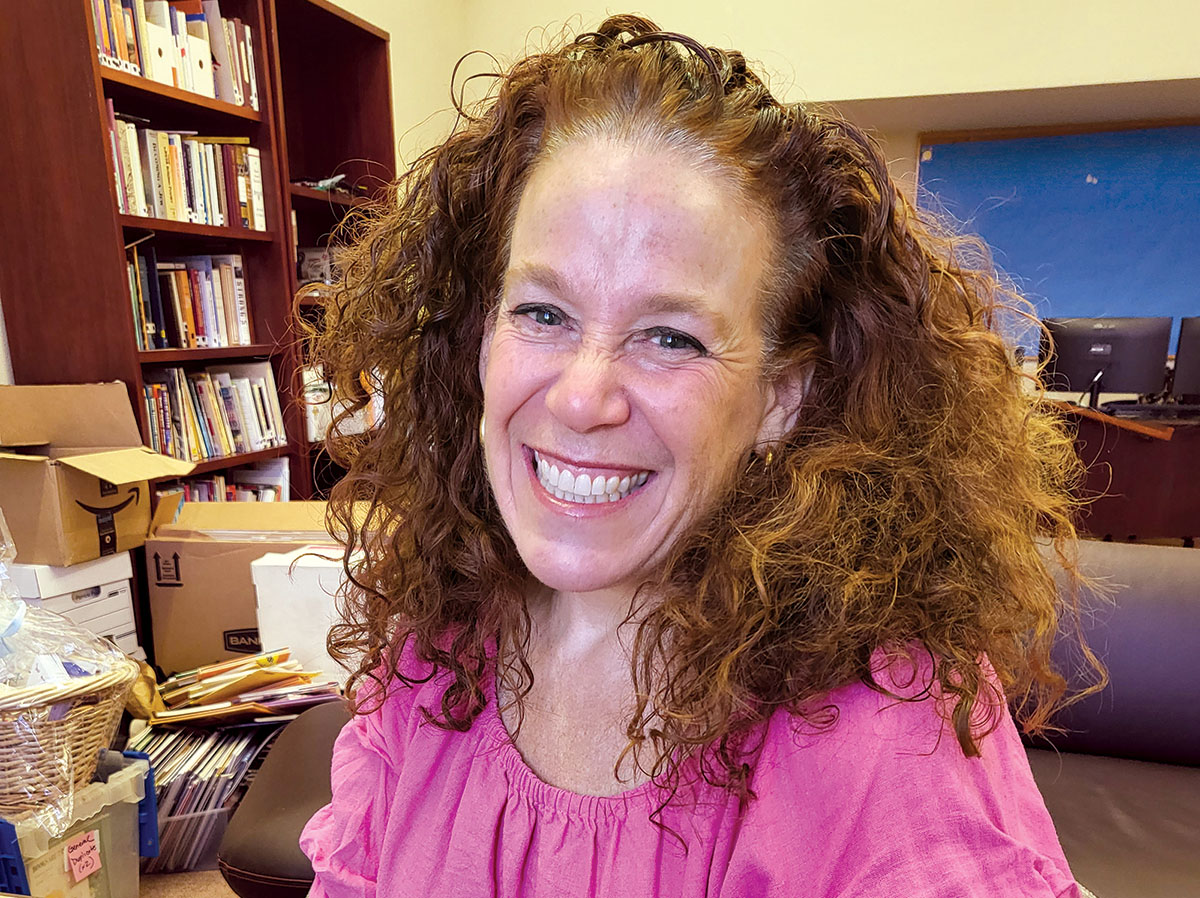
Six months after the catastrophic Eaton Fire, how is the Jewish community that took the hardest hit, the mammoth 104-year-old Pasadena Jewish Temple and Center, doing? “Overall, pretty stable,” Rabbi Jill Gold Wright said, speaking from her desk in her temporary second-floor office at Pasadena’s First United Methodist Church, 10 minutes from the Conservative temple’s campus. “We ended up here because office spaces were available and so we could be where we are holding Shabbat services.” Rabbi Gold Wright said about 30 out of 450 families in the congregation lost their homes. Another 65 to 70 families were displaced. Most still are. Some people have moved back into their homes, or are starting to, and others have moved into rental properties. Since January, Rabbi Gold Wright said she and Cantor Ruth Berman Harris “have done a lot of mezuzah-hanging ceremonies at people’s new homes.”
And there are questions the Pasadena Jewish community needs answered. The rabbi mentioned a few: Are people going to rebuild? Can they afford to remain in Pasadena? Would they be better off rebuilding elsewhere? The synagogue is facing many questions, too. “We are at the initial stages of surveying congregants, asking what is important in terms of worship space, social space.”
As Director of Education, she is being asked many questions about classrooms, learning spaces, libraries. There is talk about not just the “temple” of Pasadena Jewish Temple and Center, but the “Center” – “what that really means now.”
Decades ago, PJTC had a swimming pool, and many members are talking about bringing that back. The imposing structure that had been the synagogue’s home since the mid-1940s offered street level parking. Now there are discussions about building underground parking to better use the square footage on ground level. “I believe we will rebuild on that site,” said Rabbi Gold Wright. “For a while, it was a question. But it looks as if we are going to stay.” Just don’t ask for a target date. “I think it will take many years,” the rabbi said. “We don’t have an architect yet. We don’t have plans. We intend to build differently from what we had.” Discussing the temple structure, she noted “there was lots of wood, dry wall, stucco and not very much stone, which is why the whole thing went down.” Gold Wright compared this to Kehillat Israel in the Palisades, which is still standing. “It is made of stone,” she said.
While the timeline for rebuilding is undecided, Rabbi Gold Wright said that last winter’s enormous tragedy will pack certain lessons for designers. “They will have to take into consideration green, sustainable, fireproof, modern construction materials that will ensure that something like this doesn’t happen again.” In the interim, the Pasadena Jewish Temple and Center has found the not-far-away Methodist church to be a solid landing place since the tragedy struck. Happily, the temple’s rental contract states that it can use the space as long as needed. “We use the sanctuary and/or chapel on Friday nights and Saturdays,” Rabbi Gold Wright said. “We use their social hall for Shabbat onegs and kiddush lunches. We have these two large office spaces on the second floor, and we have the library downstairs. We use the library, partly as storage and partly for meetings and tutoring b’nai mitzvah students.” Rabbi Gold Wright glowed when describing the religious school arrangements. The spring semester was held at the Mayfield Senior School, a Catholic girls’ school in Pasadena. The rabbi described Mayfield as “wonderful partners and friends, extremely generous, not just with the rental agreement but with real friendship and love. They have been incredible.” However, they are leaving Mayfield in the fall and going to the Frostig School, a private school for kids who are differently abled. The Frostig campus, she said, is better for the students. For one thing, it’s on Altadena Drive, just down the street from PJTC’s campus. Mayfield, Gold Wright said, was a little difficult for families who live in Glendora, Monrovia and Arcadia. Geographically, Frostig is more central. Mayfield also has programming on Tuesday afternoons, which used spaces the temple could have used.
And unlike Mayfield, Frostig students are finished with classes almost an hour before the religious school programming starts. “We have full rein of the campus,” Gold Wright said, “and nobody gets kicked out of the space they wish they could use.”
What did she find last winter when she went shopping for space for the 120 students? “Everyone was extremely generous and willing to help,” rabbi she said, stretching out “extremely” for emphasis. “Really, truly. There was a real sense of goodwill and of generosity, wanting to help.”
Practical limitations also influenced the temple’s decision-making. For example, the temple’s Sunday School – 120 kids — needed a space. Churches can’t offer space on Sundays. When they looked at churches, it was not only to fit their congregants for large events, but there were calendar considerations. There were b’nai mitzvahs scheduled all the way through spring. Would there be a place for kiddush lunches?
“There was a bit of a shell game, trying to figure out the best place — with everything combined, location, capacity, availability and calendar — a million other things.”
And at Methodist, she explained, “every Shabbat, we bring down the Ark, the Sifrei Torah, the kippot, the siddurim, talitot. And the table to roll out the Torah for the reading. Then everything has to be put away and brought back upstairs for the church’s Sunday services.”
Fast Takes with Rabbi Gold Wright
Jewish Journal: Your favorite gift from your parents?
Rabbi Gold Wright: Not something tangible. It’s the invitation to the world of culture, music, theatre and travel that has defined me as an adult.
J.J.: The toughest decision you have faced?
R. GW.: My Dad died six weeks after I started my master’s program in England. I hadn’t written my first essay. The decision was whether to forget it or to push on.
J.J.: The most memorable day of your life?
R.GW.: Lifecycle events: My own becoming bat mitzvah, my own wedding, the birth of my kids, their b’nai mitzvah, my ordination day.