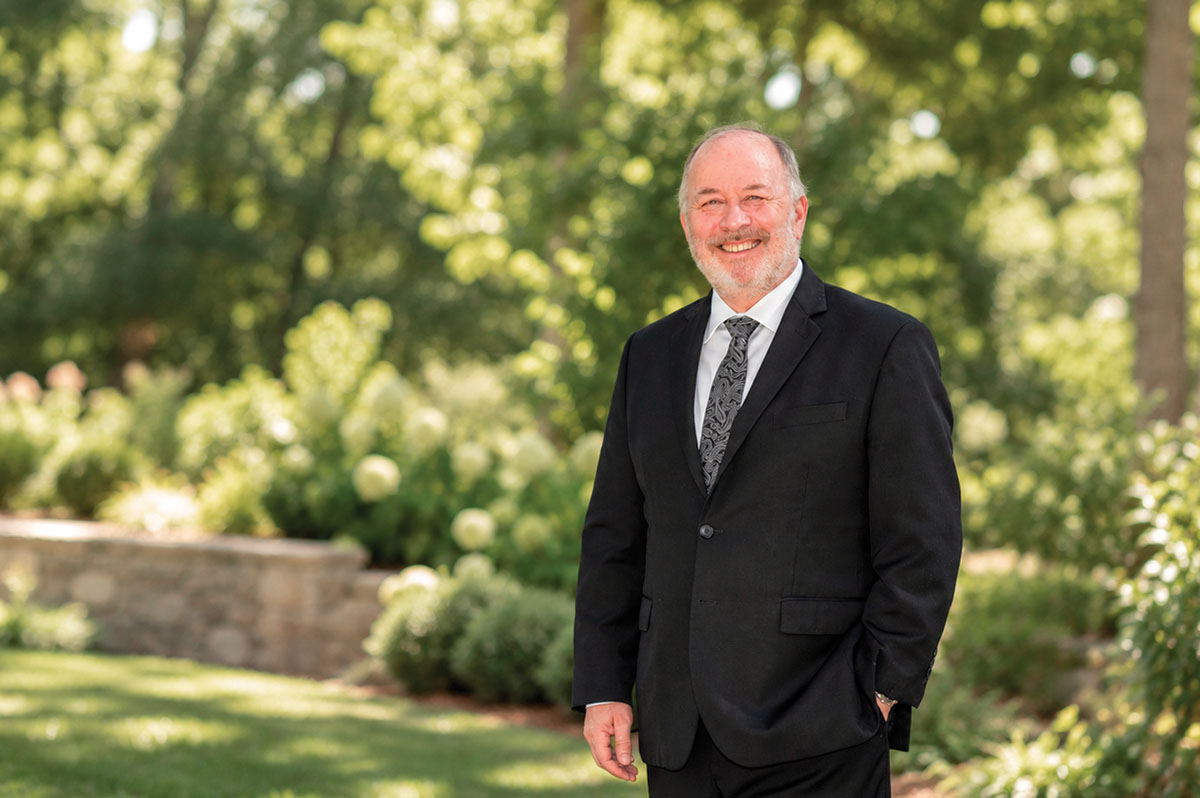
Norman Jewison is not Jewish, though his name quite literally begs the question. In fact, the association of “Jewison” and “Jewish” is so strong there is a section in his Wikipedia entry devoted to debunking the myth: “Notwithstanding his alliterative surname … Norman Jewison is not Jewish. He was raised in a Protestant family.”
But the legendary director has been telling Jewish stories his whole life. And for one in particular, he deserves an “honorary Jew” certificate. That film is “Fiddler on the Roof,” part of a canon of Jewish films (if not the preeminent one) that American Jews cherish as if it were a story from the Bible. It was a seminal movie in the Hollywood Jewish lexicon and to this day is adored and watched and mimicked like some sacred vestige of Jewish history. (How many have tried to imitate Topol’s “If I Were a Rich Man” shimmy with the belief that it might actually induce gold to drop from the sky?)
So when the man who made “Fiddler” is being honored at a star-studded gala at LACMA, you go.
Joining him on stage for the April 17 retrospective of his career were colleagues and collaborators Carl Reiner, Eva Marie Saint, Faye Dunaway, Oscar-winning songwriters Marilyn and Alan Bergman, cinematographer Haskell Wexler and the incomparable Cher, who was as lively and lovable as the “Moonstruck” character that won her a best actress Oscar. The tribute was sponsored by the Canadian Film Centre, which Jewison helped co-found 20 years ago, and Los Angeles’ Film Independent.
In his work, Jewison has followed the Jews from ancient Israel (“Jesus Christ Superstar”) to the Russian shtetl, to Nazi Germany (“The Statement”). And if his “Moonstruck” had substituted Italian Americans for Jews … well, you get the point. Jewison’s films have repeatedly explored various facets of religion, ethnicity and race: “The Hurricane,” the racially charged story of boxer Rubin Carter’s false conviction for triple homicide in the 1960s, is a shining example of Jewison’s unique sensitivity to the plight of the marginalized.
Prompted by moderator and film critic Leonard Maltin, Jewison recounted one of his formative experiences as a newbie in Hollywood: He went to the home of Edward G. Robinson (born Emanuel Goldberg), whom he was set to direct in his breakthrough feature, “The Cincinnati Kid,” starring Steve McQueen. Jewison had to explain to Robinson why he had cut several of his scenes from the film.
“Edward G. Robinson, when I met him, was this tiny little Romanian Jew, but to me he was larger than life…. I was so frightened.”
“‘You’re emasculating my role,’” Jewison said, recounting Robinson’s response. Instead of trembling, Jewison said he demonstrated some chutzpah: He attempted to buffer Robinson’s spirits by aggrandizing a vision for Robinson’s presence on screen. A close-up. A singular entrance in a hazy cloud of smoke …
“‘That’s good, kid,’” Robinson had replied.
Jewison regaled the packed house crowded in LACMA’s Bing Theater with tales of classic Hollywood. He talked about Judy Garland, Frank Sinatra and Tony Curtis (the man who got him his first film job), Katharine Hepburn, Jack Lemmon and Paul Newman.
The talent who shared the stage with him recalled numerous stories from their past together: Reiner recounted a dangerous helicopter ride in which he thought Jewison flew out of the plane; Cher reminisced about freezing on the set of “Moonstruck”; and on a more serious note, the Bergmans told Jewison that he is one of only two directors who truly understand the role music can play in film (the other was Sydney Pollack).
The group was so caught up in their reminiscing that the panel ran almost three hours. Hardly anyone was left to watch the screening of “Moonstruck.” The night was more about storytelling and remembering, two things Jews are really good at.