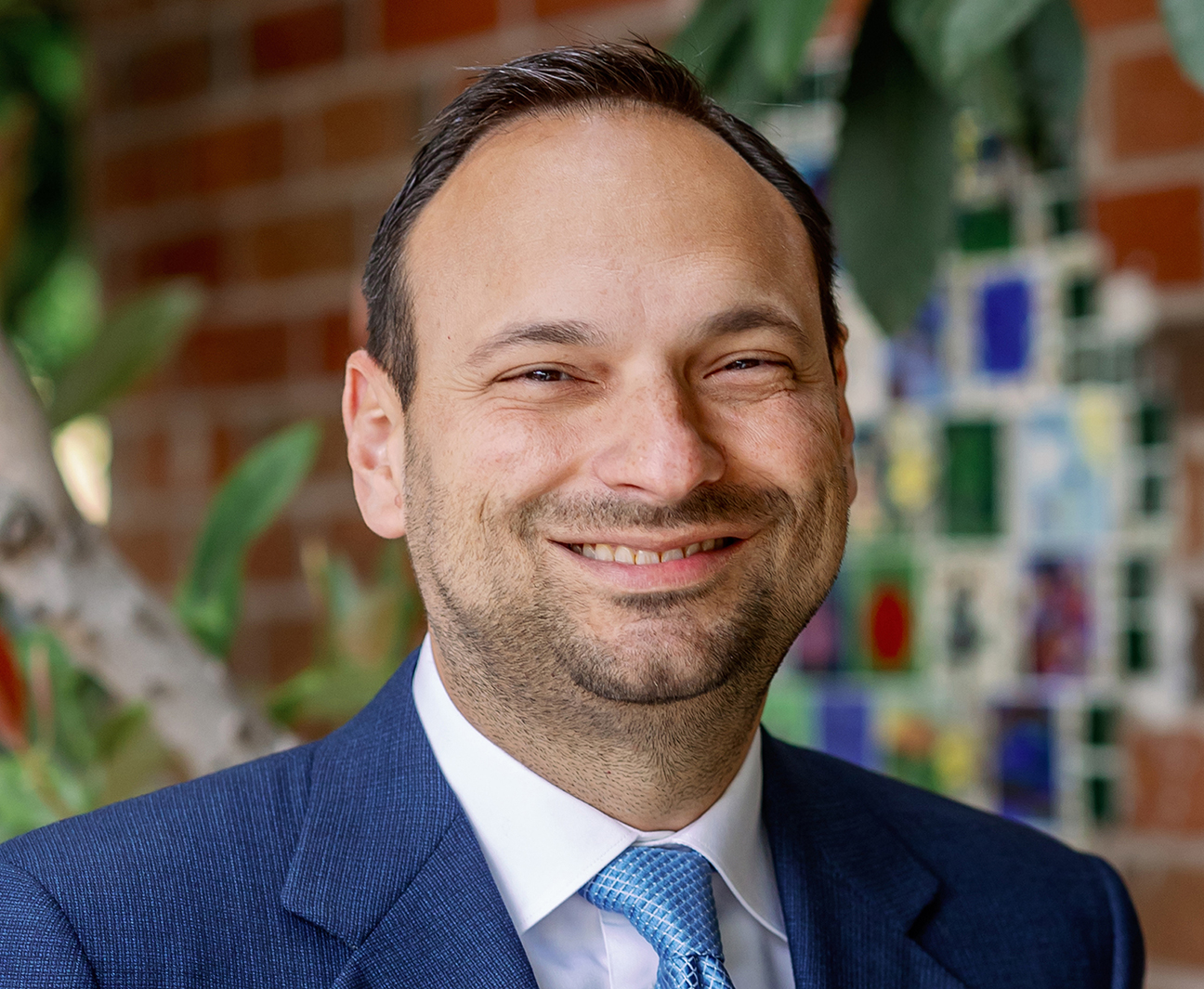
Valley Beth Shalom (VBS) is inheriting American Jewish University’s (AJU) long-running online Hebrew and adult educational programs, according to a July 8 statement from the Encino-based Conservative congregation.
The Community Hebrew Program at VBS, according to VBS, “will continue AJU’s legacy of enriching Jewish life through accessible Hebrew study resources.”
The classes include “Modern Hebrew,” “Prayer Book Hebrew” and “Biblical Hebrew.” Lasting eight weeks, they will be offered at various levels with the goal of empowering students to enhance their language skills while giving them a deep learning journey. Online summer classes start the third week of July, with the plan to launch in-person classes after the High Holy Days.
In an interview, VBS Senior Rabbi Nolan Lebovitz told the Journal that the synagogue was interested in bringing the Hebrew program to VBS because the synagogue is an unapologetically Zionistic organization that believes Hebrew strengthens one’s connection to the land of Israel.
“The Hebrew classes fit within a greater vision of the VBS community in a post-Oct. 7 world,” Lebovitz said. “We recognize the crucial role that Israel plays in our Jewish identity and the vital nature of Hebrew in gaining literacy in all matters Israel and Judaism. The Community Hebrew Program at Valley Beth Shalom provides our members and the greater LA Jewish community with the ability to access our traditional Jewish sources and a greater sense of Israeli culture today.”
Lebovitz, who led the effort to bring the program to VBS, said there are many reasons why an adult learner would want to increase their Hebrew proficiency, whether to support their biblical studies or prayer, or even for the next time they order coffee at Aroma in Tel Aviv. All of this “becomes more accessible with greater Hebrew proficiency,” he said. “As a language that has run throughout Jewish tradition for thousands of years, Hebrew is a crucial DNA marker, binding the Jewish people.”
The Community Hebrew Program complement VBS’ already-robust adult education offerings. For more than 75 years, in fact, the synagogue — which Lebovitz called an “intellectually curious community” — has offered adult learning classes.
“VBS takes great pride in the notion that our classes, our renowned speakers and our regular missions to Israel present our community with all of the resources necessary to be an informed, engaged proud Zionist Jew in the world today,” the VBS senior rabbi said. “Education has always been a key component within our VBS culture and that’s why a robust Hebrew program fits perfectly at VBS.”
“Valley Beth Shalom holds adult education as a core value,” Lebovitz continued. “It was true for my predecessors, Rabbi [Harold] Schulweis and Rabbi [Ed] Feinstein, and it is true for me, as well. Now, through an online platform, we can sustain the classes for its more than 250 students and begin to offer Hebrew learning opportunities to students around the country. VBS is looking forward to a bright future with a burgeoning Community Hebrew program.”
For his part, AJU President Jay Sanderson said VBS was the right home for the Hebrew program going forward.
“American Jewish University is deeply proud to see our beloved Hebrew program find a new home at Valley Beth Shalom, where it will continue to thrive and serve our community,” Sanderson said in a statement. “The transition ensures that learners of all ages will keep discovering the beauty of Hebrew in a vibrant, supportive environment. We’re grateful to VBS for their partnership and shared commitment to Jewish education.”
While AJU no longer will be involved in operating the program, it will continue helping to promote the classes, including to those who are converting to Judaism through AJU’s Miller Intro to Judaism initiative.
Longtime Hebrew instructor Aliza Klainman be leading the classes for VBS, and she will be joined by a team of native Hebrew speakers. With the migration of the program to VBS, Klainman — who led adult education Hebrew classes at AJU for more than 30 years — now becomes a VBS employee.
Klainman told the Journal that the classes follow the “Ulpan method,” an immersive and intense approach to learning, where Hebrew is taught with Hebrew.
“People start without any knowledge — none — and by the end of one course, they can read the print letter, write in cursive and converse in present-tense Hebrew,” she said in a Zoom interview. “So, that’s very satisfying.”
For more information about the Community Hebrew Program at VBS, visit communityhebrew.org