In the 1960s, when “God is dead” debates were fashionable on college campuses, graffiti scrawled on a Harvard dorm wall proclaimed, “God isn’t dead. He just doesn’t want to get involved.”
No such slogan greeted delegates at the 37th North American conference of the Society of Humanistic Judaism (SHJ) earlier this month in Woodland Hills, but that take on divinity wasn’t that far off.
“Some of us believe in God; others don’t, but whether He/She exists is not the central question,” said Marci Goldberg, the youthful president-elect of Adat Chaverim, the “HuJew” congregation of the San Fernando Valley.
“The meaning of Judaism lies not in God, but in Jewish history, culture and ethical values,” offered M. Bonnie Cousens, SHJ’s national executive director.
Goldberg, Cousens and Rabbi Miriam Jerris, president of the Association of Humanistic Rabbis, sat down for a 90-minute interview at the beginning of the conference, which assembled under the motto, “Connecting to Judaism: I Did It My Way.”
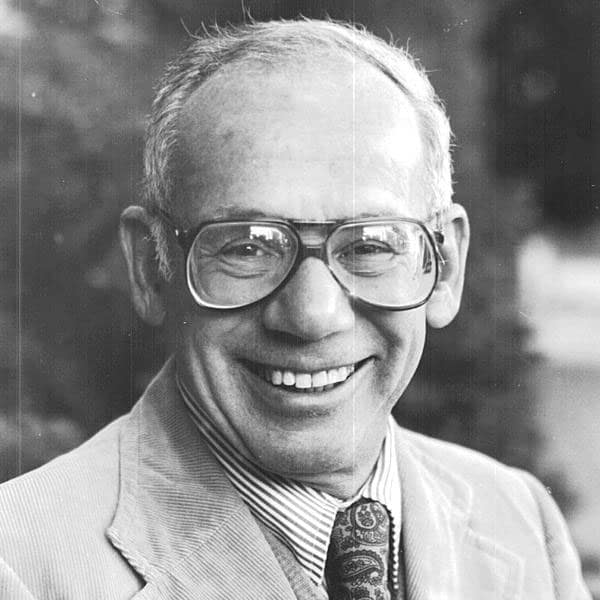
There was an undertone of sadness among many of the 150 participants from the United States and Canada, reflecting last year’s death in a car crash of Rabbi Sherwin T. Wine. He was SHJ’s founder, philosopher and spiritual guide from the time he organized the first Humanistic congregation, with eight member families, in suburban Detroit in 1963.
Wine, who was to have celebrated his 80th birthday at this year’s conference, coined the term “ignosticism,” to define the new movement’s ideology.
He argued that it was not possible to either prove or disprove the existence of God empirically, and therefore, the concept was meaningless.
Put another way, among the 20 “Sherwinisms” listed under the heading, “Vintage Wine,” in the conference program, are: “‘I do not know is a brave and dignified answer, especially when it is true” and “Sometimes the kindest thing you can say about God is that he doesn’t exist.”
As to Wine’s immediate successor, “none of us can replace him, but all of us together can try,” Jerris said.
By dint of necessity, lay leaders have always played a larger role in Humanistic Judaism than in other Jewish denominations, and out of 30 congregations or communities in the United States and Canada, only six are served by ordained rabbis. The others are led by lay madrichim, Hebrew for guides.
The movement’s two rabbinical institutes in Jerusalem and suburban Detroit are trying to up the number of graduates, but the demand still outstrips the supply.
Cousens said that SHJ, which is celebrating its 40th anniversary this year, has some 10,000 adherents in North America, with the largest congregation in Sarasota, Fla., home to many Jewish retirees. Other sizable concentrations of 130 to 150 families each are in Detroit, Chicago, Washington, D.C., and Toronto.
Throughout the world there may be some 40,000 more adherents, though it is even more difficult to get an accurate count in Europe, Asia and Israel, because membership in a congregation is primarily an American concept.
Cousens said that membership in North America is increasing at a rate of 4 percent annually. Even so, the total number of members is hardly commensurate with the pool of potential recruits, even if you add the like-minded members of the Workmen’s Circle/Arbeter Ring and of the Congress of Secular Jewish Organizations.
According to the 2000 National Jewish Population Survey, some 1.6 million adults and children live in American households that identify themselves as “Just Jewish” — either secular or unaffiliated with any denomination.
If the 1.6 million were counted as a separate denomination, they would constitute the second largest in the United States, barely trailing the Reform movement.
So why are these potential members not joining SHJ en masse?
The three interviewees had no clear-cut answers but ventured a few guesses. One may be that secular Jews, usually having arrived at that state through personal doubts and mental wrestling, are just not prone to join organizations.
For another, there is still at times an onus attached to “coming out” as a secular or atheistic Jew, though reactions by more traditional Jews seem less shocked and outraged than in previous years.
Jerris believes that SHJ’s main problem is a lack of public visibility, adding, “There are so many Jews out there just waiting to discover us.”
The movement has had a spotty history in trying to establish a foothold in Los Angeles. One congregation was founded in the mid-1970s but couldn’t make a permanent go of it.
Valley-based Adat Chaverim came into existence eight years ago and now counts fewer than 40 families, according to Goldberg, the president-elect, a nonpracticing attorney and homemaker.
Despite the small numbers, Adat Chaverim members enjoy a full schedule of social and educational programs, proving once again that it takes only a small critical mass of Jews to generate a chain reaction of activities.
Currently, the congregation celebrates all the major holidays in innovative ways, holds monthly Shabbat and occasional Havdalah services, has a Sunday school and puts on fundraisers and support programs for Israel and Darfur, not to mention book and travel clubs, adult education classes and lectures.
For Goldberg, as for many of her fellow members, the conversion to secular Judaism was not an easy process.
“I loved growing up as a Jew in a Conservative family, and I loved going to Heschel Day School,” she said. “But over time, I felt more and more hypocritical mouthing what I no longer believed. It was very sad for me to leave.”
She is hopeful about the future, having just reached an agreement to hold future services at American Jewish University (formerly University of Judaism).
“In the new location, we hope to attract new members from the Westside and make Adat Chaverim a true citywide congregation,” Goldberg said.
For information about Adat Chaverim, visit www.humanisticjudaismla.org or phone (818) 623-7363.