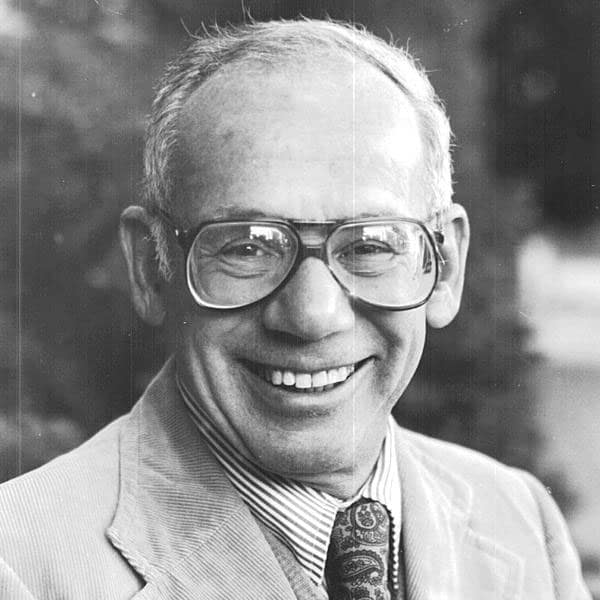
Judea Pearl, co-founder of the Daniel Pearl Foundation and an internationally renowned expert in computer science, will receive the Turing Award, known as the “Nobel Prize in Computing,” for his path-breaking innovations in artificial intelligence — the discipline probing the partnership between humans and robotic machines.
Pearl’s selection for the award, which carries a $250,000 prize, was announced on March 15, in New York by the Association for Computing Machinery (ACM).
The award recognizes Pearl’s work, which “serves as the standard method for handling uncertainty in computer systems, with applications ranging from medical diagnosis, homeland security and genetic counseling to natural language understanding and mapping gene expression data. His influence extends beyond artificial intelligence and even computer science, to human reasoning and the philosophy of science,” according to the ACM announcement.
Pearl’s specialty is the subfield of computer science that aims to discover the fundamental building blocks of thought, creativity, imagination and language — those elements of the mind that make us intelligent.
A professor emeritus at the University of California, Los Angeles (UCLA), Pearl, at 75, devotes half of his working schedule to teaching a class at UCLA, guiding doctoral students, and his research.
The other half is devoted to his work as president of the Daniel Pearl Foundation, which he established with his wife, Ruth, following the 2002 kidnapping and murder of their son Daniel, a Wall Street Journal reporter, by Muslim extremists in Pakistan. Among the foundation’s projects are an annual worldwide music day and a fellowship program for journalists from Muslim countries. Pearl also is a columnist for The Journal.
Pearl was notified of his selection for the Turing Award — named in honor of British mathematician Alan M. Turing — while preparing for a trip to Israel, where he will receive the Harvey Prize in Science and Technology at the Technion — Israel Institute of Technology.
That prize carries a $75,000 honorarium, which, Pearl said, he will divide in three equal parts and donate to the Technion, the Daniel Pearl Foundation and his own grandchildren.
He and his wife have not yet decided how to split the $250,000 Turing Award money.
Pearl’s major contribution to the two-way dialogue between man and machine has been, first, in the area of uncertainty, a constant in every human endeavor, and later in causality, the relationship between cause and effect.
The research on uncertainty occupied Pearl for much of the first part of his career, and when it was finished in the late 1980s, he turned his attention to the theory of causality to further advance a robot’s learning process.
Causality seems a fairly simple concept on the face of it. We step on the gas pedal and the car accelerates, but it’s easy to confuse this with the mere association between certain occurrences.
For instance, the word “malaria” is a contraction of the medieval Italian “mala” and “aria,” meaning “bad air,” because people coming down with the disease had often been near a swamp and breathed its foul air. Only later was it discovered that it was not the air that triggered the disease, but mosquitos that bred in the swamp.
“The rooster’s crowing does not make the sun rise and association does not prove a cause and effect relationship,” Pearl observed, but it took him years to transmit the concept to a robot.
Although his research on causality and causal reasoning “have had a major effect on the way causality is understood and measured in many scientific disciplines, most notably philosophy, psychology, statistics, econometrics, epidemiology and social science,” according to the ACM citation, some economists and statisticians have criticized the approach. Pearl said he sees the Turing Award as elevating his current and future visibility and authority among computer science students.
The Turing Award will be presented to Pearl on June 16 in San Francisco during the annual ACM banquet. Participants will include all past winners of the award, who will also mark the 100th anniversary of Turing’s birth. Turing is considered the father of computer science and is credited with devising the techniques for breaking the German code during World War II.