
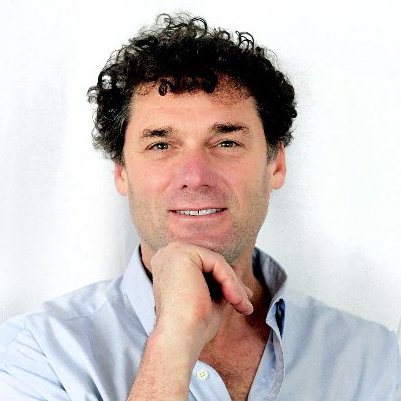
Read coverage of Bibi’s 2006 GA address here.
If you heard Benjamin Netanyahu speak at the General Assembly in Los Angeles three years ago, you would have thought, except for the perfect diction, it was a different man.
Netanyahu appeared on Nov. 9, 2006, before some 5,000 delegates at the Los Angeles Convention Center and thundered, “It’s 1938—and Iran is Germany.”
This week—on Nov. 9, actually—I heard Netanyahu speak in Washington, D.C. again at the annual convention of the Jewish Federations of North America. What a difference three years makes.
In 2006, Netanyahu was the Knesset opposition leader, now he’s Israel’s Prime Minister. From the opposition you can launch grenades—you have to. As the “Prime Minister of Israel and leader of the Jewish people”—as his friend Leonid Nevzlin introduced him—you have to pull it back a little.
You do get the world’s best security. Two sentences into Netanyahu’s address a heckler yelled out “Gaza!” and was instantly rushed out by an offensive line that would have cowed the Redskins. I almost felt sorry for the guy, since to eke out that single word he’d had to wait through an hour of introductory speeches and presentations (“The Sapir Award for Excellence to the Federation of Augusta Georgia for reaching $312,000,” etc.).
Had the heckler hung around, he would have heard a Netanyahu who sounded like Al Gore at a Peace Now rally.
The Prime Minister who three years ago bellowed, “When someone tells you he is going to exterminate you, believe him and stop him!” began this year’s talk by stressing the need for peace with the Palestinians.
“We need peace to spare our children and grandchildren the horrors of war,” he said. “My goal is to achieve a permanent peace treaty between Israel and the Palestinians. No matter where our final borders are drawn, Israel will remain secure. Let us seize the moment and begin talks immediately.”
He pledged that he would never negotiate away the right of return, either to the Palestinians or the Orthodox rabbinate.
“Any Jew—of any denomination—will always have a right to come home to the Jewish state,” he said. “Religious pluralism and tolerance will always guide my policy.”
Then Netanyahu promised that Israel would lead the world in developing alternatives to fossil fuels that support hostile regimes and harm the environment. He pledged a national commission “to dramatically reduce our dependence on oil over the next decade,” drawing on Israel’s advances in solar and cutting-edge energy sources.
Iran, the focus of his tirade three years ago, received maybe three muted mentions, when Netanyahu thanked President Barack Obama and cooperative European nations for united resolutions demanding Iran forego the development of nuclear weapons. If you blinked you would have missed them.
Who is this Netanyahu? If three years ago was 1938, isn’t today 1941? Aren’t we, the Jews, in even greater danger? Hasn’t the Holocaust begun?
“Things look different from up here than they did from down there,” Ariel Sharon famously said once he assumed the prime ministership.
A leader’s job is to inspire, to motivate. Fear only gets you so far.
Maybe Netanyahu was being duplicitous—there were plenty in the audience, especially those who support him, who said he couldn’t be less interested in making peace with the Palestinians. Even if it were politically possible, even if he weren’t ideologically opposed to it, even if the Palestinian had their act together, even if Obama hadn’t fumfered his initial attempts at peace-brokering, Netanyahu doesn’t see the urgency, they say.
Maybe. And perhaps he knows green energy and religious pluralism are a hora to American Jewish ears. It wouldn’t surprise me if Michael Oren, the American-born scholar and author who is now Israel’s Ambassador’s to the United States, took his pencil to a draft. Oren is a superb writer with a keen sense of American Jewry.
But there is also this: It’s possible he’s calculating, and it’s also possible he’s conflicted. Netanyahu, like most Israelis, like the Jewish people, is torn.
We know how bad our oil dependency is, but we won’t give up our Mercedes and SUVs.
We know how desperate the charitable needs are in the Jewish and non-Jewish worlds, but we won’t give a penny more than we planned.
We’ve known for 40 years the inevitable endgame of occupation—at some point, there are going to be more of them than us… and then what? But we pretended it wouldn’t apply to a moral, noble, Jewish state.
We believe in pluralism, in “Peoplehood”—that was the buzzword of the whole convention—but we are loathe to relinquish our turf.
Yes, if there are two faces to Netanyahu, there are two faces to the Jewish community as well. We are all like that—now and then.

































