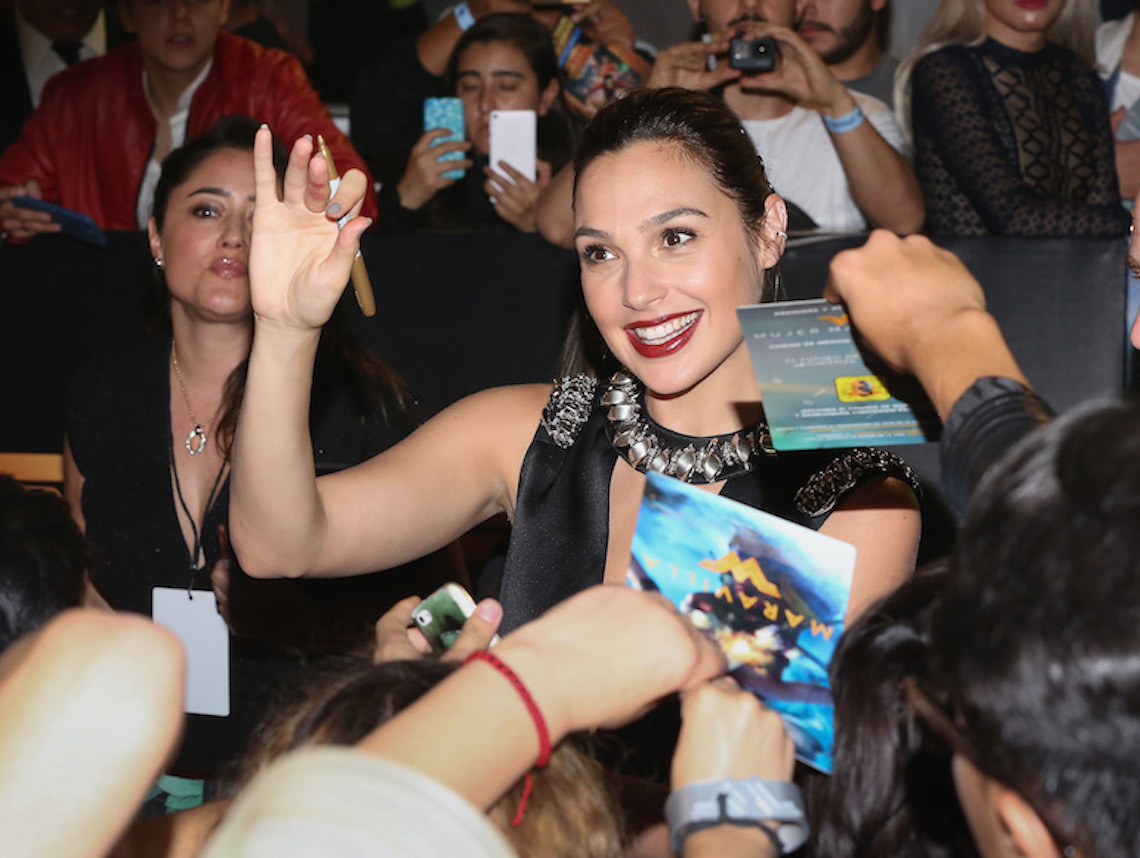
When I told my wife how much I liked “Wonder Woman,” she said, “I bet you did.”
Well, yes, if I have to watch someone run around in spandex for two hours, I’d rather it be Gal Gadot than, say, Michael Keaton. So sue me.
But even a woman that striking wouldn’t stand out if the rest of the movie hadn’t been so entertaining: the script, the direction, the superb score.
That’s why I wish I could sit down Lebanon’s Ministry of Economy & Trade and tell them, Look, don’t be a shmuck.
When “Wonder Woman” came out, the Hezbollah-run Lebanese ministry banned it, on account of Gadot being Israeli.
Israelis and Jews were bound to make a big deal of Gadot’s star turn. That’s what tribes do: boast of every Jewish wrestler, Armenian astronaut, Azerbaijani chess master. But what would have been just a source of parochial pride now, thanks to Lebanon, has become an international symbol.
Here’s yet another example of how the irrational hatred of Israel in the Arab world inevitably backfires.
Gadot’s Israeliness would have been a footnote on IMDb. Now — shukran Lebanon — she is carrying the Israeli brand on a platform that eventually will reach into every movie theater, laptop, cellphone, toy store, kids meal, Halloween costume and childhood fantasy.
The fictional Wonder Woman has to rescue humanity from the Kaiser’s army. The real Gal Gadot now has an even harder task: rescuing Israel’s image whenever and wherever it is maligned unfairly.
It’s a lot to put on the shoulders of a 32-year-old mother of two. But if she can film the re-shoots of “Wonder Woman” while five months pregnant, she can handle the BDS crowd.
Recently, I impulse-bought a T-shirt online that was pure white but for the black outline of a round head and an eye patch. In the 1960s and ’70s, any adult in the world instantly would have recognized it as Moshe Dayan. In the days before and after the Six-Day War, he didn’t just come to represent Israel, but to reflect its best qualities of bravery, fearlessness and intelligence.
Although it’s not a role she signed up for, Gal Gadot is destined to be this generation’s Moshe Dayan. Real Israeli heroes of the military type have become far too controversial. A make-believe action hero is much safer: Gadot as the Amazon princess Diana still embodies fearlessness and brains, and reflects it back on her native country. She just doesn’t have to worry about landing in Europe and being carted off to The Hague.
What’s striking, considering how fraught the subject of Israel can be, is how fearless Gadot has been in taking it on. It was striking not just that she has been called out for being Israeli, but how Israeli she is. Most movie heroes are deracinated totems of Middle American virtues. Just try to think of a single tent-pole superhero who speaks with a Southern drawl or Spanish accent. For generations, the same has been true of all leading men and women in most movies and TV shows — they had to grind down their noses and names and polish their accents if they ever wanted to be accepted.
But Gal is Gal. She kept her Israeli name (OK, Gadot used to be Greenstein, but the change was an Israeli, not a Hollywood, thing). And strikingly, she kept her Israeli accent. In fact, director Patty Jenkins went a step further. To make Gadot not stand out as foreign, all the other Amazons adopted variations of her accent. The ones who did it well, like Robin Wright, sound like they could be selling Dead Sea cosmetics at the local mall.
And Gadot’s character acts Israeli. When her love interest, Steve, kowtows to his English commanders, she marches into their conference room, shouts them down, then turns to macho Steve and dresses him down for buckling to authority. Any polite American Jew who has dated an Israeli has lived that moment, minus the generals.
Until Gadot, the Israeli image was essentially macho. The most famous Israeli woman abroad was Golda Meir, whose reputation had long faded, especially in her own country. Now Gadot comes along and fuses feminism to Israeliness — “badass and kickass and morally courageous” as Times of Israeli journalist Sarah Tuttle-Singer put it.
In the end, I wonder what will have more power to soften the hearts of Israel’s most irrational enemies: the fake heroics of the character she plays, or the more subtly heroic choices Gadot has made to embrace who she is, and to stand up for where she comes from.
Rob Eshman is publisher and editor-in-chief of TRIBE Media Corp./Jewish Journal. Email
him at robe@jewishjournal.com. You can follow him on Instagram and Twitter @foodaism
and @RobEshman.