At the risk of sounding like a cranky old-timer, the Jewish festivals of yore — the ’70s and ’80s — had a distinctive communitywide feel to them. The festival that was once held in Rancho Park drew thousands of people from across the communal spectrum — young, old, Orthodox, Reform, Israeli, American, rich, poor.
Part of the celebration was a morning march through the city, the marchers waving flags and accruing donations for Israeli charities for each mile they walked. The booths reflected the entire spectrum of Jewish involvement, and the entertainment — David Broza, Theodore Bikel — had a multigenerational, cross-cultural appeal.
“It was amazing,” said Temple Aliyah’s Rabbi Stuart Vogel of the Rancho Park Jewish Festival — affirming my nostalgia. “The whole Jewish community turned out.”
“We’d start at 8 a.m., walking,” recalled Rabbi Daniel Bouskila of Sephardic Temple Tifereth Israel. “Everyone was there for the cause. You grew up in your little enclave — your synagogue, community center — then you all came to this. It was a very unifying event.”
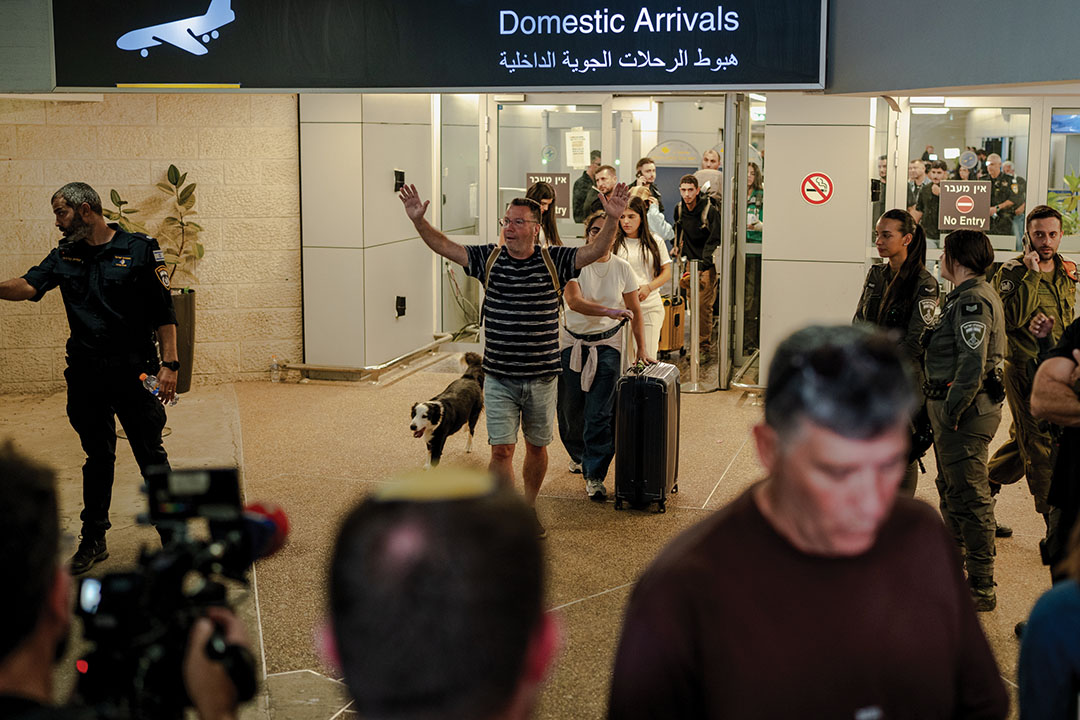
That was clearly not the case Sunday, May 15, at the Israel Festival in Woodley Park in Van Nuys.
To be fair, by most measures, the Woodley Park gathering was a success. Putting together any Jewish event on that scale is like herding cats in a hurry, and the organizers did a praiseworthy job, pulling off a well-run, well-attended event.
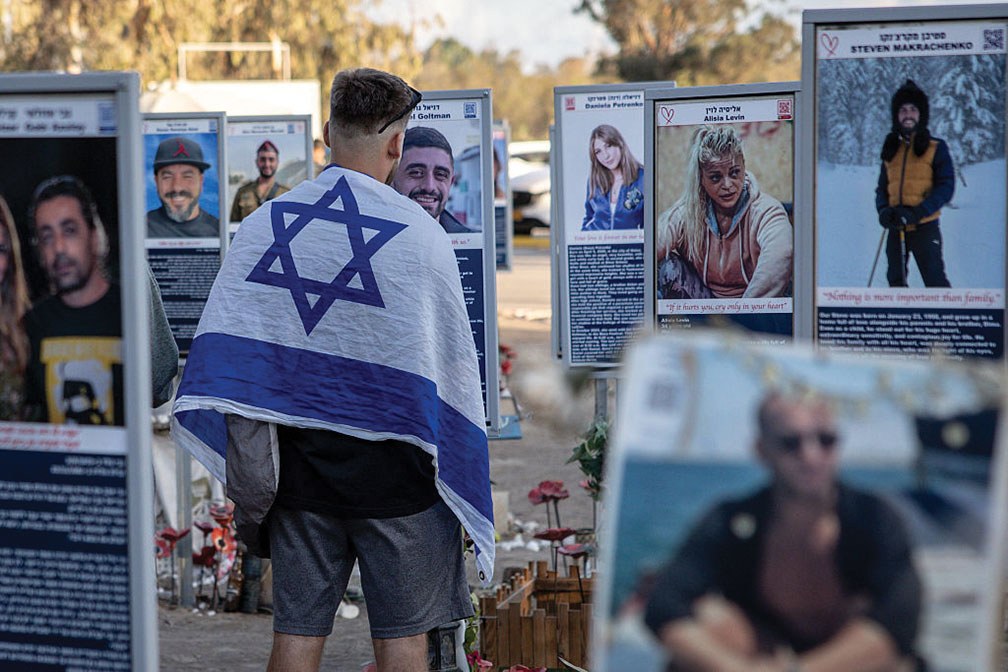
At least 30,000 turned out on the hottest Sunday afternoon of the year. I wandered around, taking in the humanity: the anti-Gaza-withdrawal group in their bright orange T-shirts placed with something like black humor next to the booth of Americans for Peace Now, their political nemeses. The black-clad Chabadniks offering passersby the chance to lay tefillin, as Israeli beauties wearing barely anything paraded close by. Everyone pausing to look skyward as a parachute team swirled down from the sky trailing American and Israeli flags. The Latino servers at the Cafe Tel Aviv serving ex-pat Israelis their cafe hafooks, almost just like in the old country.
If you were there, chances are you would have enjoyed yourself.
But, chances are, you weren’t there.
The crowd was largely Israeli, by some estimates 90 percent. On a day when the entire Jewish community could have been represented, most weren’t. I spotted just a couple of rabbis there. The community activists and organizations heads who attended showed up primarily to work — they couldn’t not be there. The El Cab crowd, the Hillcrest crowd, the masses of non-Israelis who used to swarm Rancho Park, they just didn’t show. (If you were one of the few present from those communities, go ahead and write your rebuttal, but you were the exception.)
Many organizations and synagogues even scheduled competing events. Chief among them was Big Sunday. Big Sunday, a wildly successful mitzvah day-for-the-masses, was founded by David Levinson as a volunteer program of Temple Israel of Hollywood. It has now grown to include dozens of synagogues and non-Jewish institutions. Last Sunday its 7,000-plus volunteers fanned out across the city to do everything from cleaning the L.A. River to singing for seniors. Last year I did a Big Sunday project in the morning and the Israel Festival in the afternoon. This year I could only do one.
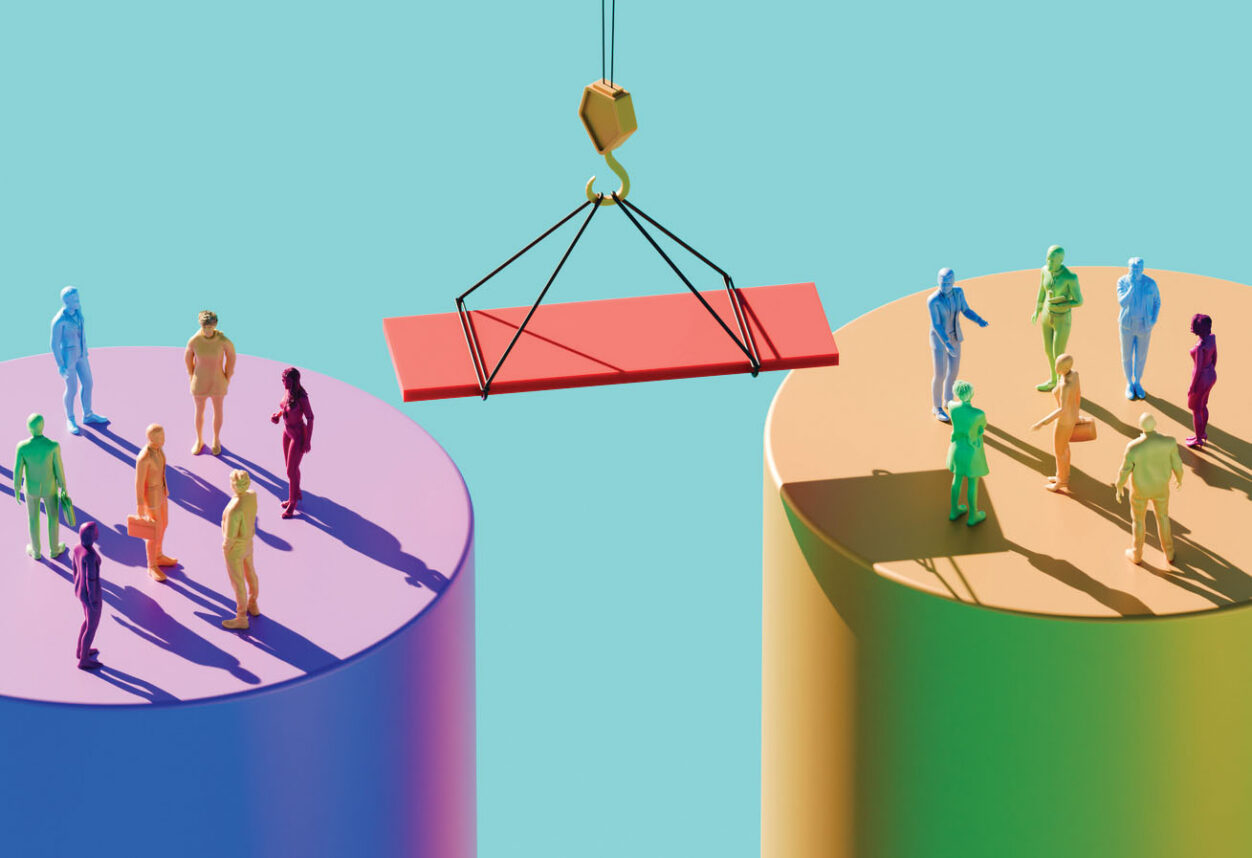
The truth is, most people who pick choose one or the other, limiting the reach of either. For all the bigness of Big Sunday and the Israel Festival, in terms of drawing the entire spectrum of the Jewish community, both could be bigger.
Part of the reality is that the L.A. Jewish community has changed drastically since the Rancho Park days. Back then, the Persian, Israeli, Russian and Orthodox Jewish communities were smaller. Now each can sustain its own festival.
The community of yore was also more cohesive. Partly this was demographics: A more homogenous L.A. Jewish world remained largely unified around a core of temples and service organizations as well as a shared post-World War II perspective of how things were and ought to be.
I wonder, too, if the idea of marching with the Israeli flag began to be less dreamy and more politically freighted in the years following Israel’s incursion into Lebanon War and the Palestinian intifadas. Now Jewish and non-Jewish protesters would swarm over such a march like June bugs on an unscreened porch.
The result is an Israel Festival that has supplanted the annual communitywide Jewish festival without really substituting for it. The Jewish Federation/Valley Alliance joined forces with the Israel Festival this year in hopes of blending the disparate communities, but clearly more work and time is needed for that to happen.
“I really feel sort of split about the festival,” said Bouskila, who grew up in West Hollywood but served in the Israel Defense Forces. “The Israeli side of me felt very at home. The American Jewish side of me felt, ‘Where is the American Jewish community?’
“Are they not part of this? Why can’t the entire Jewish community be there?”
The long-term effects of this seem obvious — a declining sense of attachment to Israel on the one hand, and a declining sense of belonging to a broader local Jewish community on the other.
But the optimist in me wants to believe this, too, will pass. If, for now, groups of us are separating out, more comfortable apart than together, perhaps the next generation will realize the value of a larger unified community and come together.
I noticed in this paper a report that Israel Television is launching its own version of the popular American reality show, “The Bachelor,” in which 15 single Israeli women will compete for the heart of an eligible Jewish American male.
Maybe that’s just where we’re at, we Israeli and American Jews — not married, not divorced, yet still interested in dating.