In defending middle-class neighborhoods, Los Angeles County Supervisor Zev Yaroslavsky is taking on an issue that reaches to the heart of Los Angeles’ ethnic, political and class divide.
All those matters are involved in a dispute over a new city development ordinance that eases restrictions on big residential buildings in such areas. This ordinance was passed to meet the requirements of a 2005 state law ordering cities to allow more dense development to create housing.
The question of preserving middle-class neighborhoods while also building affordable housing affects a huge part of Los Angeles, from the dense and impoverished Latino neighborhoods of Central Los Angeles to middle-class Jewish areas in West Los Angeles and the western San Fernando Valley. It includes the Jewish neighborhoods of Fairfax and Pico-Robertson as well as multiethnic Venice, long targeted for heavy development.
Yaroslavsky, once a Los Angeles city councilman, surrendered his role in city affairs when he was elected to the Los Angeles County Board of Supervisors in 1994. As a council member, he had been co-author of a successful ballot measure that scaled back development in residential areas. The measure, Proposition U, co-sponsored by the late Councilman Marvin Braude and passed in 1986, was a successful effort to outmaneuver the land developers and their lobbyists who, then as now, have huge clout at City Hall. The measure reduced density by limiting the size of many business and residential projects. Supervisors don’t have power over development within cities, so Yaroslavsky’s election to the Los Angeles County Board of Supervisors should have taken him out of the game.
But in 2005, the Legislature passed and the governor signed the measure designed to stimulate housing construction. It did this by telling cities to put aside zoning and other planning limitations if developers agree to include some low- and moderate-priced apartments in their projects.
Los Angeles and other cities were required to implement the state law with their own municipal ordinances.
Even though he was a supervisor with no jurisdiction over the matter, Yaroslavsky, a Los Angeles resident who has retained a strong political following in the city, stepped into the negotiations over the proposed implementation ordinance. He persuaded City Council members to modify the proposal. The council and Yaroslavsky agreed on modifications designed to limit teardowns of apartments in residential neighborhoods and other steps to preserve such communities.
With those modifications, the Los Angeles City Council recently passed and the mayor signed the ordinance implementing the state law. Under the ordinance, the city permits a builder to go 35 percent over zoning limits if 11 percent of the units are set aside for low-income residents or 30 percent are moderately priced.
But Yaroslavsky still was not satisfied. He objected to giving developers permission to build larger structures if they include low- and middle-income units. This, he said, was a bonus for developers. “L.A. doesn’t need to offer development bonuses allowing taller and bigger buildings” to create more affordable housing, Yaroslavsky wrote in a Sunday Opinion article for the Los Angeles Times. But with the state law and the city ordinance implementing this practice firmly in the books, there doesn’t seem much Yaroslavsky can do now, short of starting an initiative campaign.
His entrance into the fight has prompted speculation that he is interested in running for mayor, an office he sought years ago when he was in the council.
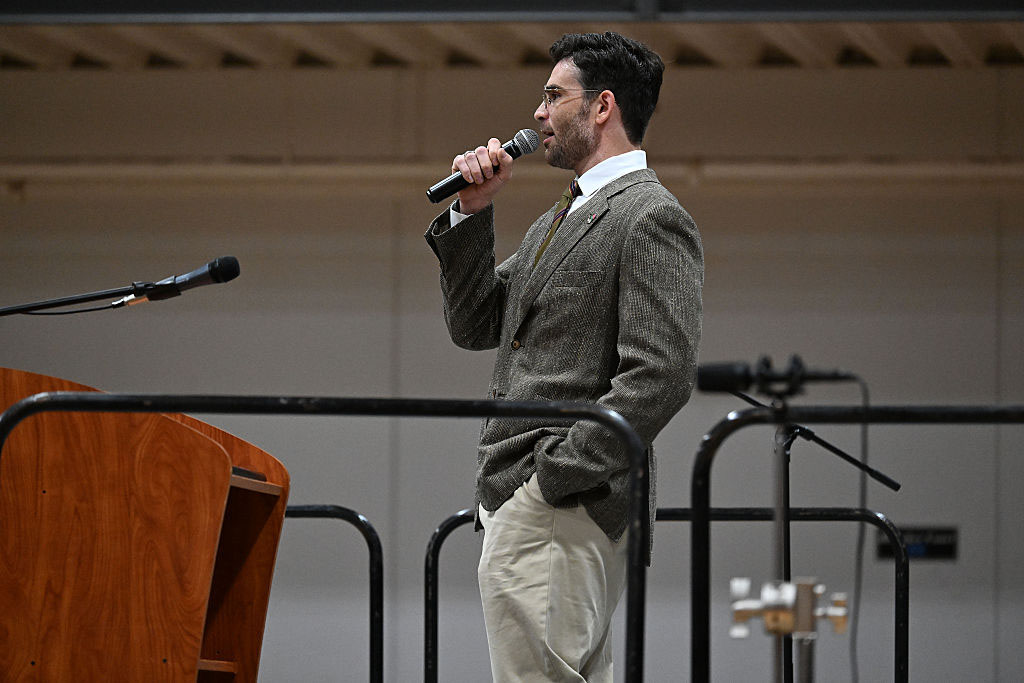
CityBeat’s Alan Mittelstaedt asked Yaroslavsky about the speculation after the supervisor discussed the development controversy at Emma Schafer’s Public Affairs Forum, a monthly gathering of political and government insiders.
“If I were running for mayor, you’d know about it.” Yaroslavsky said. “Most of the talk about me running for mayor has been emanating out of City Hall from people who are trying to marginalize some of these policy issues by reducing them to political tiffs when, in fact, they’re substantive policy issues. I’m not going to keep my mouth shut when I see my neighborhood affected by what the city does. And as a former city councilmember, I’m not going to sit back quietly and watch 20 years of my work product dismantled without a fight. This has nothing to do with running for office.”
Advocates of more affordable housing say the state and city laws are needed by neighborhoods such as Pico-Union and MacArthur Park just west of downtown Los Angeles, where Latino immigrants, some here illegally, crowd into old apartments and live in incredibly bad conditions. Those walking from Langer’s parking lot to the restaurant for a pastrami sandwich may not know they are passing through one of America’s most densely packed slums.
These same advocates say the council’s decision to ease development restrictions will make affordable housing available throughout the city. Some Pico-Union and MacArthur Park residents could then afford to move westward or into the San Fernando Valley.
This possibility complicates the dispute, however, bringing in issues of race and class.
Although the demographics of parts of Los Angeles, such as the San Fernando Valley, are changing, much of Los Angeles remains segregated by race and income. Building low-income units in West Los Angeles and the West Valley would change the pattern. Poor Latino immigrants could move into Fairfax and Pico-Robertson.
The politically correct news media and political community do not mention this aspect of the dispute, but it’s important.
But it is also important to consider the desires of middle-class L.A. residents to preserve neighborhoods that are part of the fabric of Los Angeles.
This dispute will be a big factor the city election in 2009 when Mayor Antonio Villaraigosa is expected to seek a second term. Right now the mayor is playing both sides of the issue.
He favors more housing construction, especially of the affordable kind. He’s developer friendly, approving of the commercial and residential units that were going up around the city at a brisk rate before the credit crisis slowed construction.
But Villaraigosa has also become an advocate for neighborhoods and has worked hard to strengthen his ties with Jewish communities around the city.
I would be surprised if Yaroslavsky runs against him. He can remain supervisor until 2014 when term limits force him out. Supervisors run virtually unopposed. Why give up a low-stress job for the heat of the mayor’s office?
But Villaraigosa, even without strong opposition, will have to contend in his re-election campaign with the powerful forces shaping the dispute over neighborhoods and development.