The recent cycle of violence in Israel, after a period of relative calm, raises concerns that perhaps we are on the threshold of another intifada, or another Operation Pillar of Defense (a full-scale operation in Gaza), or both. News from Israel on all television channels seems to confirm that. However, leaning on television coverage only might give a distorted picture of the situation here.
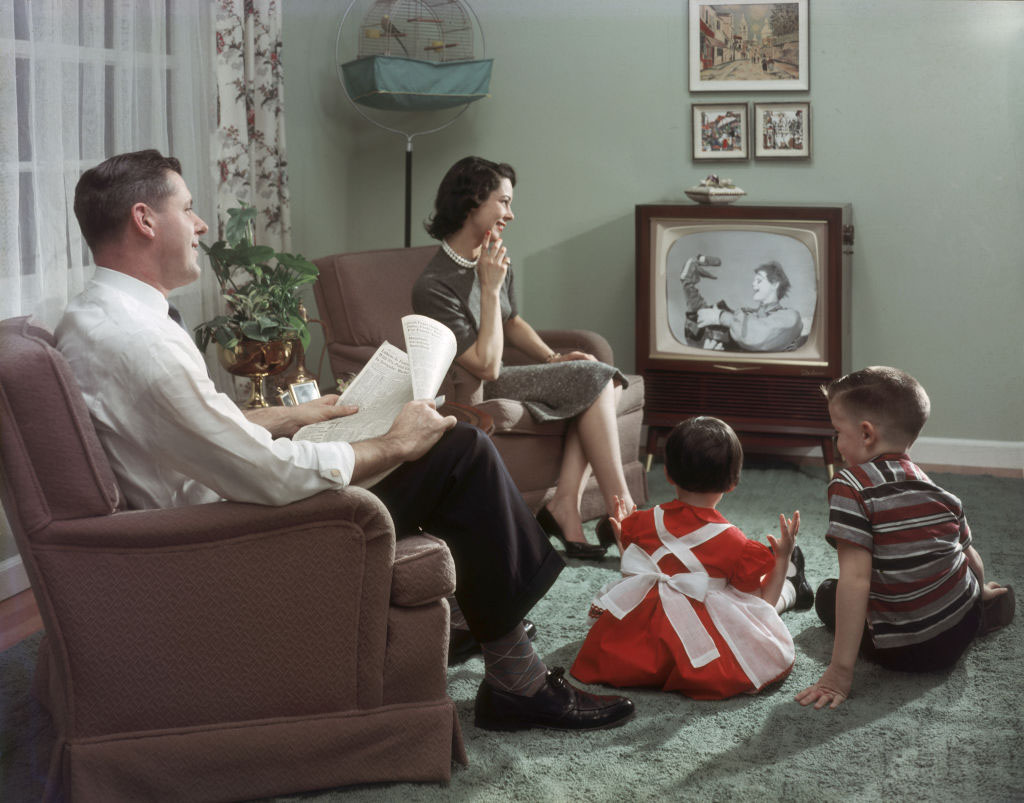
Television, indeed, is a major player. With all due respect to social media, when it comes to shaping people’s opinions, television is still the most powerful tool. This is especially true when people try to figure out what’s going on in a foreign country, and what they get is a series of scenes that make “good television,” namely, violent ones.
There is no lack of “good television” emanating from Israel today: Kidnapping and brutal murder of three Israeli youngsters, aggressive combing of the West Bank in search of the three, brutal murder of an Arab youngster by revengeful Israelis, riots of Israeli-Arabs, rockets from Gaza and more. On the screen in your living room, it really seems that hell broke loose here.
Television, however, tells us only part of the story. In a two-minute bite highlighting the recent dramatic events, important things are left out, such as the fact that the majority of people on both sides of the Israeli-Palestinian conflict still want to resolve it in peaceful ways. In poll after poll, two out of every three Israelis consistently say that they favor a two-state solution, and when I hosted Palestinian pollster Khalil Shikaki at the Jerusalem Press Club in April, he said the same thing about his own people.
Television also has a narrow angle, which catches the more troublesome bits of the reality (such as the ugly and deplorable beating of a young Palestinian boy by Israeli soldiers) but ignores the fact that, in spite of the recent surge of violence, the vast majority of Arabs and Jews here continue to live and work together peacefully.
Finally, television doesn’t have good long-term memory. We’ve had intifadas before, we have suffered from rockets launched at us from Gaza, Israeli-Arabs rioted in 2000, and so on. As a result, most Israelis today have a sense of déjà vu, and they are bracing themselves for another one of those rough periods, which seem to be an inevitable part of our destiny, and which surely will be succeeded by better days.
Television, in short, doesn’t give a full and true picture of the reality in Israel today, but that doesn’t mean the reality isn’t grim. Indeed, we have had these kinds of troubles before, except that then they came separately. Today we are facing the risk of another Intifada, Israeli-Arab riots, armed collision with Hamas in Gaza — all happening simultaneously and fuelling each other. Even without the constant threat of Hezbollah from the north, this is a highly volatile situation.
Considering this accumulation of threats, the restraint shown by the government of Israel and by the Israel Defense Forces has been remarkable. However, while this restraint should be lauded, it can’t be a substitute for policy. Instead of doing nothing and always being dragged by events and reacting to them, the government of Israel should consider taking the initiative on all fronts. If it chooses to do so, it will find out that it has a full tool kit to work with, and that the world, which seems more and more critical of Israel, might react favorably.
Let’s start with the Palestinians. The failure of the recent round of talks shouldn’t obscure the fact that during the trying time of the abduction of the three Israeli boys, Mahmoud Abbas — speaking in Arabic — condemned it fiercely, and his security services worked closely with Israel in searching for the perpetrators. This trust should be treasured. If the U.S.-brokered peace talks failed, then maybe a Plan B guided by outside-the-box thinking is needed, like a regional peace summit where the moderate Sunni regimes — threatened by a nuclear Shiite Iran — join forces with Israel, not only to extinguish the recent flames, but also to infuse some positive energy to the stalled process.
Next comes Hamas. The knee-jerk reaction to the recent barrage of rockets is to go into Gaza and teach Hamas a lesson “once and for all.” Except we have tried that before and it didn’t solve the problem. Instead, we should look at some interesting facts, again obscured by shallow news coverage: In recent years, it was renegade radical groups in Gaza that were firing rockets on Israel — against the expressed will of Hamas, which even created special forces to restrain these unwarranted attacks. And Hamas is at its lowest ebb, crushed by Egypt from the west and Israel from the east, and is having trouble feeding million Gazans. Why rescue Hamas by launching an all-out attack against it, thus making it the hero of the resistance against Israel? Better to hit Hamas in surgical raids and attacks, but let Egypt, Abbas and the burden of running Gaza coerce it into a reluctant pragmatism.
The riots of the Israeli-Arabs should be dealt with firmly, with rioters brought to justice. Yet the Or Commission, established after the riots of 2000, concluded that the outbursts had roots deeper than just solidarity with fellow Arabs in the West Bank or Gaza, and that much had to be done in the socio-economic spheres to bring the Israeli-Arabs to feel like full Israeli citizens, equal to the Jews. It can be done, and I know this first-hand, because I was the spokesman for the Rabin government, which had made this one of its priorities.
Last but not least is the Jewish extremism, which, if unchecked, might drag Israel into the abyss. While the idea that Israeli Jews burnt a Palestinian boy alive is sickening, I, for one, refused to be shocked. Twenty years ago, Baruch Goldstein, a doctor who was supposed to save lives, went into the mosque in Cave of the Patriarchs and shot praying Muslims in their backs. Since then, the leniency toward Jewish lawless acts against Arabs, such as Tag Mechir (price tag), only pushed us further in this slippery slope. This internal threat to our democracy, which already took the life of a prime minister, should be squashed with an iron fist.
To accomplish this we need common sense, strong nerves, vision, hope, resourcefulness and creativity. In one word: Leadership. Israel has never needed that more than today.
Uri Dromi was the spokesman for the Rabin government and currently runs the Jerusalem Press Club.