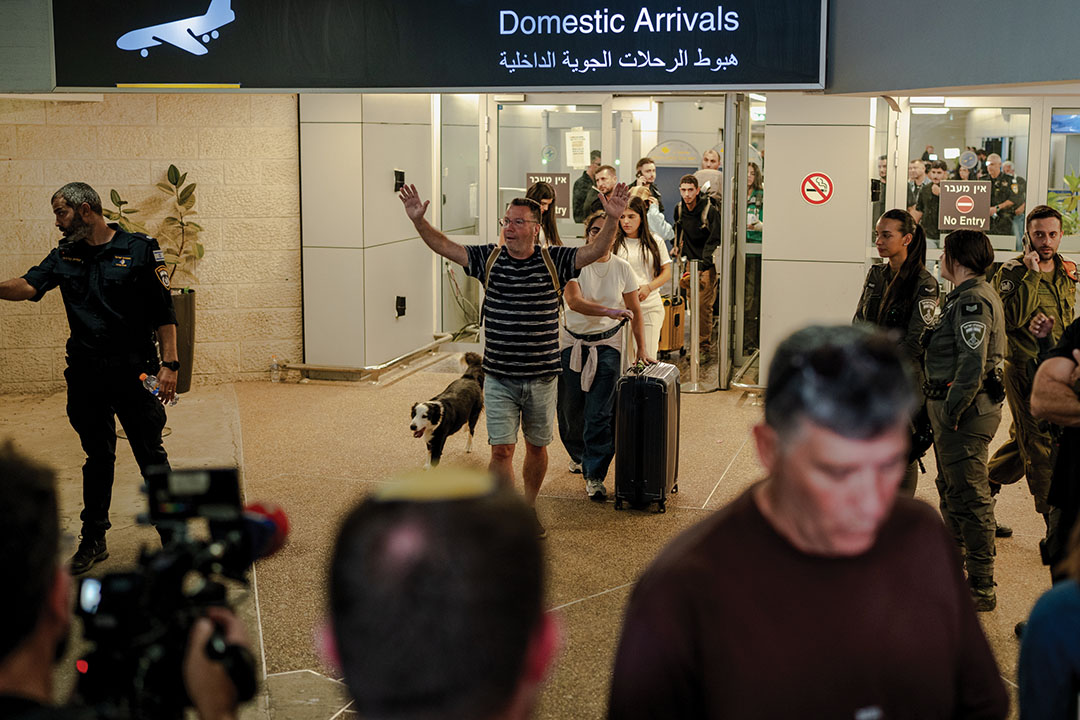
Israelis were not surprised by the terrorist attack by last month’s Al-Qaeda-linked Al-Shabaab Nairobi’s Westgate Mall, killing 67 people. They had been on alert against such dangers since two attacks on Israeli targets in Mombasa in 2002. Indeed, there were reports that Israeli experts helped Kenyan forces deal with the Mall takeover.
There are signs of expanding Israel – Africa relations. During the past two years, more than 40 senior African dignitaries—including the presidents of Rwanda, Uganda, Togo, South Sudan, as well as the prime minister of Kenya—have visited Israel, with the Nigerian president expected soon.
The Israeli-African nexus is not a new story — its narrative not merely comprised of current shared struggles against terrorism. Dating back to 1958, there is a famous picture of Israel’s then Foreign Minister Golda Meir—her sturdy pocketbook in hand — visiting Ghana, one year after that country became the first African nation to win independence and a mere ten years after the establishment of the fledgling Jewish state.
In some respects, the visit of the one-time Milwaukee housewife was prophecy fulfilled. In the 1890s, Edward Wilmot Blyden, pioneering founder of the African freedom movement, later led by led by W.E.B. Du Bois, Kwame Nkrumah, among others, lauded Theodor Herzl for launching “that marvelous movement called Zionism.” Herzl reciprocated in his novel, Altneuland (1902) envisaging “the return of Negroes” from their Diaspora to help liberate Africa.
By the early 1970s, 10 African states had embassies in Jerusalem, and Israel maintained relations with 32. After the Sharpeville massacre of 1960, Israel vociferously criticized South Africa’s apartheid regime, resulting in a temporary rupture of relations that had been established in 1948. An Israeli embassy was not opened in Pretoria until 1974. But then in wake of the 1973 Arab oil embargo, 21 Black African broke diplomatic relations with Israel. Then in 1975, just a month before the UN General Assembly passed the “Zionism equals racism” resolution, Uganda’s President Idi Amin spoke before the General Assembly calling for “the extinction of Israel.”
In 1976, during Operation Entebbe Kenyan government official Bruce McKenzie—subsequently assassinated on Amin’s orders—persuaded Kenyan President Jomo Kenyatta to permit Israeli Mossad agents to gather information prior to the hostage rescue operation in Uganda, and to allow Israeli Air Force aircraft to refuel at aNairobi airport after the rescue.
Throughout the 80s, Israel’s focus shifted to Ethiopia’s Black Jews, known as the Falashas or Beta Israel, and their epic struggle to reach the Holy Land. With Operation Moses in 1984-1985 and Operation Solomon in 1991, Israel airlifted, respectively, 6,500 and over 14,000 Beta Israel into the Jewish state. Today, all remaining Jews from Ethiopia have resettled in Israel, struggling, as each immigrant grouphas, to make the transition into the mainstream of Israeli society. Meanwhile, there was the stormy drama of the small sect of self-identified, Black Hebrew Israelites who settled in the Negev town of Dimona. They were initially made into a metaphor by critics of Israel who portrayed the Jewish state as a racist society. While it took over twenty years to fully resolve tensions, today the Black Hebrews—including the first born in Israel who was killed by Palestinian terrorists during his Bar Mitzvah in 2002—have come to symbolize how anybody with commitment and persistence can make a future for themselves in Israel.
A third act in the Israel/Africa drama is the recent influx of African refugees into Israel. Authorities have been struggling to balance human rights and security and societal concerns,with mixed results. The Israeli Supreme Court recently ruled that these individuals cannot be detained indefinitely and then expelled. A solution to their plight remains a significant challenge for Israeli society.
So against the backdrop of historic affinity of African with Jewish freedom struggles, with expanding economic opportunities and continuing humanitarian interchange, the future course of Israel-African ties seems promising.
There remains however, a significant threat to those hopes; a threat based on a powerful lie: The canard that Israel is the apartheid heir to the deposed South African Apartheid regime. The Boycott/Divestment/Sanctions (BDS) Movement was officially launched in 2005 declaring it was “inspired by the struggles of South Africans against Apartheid.” No one less than Archbishop Desmond Tutu supports this ‘big lie’ that debuted at the UN’s 2001 Conference Against Racism in Durban South Africa where NGOs made toxic attacks on the Jewish state its centerpiece. Unfortunately, officials of today's South African government, continue to embrace the slander rhetorically and diplomatically, aligning not just with the Palestinian cause in general but especially with Hamas.
Which narrative will ultimately prevail? We should take heart from Dr. Martin Luther King Jr. stirring words:
“I believe that unarmed truth and unconditional love will have the final word in reality. That is why right, temporarily defeated, is stronger than evil triumphant.”
Rabbi Abraham Cooper is associate dean of the Simon Wiesenthal Center and Dr. Harold Brackman, a historian is a consultant to the Simon Wiesenthal Center