
While the Jewish world has focused for decades on the Arab-Israeli conflict, it has given far less attention to an equally important conflict: the conflict between Judaism in Israel and Judaism in America. Everywhere I turn, I see more signs of the growing religious schism between these two communities.
First, within Israel there is the well-publicized disrespect for non-Orthodox denominations. If it’s not Reform women rabbis being humiliated at the Western Wall, it’s Conservative rabbis not being allowed to officiate at weddings.
But don’t think this is just a problem for the non-Orthodox streams.
As activist Orthodox Rabbi Shaul (Seth) Farber from the organization ITIM told me in a phone call from Israel: “If you’re a Jewish convert who wants to make aliyah, it’s actually easier to get accepted if you have a non-Orthodox conversion.”
Why? Because, unlike the Reform and Conservative streams, the Orthodox don’t have an official “head” group in America that the Israeli Chief Rabbinate can check with, so the Rabbinate has decided to take on that role. And over the years, despite valiant efforts by groups like ITIM, the Rabbinate has gotten more and more stringent in terms of accepting Orthodox converts.
As New York Rabbi Marc Angel wrote recently in Haaretz, “This [the Chief Rabbinate’s] policy had little to do with religion, and much to do with power grabbing. In one fell swoop, the Rabbinate cast aspersions on the credentials of many hundreds of Orthodox rabbis throughout the world; cast doubt on the conversions of thousands of people and their families; and created painful obstacles to those Orthodox converts who wished to make aliyah.”
When the Chief Rabbinate in Israel starts to go against strict Orthodox rabbis in America, you know we’re approaching a breaking point.
I hope Prime Minister Benjamin Netanyahu keeps all this in mind as he puts together his governing coalition over the next week or two.
As Farber told me, no real progress can be made unless the Chief Rabbinate undergoes a complete “overhaul,” including oversight by an Interior Ministry that doesn’t have a Charedi agenda. This overhaul simply can’t happen if any of the Charedi parties continue to wield their power in the government.
Will Bibi have the courage to exclude from his coalition a Charedi party like Shas, one that usually cooperates with him on other issues? We’ll see.
In the meantime, damage continues to be done. Damage, first, to the relationship between the Jewish communities in Israel and the Diaspora, and, second, damage to the Jewish religion itself.
As Angel writes: “When religion slips into power politics, it is religion that becomes sullied. It is not surprising that a high percentage of the Israeli population has little respect for the Rabbinate. It is not surprising that a very high percentage of Jews in the Diaspora view the Rabbinate negatively. As symbols of religion, the Rabbinate and its allies have been remarkable failures.
“Instead of inspiring respect and admiration for Judaism and halachah (Jewish law), the ‘religious establishment’ has generated disdain for — even hatred of — Judaism and halachah. The further it slips away from the spiritual and compassionate ideals of religion, the further it removes itself from the goodwill of the Jewish world.”
Sadly, because the Chief Rabbinate’s power grabs continue to dominate the image of religion in Israel, innovative movements that might improve this image — such as the spiritual revival among Israeli youth (visible in desert festivals) and the movement to study Talmud in the secular world — have gotten too little attention.
That’s a shame. This vibrant grass-roots religious scene in Israel ought to be of great interest to Jewish communities of the Diaspora.
By the same token, the pluralism and tolerance that we take for granted in America and that Israeli groups like Hiddush actively promote, are overdue for exporting to Israel.
Ironically, Israel’s Chief Rabbi from 1964 to 1972, Rabbi Isser Yehuda Unterman, lobbied for precisely this kind of tolerance.
But as Rabbi Shalom Hammer noted recently in JPost, Unterman was up against a fundamental difference in the two communities, which he summarized succinctly as follows: “The American Rabbinate has no power and tremendous influence; while the Israeli Rabbinate has tremendous power and little influence.”
One ray of hope — and it’s not insignificant — is that on a grass-roots level, the Jews of Israel and the Jews of the Diaspora have a lot more in common than they have differences.
But there’s another ray of hope, and that is that more modern and open-minded Charedi leaders will rise to power in Israel.
Don’t be shocked. The Charedi world is hardly monolithic. There are plenty of open-minded Charedim, here and in Israel.
I know Charedi men in Los Angeles who served in the U.S. Army. I also know many Charedi rabbis in both countries who believe that Charedim should serve in the Israel Defense Forces and join the workforce, and who believe in tolerance and mutual respect.
These Charedi rabbis are deeply committed to halachah, but they’re also sensitive to not doing anything that may cause “disdain” for the Jewish religion. They’d much rather strive to honor God’s name (Kiddush HaShem).
Well, rabbis, it’s time to stand up and make some noise. The extremists are winning, and Judaism is losing.
Let’s see your peace plan.
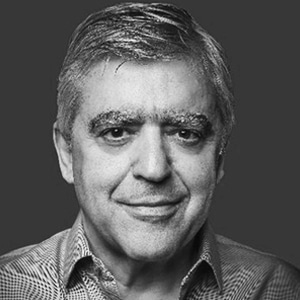
David Suissa is president of TRIBE Media Corp./Jewish Journal and can be reached at davids@jewishjournal.com.
































