
The human body was literally built to move. Whether it was to escape danger, hunt for food or build shelter, since time immemorial humanity has had its feet on the ground. That began to change when the horse became our transportation partner, but the major disruptions to physical movement came with the automobile and then digital technology.
Gradually, walking went from a default position that was inherent to living, to an intentional act. Today, in our post-Covid homebody state, when Amazon, DoorDash, Netflix, Zoom and countless other conveniences deliver virtually everything to our homes, including our jobs, we must go out of our way to move our bodies, lest those bodies slowly wither away.
The same may now be happening to our brains.
On the surface, using Artificial Intelligence (AI) to assist with mental tasks doesn’t feel all that threatening.
“Large language models produced fluent answers, summarized volumes of content, and offered surprisingly articulate responses that appealed to both my heart and head,” innovation theorist John Nosta writes in Psychology Today about his AI experience. “The outputs were impressive—often conjuring a fleeting sense of accomplishment, even joy.”
So far so good. So what’s the problem?
Nosta describes a subtle shift that he began to notice. Something was being lost.
“I began noticing a kind of cognitive displacement,” he writes. “The friction that once accompanied ideation, like the false starts, the second-guessing, and the productive discomfort all began to fade, if not vanish altogether. What was once an intellectual itch begging to be scratched is now gone.”
As soon as I read that, my brain lit up. Behind all the flash, AI is quietly removing the intellectual itch, the false starts, the second guessing, all those difficult mental activities that accompany brain work. We ask a question and, no matter how obscure or complicated the subject, AI instantly serves up a neat, well-articulated answer.
The fact that those mental activities are avoided is precisely what turns us on about AI. It’s like winning the brain lottery—all gain, no pain.
The fact that those mental activities are avoided is precisely what turns us on about AI. It’s like winning the brain lottery—all gain, no pain.
But the “gain” itself may be an illusion, because it assumes there is no value to the mental activities our brains have been trained to do for millennia. Since AI’s neat, well-articulated answers are seen as the desired outcome, why sweat the back-end stuff?
Because, for starters, that outcome may not be as desirable as it looks, and in any case, the “back-end stuff” is where our complex humanity resides, where human understanding takes shape.
“AI’s power lies in predictive fluency and not understanding, but arranging ideas in some mysterious statistical construct,” Nosta writes. “Its architecture doesn’t reflect how human minds actually work.”
AI gave Nosta answers he concluded were “too clean, too fast, and eerily fluent. Curious as it may be, it felt as if my own mind had been pre-empted. This wasn’t assistance; it was the slow dissolving of cognitive boundaries, and the results, while brilliant, were vapid in a way only perfection can be.”
Getting everything delivered to our homes also feels like perfection. The results are brilliant. Amazing movies on Netflix, great meals from Door Dash, an instant delivery of an urgent need, all feel “clean, fast and eerily fluent.”
The real danger, then, is that we will only see AI’s “eerily fluent” beauty and overlook the lazyfication of our brains.
I’m not referring here to the societal miracles AI may produce or the devastations, like cures for diseases on one end and the loss of millions of jobs on the other.
I’m referring to something more personal– AI in our everyday lives, AI chipping away at the messy brain work that makes us human.
Humans have always been susceptible to the allure of fool’s gold, the easy buck, the “tastes great, less filling” ethos that tells us we don’t have to sacrifice anything, that we can get it all– luxury and performance.
AI fits right into that mold. We can get the well-articulated answers and the convenience of not having to exert our brains, never mind the complication that AI sometimes gives us well-articulated wrong answers.
In either case, though, not exerting our brains comes with a price.
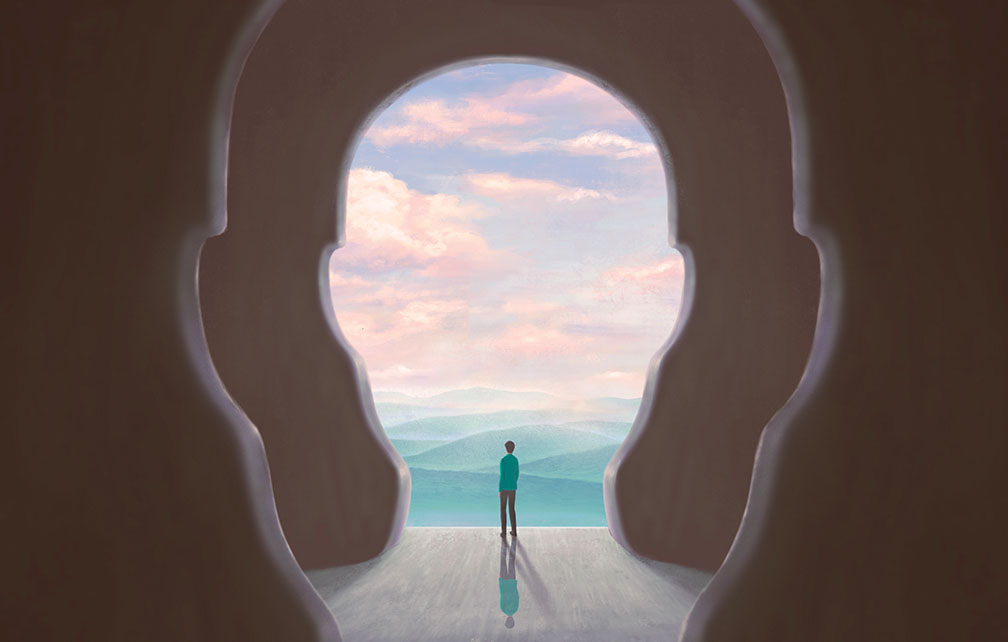
What happens to those brains when they’re invaded by cerebral shortcuts, when they’re no longer as needed? Will they atrophy like a body that spends much of its life on a couch? Will our brains become dull and sluggish, good for asking questions and then eagerly savoring the presumed “brilliance” delivered by a mysterious artificial force?
Like the horse that came before the car, digital technology has already taken us down the road of reduced brain exertion. The extraordinary power of AI may be promising in many ways, but if we don’t pay attention it may become the engine that puts our brains to sleep.
After I wrote this piece, I couldn’t help thinking of how I racked my brain working on it—the false starts, the struggle to find clearer language, the second-guessing of what quotes to include, the rewriting of drafts, and so on.
I have no idea if the end result is eerily fluent, but I know for sure it came from my messy brain.
Now I should probably get in my car and go to the gym.