He’s got the whole world in his hands. Or if not the entire planet in this case, at least most of the Middle East and its future.
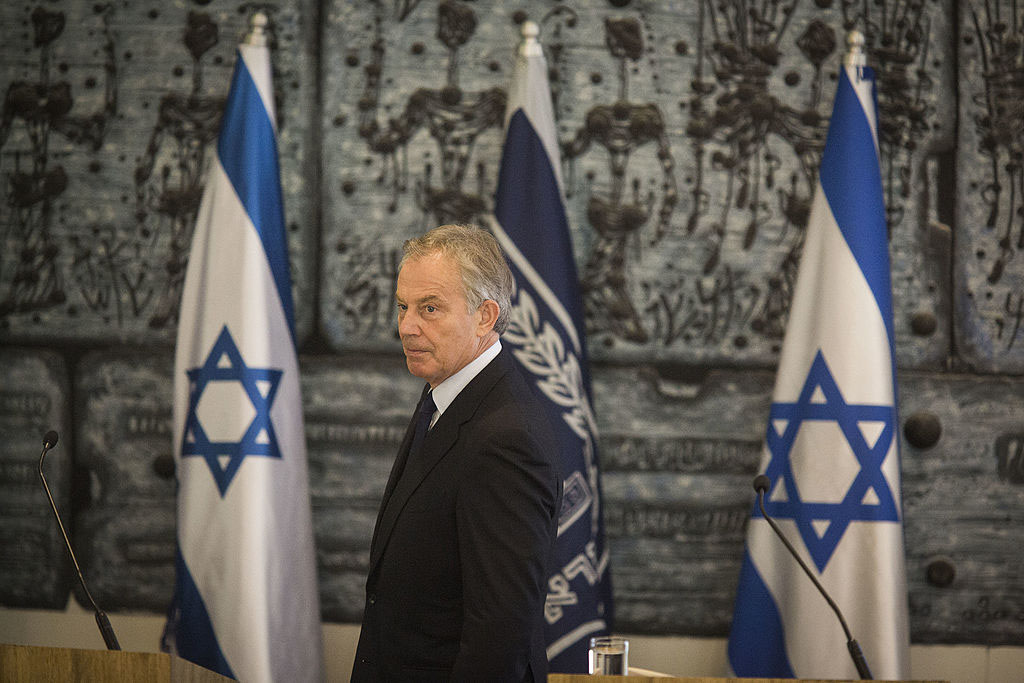
Who is the non-deity “he” who wields such extraordinary power? It can be argued that the most important individual to determine the path forward for Israel and its neighbors is not Benjamin Netanyahu, Donald Trump or Vladimir Putin, nor the current leader of any other national government. Rather, the still hazily-defined role that former British Prime Minister Tony Blair seems poised to assume in the reconstruction of Gaza could ultimately have the most significant impact on the region’s prospects for peace.
The question of who will assume responsibility for Gaza after Hamas’ departure has been the single greatest obstacle to postwar planning since the war began. Israel has been understandably opposed to an ineffectual, unpopular and untrustworthy Palestinian Authority assuming control, which has left the U.S, the Arab League and other stakeholders to talk in extremely vague terms about some other type of Palestinian leadership that would oversee the rebuilding process. The fact that no plausible alternative exists has not discouraged such fanciful speculation from continuing to shape most discussions about Gaza’s future, but it has not brought the region any closer to a realistic strategy either.
Until now. In some ways, Blair is a less-than-ideal figure to lead this process forward, given his fervent support for the Iraq War during his time in office in Great Britain and the widespread animosities that still linger from that era. But he knows the region better than almost any current or former world leader, and his experience in negotiating the Irish peace process in the late 1990s demonstrates his considerable diplomatic prowess and patience. The Belfast Agreement he guided to an unexpectedly amicable conclusion ended decades of sectarian violence between Protestants and Catholics: it is considered to be one of the most important diplomatic achievements in modern history. While there is no guarantee that any individual leader can achieve a similar accomplishment in the Middle East, Blair’s deep experience may give him sufficient credibility with the relevant participants that a plausible oversight structure operating under his purview may have a chance for success.
At the time this column was written, there was no way to predict when, how or if the Gaza War might finally come to an end. History should teach us that the military conflicts between Israel and its neighbors are never actually over. But the date on which an optimistically titled peace treaty will be signed does appear to be approaching quickly, or as quickly as a war can end after two years of false starts, false promises and false hope for peace.
While the specific date is still in question, there are a number of questions for us to ask ourselves about what happens once the fighting has stopped – until it starts again. Even as we prepare to celebrate the incremental progress that an agreement between Israel and Hamas will represent, the postwar realities on the ground will shape the future of the Jewish state and the Jewish people in countless ways. We will devote time in the weeks ahead considering what these new realities will mean for Israel, for the Middle East and the worldwide Jewish population going forward and how the last two years of warfare may change the assumptions we’ve held about each of these topics for as long as most of us can remember.
This series will continue as we examine the internal politics of Israel, the potential for stronger alliances between the Jewish state and its neighbors and the increasingly tenuous relationship between Israel and Diaspora Jews. The face of these challenges has changed dramatically since the Oct. 7 terrorist attacks, but each of them will be far different – and potentially unrecognizable – two years from now. The nature of those changes, and whether they are beneficial or detrimental, relies to a large degree on what the future holds for postwar Gaza. And that obstacle-laden undertaking now rests squarely on Tony Blair’s shoulders.
Dan Schnur is the U.S. Politics Editor for the Jewish Journal. He teaches courses in politics, communications, and leadership at UC Berkeley, USC and Pepperdine. He hosts the monthly webinar “The Dan Schnur Political Report” for the Los Angeles World Affairs Council & Town Hall. Follow Dan’s work at www.danschnurpolitics.com.