fbpx

October 7, 2025

Can This Be The End?

Israelis are worried. Jewish Israelis especially so. The old joke about a Jewish telegram that reads “start worrying, details to follow” comes to mind as I see how many people are worried. Except, in this case the joke doesn’t apply: we already got the details. We know why Israelis are worried. In fact, they are worried now for the exact same reason they were worried exactly a year ago. 

It’s been two years since Israel was forced into war by a vicious attack on its military and citizens. As wars go, one could argue that this is not such a long time. The Russia-Ukraine war is longer. The Vietnam war was longer. Both world wars were longer. The Seven Years’ War, Thirty Years’ War, Hundred Years’ War – well, all these were longer than two years. But for Israel, a two years’ war is long in at least two ways. First – it is longer than any of Israel’s previous wars (not all of them took just Six Days but, generally speaking, they were counted in weeks and months, not years). Moreover – a two-year war is a clear deviation from Israel’s national strategy that calls for short and decisive wars. 

So, Israelis are worried. After one year, the war seemed too long, and they were worried. After two years, the war seems too long, and they are still worried. In fact, after two years of war, the share of Israelis who say “I worry” is their dominant feeling is almost identical to their share after one year of war. It’s as if … as if nothing changed; as if… as if our clocks stopped ticking. The second year of the war was dramatically eventful – Hezbollah was decapitated, Iran was attacked, Gaza was reentered. And yet, Israelis’ feelings have frozen in time. Fifteen percent are sad – exactly like last year. Thirteen percent are angry. Almost exactly like last year (11 percent). The share of those who say they are “optimistic” or “determined” – two positive emotions – changed from 25 percent to 26 percent. That is, remained the same. And more than all these feelings, there’s worry. It is clear when you look at a JPPI survey (29 percent). It is clear when you look at a Gallup survey in which the question was somewhat different, but the result remains almost the same: “Did you experience the following feelings during a lot of the day yesterday?” A third of Israelis say that yesterday they were worried (33 percent).

People call for an end to the war and the release of all remaining Israeli hostages on October 04, 2025 in Tel Aviv, Israel. (Photo by Chris McGrath/Getty Images)

They are still worried. They are worried that President Trump promises more than he can deliver. They are worried that Prime Minister Netanyahu was too optimistic when he said, last Saturday, that a breakthrough is near. They are worried that Hamas will back out of a deal, that Qatar will trick Trump into changing his positions, that the Israeli government will insist on some minor detail that could derail the prospect for closure. In two years, Israelis were repeatedly disappointed by promises of a coming ending. Just count the number of times Trump prophesied about a breakthrough “maybe next week.” Just count the times Netanyahu declared that total victory is near. “Start worrying, details to follow.” This time, it is worrying that the news is too good to be true.  

In two years, Israelis were repeatedly disappointed by promises of a coming ending. Just count the number of times Trump prophesied about a breakthrough “maybe next week.” Just count the times Netanyahu declared that total victory is near. “Start worrying, details to follow.” This time, it is worrying that the news is too good to be true. 

This article is being written as the delegated teams – Americans, Israelis, Palestinians, Qataris, Egyptians – begin to talk about details. There’s a plan. The plan Trump laid out when Netanyahu was in the White House, two weeks ago. Israel accepted the plan. Hamas did not accept it. Then, the weirdest thing happened: Trump acted as if Hamas did accept it. What were his reasons? There are three options that come to mind. 

The least complimentary of the options is that Trump did not understand that Hamas said no. It said yes to some items and no to others. It said no to a crucial element concerning the future arrangement in Gaza – no to the demand that Hamas would disarm. 

A second option is that Trump wants to move forward no matter how, no matter the exact details, because of his unhinged, unconcealed desire to get the Noble Peace Prize. That is the option most concerning to Israel. 

The third option is that Trump wanted to keep the momentum toward pacification. In diplomatic negotiations a detail could be important, it could be the make or break of a deal, but the overall momentum is of no less consequence. President Jimmy Carter and his team understood that, when they pressured Israel and Egypt to get over their differences and sign a peace treaty in 1978 and ‘79. Both countries had caveats, both countries were not fully satisfied. But the momentum of peace was an important and useful tool that Carter used wisely. It is not impossible that Trump is hoping to use the same tool as he attempts to convince two exhausted groups that it is time for them to accept a certain compromise. 

Of course, no one in Israel’s leadership wishes to acknowledge that a compromise is what might be coming. Israel’s leadership wishes to present whatever comes next as clear victory. That, in itself, is an obstacle. Militarily speaking, there’s no doubt that Israel is winning in Gaza. The IDF can do as it pleases. It can occupy whatever territory he decides to enter. It can destroy whatever remains there. It can kill operatives, find and destroy tunnels, move almost freely in all the territory. Hamas – as an army – is defeated. 

It is not yet defeated as a player in Gaza’s future. That’s the meaning of its response to the Trump plan – the clear “no” that the president refuses to hear. 

Which sends us back to the “momentum.” To the possibility that a positive momentum is gradually building that could bring about an ending. Here’s a possible scenario (and as you read these words, you might already know if that’s the way things started developing). First – the parties deal with the “yeses.” Israel said yes to a hostage deal, Hamas said yes to a hostage deal – so let’s get the hostage deal done. Surely, Israelis will rejoice as their hostages get back. Surely, Hamas will take credit for its achievement as hundreds of Palestinian convicts, including vicious murderers, are released from Israeli imprisonment. 

A positive outlook would build on the assumption that a release of the hostages first makes the next move less complicated. Why? There are two reasons that seem to contradict one another but, in fact, complete one another. 

On the one hand, the next move becomes less complicated because the hostages are Israel’s most important tool as it argues that the war must continue. Even according to a recent Pew survey, from which one learns that Americans are quite critical of Israel’s conduct of the war, there’s still a majority who are extremely or very concerned about “remaining Israeli hostages not being returned to Israel.” So, even many critics of Israel understand that the release of hostages is an essential step on the road to ceasefire. And this means that by completing a hostage deal, Israel loses a strong argument for continuing the war. 

The flip side is that a release of the hostages unshackles Israel. If Israel had to be cautious around Gaza – lest its forces mistakenly hurt a hostage or make their Hamas wardens dangerously nervous – a hostage-free Gaza is a much easier military target. The IDF can bomb, it can capture territory, it is freer to operate in ways that weren’t available since the start of the war. 

So on the one hand, Israel loses a critical argument for more war, and on the other hand Israel gains a critical advantage in its ability to continue the war. How are these two seemingly contradictory things helpful? They are helpful as Trump puts more pressure on all sides to keep moving forward beyond the hostage deal and into the treacherous territory of agreeing to an arrangement for the future control of Gaza. 

After a hostage deal Trump can say to Israel: You got what you rightly declared to be a precondition to any settlement – the hostages are back. Now, no one is going to sympathize with Israel if it refuses to end the war and insists on perpetuation of the violence. 

After a hostage deal Trump can say to Hamas: You already saw what Israel can do in Gaza when it is shackled by its concern to the safety of the hostages. Do you really want to see what it can do when its forces become unhinged by such consideration? 

After a hostage deal everything changes. 

The copyright goes to Ehud Barak. When he was the chief of the IDF – before his tenures as prime minister and defense minister – Barak described the Oslo Accords between Israel and the Palestinian leadership as “full of holes, like a Swiss cheese.” Some cheeses age well, and thus, more than 30 years later, the expression is still useful. In the last two weeks it was repeatedly used to describe the Trump plan for Gaza. American in origin, but Swiss in formation. 

Example. Point 13 of the Trump plan: “Hamas and other factions agree to not have any role in the governance of Gaza, directly, indirectly, or in any form.” What do we mean by “agree”? What is “any role”? What is “indirectly”? Imagine a group of sanitary workers. Gaza is going to need people to collect the garbage. Would collecting garbage on behalf of a new governing body be considered an “indirect” “role” in the “governance” of Gaza? Ans what about the next sentence: “all military, terror, and offensive infrastructure, including tunnels and weapon production facilities, will be destroyed and not rebuilt.” Destroyed by whom? And who’s in charge of verifying that “all” infrastructure was indeed destroyed? 

And look further: “there will be a process of demilitarization of Gaza under the supervision of independent monitors, which will include placing weapons permanently beyond use through an agreed process of decommissioning…”. When Hamas operatives said “no” to the Trump plan (what some people prefer to call “yes, but…”) it specifically said “no” to this item. So just think about the practical aspects of implementing such a process. There’s a need for “monitors” that can be trusted (less they turn a blind eye to existing weapons). There’s need for agreement (no “agreed process” means no “decommissioning”). There’s a need to understand what “permanently beyond use” means. It is one thing to destroy all weapons, or put them in storage under IDF supervision, it is another thing to put them in storage in Gaza, where they can be reached when the “monitors” can no longer guard them.

Swiss Cheese

Consider this: most Israelis are afraid that an Oct. 7 type event could reoccur near Gaza. Consider this: most Israelis think it’s time to end the war. They understand that the plan for ending the war is as solid as you-know-what. And yet, they accept it, because they see no point in perpetuating the bloodshed. And no – they do not believe that the Trump plan is likely to stabilize Gaza and turn it from a threat to an opportunity. They don’t believe Gaza can be pacified not because they don’t trust Trump – in fact, he is possibly the one leader in the world, and this includes all foreign and Israeli leaders, that the vast majority of them trust (a in a recent Gallup poll: 76 percent). 

They don’t believe Gaza can be pacified because they don’t trust their own leadership and they don’t trust the Palestinians, and neither the public nor the leaders trust the international community. In the past year, the trust of Israelis in countries in Europe collapsed. France is the best example. Is it an ally? Nineteen percent of Israelis say yes, 55 percent call it “unfriendly.” One wonders: can Israelis trust an international force whose members come from France? From Britain (a mere 27 percent call Britain “friendly”)? From Qatar (most Israelis would call it a foe)? From Egypt? The Trump plan calls for the Palestinian Authority to ultimately have a hand in ruling Gaza. More than four in 10 Israelis say that such vision is unacceptable for them “under any circumstances.” 

You still wonder why the dominant sentiment is “worry”?

After two years of war, a 62 percent majority of Israelis agree that “the war was prolonged because no clear and realistic goals were set that would allow it to end.” Again, the numbers from a year ago are basically unchanged. In October 2024 39 percent “strongly agreed” with this claim, and today, October 2025, it is the same number – 39 percent. A year ago, 39 percent disagreed with this statement (“no clear and realistic goals”), today it is just slightly less – 35 percent. Nir Hasson of the newspaper Haaretz, in an article whose conclusions I mostly reject, used a metaphor worthy of borrowing amid these unchanging numbers. “For Israelis,” he wrote, “the sun that rose on Oct. 7 has not yet set.” After two years, it is still the same long, bloody, painful, worrisome, devastating day.

Does President Trump possess the mercurial power to make a sun set? His ambition seems to be of such magnitude, and similarly, his ego. Earlier this week, he pushed an exhausted region towards the scorching heat of the sun. As if telling us all: help me make it set – or risk burning. 


Shmuel Rosner is senior political editor. For more analysis of Israeli and international politics, visit Rosner’s Domain at jewishjournal.com/rosnersdomain.

Can This Be The End? Read More »
Ten Secrets to Academic Success | Distinguishing Fair Criticism of Israel from Anti-Zionist Antisemitism

Others in the series:

#1: Remember Why You’re Going to College

#2: Give Yourself the College Orientation You Deserve

#3: Great Debates About Great Books Yield Deep Knowledge, Sharp Minds and Constructive Citizens

#4 Make for Yourself a Teacher – Acquire a Friend

#5 Turn It Off! Managing Social Media, Middle East Minefields, and Political Difference

#6 Fighting Educational Malpractice Personally: What Do I Do with a Politicized Prof – or Teacher

#7 Fighting Educational Malpractice Institutionally: A Consumer Rights Issue


The philosopher Jean-Paul Sartre supposedly said: “The antisemites will accuse a Jew not because they think the Jew is guilty but because they want to force the Jew to turn out his pocket.” He actually wrote: “Never believe that antisemites are completely unaware of the absurdity of their replies. They know their remarks are frivolous, open to challenge. But they are amusing themselves, for it’s their adversary who is obliged to use words responsibly, since he believes in words.” Satre’s 80-year-old insights decipher today’s college discourse about Jews, Zionism and Israel.

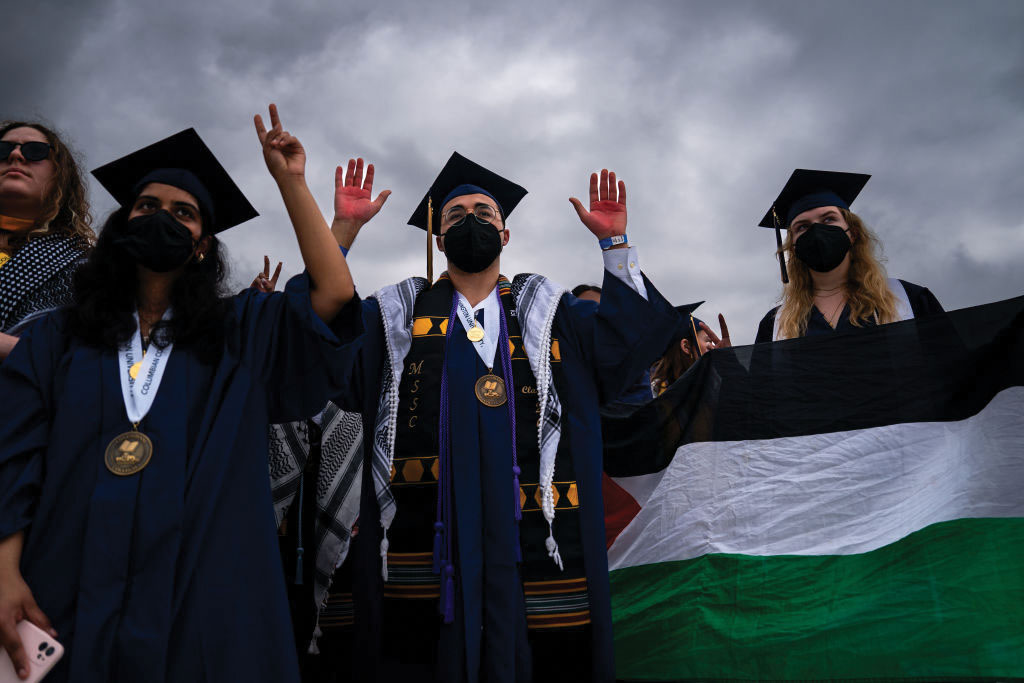
 That’s why we must transcend the anti-Jewish and anti-Israel hysteria. Anti-Zionism has become this generation’s Uber-fetish. The “enlightened” of Generation Uber prove their political correctness by wearing keffiyehs and masks while “privileging” hating Israel over other commitments to feminism, liberalism, non-violence, decency.

 This onslaught makes most Zionists too defensive, especially on campus. We insist: “No, we’re not settler-colonialist or racists or committing genocide or imposing mass starvation…” Now, the latest, negating his efforts to fight campus antisemitism and broker a Middle East peace, is: “We’re not pro-Trump or even grateful for anything he’s done for Jews, Israel, the world – and America – that Kamala Harris never would have done.”

 We’re so busy denying, turning out our pockets, we’ve forgotten to wave the flag to show who we are and how proud we are of Israel’s successes under impossible circumstances. And, reflecting our deep Diaspora-honed need to be liked – we buy the claims of many hypocritical, obsessive, Bash-Israel-Firsters: “I’m not antisemitic, I’m just criticizing Israel.”

 Pause! Cue up the virtue signal to say, “There’s much room for legitimate criticism of Israel.”

 But why be so apologetic? Israel is a democracy and a Jewish state. Patriotic Israelis and proud Jews constantly debate what Israel does – without rejecting that Israel is.  Patriotism doesn’t mean blind allegiance. It means loving your country because of its politicians sometimes – but despite its politics always.

We’re just not that stupid. Reasonable people can distinguish reasonable criticism from unreasonable contempt. Signs of anti-Zionist anti-Semitism include:

  Saying “Happy Oct. 7,” as was said last year;

  Justifying Hamas’ anti-Zionist antisemitic rampage;

  Championing Palestinian nationalism and accepting every other national identity, except Jewish nationalism, meaning Zionism;

  Negating the deep Jewish ties to their homeland;

  Generalizing about “the Jews” and “the Zionists”;

  Shrieking, bullying canceling others, in an anti-Israel frenzy.

Follow two guidelines: First, my Black, feminist, and LGBTQ+ friends put the burden of proof on the bigot, not the victim. True, I advise Jewish students not to be hyper-sensitive – give others the benefit of the doubt. Still, I don’t know of many conversations in other targeted communities, anguishing about just when their detractors become haters.

 Many campus communities even reject micro-aggressions – the “everyday slights, indignities, insults, put-downs and invalidations,” Dr. Derald Wing Sue writes —coming from “well-intentioned individuals who are unaware that they are engaging” in “offensive or demeaning” behavior. Yet precisely on these hair-trigger campuses, Jews have to justify feeling victimized by intentional macro-aggressions.

 Second, hatred, and especially Jew-hatred, is three-dimensional. Most focus on words, images, deeds – and there are so many explicit attacks these days. But the hysteria reflects an anti-Jewish mania.  Israel-bashers’ hysteria, exaggeration, intensity, and obsessiveness fail the smell-test. Equally revealing are the “dog-whistles,” the coded words, the not-well-hidden slights and accusations making Jews feel unwelcome – especially on campus.

 In my new “Essential Guide to Zionism, anti-Zionism, Antisemitism, and Jew-Hatred,” I echo my friend Professor Judea Pearl that Zionophobia, obsessively hating Israel and Zionism, is bad enough. Hating any national grouping is unacceptable.  Zionophobia’s dip into reservoirs of Jew-hating stereotypes only makes it even more repugnant.

The “Essential Guide” proposes the T E S T test to expose Zionophobes, perpetually escalating from standard criticism to bigotry.  Ask:

• Do they Totalize?: Indulging in essentialism, finding everything related to Israel, Jews, Zionists, evil. A University of Kentucky law professor crossed into hate-filled incitement by “calling for the end of the Israeli state today,” adding: “I ask for an international coalition of forces to go to Gaza and eliminate every last one of them.”  

• Do they Exaggerate?: The more extreme the criticism, the more it smacks of bigotry. A Cornell class on “Gaza, Indigeneity, Resistance,” uses “the case of settler colonialism in Palestine/Israel” and the Gaza “genocide” to prove that “Indigenous people are involved historically in a global resistance against an ongoing colonialism.” The anti-intellectual heavy-handed rhetoric demonizes rather than illuminates.

• Is it Sweeping?: Turning any Israeli misstep into justification for outright denial, not just attacking what Israel does, but that Israel is. In fall 2023, University of California at Berkeley students hung a banner with a Palestinian flag from a 307-foot bell tower proclaiming: “Cease fire now. Free Gaza.” A year later, their banner featured the inverted red triangle Hamas uses to identify Israeli targets and declared: “Glory to the Resistance.” The first banner criticized Israel’s war and policies – the second repudiated Israel – and liberalism itself.

• What’s their Tone?: The more intense the criticism, the more it smells like bigotry. A Jewish professor spread Jew-hatred by tweeting shortly after Oct. 7: “Free Gaza, free Palestine, stop the ongoing genocide by the Israeli and American war machines.” She added a post to her Instagram forwarding the message from a Palestinian American: “Do not cower to Zionists. Shame them. Do not welcome them in your spaces. Do not make them feel comfortable. Why should those genocide loving fascists be treated any different than any other flat out racist?”

 Whether to punish students and professors for expressing reprehensible views is for another article.

 These examples acknowledge a vast universe for robust debate about Israel’s actions. The trendy, categorical assaults on Israel, which inspire Jew-hating violence, reflect a mania that’s as fresh as today’s headlines, but as old as pagan and medieval Jew-hatred. That such demonizing, pigeon-holing, and fanaticism not only exists on campus but thrives, betrays every student, reflecting a deep rot undermining higher education – in America and beyond.


Gil Troy, a senior fellow in Zionist thought at the Jewish People Policy Institute, is an American presidential historian. Last year he published, “To Resist the Academic Intifada: Letters to My Students on Defending the Zionist Dream” and “The Essential Guide to October 7th and its Aftermath.” His latest, “The Essential Guide to Zionism, Anti-Zionism, Antisemitism and Jew-hatred” was just published and can be downloaded on the JPPI Website. 


Ten Secrets to Academic Success | Distinguishing Fair Criticism of Israel from Anti-Zionist Antisemitism Read More »

The Darkness and the Light

Two years. It’s been two surreal years since that Saturday of watching impossible scenes unfold in Israel. The kind of gruesome savagery that seemed safely confined to the past — that of the Jews’ biblical enemies, say, or medieval pogromists, or the Nazis before they learned to industrialize genocide — had been captured on the killers’ own GoPro cameras and splashed across Twitter for the world to see. And we, far away, could do nothing but watch. 

Who can forget the sight of Shiri Bibas surrounded by those armed men, her face a canvas of pure terror as she tried in vain to keep her two tiny red-headed boys safe? Or Naama Levy in her bloody sweatpants, dragged by the hair to the jubilant cry “Allahu Akbar!”? Or Shani Louk’s broken body being driven through a mob of exuberant Gazans in the back of that pickup truck? Or all those unidentifiable bloody bodies at bus stops, front yards, children’s bedrooms? It was unfathomable, but it was happening, virtually in real time across our phones.

And after that horror came the one that followed, which seemed almost more crazymaking because it toppled any belief we had in the goodness of those around us — our colleagues, neighbors and friends. Almost immediately, people around the world took to the streets — not to express their sorrow and revulsion, but their delight in the carnage. Oh, there were expressions of sympathy too, for about five minutes. The Empire State Building, Berlin’s Brandenburg Gate and other global landmarks were lit up in blue and white in solidarity with Israel. Soon though, those sights had gone dark and the only light seemed to emanate from the flares protesters threw as they howled, “Globalize the intifada!” 

And apart from those screams, there was the eerie silence. Schools and workplaces that always rushed out expressions of support and love to anyone suffering any kind of distress had nothing to say to their Jewish students and employees. The media lost its tepid interest in Israeli victims, and highlighted only the plight of the Palestinians as they awaited Israel’s military response. American Jews — people who might have a personal connection to the murdered and kidnapped of Oct. 7 and likely felt shattered even if they didn’t — felt utterly alone and friendless. 

For some of us who considered ourselves, if sometimes uneasily, on the political left, these days brought another sense of violent estrangement, because we knew the participants of the antisemitic carnivals now taking place. I crashed out an essay with a headline I didn’t expect to survive editorial scrutiny, “I Was You, ‘Defender of the Palestinians,’ and Now I Want to Puke.” I’d been one of those Israel-hating fools most of my adult life, and although I repudiated my former views years earlier, nothing could prepare me to see what they meant in action — their actually eliminationist implications as they played out in cities around the world. I wrote about my rage and disgust and, despite myself, my shock at seeing people I’d once respected and loved engaging in unimaginable levels of depravity. And the worst of it was knowing that if not for a few chance things that happened to me midlife, I might have still been among them. 

Evil takes hold so easily. These past two years we’ve seen it apparently slip free of whatever bonds normally hold it in check and run wild. Elderly Jews in Colorado set on fire as they peacefully demonstrated for the hostages. Synagogues around the world firebombed. The Pennsylvania governor’s mansion set alight as he and his family slept during Passover. The open display of “No Jews” signs in shops and other establishments. A pogrom in Amsterdam. A young couple shot dead as they emerged from a Jewish museum in Washington, D.C. Last week in Manchester, the car-ramming and stabbing of Jews entering a synagogue for Yom Kippur services, killing two. On and on the list of atrocities goes, and even if the current Gaza war ends — as I hope and which now looks possible — I’m not optimistic that the Jew-haters will do more than slightly curtail their spree. They’ve grown addicted to it.  

Evil takes hold so easily. These past two years we’ve seen it apparently slip free of whatever bonds normally hold it in check and run wild.

I’ll forever have to grapple with how this darkness found such a place in my heart. My parents had taught me the difference between right and wrong, but without belief in God it couldn’t withstand the question, “Says who?” When morality is secularized, wrested completely from religion, it can only be subjective — which is to say, it’s all too easy to punch giant holes in it. Some people manage to lead upright, purposeful lives without believing in God, and seem mostly fine with it. But there will also always be people like me — folks who can’t manage life without a sense of the transcendent, and aim to dismantle everything trying to achieve that. In today’s West, where people enjoy unprecedented levels of wealth, health, security and comfort, there seems to be only an ever-accelerating drive to extinguish ourselves.

When morality is secularized, wrested completely from religion, it can only be subjective—which is to say, it’s all too easy to punch giant holes in it.

Unlike in my younger days, I don’t claim to know the fix for this. But although I haven’t managed to find faith in God, I see the wisdom of beginning to behave as if I do. I’ve spent these past High Holy Days reflecting and atoning, and the place to do this has been among Jews, the people of my mother’s family’, who seem to have forgiven and accepted me despite everything. This was the year I fell in love with Avinu Malkeinu, heard the shofar blasts in synagogue for the first time, fasted and attended the Yom Kippur service from Kol Nidre to Neilah. I can’t claim I had a spiritual epiphany, but sometimes I felt a certain clarity and peace, and that was more than enough.

Two days later I received an invitation from Judea Pearl, an ebullient, wonderful man I’m blessed to consider a friend. He asked me to join him and three others around a table for Havdalah, the ceremony ushering out Shabbat. At first we talked, inevitably, of antisemitism and Zionism, and sang, as one always sings with Judea. Then it was time for the ceremony. Judea blessed a glass of wine, symbolizing joy and abundance, and passed around jars of fragrant spices to refresh the soul, which is saddened by the departure of Shabbat. 

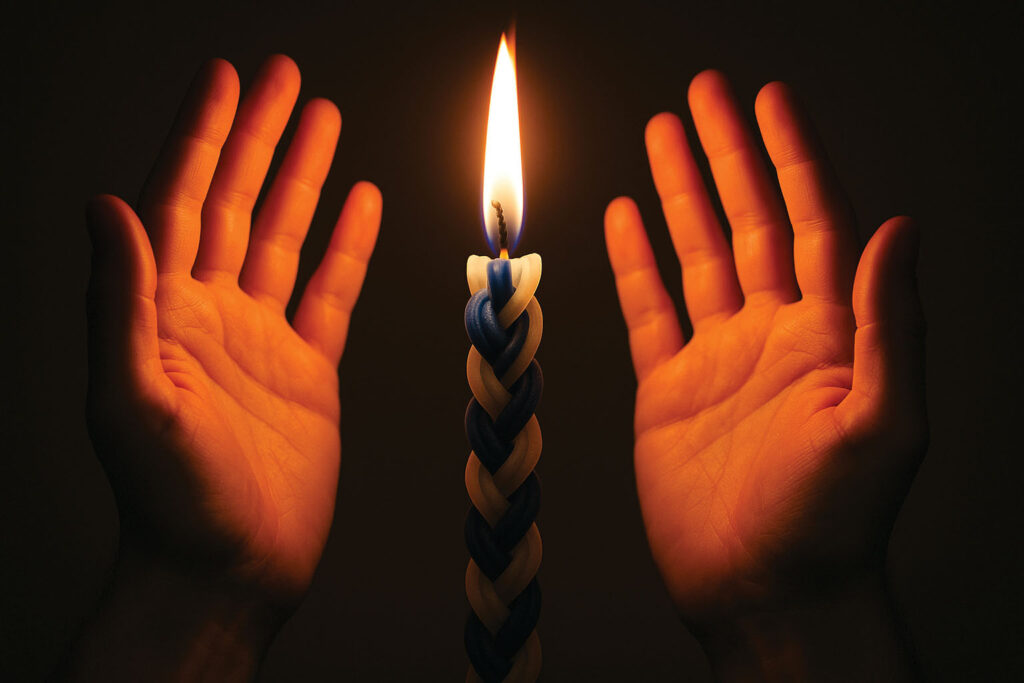
Finally one of us lit the candle. Judea showed us how to hold our hands in front of it, weaving our fingers through each other so the flame showed between the cracks. Jews do this, he explained, in order to differentiate between the darkness and the light — that we may always know the difference between the two. 

I think that is, in essence, what Judaism gave the world — that distinction which is everything — and is probably why so many people throughout the centuries have hated it. Still we keep lighting candles, mindful to leave room at the table for the fallen to find their way to the light.


Kathleen Hayes is the author of ”Antisemitism and the Left: A Memoir.”

The Darkness and the Light Read More »

The Death of Integrity in Academia

Recently, the University of San Francisco’s Jewish Studies & Social Justice program, under the leadership of Aaron J. Hahn Tapper, announced that it had brought in Hadar Cohen to teach a course titled “Arab Jews: Histories, Politics, and Identity.” At first glance, it might sound like a welcome step — a Mizrahi Jew given a platform in academia — but Cohen is not a historian or a scholar of Middle Eastern Jewry and she holds no advanced academic training in Jewish or Middle East Studies. Her background is in engineering, “alternative divinity programs” and “spiritual activism.” She openly states that “each aspect of her work is done through a political lens.” What qualifies her to teach is not academic rigor, but that she fits the ideological script academia demands. And that is the point.

Universities once upheld rigorous standards: advanced degrees, peer-reviewed scholarship, years of study. Increasingly, those have been replaced by the ability to embody activist frameworks that align with a particular brand of “social justice.” This is not education; it is indoctrination, and it compromises the very integrity of academia by prioritizing ideology over scholarship.

Even the course title reveals bias. “Arab Jews” is not a neutral term, it is a politicized label largely rejected by Jews from Arab and Muslim countries. It collapses Jewish identity into Arab nationalism and erases the truth that Jews were indigenous to the Middle East and North Africa long before Arab conquest. For centuries, Jews in Arab lands were not considered Arabs but second-class dhimmis, tolerated but legally subordinate. Tunisian-Jewish writer Albert Memmi put it bluntly: “The term ‘Arab Jews’ is obviously not a good one … We would have liked to be Arab Jews, [but] centuries of contempt and cruelty prevented it.” To frame our narrative through a term we overwhelmingly reject is distortion, not representation.

Cohen herself has written: “Zionism has no space for an Arab Jew like me.” But Zionism was, and still is, fundamentally a decolonization project. Jews are not colonizers in the Middle East, we are the indigenous people of the land of Israel, whose presence long predated both European imperialism and Arab conquest. If we are speaking honestly about colonization, it was the Arab-Muslim empires of the seventh century onward that spread across the region, supplanting local languages and cultures. To accept the label “Arab Jew” would be to adopt the identity of our colonizers — the very people who treated us as inferiors for centuries and expelled us en masse in the 20th century.

The story of Jews from these countries cannot be told without naming Islamic antisemitism. Under the dhimma system, Jews were taxed, humiliated and often attacked. Pogroms like the Farhud in Iraq or expulsions from Egypt, Libya and Yemen were not anomalies but the culmination of a long history of subjugation. This is precisely why so many Mizrahi Jews are staunchly pro-Zionist. Our Zionism is not abstract but born of lived experience: centuries of Islamic antisemitism, followed by dispossession and exile. To erase this reality in the name of “Arab Jewish” identity politics is not only offensive, it is profoundly unacademic.

Yes, Mizrahim faced hardship in Israel’s early decades, but the country also did remarkable work to unify Jews of all backgrounds. Shared schools, neighborhoods, military service and culture fused Mizrahim and Ashkenazim together. Intermarriage is widespread, and today Israeli identity is inseparable from Mizrahi music, food and politics. While gaps remain, Israel is not a place where Mizrahi identity is erased by Zionism. On the contrary, it flourishes.

Meanwhile, highly qualified Jewish faculty with advanced degrees, peer-reviewed work and years of teaching experience are often run out of academia or made to suffer the moment they teach honestly about Zionism or antisemitism. Professor Andrew Pessin at Connecticut College was hounded into isolation after a pro-Israel post was misquoted as racist, while Columbia’s Shai Davidai was investigated, banned from campus and ultimately driven out despite being cleared.

I also spoke with a Mizrahi Jewish professor who lived this reality. She had published two books and taught a course on modern Israel that Jewish students requested after being inundated with revisionist narratives in their Middle Eastern Studies program. In her class she presented both Jewish and Arab perspectives, even inviting the Palestinian history professor to speak. That invitation was never reciprocated. Her students — Jews, Christian Arabs and others — appreciated her balanced approach, and not one filed a complaint. Yet the Palestinian history professor ensured she was not offered additional courses. Without tenure, she was quietly pushed out. At another prominent university, she refused to sign anti-Zionist faculty statements. Knowing tenure would be denied, she left academia altogether — driven out by the same ideology that once drove her family from the Middle East.

The pattern is clear: universities only want Jewish Studies professors who conform to what is deemed an “acceptable Jew.” This was evident in the appointment of Shaul Magid at Harvard Divinity School, brought in amid rising antisemitism on campus. Rabbi David Wolpe, who once served on Harvard’s antisemitism advisory board, described Magid as “a gracious human being & an estimable scholar of Jewish texts, notably Hasidism,” but added, “I profoundly disagree with his stance on Israel and wish HDS would appoint someone whose views reflect the mainstream of the Jewish community.”

Even when Jewish scholars are respected, their political reliability, not their expertise, determines whether they are elevated or erased. Others are denied tenure, disinvited or pressured into silence. And in their place, universities elevate voices like Hadar Cohen — individuals with little scholarly training whose rhetoric fits the ideological mold academia wants. This is not education, it is politics. It’s a collapse of integrity.

The uncomfortable reality is this: Cohen has been elevated not because she represents Mizrahi Jews, but because she doesn’t. Her narrative aligns with the propaganda academia prefers, framing Jews from Muslim-majority countries as “Arab Jews,” downplaying Zionism and providing ammunition for anti-Zionist rhetoric. In doing so, she allows herself to be tokenized — the rare Mizrahi voice weaponized to legitimize a broader project hostile to the overwhelming majority of Mizrahi Jews and our lived experience. And here is the danger: students, already primed to obsess over this issue, will run to her class, tokenize her as an “as-a-Jew” voice, and then regurgitate her rhetoric as proof that their own antisemitism, cloaked as anti-Zionism, is justified.

This is what makes the situation so infuriating. The organization I work for, JIMENA: Jews Indigenous to the Middle East and North Africa, is dedicated to preserving the history and heritage of Jews from the region and elevating the work of scholars who teach our Sephardic and Mizrahi identities with rigor and integrity. Our Distinctions journal, a quarterly online publication amplifying scholars, artists and activists, is one vehicle for this work. Our efforts are supported by leading contributors, by our advisory board, and by 63 members of our Sephardic Leaders Fellowship advisory committees. JIMENA is also supported by synagogues, schools, summer camps, and legacy institutions nationwide — evidence of broad communal backing.

The appointment of Hadar Cohen is not progress, it’s tokenization. It is propaganda dressed up as education. And for Mizrahi Jews, it is a painful reminder: our story is still being told for us, by those who do not speak for us, in institutions that care more about the narrative than the truth.

At the end of the day, Cohen herself is not to blame. She is seizing opportunities as anyone would. The fault lies with a system of academia that elevates unqualified voices because they serve an ideological agenda, while sidelining those best equipped to teach our history with honesty and rigor. The crisis is not about one course or one individual. It is about a university culture that has abandoned truth for tokenization, and scholarship for propaganda. That is the stain on academia… and it will be remembered.


Matthew Nouriel is an Iranian Jewish LGBTQ activist and writer based in Los Angeles. He serves as Director of Community Engagement for JIMENA (Jews Indigenous to the Middle East and North Africa) and is active in public discourse on Middle Eastern human rights, antisemitism, and identity. @matthewnouriel (Instagram, Substack)

The Death of Integrity in Academia Read More »

The Abortion-Clinic Law Protecting Synagogues

Last week, the Department of Justice filed a civil rights lawsuit against a group of protesters who surrounded a New Jersey synagogue during an anti-Israel demonstration, accusing them of using force and obstruction to prevent Jewish worshippers from entering. The complaint — the first of its kind filed by the Department of Justice — describes protesters pushing past police barricades, entering synagogue property, and creating a scene so chaotic that congregants fled indoors for safety. It’s not the only such case. A separate lawsuit against CodePink is still unfolding after a 2024 protest outside Los Angeles’ Adas Torah Synagogue allegedly turned violent, leaving worshippers unable to leave or enter freely because of the chaos outside.

Given the highly charged environment surrounding anti-Israel protests, the DOJ’s action has sparked controversy. Critics worry that using a federal statute to target anti-Israel demonstrations could chill protected political protest. But the statute the government is relying on — the Freedom of Access to Clinic Entrances Act, or FACE Act — has long been used to draw a constitutional line between protected advocacy and coercive obstruction.

Enacted in 1994 in response to a wave of violence outside abortion clinics, the FACE Act makes it illegal to use “force, threat of force or physical obstruction” to “intentionally injure, intimidate or interfere with” anyone seeking to enter a reproductive-health facility. Late in the legislative process, Congress added “places of religious worship,” extending the same protections to those seeking to enter synagogues, churches and mosques. For 30 years, federal appellate courts reviewing the statute have upheld it as consistent with the First Amendment, recognizing that protecting access to clinics or synagogues is not the same as punishing speech.

The FACE Act targets a specific kind of confrontation — when protest crosses the line from persuasion to coercion. “Force” and “threat of force” capture assaults and true threats, while “physical obstruction” refers to conduct that makes entry or exit impassable or unreasonably difficult. The law doesn’t prohibit protest or persuasion; it targets acts that block doors, surround entrances, or use threats of violence to make access impossible. Its focus is access, ensuring that people can reach a clinic or a synagogue without being physically prevented or placed in reasonable fear of harm.

When Congress added “places of religious worship” alongside clinics, it did so through an amendment offered by the then Senator Orrin Hatch (R-Utah), who described it as a matter of “fairness,” making sure that people of faith, whatever their beliefs, were equally protected from obstruction or intimidation. Courts and scholars, drawing on that legislative history, have since interpreted the addition as reinforcing the statute’s neutrality. It protects access to both abortion clinics and churches, to both moral conviction and religious exercise. And that neutrality has played out in practice. The statute has been invoked not only to protect abortion providers but also those on the other side of that debate — such as protesters outside clinics and pro-life pregnancy centers — when they were the targets of obstruction or threats. It is that neutrality that courts have leaned on in upholding the statute’s constitutionality. Because the FACE Act regulates conduct rather than content, it is considered a content-neutral law that serves an important government interest in preserving public safety and access to constitutionally protected spaces, while burdening as little speech as possible. As a result, courts have concluded that it satisfies the demands of the First Amendment.

Courts have also been careful not to let the statute sweep too broadly. Because the FACE Act operates near the line between expression and coercion, its terms — especially “intimidate” and “interfere” — require careful interpretation and application. Communications that blur the line between advocacy and threat can raise legitimate First Amendment concerns, and an overly broad reading of “intimidation” could risk criminalizing protest rather than coercion. Congress anticipated that risk, instructing that the Act “shall be construed and applied” in a manner consistent with the First Amendment. Federal courts have honored that limit, applying the statute narrowly to coercive conduct and “true threats” that create reasonable fear of harm. In one case, for example, an activist mailed a doctor a letter warning that “thousands of people” knew her name and that “someone” might place an explosive under her car. The letter never promised violence outright, but the court found that a jury could view it as a threat intended to deter the doctor from performing abortions. That case captured both the strength and restraint of the statute, reaching conduct that coerces but not speech that merely offends.

That balance between protest and obstruction is exactly what the Justice Department is now invoking in New Jersey. The government’s complaint describes conduct that, if proved, falls squarely within the statute’s core. Demonstrators allegedly forced their way past police barricades, entered synagogue property, physically assaulted attendees and created a threatening environment that impeded access to religious services. Those allegations involve “force, threat of force and physical obstruction” intended to “injure, intimidate, or interfere” with worshippers’ ability to enter and leave their synagogue — precisely the conduct the FACE Act was designed to reach. The complaint also points to a letter that protest organizers delivered to the home of a synagogue leader, accompanied by photographs of his residence and later posts publicizing his address. Standing alone, that letter may sit closer to the constitutional edge; its language reads more like a demand than a threat, and courts have been careful not to treat mere advocacy or unwelcome persuasion as “intimidation.” But in the context of the surrounding violence, the government argues that the letter forms part of a larger campaign of coercive conduct. In that sense, the case tests not new constitutional ground but familiar ones — the same line courts have drawn for decades between protest and obstruction.

A similar framework underlies the Adas Torah litigation in Los Angeles, where a federal district court applied the FACE Act in a house-of-worship context. The case arose from a June 23, 2024 anti-Israel protest outside the Adas Torah Synagogue, where demonstrators allegedly blocked driveways, pounded on vehicles, and clashed with police as congregants attempted to attend a religious event. The court drew the same constitutional line that earlier rulings had traced. Political advocacy and even incendiary rhetoric remain protected, but acts or symbols that reasonably convey threats of force do not. It dismissed claims against one group whose social-media posts merely called for protest but allowed the claim against CodePink to go forward, finding that its post showing the synagogue’s name and address within an inverted red triangle — a symbol allegedly used by Hamas to mark targets — could plausibly constitute a “threat of force” intended to intimidate Jewish worshippers or incite others to obstruct access. In short, the court applied the FACE Act as Congress intended, narrowly reaching coercive conduct but not protest itself.

For all the novelty of seeing the FACE Act invoked to protect synagogues from anti-Israel protests, its application here reflects continuity rather than reinvention. A statute born out of the abortion-clinic blockades of the 1990s is now being used to protect Jewish worshippers from threats and intimidation outside their synagogues. That continuity is a reminder of how the law, at its best, can safeguard access to conscience across profoundly different settings. In a moment when the war in Israel has become a flashpoint for American politics, it is striking that a statute first designed to protect abortion clinics can still draw a constitutional line that both protects protest and preserves the freedom to enter a sacred space without obstruction.


Michael A. Helfand is the Brenden-Mann Foundation Chair in Law and Religion and Co-Director, Nootbaar Institute on Law, Religion & Ethics at Pepperdine Caruso School of Law as well as Senior Fellow at the Shalom Hartman Institute.

The Abortion-Clinic Law Protecting Synagogues Read More »

Flags of Faith

Daily headlines debating certain countries’ recognition of a Palestinian state despite (or because of?) Hamas’ Oct. 7, 2023 terrorist attack against Israel has brought to the forefront a focus on flags. National symbols, after all, stand as points of pride for distinct populations.

With Simchat Torah approaching then, it’s worth noting how for centuries, Jews have turned to flags as an expression of faith that the Jewish story would continue, despite our enemies’ claims to the contrary.

As the National Library of Israel has documented on its blog, “The Librarians,” “When not busy elbowing each other during the hakafot in an attempt to touch and kiss the Torah scroll leading the procession, the Jews of 16th century Eastern Europe grappled with the question of how to involve the children of their communities in the Simchat Torah celebrations. In order to solve the problem, the community adults designed a symbolic item which fit the children’s dimensions – the Simchat Torah flag.”

The Library’s archives house a breathtaking array, including 18th century woodcuts from Amsterdam, greeting cards depicting artistic renditions from 19th century New York, and others from Eastern European communities of the early 20th century. As the head of content at Yad Vashem, Chen Malul, has noted, “Jews of Eastern Europe designed Simchat Torah flags reminiscent of the banners of European knights and cities, but replete with Jewish motifs. Thus, the members of the community hinted that the flags of the Jewish people – in contrast with medieval Christian tradition – were flags of the Torah and its commandments, and not symbols of warfare and bloodshed.” A stunning sample from more modern times, a 1902 flag from Warsaw, depicts the icons of the Twelve Tribes, a menorah, a Star of David – with Moses, Aaron the High Priest and Theodor Herzl in the center.

Another banner from the same year, this one from Belarus, pictures Moses holding what appears to be the new law book for the Jewish people inscribed with “Our hope is not yet lost” (a line from “Hatikvah,” which would later become the national anthem of the Jewish State).

In the early years of the revived Jewish national homeland, flags reflected the longing and desire for access to local meaningful historical and religious sites, including the Western Wall and Rachel’s Tomb. Following the reunification of Jerusalem in 1967’s Six Day War, the Western Wall and Rachel’s Tomb now were depicted on flags in ways that matched the reality – with children rejoicing on location. As the late British Chief Rabbi Lord Jonathan Sacks noted, “The reborn State of Israel in a mere 70 years has surely exceeded even the highest hopes of the early pioneers of the return to Zion, and this despite the fact that it has had to face almost ceaseless threats of war, terror, delegitimization and defamation. Despite all this, it stands as a living testimony to Moses’ great command: ‘Choose life, that you and your children may live.’”

This year, the Simchat Torah Challenge, a Jewish educational organization funded by the investor and philanthropist Daniel Loeb, commissioned modern Jewish artists, including the LA-born Hillel Smith, to make their own flag designs, which are shared on the organization’s website. They also encourage their community of Torah learners to craft their own. As the organizers of this initiative note, “Today, you can find Simchat Torah flags in Jewish communities around the world. Their flags are not just religious symbols – they’re cultural expressions of where they come from, whether ultra-Orthodox communities, secular Israeli kibbutzim, or the creative mind of a young child sticking apples atop their flagpoles or creating paper-flaps to mimic holy arks.”

As we dance with the scrolls bearing the Five Books of Moses this Simchat Torah, then, let’s pause to salute the banners in the crowd, held by countless Jewish kids across the globe. They stand as symbols of our flourishing Jewish state, flags of faith.


Rabbi Dr. Stuart Halpern is Senior Adviser to the Provost of Yeshiva University and Deputy Director of Y.U.’s Straus Center for Torah and Western Thought. His books include the newly released “Jewish Roots of American Liberty,” “The Promise of Liberty: A Passover Haggada,” “Esther in America,” “Gleanings: Reflections on Ruth” and “Proclaim Liberty Throughout the Land: The Hebrew Bible in the United States.”

Flags of Faith Read More »

The Paradox of Israel

This is an excerpt from a Yom Kippur sermon delivered by Rabbi Michael Gotlieb at Kehillat Ma’arav Congregation in Santa Monica.

I was in New York last February when four-year-old Ariel Bibas was confirmed murdered by Hamas. In solidarity with Israel, the Empire State Building was lit up orange in memory of red-haired Ariel.

Nearly two years since Oct. 7, with Israel’s military campaign in Gaza, that solidarity has eroded to the point that I’m deeply worried that Israel is becoming a pariah state among some of her most valued longtime allies. 

Let alone the rise of Jew-hatred in America and abroad — tethered to a shifting downward opinion of Israel. It breaks my heart to say that, because I love and respect Israel and my love and respect for Israel remains clear and undiminished. 

Though it’s become an almost dirty word — “the Z word” — I am a Zionist and I continue to be a supporter of Zionism.  Zionism is Jewish national self-expression and free-will; Zionism stretches across the entirety of Jewish history. 

The hope to return to the land of Israel and reestablish an independent Jewish state has remained with us Jews ever since the destruction of the Second Temple in the first century of the Common Era.

The physical land of Israel is definitional to Judaism. One who denies Israel’s legitimacy to exist as a free and independent Jewish nation is an antisemite. Professor Emerita Ruth Wisse summarizes: “Anti-Zionism is a more malevolent form of antisemitism, because it denies Jewish national distinctiveness.” A nation needs a land. The land of Israel is our indigenous homeland — that’s where we Jews begin, that’s where we’re formed — and that’s Zionism.

But being a Zionist doesn’t mean one agrees with everything the Israeli leadership does or advocates. Zionism has never been one size fits all. We are a people of lively discussion, debate and disagreement — there never was one Jewish paradigm, be it religious, or political or cultural, that fits all.

So, how can we hold divergent opinions when it comes to Israel, the fulfillment of modern Zionism? To paraphrase Rabbi Stuart Weinblatt, founder of the Zionist Rabbinic Coalition: “Your criticism of Israel should not be louder than your support for Israel.”

Israel’s political and military decisions are filled with paradox, complication and tension. Think of the Bible’s story of the burning bush. Moses, while wandering in the desert, approaches a shrub engulfed in flames. It’s not disturbed by the fire, and remarkably remains intact. It’s an instructive allegory. How can something be in flames, but not be consumed by the intense heat and fire? It defies natural law. 

Israel must stare into the burning bush every day. Prior to Oct. 7, Israel faced difficulties from within, including the battle over judicial reform; government coalition members, some of whom are bona fide bigots, who oppose any notion of a two-state solution between Israel and the Palestinians; and West Bank settlers who torment Palestinians and attack Israeli military police. There are also growing tensions between the general population and ultra-Orthodox Jews who refuse to serve in the army.

Post-Oct. 7, Israel has been plagued with difficulties from without. As we know all too well, two years ago, Hamas slaughtered, raped and butchered 1,200 Israeli souls. Relative to Israel’s population, that’s equivalent to more than 60,000 Americans murdered in one day. Many were viciously tortured to death.

Hamas also captured 251 innocent Israelis. Of the 48 remaining hostages in Gaza, Israel thinks 28 are dead, and 20 are still alive. 

Today marks the hostages’ 725th day in their Hamas hellholes.

In 2005 Israel ceded the entire Gaza Strip to the Palestinians. Beginning the following year, Gazan rockets started raining down on Israel. Over the course of 17 years, more than 20,000 missiles have been launched against Israel.

This past Jewish calendar year, Israel had to successfully confront Iran, Hezbollah and the Houthis. That said, the images coming out of Gaza are heartbreaking: Gazans living in tents. Food insecurity. Social media is filled with pictures of destruction and death. What is Israel to do? What are we to think?

Israel can’t allow the Gaza Strip to return to the way it was prior to Oct. 7. It can’t leave a void in place of Hamas’ eventual retreat, and it can no longer live with missile attacks and the constant threat of murder, destruction and war. As one of Israel’s leading intellectuals, Micah Goodman, points out: The challenge Israel faces is not a binary between good choices and bad ones, but rather between bad choices and worse choices. Israelis are continually forced to stare into the flame of the burning bush — paradox, complication and tension.

Let’s unpack some of the allegations leveled against Israel. The first being the most pernicious: Israel is committing genocide in Gaza. Let me state unequivocally: Israelis are doing no such thing. 

According to the Hamas-run Health Ministry, there have been more than 60,000 deaths since the beginning of the war. I ask: Even if the numbers are accurate, if Israel’s committing genocide, why aren’t the numbers in the hundreds of thousands, or more than a million? Why does Israel give prior notice alerting Gazans to evacuate areas it intends to destroy? Why are there nearly five times more Palestinians living in Gaza and the West Bank than there were at Israel’s founding in 1948?

Further, between a third to one half of those killed represent Hamas militants. Need it be said, the loss of any truly innocent soul is a tragedy. But this is a low proportion of civilian deaths compared with other modern wars, especially in very crowded urban areas.

Most Israelis feel the war with Hamas has gone on much too long. We should hope and pray that last Monday’s 20-point peace plan launched by the Trump administration will prevail. 

Another accusation is that Israel is intentionally withholding food from Gaza. I emphatically believe Israel should provide copious amounts of food, water and medicine, not merely because of the Geneva Convention’s rules of conduct, but because Jewish values dictate it’s the right thing to do. 

Although there have been Israeli missteps in the distribution of food in Gaza, the blame sits squarely with Hamas. It is Hamas that doesn’t care if its own people starve.

If you are genuinely concerned about innocent Palestinians (as I am); if you hold out for the long-term possibility of a two-state solution (as I do); if you value Israel’s legitimate right to live as an independent Jewish nation (as I continually pray for); then Hamas must be marginalized to the point of virtual nonexistence. It’s that simple.

It is Hamas that has wanted this war to continue. They know they’ve lost the ground war; they probably knew they would. But it’s highly likely they thought they could win the war of public opinion — and they are proving themselves right.

Older Jews remember Israel as a young idealistic nation fighting for its survival against Palestinian terrorism, and how Palestinian leaders repeatedly refused offers of a state of their own in the West Bank and Gaza. The younger generation doesn’t have that perspective. Too many of them see Israel as the aggressor, a brutal occupier of Palestinian territories. 

Each of us can strive to counteract this false narrative. Israel remains a free, open, compassionate, creative country. It bridges the cultures of east and west, respecting and upholding ancient traditions. It is a pioneer in women’s rights and LGBTQ lifestyles. Israel has provided safe haven for refugees representing more than 70 countries. 

Each of us can support religious and secular organizations that work for liberal democracy in Israel. Each of us can broaden our understanding of what Israel faces on a daily basis: the paradox, complication and tension; a lowly desert bush that’s an unconsumed blazing inferno.

In addition to mainstream media sources, consider reading or listening to podcasts and articles on Israel by Bari Weiss, Yossi Klein Halevi, Haviv Rettig Gur, Daniel Gordis, Tal Becker, Dan Senor, Micah Goodman, Bret Stephens, Ross Douthat, Douglas Murray, Bill Maher and others.

Israel with all her shortcomings and faults, remains an extraordinary nation. Now’s not the time to walk away from Israel in frustration and anger. When a friend or a loved one is in trouble, you do all you can to help. Now’s the time to stand up for Israel. Now’s the time to, ensure that “your criticism of Israel should not be louder than your support for Israel.” 


Michael Gotlieb is rabbi of Kehillat Ma’arav in Santa Monica.

The Paradox of Israel Read More »

Kaddish and Continuity: A Golani Story

In Israel, old soldiers don’t fade away — they return, year after year, to gravesites and battlefields, carrying the weight of memory and the devotion to legacy. The fallen and the new generations of soldiers are forever in their hearts.

Two years ago, I wrote here about a touching ceremony on Mt. Hermon commemorating 14 elite Golani reconnaissance fighters who fell in the Yom Kippur War during attempts to retake that vital site. I only knew about one of them, Chaim Horan (Chuck Hornstein), through stories I’d heard over the years at his annual azkara – memorial – at Mt. Herzl.

Back in the ‘60s, my husband David and his friends were members of a close-knit youth movement in Manhattan. When young Chaim joined the movement, these older members became his leaders and mentors until, by the early ‘70s, they had all made aliyah. When Chaim eventually followed them to Israel, the movement friends became his family. When he joined Golani recon, one of Israel’s most elite infantry brigades, they had his back. And they have kept his memory alive since he fell on the Hermon in 1973. Recently, they created a scholarship in his name for deserving Golani recon soldiers. 

It’s been 52 years since the Yom Kippur War. Chaim’s friends are getting older, some in their eighties, yet continue to navigate the hilly Mt. Herzl Military Cemetery in Jerusalem to honor Chaim’s memory each year. As I walked up the stone steps to the Yom Kippur War section of the cemetery, I noticed a group of men going in the same direction and wondered why they were at Chuck’s grave. As the hazzan was starting the ceremony, one of the strangers gently broke in, changing the tone of the azkara. 

“Would you mind if I said a few words before we start?” he asked. 

Very unusual.

“Let’s each introduce ourselves and say how we knew Chaim.”

Chaim! Yes. His army gang. They call him “Chaim” while the New York crowd uses “Chuck.” This was Chaim’s former commander, Eitan. The others were members of the team – from the ceremony – the ones who had stood before us on Mt. Hermon and recounted the battles. The ones desperately trying to hold back the tears. Now they were here to get to know the people who for 52 years have never allowed Chaim to be alone, who come every year to say Kaddish and to share memories. 

Chaim’s friends and his army team around the grave. Credit: Reuven Genn

We learned about them, too. By the time Chaim made aliyah and joined the army, he was three years older than most of them, who had enlisted right out of high school. To these young Israelis of the early 1970s, Chaim was a man of the world. He was from New York! He had studied at university. He became the go-to guy for advice on life’s dilemmas.

Commander Eitan and his buddies had another goal for the afternoon: continuity of the Golani legacy. At every azkara, conscript soldiers from the same unit serve as honor guards. This year, four Golani soldiers stood with us — a short break from their training to become recon fighters. A tough path to choose. They look so young and shy. Eitan caught them off guard. 

“Tell us your name and where you’re from,” he addressed the soldier closest to him. 

They had been assigned to this azkara, to come and stand at attention at the grave of a fallen soldier from half a century ago. They didn’t expect to be the center of attention.  

“Have you reached that ‘I can’t go on point’?” Eitan asks them. 

He waits for a response. I’m sure these soldiers, who will protect us with their lives, now wish they had a foxhole to jump into. No one ever engages them at these memorials more than to thank them for being there and to wish them well. Their rigorous training hadn’t prepared them for this encounter! 

Eitan persists, encouraging them to respond. Encouraging them to break through those moments when they think they can’t continue. “We’re always there for you,” he said. “We have WhatsApp groups.  You can always reach us.”

I know he means it. These old soldiers don’t fade away — they mentor, they remember, they lift up. They infuse the young with strength of body and character. And in doing so, they keep themselves going, too. 


Galia Miller Sprung moved to Israel from Southern California in 1970 to become a pioneer farmer and today she is a writer and editor. 

Kaddish and Continuity: A Golani Story Read More »

When Facts Fall Victim to Vibes

The humanitarian situation in Gaza is a profound tragedy. It is from this place of concern that we must also insist on intellectual honesty, especially when using terms as grave as “genocide.” A cultural environment is emerging where assertions about Israel are accepted as “common knowledge” so universally that few bother to check the facts — even those tasked to do so. The current zeitgeist has transformed Israel into both a symbol and a victim of this cultural moment.

The United Nations Human Rights Council’s (UNHRC) latest report that came out a few weeks ago is a masterclass in dressing propaganda in the language of law. While presented as a “legal analysis,” it’s a document structured to support a predetermined conclusion. The report’s most significant flaw is its attempt to infer genocidal intent from the destruction of property. It admits the destruction itself is not a genocidal act but asks the reader to connect the dots. By omitting Israel’s stated goal of dismantling Hamas’ military infrastructure, it transforms a complex combat situation into a simple act of mass killing. This isn’t rigorous legal analysis; it’s a conclusion driven by ideology.

Long before the report, the off-hand labeling of Israel’s actions as “genocide” was already common. These accusations, often delivered by academic authorities without rigorous evidence, were amplified by social media algorithms and validated through circular citations where activists cite each other as “experts.” The claim has become less a factual assertion requiring proof and more a litmus test for progressive credibility. To challenge it is to reveal yourself as an outsider. This encapsulates a troubling phenomenon: the rise of “vibe-expertise,” the practice of making assessments based not on facts, but on the prevailing zeitgeist and ideology.

This environment generates well-intentioned but clumsy gestures, like Coldplay’s Chris Martin feeling the need to affirm the humanity of his Israeli fans, as if their identity were inherently suspect. We see it in cultural boycotts, such as one supported by over 2,000 filmmakers. While born from a desire to protest policy, such actions risk a blanket condemnation that slides into the cultural isolation of an entire people. The issue is not criticism of the Israeli government, but the casual acceptance of extreme characterizations that erase the humanity of Israelis themselves.

The civilian death toll in Gaza is heartbreaking, and the Israeli military’s conduct demands scrutiny. But what Israelis view as a tragedy they seek to minimize, Hamas views as a deliberate strategy. Hamas embedded its military infrastructure within civilian areas knowing Palestinian casualties would create exactly the international pressure we now witness. Acknowledging this is not an apology for Israeli actions; it is a recognition of the tragic moral dilemma at the heart of this conflict.

To ignore this reality is to misunderstand the situation. Israel’s efforts to provide humanitarian aid, establish evacuation corridors and treat wounded Gazans in its own hospitals are not the actions of a state with genocidal intent. These facts do not erase the suffering, but they fatally complicate the simplistic narrative of pure evil.

The fierce dispute within Israel over the war’s continuation — a debate between prioritizing the hostages’ release or ensuring Hamas’ defeat — is almost entirely ignored by global media. The international pressure campaign has little influence on this internal debate. Its more significant consequence is the distortion of Western morality in favor of a jihadi organization’s strategic narrative.

The greatest danger today is not overt bigotry, but a moral inertia among well-meaning people. When intellectual integrity is sacrificed for the comfort of conformity, reason is replaced by a righteous-feeling consensus. When we allow ideology and “vibe-expertise” to replace factual analysis, we aren’t just getting Israel wrong — we’re undermining the foundations of ethical discourse. Every time we accept an evidence-free genocide accusation, we fulfill Hamas’ strategy.

Bravery today is not submitting to the zeitgeist, but challenging its moral distortions. This isn’t about denying Palestinian suffering. It’s about refusing to allow that suffering to be weaponized by an organization that deliberately creates it.


Eran Shayshon is the founder of Atchalta (atchalta.com), an Israeli policy and strategy organization focused on analyzing contemporary challenges facing Israel and the Jewish people.

When Facts Fall Victim to Vibes Read More »

Our Friend, Jay

What is a friend?

Someone who shows up for you. Supports you. Improves your life. Loves you unconditionally — even when you haven’t returned their text in three days or you forgot to like their Facebook vacation photos. 

“Acquire for yourself a friend” (Pirkei Avot 1:6). Not the Facebook kind but a real friend. 

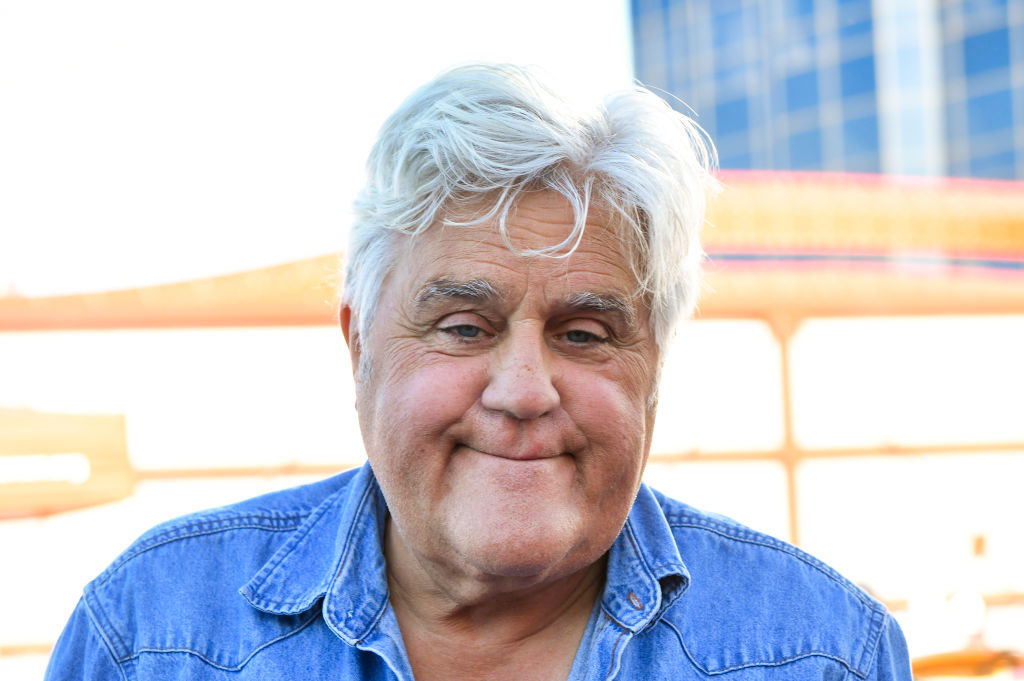
Why? Because we all want to feel connected. We all need community, especially now. When I think about the word friend, I think about Jay Leno, whom I’ve known for 40 years. One of the funniest comics ever. Jay can rock a room like few others.  Jay has no ego. No drama. No bs.  Just heart. He’s the guy who shows up when needed. Besides performing in Las Vegas, and in theaters all over the country, he lends his name to many causes. And when it comes to Israel, he’s one of the first to show up. That’s a friend.

And in these hard times for Israel, we Jews know at least one thing: humor can help get us through. Why do you think we have so many benefits featuring comedy? We know an evening of humor can not only raise money but our spirits. We believe laughter is the best medicine… and if it’s not, it’s a close second. 

And on Oct. 19, Jay will be headlining “Teaming with Laughter” for a very special organization, The Israel ParaSport Center. It’s a one-of-a-kind, life-changing rehab and adaptive sports organization in Ramat Gan, Israel, for Israelis with physical disabilities. And it’s not just for Jewish Israelis but for anyone with a disability, no matter what their background.

Imagine a place where someone who has suffered a spinal injury or stroke, lost a limb or been wounded by war or terror can go, not only to heal the body, mind and spirit — but to thrive. The Israel ParaSport Center is that place. Whether someone was born with a disability (such as cerebral palsy or spina bifida) or acquired one later in life, the Center offers adaptive sports, holistic rehab programs, social services, and a strong community that says: You can live a full, active and meaningful life. You belong. You matter. 

This year’s event promises to be epic and filled with friends. Not only Jay, though come on, Jay Leno, but also comedy legend Fritz Coleman. He promises no rain that night. And me, Mark Schiff, who’s been on tour with Jerry Seinfeld for 25 years. Then there’s the very funny Avi Liberman, who’s done more for Israel than most prime ministers. There will be magicians from the renowned Magic Castle entertaining during dinner time. You won’t get that action sitting home in your underwear watching TV.

And the best part? You’ll get to meet the real stars: Israeli para-athletes from The Center. Their resilience will inspire you. Their presence will remind you that laughter and hope often go hand in hand. You will feel really good that you decided to come laugh for such an inspirational cause. As our friend and Center athlete and terror survivor Asael Shabo said when the war began,  “We cannot let hate keep us from gathering, uniting, loving, living … and even laughing!”

One of the things we Jews have always done is find humor during difficult times – it lifts us up, lightens the load for a little bit,and brings us together. 

So: Come. Laugh. Connect. Make a Difference.

Get your tickets now (www.israelparasport.org/twl-2025). Bring a friend or come alone and leave with a dozen new ones and a stomachache from laughing so much. If the stomachache persists, good chance there will be many doctors in the audience to help you.

Because when you show up, you’re not just enjoying a comedy show. You’re supporting Israelis with disabilities who – because of The Israel ParaSport Center –  are empowered to live their lives without limits through the magic of sport. And that will help level the playing field. And that, my friend, is something worth showing up for.

Teaming with Laughter is presented by the U.S. Friends of the Israel ParaSport Center, a nonprofit organization headquartered in Chicago, with a Western Region office located right here in Los Angeles


Mark Schiff is a comedian, actor and writer, and hosts, along with Danny Lobell, the “We Think It’s Funny” podcast. His new book is “Why Not? Lessons on Comedy, Courage and Chutzpah.”

Our Friend, Jay Read More »