fbpx

October 7, 2025

Gaza in the Balance

He’s got the whole world in his hands. Or if not the entire planet in this case, at least most of the Middle East and its future. 

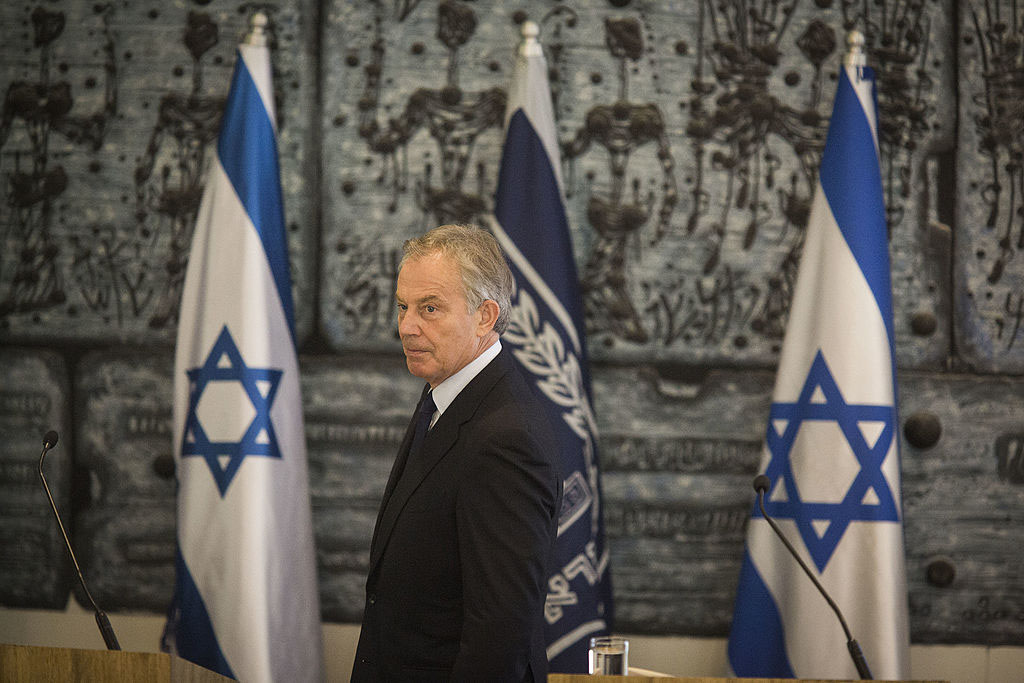
Who is the non-deity “he” who wields such extraordinary power? It can be argued that the most important individual to determine the path forward for Israel and its neighbors is not Benjamin Netanyahu, Donald Trump or Vladimir Putin, nor the current leader of any other national government. Rather, the still hazily-defined role that former British Prime Minister Tony Blair seems poised to assume in the reconstruction of Gaza could ultimately have the most significant impact on the region’s prospects for peace. 

The question of who will assume responsibility for Gaza after Hamas’ departure has been the single greatest obstacle to postwar planning since the war began. Israel has been understandably opposed to an ineffectual, unpopular and untrustworthy Palestinian Authority assuming control, which has left the U.S, the Arab League and other stakeholders to talk in extremely vague terms about some other type of Palestinian leadership that would oversee the rebuilding process. The fact that no plausible alternative exists has not discouraged such fanciful speculation from continuing to shape most discussions about Gaza’s future, but it has not brought the region any closer to a realistic strategy either.

Until now. In some ways, Blair is a less-than-ideal figure to lead this process forward, given his fervent support for the Iraq War during his time in office in Great Britain and the widespread animosities that still linger from that era. But he knows the region better than almost any current or former world leader, and his experience in negotiating the Irish peace process in the late 1990s demonstrates his considerable diplomatic prowess and patience. The Belfast Agreement he guided to an unexpectedly amicable conclusion ended decades of sectarian violence between Protestants and Catholics: it is considered to be one of the most important diplomatic achievements in modern history. While there is no guarantee that any individual leader can achieve a similar accomplishment in the Middle East, Blair’s deep experience may give him sufficient credibility with the relevant participants that a plausible oversight structure operating under his purview may have a chance for success.

At the time this column was written, there was no way to predict when, how or if the Gaza War might finally come to an end. History should teach us that the military conflicts between Israel and its neighbors are never actually over. But the date on which an optimistically titled peace treaty will be signed does appear to be approaching quickly, or as quickly as a war can end after two years of false starts, false promises and false hope for peace. 

While the specific date is still in question, there are a number of questions for us to ask ourselves about what happens once the fighting has stopped – until it starts again. Even as we prepare to celebrate the incremental progress that an agreement between Israel and Hamas will represent, the postwar realities on the ground will shape the future of the Jewish state and the Jewish people in countless ways. We will devote time in the weeks ahead considering what these new realities will mean for Israel, for the Middle East and the worldwide Jewish population going forward and how the last two years of warfare may change the assumptions we’ve held about each of these topics for as long as most of us can remember.

This series will continue as we examine the internal politics of Israel, the potential for stronger alliances between the Jewish state and its neighbors and the increasingly tenuous relationship between Israel and Diaspora Jews. The face of these challenges has changed dramatically since the Oct. 7 terrorist attacks, but each of them will be far different – and potentially unrecognizable – two years from now. The nature of those changes, and whether they are beneficial or detrimental, relies to a large degree on what the future holds for postwar Gaza. And that obstacle-laden undertaking now rests squarely on Tony Blair’s shoulders.


Dan Schnur is the U.S. Politics Editor for the Jewish Journal. He teaches courses in politics, communications, and leadership at UC Berkeley, USC and Pepperdine. He hosts the monthly webinar “The Dan Schnur Political Report” for the Los Angeles World Affairs Council & Town Hall. Follow Dan’s work at www.danschnurpolitics.com.

Gaza in the Balance Read More »
Manchester: A Personal Response from an Englishman in LA

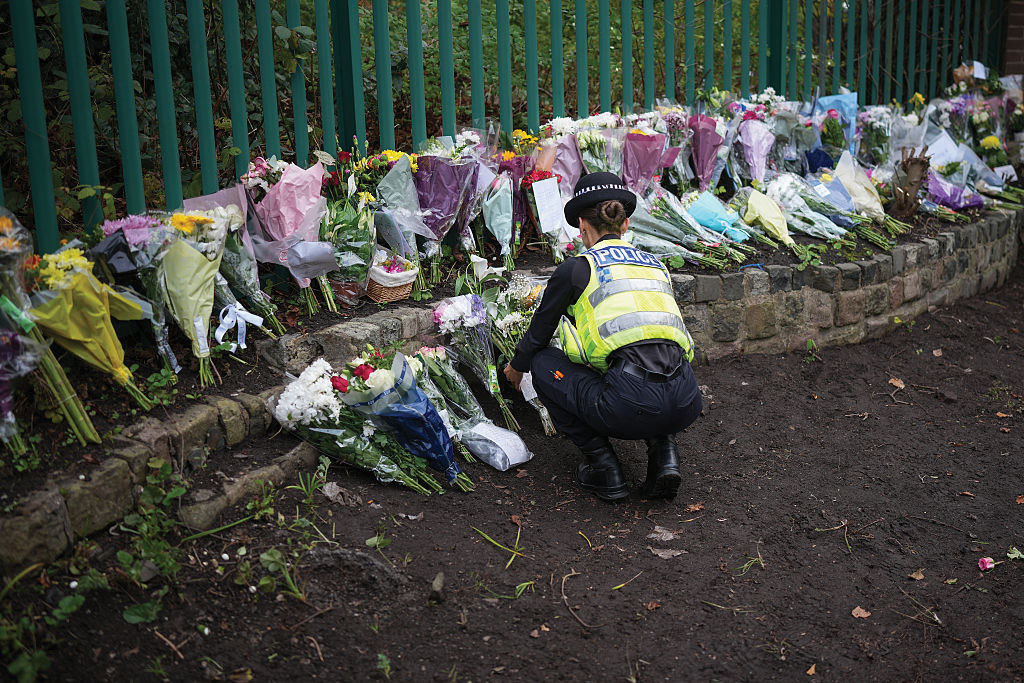
My friends and family are in shock. The Islamic terror attack on Yom Kippur left two people dead and three injured at the Heaton Park synagogue in Manchester, England. The attacker was a man named Jihad. A question being asked by so many British Jews is: “Should we stay in Britain?“ Personally, I think things are going to turn around and I’m optimistic about the future for Anglo-Jewry.

This is a difficult time. I’m currently in Los Angeles and still reeling about the news from home. There is an outcry in the community as people question if they are still safe, but the U.K. is not about to turn into the Islamic Republic of Great Britain.

First, some context. Manchester has a beautiful Jewish community. It’s a center for Jewish life in Northern England, its frequently-grey skies sometimes manage at least two days of sunshine per year and its Jewish population is around 30,000 people.

I spent several Shabbats in North Manchester during the last year, since I was rehearsing my recent play nearby. In July I performed the play at the Manchester Jewish Museum en route to the Edinburgh Festival, and the community was as welcoming and warm as ever. Manchester has been a good place for Jewish life.

Nevertheless, the Anglo-Jewish community is in turmoil. This terror attack was not a “wake up” moment but a “we told you so” moment. There have been regular antisemitic rallies happening in London for two years since Oct. 7, and a demonstration even took place in Manchester following the attack, along with others around the U.K. They are presented as pro-Palestine rallies, but as with everywhere else, when protesters are chanting “Globalize the Intifada,” it is a call to kill Jews. This was even more explicit at Glastonbury Festival, where a performer chanted, “Death, death to the IDF!” I think of my family and friends who are serving in the Israeli Defense Forces, and new friends I made whilst volunteering in the summer of 2024 at healing events for wounded IDF soldiers. The BBC broadcast the “death to [Jews]” chant before the typical retroactive “whoops, we shouldn’t have done that” apology.

The British Broadcasting Corporation (BBC) is in a mess. It is a nationalized organization of television, radio and online media channels, paid for by national taxes. Whilst it has some pro-Jewish elements, BBC news frequently misreports events in Israel from the anti-Zionist perspective, and occasionally issues apologies. On the other hand, the corporation regularly includes religious programming, and the current Chief Rabbi Ephraim Mirvis is often heard on BBC radio. I personally had a great decade recording regular “Pause for Thought” national broadcasts in the 2000s, which were 2.5-minute spiritual broadcasts that shared a Jewish/Torah idea with a universal message. We always used to enjoy our emeritus Chief Rabbi Sacks’ annual pre-Rosh Hashanah television program. Despite the positives, it regularly feels like the BBC does not like Jews. 

I am nevertheless optimistic about the future of Jewish life in Britain. The first reason is because the current problems are not an intrinsically British problem, but an Islamic problem. The British people are frustrated and angry with somewhat-uncontrolled immigration from illegal migrants who arrive in Britain on small boats that have sailed (or rowed) across the English Channel from France. They are fed up with the tolerance of Sharia law in certain towns, and specifically the lack of integration into British culture. It makes no difference if your heritage is Jamaican, Indian, Jewish or whatever, but you are expected to integrate; insisting on Sharia law is not integration. The British people saw what happened in the U.S. with the MAGA revolution, and many are secretly saying “we want some of that.” MEGA baseball caps are even starting to emerge, to Make England Great Again.

The U.K. revolution may happen in a number of ways. Whilst the current U.K. government is led by the left-wing Labour Party under Sir Keir Starmer, and the next general election will not happen until 2029, people are fed up. They were already fed up with the heavy socialist tax increases brought in when the government was elected in July 2024, following 14 years of Conservative rule, but the electorate has now had enough. 

There is the rise of a new party, Reform UK, led by Nigel Farage who engineered the Brexit campaign and has been described as Britain’s answer to President Trump. One of his major challenges is that he has formed a new, small party that is the third wheel in a two-party system. Polls are showing that he would overturn the system and become prime minister if there was an election tomorrow. But three years is a long time in politics, so who knows what will happen in 2029. One thing is certain; Britain will not be ruled by Sharia law. 

At times like this, I ask WWJD?, or, What Would Rabbi Jonathan Sacks Do? Our late, great, beloved Chief Rabbi was an adviser to prime ministers and royalty. I think of two conversations: the first was a fantastic event I attended in March 2002, where Rabbi Sacks had a public conversation with the brilliant academic Dr. George Steiner at U.K. Jewish Book Week in London. The conversation was about the stability of Jews in the Diaspora. Steiner, a Holocaust survivor, claimed that Jews should learn four languages and always have a suitcase packed to flee in an emergency. Rabbi Sacks had faith in Diaspora living, and believed in the stability of Jewish life in Britain. 

A second conversation with Rabbi Lord Sacks took place at his home in London in 2018. It was a private chat, just myself and Sacks over a cup of tea, and in between chatting about Hamilton, Eminem, Beethoven and Mozart, I mentioned the precarious situation of the Jews in France in light of terror attacks in Paris and the increased reports of French Jews moving to Israel. He effectively said, “Marcus, it’s not so bad,” pointing out that at the time the French community was around half a million people, and it still is. 

This is my feeling about the situation today for Anglo-Jewry. In recent years I’ve spent a lot of time in England, I feel comfortable there, and wear my kippah in public. Naturally, I avoid doing that in certain areas. But I am also careful in certain areas in Los Angeles.  

Perhaps it is helpful for Jews to have a couple of passports. It is definitely helpful to choose faith over fear, and find some optimism amidst the current darkness. Jews were resettled in England in 1656 after being expelled in 1290. Three years is a long time in politics, and 368 years is a very long time for a Jewish community to successfully remain in one country. The Anglo-Jewish story is not over, and there is hope yet to come.


Marcus J Freed is an actor and writer.

Manchester: A Personal Response from an Englishman in LA Read More »

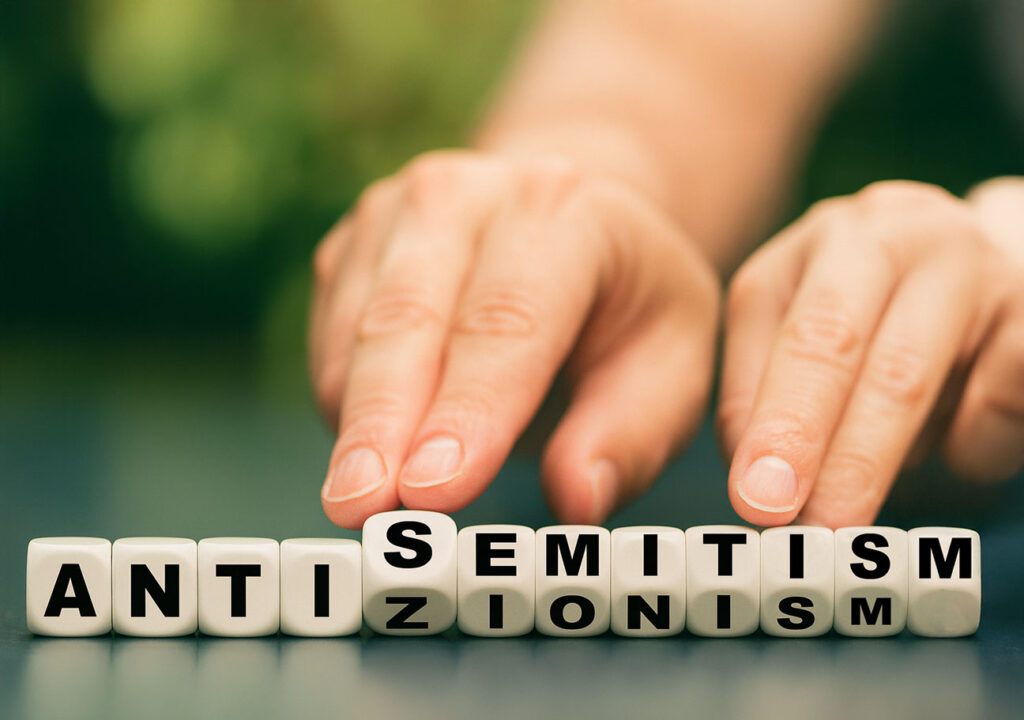
Zionism Doesn’t Need Antisemitism to Defend Itself

If Zionism has become a poisoned idea, how does one defend it? Said another way, how does one defend something that is so unpopular? It’d be like trying to defend apartheid in a world that is anti-apartheid.

This conundrum has bedeviled efforts to defend Israel. In the wake of Oct. 7 and the Gaza war, Israel has become a pariah state. Truth be damned, accusations of genocide, apartheid and colonialism are routinely hurled at the Jewish state and much of the world has bought it.

The Jewish response has been that since anti-Zionism is usually a cover for antisemitism, we should focus our fight on antisemitism. What no one likes to admit is that it’s a lot easier to fight antisemitism than to fight anti-Zionism. Judaism doesn’t carry the poison of Zionism. Whereas being anti-Zionist is widely perceived as acceptable, being anti-Jewish is not.

Focusing our fight on antisemitism, then, gives us a cleaner punch against Israel haters.

So far, so good.

But have we ever asked ourselves what price we’re paying for that cleaner punch? If we fail to defend Zionism because the word has become so dirty, and jump right to antisemitism because that word is still clean, what statement are we making about Zionism?

For starters, by not confronting the poisoned view of Zionism, we’re reinforcing the poison. We’re saying that anti-Zionism is not a big enough sin on its own; that without the moral sin of antisemitism, we’re incapable of challenging the anti-Zionist poison.

In any case, calling anti-Zionists antisemites, even when true, is hardly a good defense of Zionism. It’s too easy to deny. Avoiding a direct defense of Zionism ends up undermining the very idea of Zionism, which ironically is the intent of Israel haters.

Haters aside, the truth is that Zionism isn’t a poison; anti-Zionism is. Zionism is a uniquely powerful and legitimate movement that represents the return of a persecuted people to its biblical homeland. Faced with the world’s oldest hatred, Zionism became a refuge for the world’s most hated.

Anti-Zionism, or being anti-Israel, is no less offensive than being anti-Spain or anti-Italy or anti-Finland.

If “anti” were based on truth, the world would become anti-Russia, anti-China, anti-Iran, anti-Sudan, anti-North Korea and anti any country where humanitarian horrors make Israel look like Club Med.

“What is unique about Israel is neither its history nor its conduct, but the widespread belief that its sovereignty is conditional,” Adam Kirsch writes in a must-read essay in the Jewish Quarterly titled, “The Z Word: Reclaiming Zionism.”

“When an idea is challenged, those who believe in it must be able to mount a substantive defense – to show why it is as worthy and necessary today as it was a generation or a century ago,” Kirsch writes. “For Zionists, that means reclaiming the definition of the word from its opponents.”

We won’t reclaim the word until it stands on its own. The Jewish reflex to characterize the demonizing of Zionism as an attack on all Jews is understandable. It bonds the Jews with the miracle of the Jewish state. It tells the world that messing with Israel is the same as messing with the Jews.

But however alluring that formulation is for the Jews, it’s even more attractive for Jew-haters, who get to exploit the poisoned brand of Zionism to poison Judaism, killing two Jewish birds, as it were, with one stone.

That is why Zionism must stand on its own, without the crutch of antisemitism. Keeping the focus on anti-Zionism isolates the brazen rejection of a country’s existence, an insult reserved for no other country than Israel.

No one is suggesting, of course, that we should stop fighting antisemitism. If a Jew-hater goes after a Jew because he or she is Jewish, or if any institution discriminates against Jews based on their Jewish identity, that is antisemitism, and we should fight it as such.

Similarly, when Jew-haters use their animus for Israel to go after Jews, we should defend Israel on its merits. The animus for Israel is the sin, independent of how one might feel about Jews.

Jew-haters would like nothing better than to taint Jews with the toxins they have attached to Zionism. By automatically using the antisemitism tag to defend Israel, we unwittingly follow their strategy, undermining both Zionism and Judaism.

What to do?

A good place to start would be an unapologetic campaign to make the case for Zionism, using bold messages to directly counter the poison.

In the same way that haters associate Zionism with the worst poisons of humanity, we should go in the opposite direction and associate Zionism with the best things humanity has to offer.

Israel is far from perfect and has its share of flaws, but that doesn’t mean we can’t associate Zionism with its true ideals of hope, success against all odds, a better future, a diverse society, universal right to sovereignty, self-correction and basic freedoms.

If our enemies have the chutzpah to poison Zionism with lies, we ought to have the chutzpah to defend Zionism with its own soulful truth, without needing the cavalry of antisemitism.

Zionism Doesn’t Need Antisemitism to Defend Itself Read More »

UC President Directs Campuses to Enforce Policies Prohibiting Unlawful Protest in Advance of October 7th

Two years after the Hamas massacre of October 7, UC leaders are taking no chances.

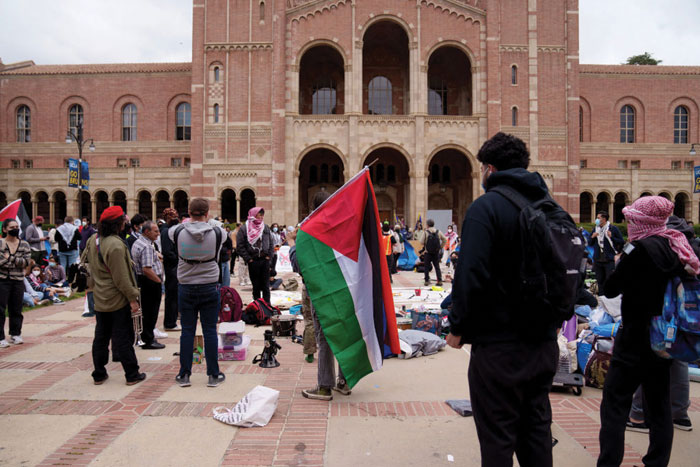
UC President James B. Milliken on Friday ordered all ten campuses to strictly enforce system policies against unlawful protest ahead of the two-year anniversary of October, signaling that maintaining campus order and protecting students from harassment are top priorities as demonstrations are expected across the system.

In a letter obtained by the Jewish Journal, Milliken acknowledged that the attacks and the war that followed “have deeply and personally affected members of the UC community over the last two years.” He urged chancellors to apply university rules consistently and to ensure demonstrations are managed “lawfully, safely, pursuant to university policy, and without disruption to essential university functions, while also respecting lawful speech and assembly.”

At the center of his directive are the UC system’s Time, Place, and Manner (TPM) policies — the framework that regulates on-campus protests. Milliken emphasized that the rules are essential to protecting free expression while preventing intimidation and safeguarding the university’s ability to function.

The directive comes a few months after UC reached a legal settlement with Jewish students and alumni who alleged administrators failed to protect them from harassment and intimidation. In Frankel v. University of California, plaintiffs described protesters establishing “Jew-free zones” and blocking Jewish students from libraries and classrooms.

Faculty leaders have also pressed the university to act more decisively. Kira Stein, chair of the Jewish Faculty Resilience Group at UCLA, wrote recently in the Los Angeles Times: “Over the past 18 months, [the Jewish Faculty Resilience Group] has provided UC leaders with evidence and a roadmap to address antisemitism … The real question is whether the university’s leaders, faculty and the media have studied this evidence with the seriousness it deserves — or skimmed past it, choosing the comfort of distance over the responsibility of action.”

Milliken instructed all UC chancellors to require that all demonstrations be scheduled through proper channels and to remind student groups, faculty, and outside actors that following conduct policies is mandatory. Violations, he warned, may lead to sanctions “up to and including removal from campus or disciplinary measures.”

He also directed administrators to coordinate closely with campus police, legal counsel, student affairs leaders, and safety officials to review staffing, emergency protocols, and crowd management strategies. The University of California — serving nearly 300,000 students across ten campuses — has been a flashpoint for debates over Israel and Gaza, with last year’s October 7th anniversary triggering widespread protests that required significant security measures.

Some Jewish advocacy groups have reported UC has begun taking more visible steps to respond to antisemitism. In a recent statement, the Jewish Public Affairs Committee of California (JPAC) praised recognized that the UC system “has taken steps to counter antisemitism and ensure the safety and inclusion of Jewish students and faculty,” adding that “UCLA’s new Chancellor Julio Frenk is an active partner and champion in these efforts, making it clear through actions and policies that antisemitism has no place on campus.”

The anniversary will again test UC’s ability to balance free expression with safety. Milliken closed his letter by underscoring that responsibility: “It is our responsibility to see that we ensure the right to free expression and at the same time protect public safety, keep university operations running, and preserve community well-being.”

UC President Directs Campuses to Enforce Policies Prohibiting Unlawful Protest in Advance of October 7th Read More »