fbpx

‘Ali G: Who Is I?’: Two Decades Later, Sacha Baron Cohen Returns as Ali G

Sacha Baron Cohen is one of the comic geniuses of our time.

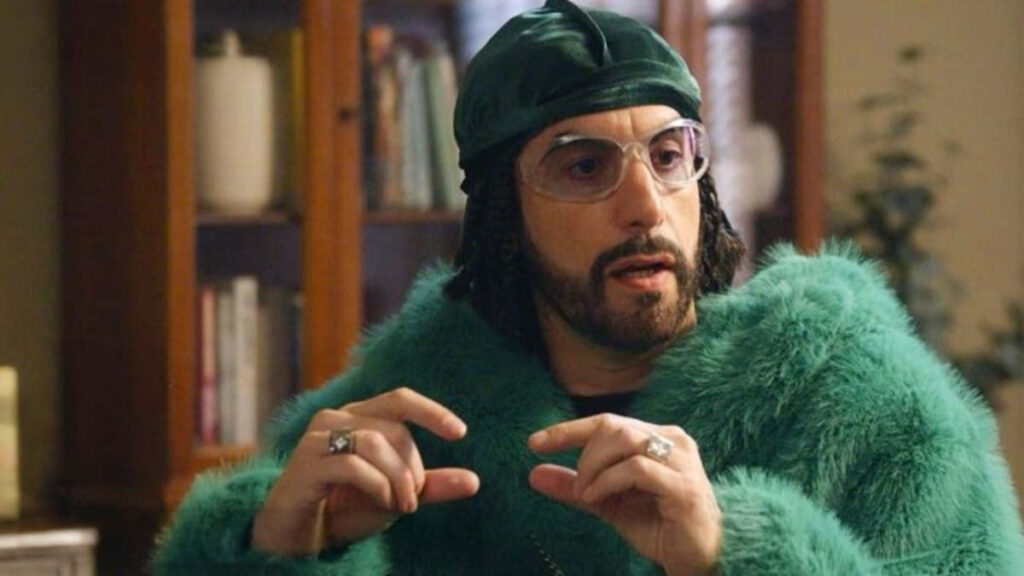
The British born comedian became known in America with HBO’s “Da Ali G Show.” Wearing a doo-rag, sunglasses, and pretending to be totally stupid, Ali G would he ask Donald Trump what he thought of an ice-cream glove, made Andy Rooney of “60 Minutes” end an interview in anger, and asked a rabbi and a priest why he saw nuns that were strippers. He’d mix in a legit question here and there. Cohen would get international fame, taking one of the characters from the show, a mustachioed man from Kazakhstan who hates Jews, claims his sister is a prostitute and says women and monkeys have similar driving skills. With a reported budget of $18 million, it had a worldwide gross of nearly $263 million, despite a controversial on-screen fight with his assistant Azamat, played by Ken Davitian. Disturbingly, he was able to get a crowd in an Arizona bar to sing along on a song with a chorus of “Throw the Jews down the well so my country can be free,”. He had anothersuccess with the film “Bruno,” a flamboyantly gay fashion critic who convinced Paula Abdul to sit on a man and use him as a chair.

How Crazy Can You Get?

Cohen showed himself to have serious acting chops, playing Mossad agent Eli Cohen in the Netflix series “The Spy,” but the first film Cohen made based on his characters, the scripted comedy “Ali G Indahouse,” was a critical and commercial failure. He triumphally returns to Ali G in his new Showtime movie “Ali G: Who Iz I?” But once you’ve done a naked fight,(“Borat”) and staged a gay kiss in a cage in a homophobic town (“Bruno”), what can you do you top it?

On the basis of this movie, his answer is to repeat what worked before. Ali G still wears a durag, big sunglassesand speaks in the same South London Rasta rapper patois. He arrives in America convinced that HBO has picked up season three of “Da Ali G Show,” only to find out – after splashing for a $1,200 lunch – that the offer is from 20 years ago, and no longer valid. His girlfriend, Julie, who is heavily pregnant (when they visit an OB/GYN he insists the doctor tell her it’s gas, or “a big poo”), is along for the ride.

The unborn child is the spark for the movie’s second half. Nira Cain-N’Degeocello, a liberal white professor from Berkeley (also played by Baron Cohen), accuses Ali G of cultural appropriation, notwithstanding his own clumsy attempts to look black. He manages to get Ali G cancelled, but Ali is offered a chance to host a libertarian-backed “Free Speech Show,” where audience members – including disgraced former U.S. House member George Santos – vie to see who can stuff the most dolls – representing immigrants, liberals and intellectuals – into showers and gas them with Zyklon-B and are led in Elon Musk styled Nazi salutes.

At the same time, Cain-N’Degeocello hires Erran Moran (also Baron Cohen), a fitness instructor who may (or may not) be a Mossad agent, to train three locals for a mission to kidnap Julie’s newborn baby and ferry it to Mexico. When Morad trains the men, he uses the Hebrew words for men’s sexual organs and equips them with a very bizarre weapon. It’s hilarious to those who know Hebrew and still funny to those who don’t.  The film starts out a bit slow but quickly gains steam. It is a wonder that during some of the gags, Cohen was not arrested by police.

Did the new comedy landscape limit what Cohen could do in this movie?

In 2026, there is hypersensitivity and pressure to be politically correct in a tradeoff, there is a preference to make a film that has fewer laughs, if it will get less criticism. The result is predictable and boring comedies. 2023’s ‘No Hard Feelings” with Jennifer Lawrence, and Jeremy Garelick’s excellent “Rolling Loud” with Owen Wilson, are successful efforts to bring back what is now considering somewhat risqué comedy. There is no way to know if there are things that Cohen wanted to do in this movie but couldn’t pull off. But what he did was not only very funny, but very daring. Remember, the actual country of Kazakhstan was angry at Cohen and its politicians felt obligated to release statements that the film/character were not real, perhaps because they are stupid, though it’s a testament to Cohen’s skill.

A Victim of His Own Greatness?

There will be those who see this film and say it’s not as funny as “Borat” or “Bruno.” That would be true, but one cannot expect a generational talent to repeat the same level of brilliance. One the cat’s out of the bag; you can’t expect the same cat to show up. There were critics who lamented that Michael Jackson’s “Dangerous” was not as good as “Thriller” and “Bad.”

Don’t Worry, Be Happy

Cohen has had an amazing career, and it’s a relief to see that he isn’t giving up and his love of comedy brought him to do another film. I’m sure there are some that want him to create new characters. But they should understand it’s one thing to be a character on “Saturday Night Live” for sketches. It’s quite another animal to have to be in the real world and convince people that you are real. As someone who fell in love with Cohen’s humor of Ali G when the show first aired on HBO in 2000, I won’t get tired of his humor. Anyone who loves comedy should go see the film. Anyone offended by microaggressions might not want to. Cohen is always clever and it’s hard to believe he convinced these morons to do insane things. It’s a credit to his determination and originality. I will be looking forward to his next film or TV show.

Cohen has had an amazing career, and it’s a relief to see that he isn’t giving up and his love of comedy brought him to do another film.

‘Ali G: Who Is I?’: Two Decades Later, Sacha Baron Cohen Returns as Ali G Read More »

Israeli Comedian Yohay Sponder Shines at Historic NYC Theater

Could an Israeli comedian who wasn’t totally fluent English perform and be a hit in America?

This is a question Yohay Sponder pondered some years ago. Along with famed Israeli comedian Shahar Hason, they were both household names in Israel and Sponder’s “Funny Monday” shows were in English.

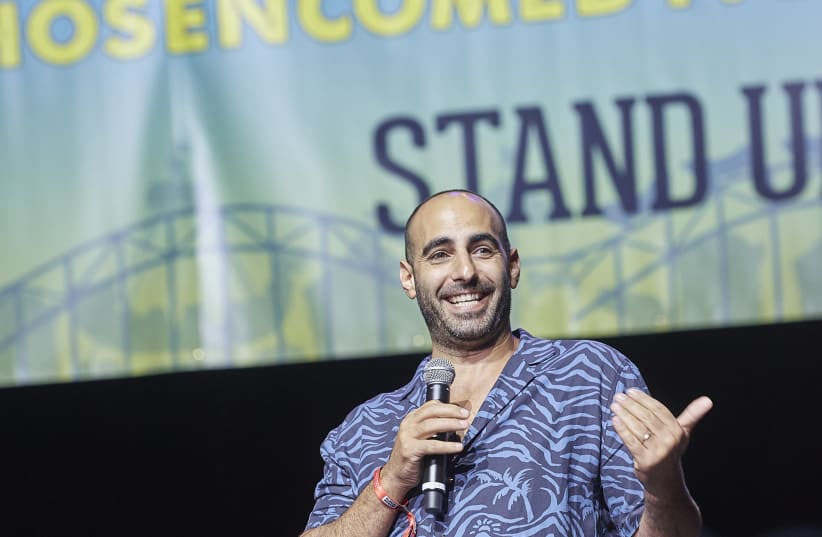
I was in the crowd of several thousand who watched Sponder five minute set at the Chosen Comedy Festival in Brooklyn in 2022. Modi (Rosenfeld) announced him only as Yohay and nobody knew who he was. He made some brash jokes, and it was clear his blunt style was needed. Several people in the audience I spoke to were not impressed. I was.

Dani Zoldan, owner of Stand UP NY, said the success couldn’t have happened to a better person.

“In four years, he’s had a great rise,” Zoldan told The Journal. “I never heard of him when I did the First Chosen Comedy Festival in Brooklyn, and I had to be convinced by a producer to put him on. It was kind of a favor. To see him now doing the Beacon Theater on multiple nights, it’s great to see, not only because of his talent, and how he is resonating with audiences, but because he is a real mensch.”

“To see him now doing (New York’s) Beacon Theater on multiple nights, it’s great to see, not only because of his talent, and how he is resonating with audiences, but because he is a real mensch.” – Dani Zoldan

Dan Singer, the cantor of the Stephen Wise Synagogue in Manhattan, was also impressed by Sponder.

“He has a magnetic, warm personality and is clearly someone everyone in the room would love to hang with,” Singer said.  “He speaks of positivity all the time, something we desperately need.”

When he headlined Stand Up NY, Sponder had a greater command of English and only a small bit of nerves. At the Beacon Theater, it was clear he had no nerves and a total command of the stage.

Sponder gave respect to Jerry Seinfeld, who continues his residency at the Beacon and told the crowd that he was in America on a tourist visa.

“Please, let’s keep it between us,” Sponder joked.

Sponder showed great confidence. Crowd work can feel like a highwire act with no net, but Sponder stopped to ask a man why he was walking out. The man, who said his name was David said he was going to the bathroom. He came back a few minutes later with M&M’s and he tried to give some to Sponder but only one came out of the packet.

Sponder realized how crazy Israelis are when they were upset that Iran threatened to wipe out the country in nine hours, but after the missile attack, it didn’t happen.

He has done shows in Israel when there were threats of Iranian attacks and only about 20 people came. His fear was there would be an attack and the media would report that only 20 people came to his show.

What is unique to Israel is they have “rescue flights” where people leave their margaritas by the pool and run from whatever country they are in to get to the war to defend the country.

He also joked that the exploding pager operation in Lebanon performed a bris on many Hezbollah operatives.

“They bought the pagers from us,” he said. “We made money that day … How did they not realize it was us when we told them ‘zero percent discount sir.’””

In a Q&A with audience members one patron asked Sponder what he thought of the terrorist attack on a flydubai flight.

“Don’t fly Dubai,” was his reply.

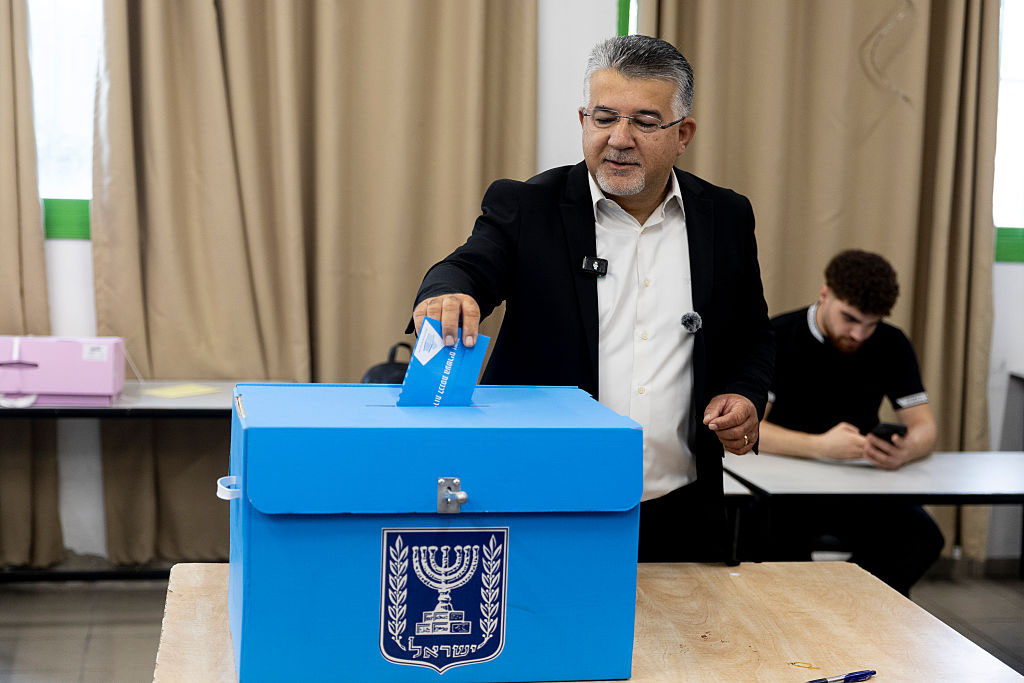
A person asked Sponder who would be his candidate to vote for in the Israeli election and Sponder would not say who he would vote for, but that it is important for people to vote.

He called French leader Emanuel Macron “the biggest useful idiot of all time” for his ineffective statements as France was burning with protests. It was unnecessary for Macron to say he did not participate in the war in against Iran, as this was already clear. He said France isn’t know to make war but to tell the other side it is surrendering.

“You’re named after the cookie, we’re going to call him for the dessert.”

He shot a special in 2025, “Self-Loving Jew,” in response to self-hating Jews. It was warmly received, but there were some threats.

Sponder’s rise in Jewish comedy and is not only a reflection of the hard work he put in to gain enough fluency in English to perform “Funny Monday” in English, but his understanding of the need for humor in tough times. He is a fearless comedian.

Sponder tells a story about a January 2025 show at the Boom Chicago comedy club that was cancelled; management told him there were threats and they would help him find a Jewish venue. He said that was discrimination.

New Yorker Nike Silberstein told The Journal that to her, Sponder is more than a comedian.

“He makes me feel stronger as a Jew,” she said. “His humor is great, but he also says serious things that would be useful in conversations, like his joke when a British person tells him Israelis are colonists and he explains how absurd a thing that is to say. He’s wonderful and I was an early fan who is not surprised at him getting all the love he deserves performing at big American venues.”

Sponder talked about having Polish and Moroccan lineage and is the grandson of Holocaust survivors. He also took a moment to speak seriously and said when Jews are forced out of a place, it is a sign of an imminent downfall of the society.

“Love is the most important part of the Jewish people,” he told the crowd.

He joked about his mother-in-law speaking in Russian, which he said is the worst language if you don’t understand it and requires you to twist your face to speak it.

Sponder’s gamble on himself as paid off and he continues his Genesis tour at Laugh Factory in Las Vegas on Oct. 28, before heading back to Isreal. He will perform with Elon Gold on December 28 in Jerusalem, for a “Homecoming “ tour that includes shows in Haifa and Tel Aviv.

And he’ll be performing at the Wiltern in Los Angeles on April 1.

In an interview well before his show, Sponder told The Journal: “We have always had enemies, and it should not come as surprise. We have to be strong and do the best we can and be positive. Being worried all the time doesn’t help. I try to make people laugh and I want people to take pride in being Jewish.”

Israeli Comedian Yohay Sponder Shines at Historic NYC Theater Read More »

JIVE Brings Jewish Music to Life in a Concert of Hope and Resilience

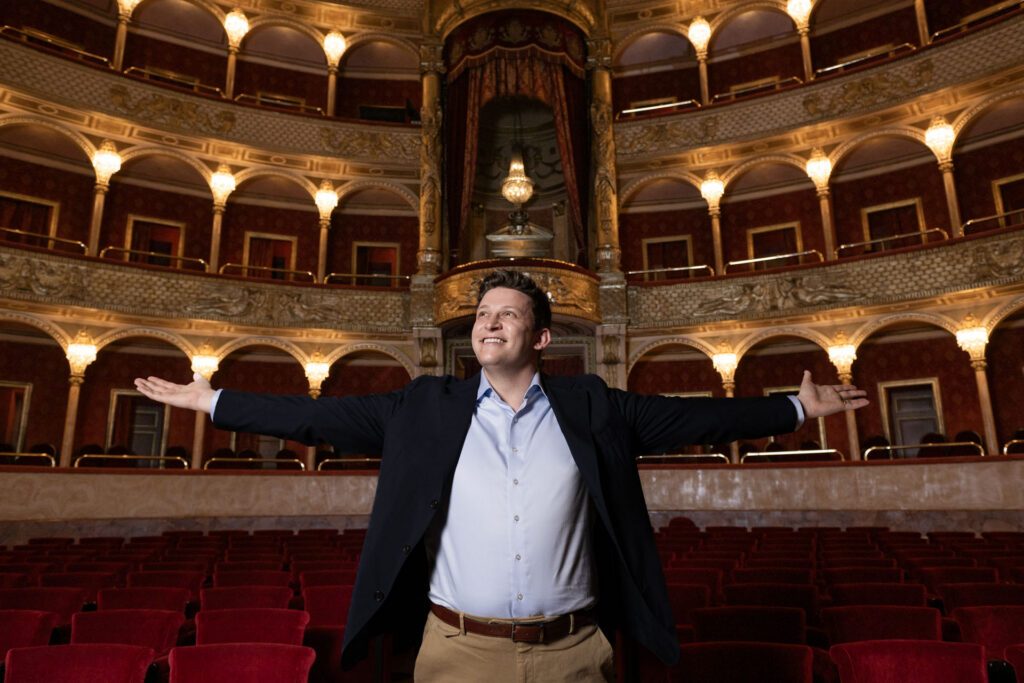
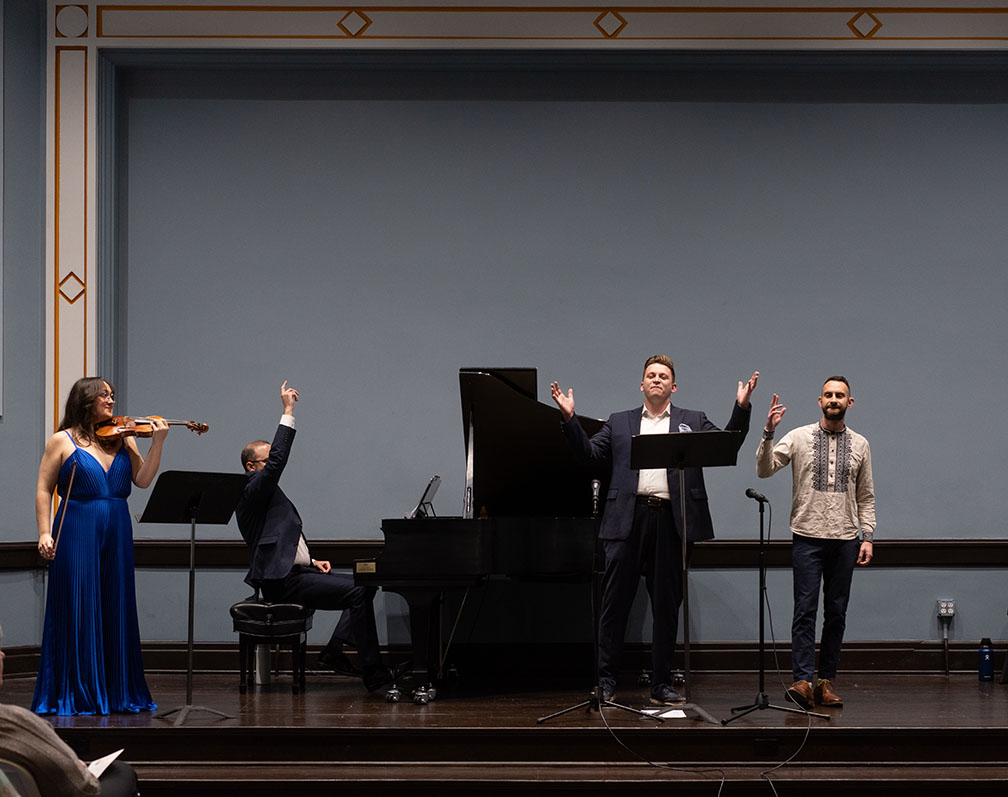
At the Goldrich Cultural Center at The Grove in Los Angeles, music will tell a story that spans generations, continents and some of the darkest chapters in Jewish history. On Nov. 4 and 5, countertenor Aryeh Nussbaum Cohen, baritone and cantorial soloist Simon Barrad, and pianist and music director Ronny Michael Greenberg will take the stage for “It’s Now or Never: Songs of Hope and Resilience,” a musical tribute to Holocaust survivor Renée Firestone. Firestone, 102, is a fashion designer and entrepreneur who for nearly half a century has dedicated herself to Holocaust education, becoming a longtime voice for remembrance. The program weaves together Yiddish songs, German lieder, jazz, musical theater and works by composers murdered during the Holocaust, alongside the world premiere of a new song cycle inspired by Firestone’s life.

But this ambitious production is also part of something larger. The three musicians are the driving force behind JIVE — Jewish Innovative Voices & Experiences — an initiative they founded to explore Jewish music beyond the familiar boundaries of synagogue music and traditional repertoire. Moving freely between classical opera, Yiddish and Ladino songs, Broadway, jazz and contemporary compositions, they are creating a musical space where different Jewish traditions and generations meet. Greenberg, who is also a creative producer, founded the nonprofit Taste of Talent, through which he develops musical projects that bring together music, culture and community. Their approach is both a celebration of Jewish musical heritage and an effort to give it new life, reaching audiences who might not otherwise encounter much of this repertoire.

The collaboration between Nussbaum Cohen and Barrad might never have happened had it not been for the pandemic. The two first met briefly at a dinner in Cincinnati in 2018, when both were performing there. A year later, when Barrad’s wife joined the Adler Fellowship program at San Francisco Opera, where Nussbaum Cohen was already a fellow, they got to know each other better.

Then came 2020. With their national and international performance contracts cancelled, the two found themselves in San Francisco with an unexpected amount of time on their hands. They began playing tennis once a week and spending time together, gradually discovering a friendship that would eventually turn into a musical partnership.

Their first opportunity to perform together came that November, at an outdoor venue. Barrad arranged a setting of Gerald Cohen’s well-known Psalm 23, familiar to many synagogue congregations, as a duet for their two voices.

“I’ve been writing music for Aryeh and me to sing since 2020,” Barrad said. “The first time we sang together was kind of magical, and we knew that we had to do more.”

The success of that first arrangement was no coincidence. Barrad was struck by the unusual musical possibilities of pairing his baritone with Nussbaum Cohen’s countertenor. “It’s rooted both in Aryeh’s extraordinary musicality and ears, listening for his collaborators, but also just in the tone of a really good countertenor that can blend so well that you almost can’t tell that two voices are singing. We become one voice.”

Nussbaum Cohen explained that their different vocal ranges allow them to play with harmonies in ways that create a distinctive sound.

Photo by Tina Gutierrez

 “Simon comes higher than a traditional baritone, and I come lower than a traditional countertenor,” he said. “There will be times where Simon and I sing incredible dissonances, these kinds of notes that are close together, and then resolve into singing in unison, in a way that you can’t tell that there are two of us. We just kind of become one, and it creates this beautiful, elevated sound.”

The arrangement of Psalm 23 remains a staple of their performances. “We perform it in basically every program we do,” Nussbaum Cohen said. “It’s just magical, the arrangement that Simon wrote and the way he crafted it for our voices to go together.” Looking back at how it all began, he added, “It really was bashert.”

A week before the interview, Nussbaum Cohen had returned from Beijing, where he performed Handel’s “Julius Caesar”in the Chinese premiere of the opera. Before that, he had appeared in a contemporary opera adaptation of “King Lear” in Berlin, with another production, Gluck’s “Orfeo ed Euridice,” awaiting him in Amsterdam. His career takes him to some of the world’s leading opera houses and concert halls, but there is one kind of performance that holds a particularly personal significance for him.

“I’m a grandson of survivors, and I got my start singing in synagogue as a cantor,” he said. “The thing that fulfills my musical ‘neshama’ the most is singing music like this and bringing life to a program and a story like this. It’s really the most meaningful thing of anything that I do.”

“I’m a grandson of survivors, and I got my start singing in synagogue as a cantor. … The thing that fulfills my musical ‘neshama’ the most is singing music like this and bringing life to a program and a story like this. It’s really the most meaningful thing of anything that I do.” – Aryeh Nussbaum Cohen

That connection to his Jewish heritage has accompanied him throughout his international career. Although his opera schedule often means spending the High Holy Days wherever his work takes him, he makes a point of including Jewish music in his recitals. Last year, for example, he toured eight American cities, including concerts at New York’s Carnegie Hall and Houston’s Menil Collection. Those performances gave him an opportunity to choose his own repertoire, and he made sure every program included Jewish music.

“I’m not necessarily able to be on the bimah anymore, but I bring some of that with me wherever I go,” he said. “I always bring some of that to the traditional classical world that I’m performing in.”

His appearances in Germany have carried an additional dimension. With his mother’s family originally from Germany and his father’s from Eastern Europe, Nussbaum Cohen is acutely aware of the history behind his presence on German stages. He has performed in Berlin in nearly every season of his career, and said that rather than feeling conflicted about returning to a country responsible for the murder of so many of his relatives, he sees it as an opportunity to reclaim a place that should never have been taken away.

When he first went to perform there, his sister questioned whether he felt uncomfortable singing in a country that had been so horrific to their family. His response was unequivocal.

“For me, it’s the opposite. It’s like the ultimate middle finger back at what was done to us,” he said. “Here I am with the most Jewish name you could have, and I am being hired to be Julius Caesar or to play these big heroic roles. It doesn’t matter that I’m Jewish. I’m the best person to do the job, and I’ll be given the applause like anyone else would. For me, it’s so gratifying to reclaim what should have never been taken from us and our place in that society.”

After his grandfather died, Nussbaum Cohen reclaimed his German citizenship, partly to make working in the country easier. “It’s the least they can do, to give me back the passport that was taken from my grandfather and his parents and everyone else.”

His most recent visit to Berlin, however, was different. For the first time, he brought his 18-month-old son with him.

“It was really emotional in a way that I hadn’t expected,” he said. “Seeing my beautiful little Jewish boy bringing smiles to people around the streets and just sharing his spirit, his soul, in this place was very emotional and very gratifying.”

“It’s Now or Never: Songs of Hope and Resilience,” will be performed Nov. 4 and 5 at 7:30 p.m. at the Goldrich Cultural Center, home of Holocaust Museum LA, at The Grove (100 The Grove Drive, Los Angeles). Tickets ($54 adults, $45 seniors and $27 museum members) are available through the museum’s website.

JIVE Brings Jewish Music to Life in a Concert of Hope and Resilience Read More »

An Abdul El-Sayed Victory Would Be a Defeat for Democrats

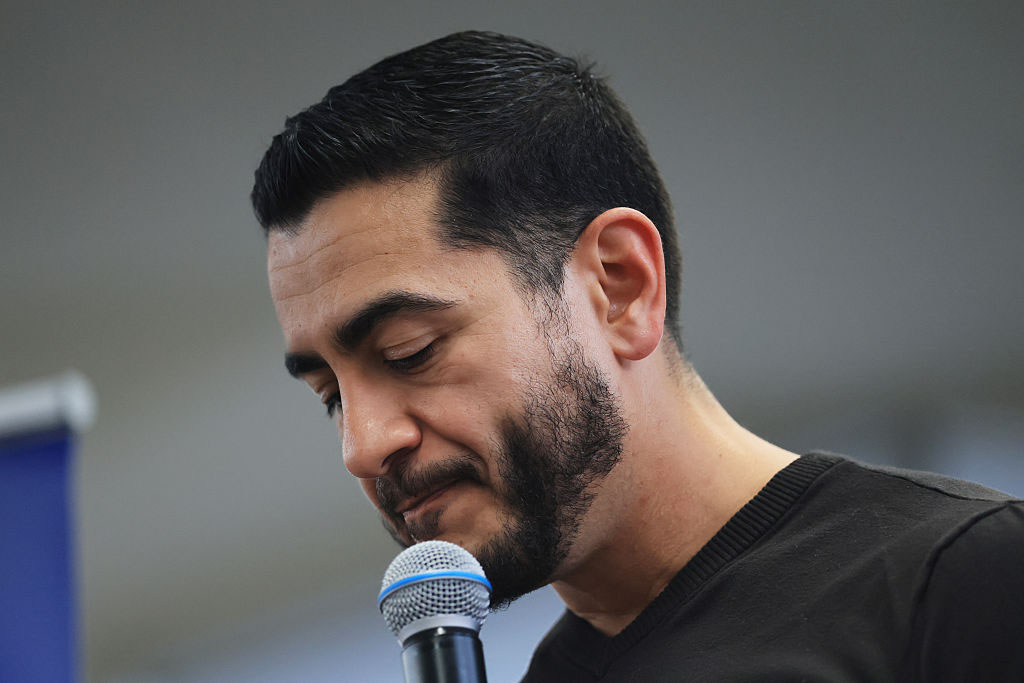
I have spent my adult life working to elect Democrats. I began as an intern in the Clinton White House, held senior-level campaign roles for Sen. Chuck Schumer, Gov. Andrew Cuomo and Gov. Wes Moore, President Biden’s super PAC, and served as a Biden delegate to the Democratic National Convention. The Democratic Party has been my political home. That is precisely why I believe it is so important to speak out against Abdul El-Sayed’s candidacy for the U.S. Senate. With a child at the University of Michigan, this election is personal. But its consequences extend far beyond Michigan.

An El-Sayed victory would send a dangerous message to Democrats across the country that inflammatory rhetoric, tolerance of antisemitism and alliances with extremists are not political liabilities but a viable path to national office. That lesson could shape the party for years.

Inflammatory accusations against Israel are not merely a feature of El-Sayed’s political identity. They ARE his political identity. In an April CNN interview, asked whether Israel’s government was as evil as Hamas, a U.S.-designated terrorist organization, he answered: “Yes.” When El-Sayed later declined to distinguish Israel from Iran as threats to America, fellow Democrat Pete Buttigieg clarified the distinction: “Iran is our enemy. Israel is not. They’re an ally, so that’s pretty clear to me.”

He has spoken of American tax dollars “killing other people’s children in Israel”. His sweeping accusations of genocide and apartheid against Israel are patently false, and his rhetoric about the killing of children to be a modern-day blood libel. Such rhetoric inflames antisemitism, normalizes hostility toward Jews and puts Jewish communities at risk.

His association with Hasan Piker is deeply disturbing. Piker campaigned with El-Sayed during the Democratic primary. At Cornell University, Piker joined a crowd chanting, “From the river to the sea, Palestine will be free.”

Just days before the election, Piker compared pro-Israel voters in West Bloomfield, a heavily Jewish Detroit suburb, to members of the Ku Klux Klan, accusing them of “Jewish supremacy.” In that community, Temple Israel was targeted in a Hezbollah-inspired terrorist attack earlier this year, with preschool children inside. El-Sayed condemned the attack but later used the phrase “hurt people hurt people,” for which he subsequently apologized.

Democratic Sen. Elissa Slotkin, who endorsed El-Sayed, condemned Piker’s remarks as antisemitic, divisive and deeply offensive.

The concern extends beyond Hasan Piker. On Thursday, El-Sayed appeared at a campaign event alongside Mayor Marcus Muhammad, whom the Washington Free Beacon identifies as a Nation of Islam student minister and supporter of Louis Farrakhan. Muhammad has promoted Farrakhan material advancing the antisemitic conspiracy theory that Jews controlled the transatlantic slave trade. That again raises questions about El-Sayed’s judgment.

Former Michigan Democratic Party chairman Lon Johnson has also criticized El-Sayed’s “reluctance to unequivocally condemn dangerous rhetoric” in the context of concerns about antisemitism.

El-Sayed denounces a political system in which “corporations and would-be oligarchs and billionaires” buy politicians. Yet his father-in-law, Tayeb Jukaku, contributed $300,000 to a super PAC supporting him, Jeffrey Soros hosted a fundraiser for him, and Rep. Alexandria Ocasio-Cortez transferred $1 million to a joint fundraising committee supporting his candidacy, according to The New York Times. The contradiction is striking.

Political parties learn from victories. Donors and aspiring candidates study which messages and coalitions succeed. Winning can make an entire campaign seem like a model.

Donald Trump carried Michigan in 2016 and 2024, underscoring its importance as a battleground. An El-Sayed victory could convince future Democrats that the very conduct their party should be rejecting is instead a winning political strategy.

Senate control matters. But a party’s health cannot be measured solely in seats. Its credibility depends on the principles it defends.

Democrats demand that Republicans confront extremism. We must apply the same standard to our own candidates.

Fellow Democrat Haley Stevens has faced fierce backlash from within her own party for endorsing Republican Mike Rogers. Her experience illustrates how quickly party loyalty can become a demand for conformity, even when Democrats believe principle requires a different choice.

I became a Democrat because I believe in tolerance, civil rights and the conviction that prejudice must be confronted rather than excused. Those commitments are precisely why I believe Abdul El-Sayed is entirely unworthy of support within the Democratic Party. And while I have spent my career electing Democrats, in this election, I would cast my vote for Republican Mike Rogers. Not because I have abandoned my party, but because I refuse to abandon the principles that brought me to it.

The Democratic Party cannot claim to stand against extremism while rewarding it at the ballot box. An El-Sayed victory might add a seat to the Democratic column, but it would send a dangerous message about what the party is willing to tolerate in pursuit of power.


Jennifer Bayer Michaels is a Democratic political advisor based in New York.

An Abdul El-Sayed Victory Would Be a Defeat for Democrats Read More »

Columbia College Votes on Anti-Israel Referendum – But School Has Yet to Reveal Results

From October 13 through 19, Columbia College students voted on a referendum outlining university divestment from Israel and closing Columbia Global Center Tel Aviv, the newest worldwide center for the university that opened this past summer. While referendum results are nonbinding and do not change the university’s policies, they can put pressure on the university to take action.

According to the Columbia Spectator, two questions on the referendum asked if Columbia should “divest stocks, funds, and endowment and withhold future investment” in “defense equipment, technology, and services companies” and “companies that profit from or financially support the State of Israel’s acts of occupation, discrimination, and violence against Palestinians.” Previously, in November of 2025, a 12-member voting committee on “socially responsible investing,” which is made up of students, faculty, and alumni, rejected three proposals putting forth a divestment from Israel.

The sixth question on the referendum asked if the global center in Tel Aviv should be shuttered. A referendum from 2024, which CU Apartheid Divest proposed and the Columbia Elections Board approved, asked students if Columbia should cancel the global center; 68.36% of respondents voted in favor of it.

As of October 30, results from the latest referendum had not been released. Columbia officials did not respond to a request for comments, but Jewish students at Columbia reacted to the news.

Galia Labowitz, a senior at Columbia University, said, “I think everyone at Columbia is honestly just exhausted. It feels like we have the same referendum debate every year.”

In October of 2020, a similar referendum asked whether the university should divest its funds, stocks, and endowment from companies that profit from or engage in Israel’s actions toward Palestinians, which the Columbia University Apartheid Divest defined. It passed, with 61.03% in favor, but it did not change the university’s investment policies.

The April 2024 referendum, which included the cancellation of the Global Center Tel Aviv, resulted in 76.55% voting in favor of financially divesting from Israel. Additionally, 65.62% voted to end the dual degree program Columbia has with Tel Aviv University.

There have been multiple reports of antisemitism at Columbia University, especially since the October 7, 2023 attacks on Israel; many occurred during the spring of 2024 encampments on campus. Several Israeli and Jewish students have filed lawsuits against the university for alleged antisemitism. In July of 2025, Columbia reached a Federal Resolution Agreement with the Trump Administration to resolve civil rights and anti-discrimination investigations linked to the protests, agreeing to pay a $200 million settlement to the federal government over the course of three years.

At best, this referendum is symbolic, and at worst, it’s divisive.” TJ Katz

TJ Katz, a junior at Columbia who is the current president of AEPi, reflected on the referendum.

“At best, this referendum is symbolic, and at worst, it’s divisive, because it doesn’t have the power to actually change how Columbia invests and handles global relationships,” he said. “All it does is pit students against each other and threaten the progress made towards a more peaceful campus.”

Columbia College Votes on Anti-Israel Referendum – But School Has Yet to Reveal Results Read More »

Anatomy of an Apartheid State

Israel held its parliamentary elections this week. And like in every election since the country’s founding, no political party managed to achieve a majority of Knesset seats to govern the nation. That’s because Israel has 11 political parties! In some elections they have had even more. There is considerable fragmentation. It takes 61 parliamentary seats to obtain a majority. (The Knesset has 120 seats.)

Benjamin Netanyahu’s Likud party received the most votes but only managed to collect 26 seats. Once again, Israel’s prime minister, whomever that should be, must assemble a coalition of other parties to form a government. Otherwise Israel’s president will be forced to call for new elections—even though voter turnout was an astounding 77.7% of the nation.

Israel is a vibrant but chaotic liberal democracy. The sheer number of viable political parties with drastically conflicting priorities is the best evidence of it. Some receive tens of thousands of votes, but in a proportional representation system, still fail to garner even a single seat. Two separate pro-cannabis parties (one the “Green Leaf”) suffered that result in past elections.

Take a guess: Are there pot-smoking parties in Arab-Muslim nations? Most permit a man to take a child bride without any political opposition. Saudi Arabia officially allows beheadings. Is there an opposition party in the Kingdom demanding un-severed heads?

But here’s the thing — Israel’s customary gridlock in cobbling together coalition governments may face a situation unlike any other democracy: cabinet members, privy to national security intelligence, who are opposed to the existence of the Jewish state. Worse still, they refuse to denounce terrorism or even call Hamas terrorists.

Israel’s customary gridlock in cobbling together coalition governments may face a situation unlike any other democracy: cabinet members, privy to national security intelligence, who are opposed to the existence of the Jewish state. Worse still, they refuse to denounce terrorism or even call Hamas terrorists.

Netanyahu’s former coalition partners—mostly religious parties—fell very short in this past election. Four other Zionist opposition parties together received 48 seats, but they have refused to serve in a Netanyahu-led government. But two Arab non-Zionist parties together claimed 19 seats—a truly stunning showing! (Netanyahu is accusing them of fraud and bribery, with Qatari money possibly boosting voter turnout.)

If the Zionist opposition parties join up with anti-Zionist, terror-neutral Arabs, they would have 67 seats, and a government could be formed.

But what kind of a coalition would that look like? The leader of one of those opposition parties, Avigdor Liberman, said on Friday: “We will not sit with supporters of terrorism!” (Several of the candidates in one of the Arab parties openly celebrated October 7, 2023.) But he said that he will not join a Netanyahu government, either.

Yet, one Arab political leader (an Islamist with ties to the Muslim Brotherhood), joined an Israeli coalition government in 2021. So, there is precedent for such a mixed-marriage of politicians who might as well engage in mixed-martial arts.

But 2021 was not 2026, with Israelis reeling from the post-October 7 realization of just how far Palestinians are willing to go to kill Jews. Hamas remains in Gaza, fully weaponized. Hezbollah is mobilizing missiles in Lebanon. The Houthis are already lofting them from Yemen. And a formidable IRGC still prowls Iran.

Can Israel afford to have a Muslim politician who is agnostic about terror serve in the cabinet and attend security briefings?

Who knows how this will all work out? But I do know one thing: A society so open and committed to its democratic character that it permits Arabs and Islamists who wish harm to come to the Jewish state to sit in parliament, and are asked to join the governing coalition, is not an apartheid state.

Imagine if America’s Secretary of the Interior was sympathetic to what happened on 9/11.

Jew-haters like Zohran Mamdani, Abdul El-Sayed, Ilhan Omar, Rashida Tlaib and, of course, Bernie Sanders—and any number of other self-loathing Jews of political influence—repeatedly slander Israel as an apartheid state knowing full well the absurdity of such a charge.

Apartheid, as it was practiced in South Africa, is defined as institutionalized racial segregation that literally results in “apartness” or “separation.”

But Muslims and Arabs, who constitute 20% of Israel’s population, are fully integrated into Israel’s civil society. There are no legal restrictions or separations of any kind. Jews and Arabs ride the same public transports, eat in the same restaurants, and as we can see from this recent electoral predicament, vote in the same elections and serve in the same parliament.

Not to mention serve in the IDF and occupy seats on the Supreme Court. Moreover, Islam is not a race but a religion, so apartheid could never have applied. But just in case, Israel recently crowned a Black Israeli from Ethiopia as Miss Israel.

What an insult to Black South Africans to compare their Soweto degradation to the Shangri-la that is Israel for Muslims.

But a more important point must be made here, something we have seen in global cities such as London, Rotterdam and New York, and in smaller locales such as Dearborn, Michigan and Hamtramck, Michigan, and all throughout Minnesota: Muslims vote, in large numbers, and in a bloc.

They might not be enamored with Western values, but they surely know how to participate in representative democracy. Reckless immigration policies throughout the West have resulted in electoral armies of Muslims doing battle, fabulously, at the ballot box.

Nineteen seat-holders out of 120 in the Knesset would end parliament in a heartbeat and hand the keys to Israel’s Jewish kingdom over to Hamas. They have been given the civil rights to make such an outcome real. Foolishly deluded nations have done so all throughout the Western world: allowed their constitutional freedoms to be manipulated by an Islamic global agenda.

It starts small, mostly in local governments. It might even seem innocuous or churlish to deny calls to prayer in public spaces, No-Go Zones, Sharia courts, and agitators exercising their First Amendment rights to scream: “Globalize the Intifada!” and “Death to America!”

But these are not small concessions. They are very different in kind and character than past First Amendment challenges: Christian prayers in public schools and protest signs that read, “F— the Draft!” Devout Christians and draft-dodgers were never paving the way toward a new American theocracy on the level of an Islamic caliphate.

What we are seeing around the West is the leveraging of democracy in ways that endanger the broader freedoms that would otherwise be enjoyed by all, and the granting of rights that exceed what liberalism had ever envisioned.

What we are seeing around the West is the leveraging of democracy in ways that endanger the broader freedoms that would otherwise be enjoyed by all, and the granting of rights that exceed what liberalism had ever envisioned.

Thomas Jefferson sent a fledgling American Navy to do battle against Barbary pirates. European nations fought off invading Muslim armies for nearly 1,000 years.

Meanwhile, duly elected lawmakers like Omar in Minnesota and Tlaib in Michigan (and the aspiring El-Sayed) slander the Jewish state with lies about “apartheid” and “genocide,” blame Jews for the world’s problems, preach anti-American propaganda, all without having to swing a sword or fire a shot.


Thane Rosenbaum is a novelist, essayist, law professor and Distinguished University Professor at Touro University, where he directs the Forum on Life, Culture & Society. He is a contributing writer for White Rose magazine. His most recent book is titled, “Beyond Proportionality: Israel’s Just War in Gaza.”

Anatomy of an Apartheid State Read More »

A Table in Portugal: Your Guide to an Immersive Culinary (and yes Kosher) Journey.

I travel to Portugal far more often than my passport would suggest.  One pour of twenty-year tawny Port, amber at the rim and smelling of orange peel and toasted walnuts, and I can see the rabelo boats rocking at their moorings in Vila Nova de Gaia. A spoonful of Serra da Estrela cheese takes me up into the mountains, where the air smells of woodsmoke and the stone villages close their shutters early against the cold. That is the quiet magic of Portuguese food. It carries you somewhere, and never more so than in late autumn and winter, when the whole country gathers around the table.

This image has an empty alt attribute; its file name is image-20.png

Where my love of food and wine began

My parents were both excellent chefs, and wine was always part of our table. My very first taste of alcohol was a glass of Champagne in Épinay, in France, with my first real food and wine pairing, and it has shaped the way I travel ever since. I travel slowly, I eat where the locals eat, and wherever I go, I try to book a cooking class.

My advice for your culinary trip to Portugal: do the same. Research the places recommended for personal, unhurried experiences, then check that research again. Ask where the locals eat. Those are almost always the best tables. If you are working with us we will confirm everything according to your travel style and needs.

Portugal’s food carries traces of the Jewish families who lived, cooked and kept their traditions here, sometimes in secret, for centuries. Today it is easier than ever to travel while kosher, and I share how below, along with pro tips from our partners at NONIUS Travel, who design private food and heritage journeys across Portugal.

Why November and the Holiday Season Are Great Times for a Culinary Trip to Portugal.

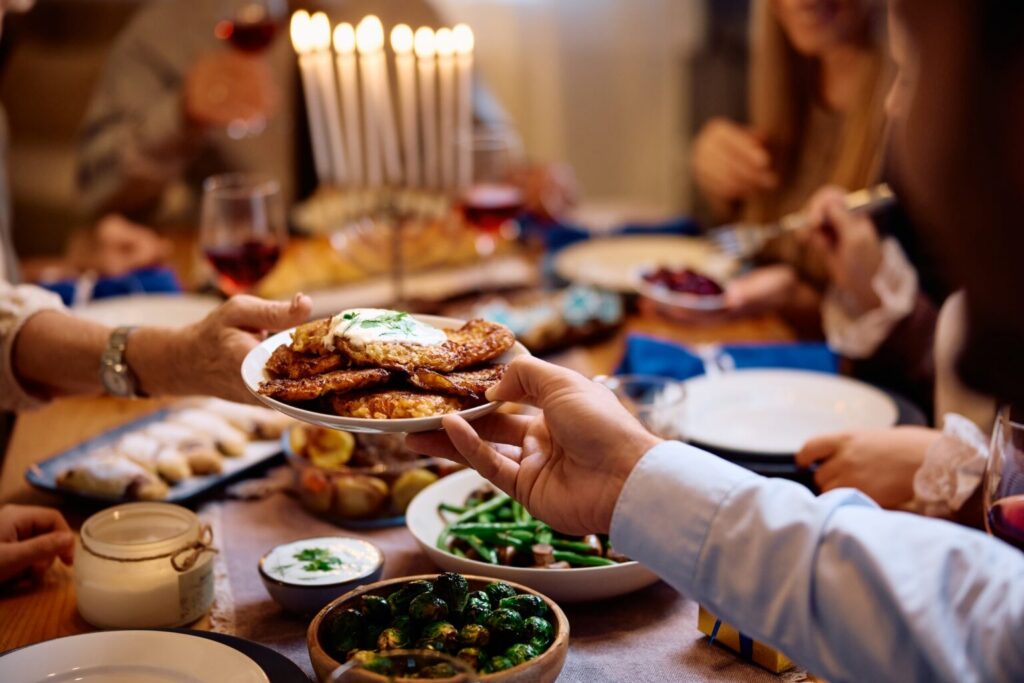
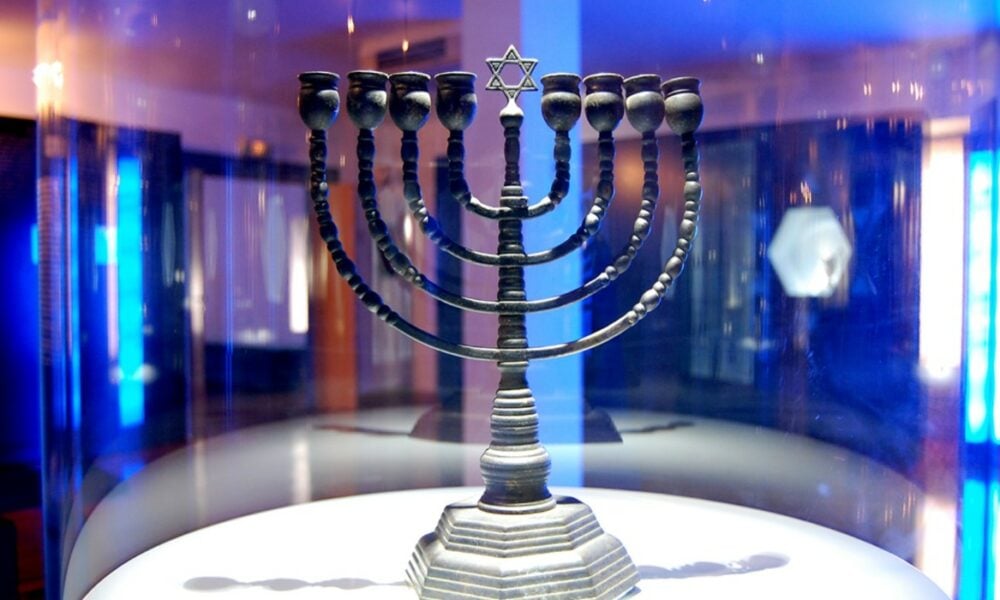
This image has an empty alt attribute; its file name is image-3.png When clients ask me when to go to Portugal for the food, I say November. The harvest is in, the first new wine is being poured, and new olive oil runs green and peppery from the mills. On November 11, St Martin’s Day, villages roast chestnuts over open fires and hand them out hot in paper cones. The summer crowds are gone, the light turns soft and golden, and the evenings are cool enough for a long lunch. December is just as rewarding. This year Hanukkah begins at sundown on Friday, December 4, and runs through December 12, when Lisbon and Porto are already glowing with winter lights. Lighting the menorah in a city where Jewish families once had to keep their faith behind closed doors is a moving way to spend the holiday, and Porto’s Kadoorie Mekor Haim Synagogue and Lisbon’s Shaare Tikva Synagogue both welcome visitors.

NONIUS Pro Tip: If your dates are flexible, aim for the week around November 11. Many villages hold their own celebration, and you can join simply by turning up.

A week in Lisbon over Thanksgiving or Hanukkah can still come together this year. Reach out to me and I will see what is available. Jewels of Faith: Portugal's Vibrant Synagogues - The Lisbon Guide - Updated for 2026

The Tasca, Where Portugal Actually Eats.

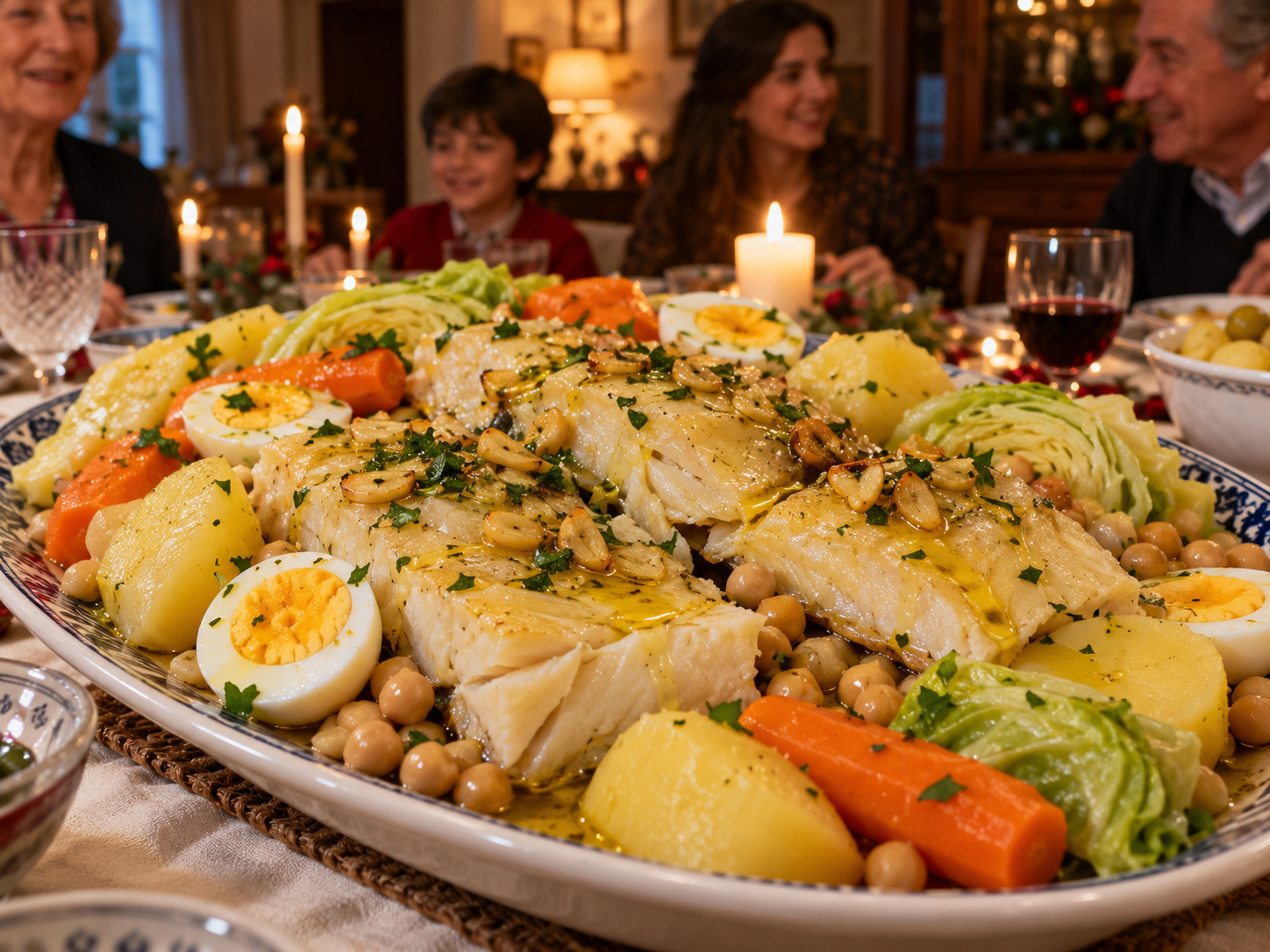
If you take one thing from this guide, let it be the tasca, the small family-run dining room where Portugal actually eats. Look for paper tablecloths, a handwritten menu and a kitchen no bigger than a closet. Grilled fish arrives blistered from the coals, a stew has been simmering since morning, and three generations share the next table with nobody in a hurry to leave. Many tascas are not kosher, but even travelers who keep kosher can enjoy the experience with a fish dish, and every visitor can learn from how Portugal eats: slowly, generously and together.

NONIUS Pro Tip: Go at lunchtime and order the prato do dia, the dish of the day. It is what the kitchen is proudest of and usually the best value on the menu.

The Regions on a Plate.

Living in the Alentejo: an oasis of peace and authentic beauty" - Divine Home The Alentejo. Here you don’t order a meal so much as watch it arrive: warm bread, olives with garlic and oregano, sheep’s cheese, then small plate after small plate until lunch becomes the afternoon. NONIUS Pro Tip: the bread, olives and cheese placed on your table are not free, so ask for them to be taken away if you would rather save room.

Serra da Estrela and Belmonte. In Portugal’s highest mountains, winter is the season for Queijo Serra da Estrela, a sheep’s milk cheese so soft you eat it with a spoon. Just below the mountains lies Belmonte, home to a community that kept its Jewish traditions alive in secret for centuries. Its Jewish Museum tells their story, and Bet Eliahu Synagogue has served the community since 1996. The story is on the plate too. Families here made alheira, a sausage of chicken and bread, and hung it to dry in their windows like their neighbors’ pork sausages, so as not to draw suspicion. Today you will find alheira on menus across the country.

The North, in Lisbon. For caldo verde and hearty northern cooking without leaving the capital, NONIUS recommends A Gina, where regulars are greeted by name. Portions are generous, so order a meia dose, a half portion. This image has an empty alt attribute; its file name is image-7.png

Keeping Kosher in Portugal: Restaurants, Kosher Port and Wine Tours

A generation ago, keeping kosher in Portugal took real planning. Today Lisbon and Porto both have certified restaurants, kosher grocers and even kosher Port, so you can enjoy the table without compromise.

In Lisbon.

  • Genesis Lisbon, Campo Pequeno. Israeli and Middle Eastern cooking, certified by both of the city’s rabbis, Rabbi Suiza of the Jewish Community of Lisbon and Rabbi Rosenfeld of Chabad Portugal. Closed on Shabbat.
  • Kosher in Lisbon. One of my favorite ideas for a culinary traveler: kosher meals in a local family home, paired with guided tours of Jewish Lisbon.
  • Portuel. A kosher grocery with stores in Lisbon and Vila Nova de Gaia, selling certified meat, poultry, prepared foods and wine.Explore Portugal: A Guide to Kosher Travel from Lisbon to the Algarve

In Porto

  • Le J Restaurant. A casual kosher deli under the supervision of the Oporto Rabbinate, with burgers, schnitzel sandwiches and parve options.
  • Kosher grocers: Club J Market and Portuel’s Gaia store. Hotel da Música’s kosher restaurant and Ibéria Kosher were temporarily closed this summer and are expected to reopen by the end of the year, so check the Porto Jewish community’s kashrut page before you travel.

Kosher Port and Wine Tours

  • Porto Cordovero. Taylor’s kosher Port returned in 2026 after almost two decades, with a Ruby at about $27 and a Late Bottled Vintage. US kosher wine retailers such as KosherWine.com carry it, so you can taste it before you go.
  • Quevedo. A family Port house that has made a Kosher Ruby Port since 2011, sold at its lodge on the Vila Nova de Gaia waterfront, where you can taste where it is made.
  • A kosher Port tasting in Porto. Portoalities includes a kosher Port tasting on its private Jewish Heritage tour of Porto, from €290 for two.
My pro tip: Confirm certification directly with each restaurant before you go, since the Lisbon community itself recommends this, and book Shabbat meals well in advance. If you would rather not plan it all yourself, this is exactly what I arrange for clients. If you are booking through me I will check each activity and restaurant for you before making reservations.

The Holiday Season in Portugal.

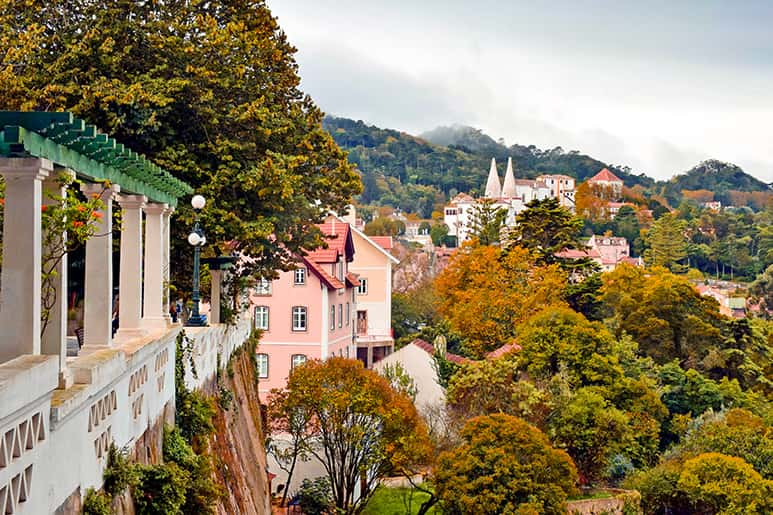
Things To Do in Lisbon in November: 7 Classic Picks From late November, Portugal glows. Lights are strung through Lisbon and Porto, the smell of roasted chestnuts drifts from street carts, and markets fill the squares with local cheese, honey and sweets made only at this time of year. Lisbon rings in the New Year with fireworks over the river at Praça do Comércio, Madeira’s New Year’s fireworks once set a Guinness World Record, and the Serra da Estrela usually opens for skiing in December. With the summer crowds gone, it is the perfect season to wander slowly.

NONIUS Pro Tip: Many traditional restaurants close early on December 24 and stay closed on the 25th, so plan and book your meals for those days well in advance.

The Best Kosher Restaurants in Lisbon (Updated 2026)

Celebrating the Holidays in Portugal, Whatever Your Traditions

For observant families: Hanukkah in Portugal. Hanukkah 2026 begins at sundown on Friday, December 4, so the first night falls on Shabbat and the Hanukkah candles are lit before the Shabbat candles. Arrange your Shabbat meals ahead through the kosher options above. For services, Lisbon’s Shaare Tikva Synagogue has served the community since 1904, Porto’s Kadoorie Mekor Haim is the largest synagogue on the Iberian Peninsula, and Chabad Portugal runs the Avner Cohen Casa Chabad in Cascais, just outside Lisbon.

My pro tip: Pack a travel menorah, and ask your hotel before you arrive whether candles may be lit in your room or in a designated space. As your advisor I will sort this out for you in advance.
This image has an empty alt attribute; its file name is image-12.png

For blended families: Christmas in Portugal. If your family celebrates both holidays, Portugal makes it easy to honor each one. This year Hanukkah’s eight nights fall in early December, leaving the rest of the month for the Christmas lights of Lisbon and Porto, the markets, and the medieval town of Óbidos, which becomes a Christmas village that children love. Portuguese families celebrate on Christmas Eve with the Consoada, a feast of salt cod, rabanadas and the crown-shaped bolo-rei, so that is the night to book a special table. A December trip that begins with the menorah in Lisbon and ends among the Christmas markets gives everyone a holiday to remember.

2027: A Heritage and Culinary Journey for Your Group

For 2027, I am designing small-group journeys that bring Portugal’s Jewish heritage and its table together, because the two stories are deeply intertwined. A journey might look like this:

  1. Lisbon. Walk the old Jewish quarter of Alfama, visit Shaare Tikva Synagogue, opened in 1904, and share a kosher meal in a local family home.
  2. Tomar. See the 15th-century synagogue that now houses the Abraham Zacuto Luso-Hebraic Museum.
  3. Belmonte and the Serra da Estrela. Meet the story of the community that kept its traditions in secret for centuries, and taste the mountain cheese in its winter season.
  4. Porto and the Douro. Visit Kadoorie Mekor Haim, the largest synagogue on the Iberian Peninsula, finish with a kosher Port tasting in Vila Nova de Gaia, and slow down for a day in the Douro Valley.

Every meal can be arranged kosher, and Shabbat can be planned around the community in Lisbon or Porto. It is an ideal journey for synagogue groups, families marking a milestone, or friends who want to travel with meaning. Tell me about your group and I will design it around you. Porto, Portugal Has a New Kosher Restaurant: BoLa Falafel • YeahThatsKosher

Come Hungry

If I could give you only one piece of advice, it is the one NONIUS gives every guest: don’t over-plan your meals. Book one or two special tables and leave room for the lunch someone insists you stay for. Ask the people you meet where they eat. In Portugal, that question is always taken as a compliment. Whether it is a last-minute November escape, Hanukkah in Lisbon or a 2027 heritage and culinary journey, I would love to plan your Portuguese table. Contact me at Dream Destinations Travel.

Jewish Tours in Portugal & Spain - Travel Guide to Portugal


Ready to book your culinary tour of Portugal?  We also book weddings, proposals, groups, wellness, multigenerational and sports trips.  Contact me today to craft your personalized experience. With exclusive local partnerships, insider itineraries, and seamless logistics handling, we will transform your destination into your next unforgettable reality. Reach out to me at our email or alternatively, complete the form below with your dates and interests for your upcoming trip.   Email me at Contact@luxetravelpartner.com. You can also find more information about my agency at www.luxetravelpartner.com.


This is where the trip actually  comes together. NONIUS DMC, Portugal’s destination specialists, hold relationships with venues in every region and a full bench of trusted suppliers (planners, photographers, florists, musicians, private drivers), with one point of contact who stays with you from your very first question through the last dance.  Here’s how easy this is: you book with me. I’ll help you choose the region, the season, and the shape of the week, and then NONIUS finishes the trip, guiding you and every guest through it on the ground in Portugal, so nothing is left to chance and nothing falls on you. A trip, not a night. An experience, not a venue. Let’s start planning it. bookings@noniustravel.com, https://www.instagram.com/noniustravel

A Table in Portugal: Your Guide to an Immersive Culinary (and yes Kosher) Journey. Read More »

In Defense of Israel

Leftist mainstream media outlets piled on this week to express outrage at my observation, during a speech in Grand Rapids for Mike Rogers, about the troubling dearth of scientific output from the world’s 22 Arab nations over the past five decades. These reporters — @fatimathefatima @AP, @Kanishka183 @Reuters, @rachel_roubein @washingtonpost, @baylisswagner @nytimes, @stevebenen @MSNOWNews — omitted critical context, presumably to bestow plausibility on their accusations that my statements were racist and Islamophobic.

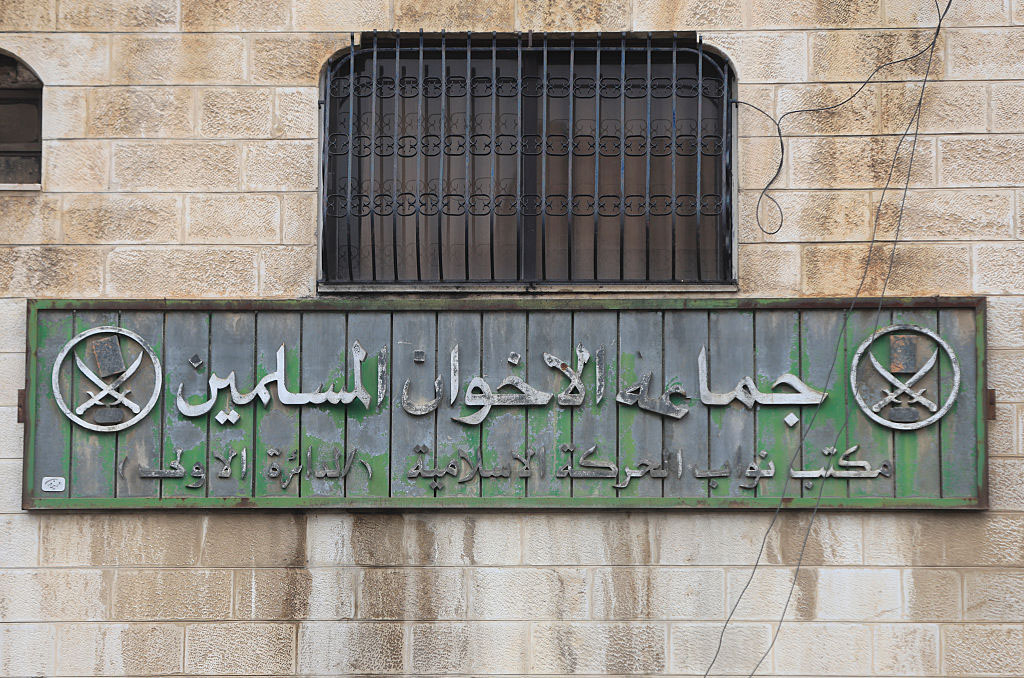
However, my speech was not a critique of Arabs or Islam, but of Islamism (also known as “Islamofascism” or “Political Islam”), a toxic ideology conceived and promoted by the terrorist group, the Muslim Brotherhood. Let’s see which reporters take the time to read this post and then correct their stories.

Criticizing Islamism is neither Islamophobic nor racist. Islamism is a violent corruption of mainstream Islam that summons adherents back to the seventh-century ideal of bloody jihad, the homicidal and suicidal religious zealotry that propelled a motley cadre of desert nomads to conquer half the world. Sheikh Ahmed El-Tayeb, the Grand Imam of Al-Azhar — the Muslim equivalent of the Vatican and the highest authority in Sunni Islamic thought — has rejected Islamism as “false Islam” and a “perversion of the Islamic religion” and accused it of “barbaric crimes.”

Islamism is intensely anti-American, anti-Western, and hostile to modernity. It is explicitly contemptuous of democracy, constitutional government, capitalism, minority rights, gay rights, women’s rights, free speech, and virtually all personal freedoms. Its central aspiration is for a global caliphate ruled by a single theocratic despot with absolute power to impose sharia law that dictates every aspect of human conduct. The Muslim Brotherhood’s founder, Hassan al-Banna, taught that the highest aspiration for a Muslim was martyrdom in the achievement of that goal; the purpose of every Islamic nation is to “perfect the industry of death” until world domination is accomplished.

I pointed out in my speech that the Muslim Brotherhood’s antipathy for modernity is a dramatic departure from Islam’s historical affinity for science and learning. During the Muslim Golden Age, spanning the eighth through the fifteenth centuries, Muslim leaders dignified Islam’s wealth and power by promoting a brilliant flowering of innovation and scholarship in science, mathematics, philosophy, art, literature, astronomy, pharmacology, psychology, engineering, architecture, medicine, and navigation that continues to enrich the world today. Arab leaders fostered an intellectual ferment unmatched by any other in human history. A long line of enlightened caliphs assembled—and abundantly rewarded—an unparalleled galaxy of jurists, scientists, physicians, philosophers, musicians, artists, poets, and wits. Muslim rulers elevated the role of reason and tolerance, cultivating a milieu of religious and intellectual freedom—where Jews and Christians also flourished—and encouraged sages of various faiths and ethnicities to collaborate and freely exchange ideas.

For five centuries, Arabic was the world’s most learned and literary tongue and the lingua franca of science and scholarship. Most mosques had libraries (Córdoba hosted 600!). Muslim princes in the tenth century often had more books in their personal collections than existed in all of Europe. Baghdad had 100 bookstores in AD 891. England would have to wait another 420 years until 1309 to see paper for the first time.

Islam’s second Golden Age during the Ottoman Empire (1299–1922) birthed a cosmopolitan and pluralistic civilization centered in Constantinople that yielded additional bonanzas in poetry, music, art, and a tsunami of scientific innovation from coffee to water pumps, steam engines, gears, surgical scalpels and clamps, the first smallpox vaccine, and the cannons that allowed the Ottomans to dominate Europe to the gates of Vienna.

In 1928, six years after the Ottoman Empire collapsed, the Muslim Brotherhood began to spread its dark strain of violent fundamentalism from Egypt to Palestine and across the Muslim world. Islamism’s contagious proliferation ended the dialogue between Islam and the intellectual classes and demoted the role of reason in Islamic life. The Muslim Brotherhood’s principal philosopher, Sayyid Qutb, was contemptuous toward public education in science, math, and philosophy, believing that the only source of truth is the Koran. For Qutb, the purpose of education was not to celebrate life, or to nourish the intellect, but to indoctrinate children in the art of war, the glorification of death, and a blind obedience to an autocratic caliph.

Qutb railed against reason, which he considered the seed of apostasy. He sought to silence the humanities and viewed science as a sinister displacement of religion. He derided pluralism, rationalism, innovation, and tolerance. In doing so, he deprived Islam of its modern potential and its own greatest inheritance: the confidence to learn from the world, preserve its wisdom, and surpass it.

In his obituary for Muslim culture, The Closing of the Muslim Mind (2010), Robert R. Reilly recognizes that Qutb’s outlook dooms his followers to inertia. A religion that values obedience over initiative, that seeks to obviate independent reason, is a religion of violence. Where there is no framework for rational mediation, all disputes must be settled by force.

It didn’t worry Qutb that discouraging education in physics, mathematics, medicine, or engineering would atrophy intellectual and economic development in the Muslim world. Qutb explained that Muslim countries were so far behind the West in the sciences and technology that there was no hope to catch up. Muslims, he preached, should do what they do best—study the Koran and embrace martyrdom as the path for achieving global dominion: “The Muslim community today is neither capable of nor required to present before mankind great genius in material inventions, which would make the world bow its head before its supremacy.”

Qutb’s diatribe against Muslims competing in science and technology was nothing less than civilizational malpractice—especially given that he wrote it in 1964. Had Japan, Singapore, or South Korea accepted Qutb’s logic in 1964, they would have opted out of modernity. Instead, they chose to accept the challenge of competition. Their decision to engage has yielded stunning achievements that transformed their nations into economic and technological superpowers and enriched all of humanity.

The anti-intellectualism of Islamism—the rejection of evidence and the scientific method, the hostility toward objectivity, the suppression of contrary information, the deification of dogma, the embrace of pseudoscience, the contempt for reason as the path for discerning objective truth, and Islamism’s association of science with immorality—has helped close off the Islamic mind. The staggering metrics of intellectual and scholastic enfeeblement in Muslim nations attest to Islamism’s systematic squandering of human capital including the creative potential among the world’s two billion Muslims.

Korea issued 260,000 patents in 2024, while nine Arab countries, including Egypt, Saudi Arabia, and the UAE, issued fewer than 10,000 in total, with 8,000 of these coming from a single nation—Saudi Arabia—which has made herculean efforts in recent years to de-Islamize its society. Japan, which represents about 1.5% of the world’s population and is practically devoid of natural resources, granted 306,855 patents in 2024 alone. There are 127 million Japanese, compared to 500 million Arabs.

According to Hillel Ofek’s 2011 analysis, there were a mere nine scientists, engineers, and technicians per thousand citizens in Islamic nations. The global average was forty-one. Among the 1,800 universities in Muslim nations, only 312 housed scholars who had published articles in journals.

Muslims represent 26% of the world’s population, and Muslim countries control half the world’s crude oil resources and 40% of natural gas resources. And yet the 53 Muslim countries combined publish only 5% of the world’s scientific literature. Hillel Ofek points to a 1989 study showing that in a single year, the United States published 10,481 frequently cited scientific papers, but during that same year, Arab countries published just four. A 2002 analysis of Arab science in Nature magazine identified only three scientific areas of excellence from Islamic countries: desalination, falconry, and camel reproduction. According to Nobel laureate physicist Steven Weinberg in 2011, “for forty years I have not seen a single paper by a physicist or astronomer working in a Muslim country that was worth reading.”

Contrast the Arabs’ dismal record of intellectual achievement in modern times with that of their closest cousins, the Jews, nearly all of whom live in democratic societies with laws that separate religion and politics.

Keep in mind that Jews, who number 15.8 million worldwide, represent a mere 0.2% of the world population. As of 2025, no Muslim has ever received the Nobel Prize in medicine or economics, and only four Muslim scientists—all living in Western democracies—have received the Nobel Prize in chemistry or physics. In contrast, some 200 Jews have received Nobel Prizes in science. About 26% of Nobel Prizes in math and science, 28% in medicine, 40% in economics, and 39% in chemistry have gone to Jews. Since 1901, some 22% of Nobel Prizes in all categories have gone to Jews.

Genocidal hatred against ALL Jews and Christians and other minorities is foundational to Islamism. Only in the West does Jew hatred pretend to require the alibi of Palestine or hide behind anti-Zionism. Muslim Brotherhood cosmology describes the universe as a cosmic, existential war between Islam and Jews that began with Muhammad and which only one side can survive. “Since Islam subdued them [in Medina],” Qutb warned, “they are unforgiving and fight furiously through conspiracies, intrigues, and also through proxies [the United States] who act in the darkness against all what Islam incorporates.” Islamist utopia will only emerge when every Jew is exterminated. Jews in Qutb’s theology are not just political adversaries, but perpetual and metaphysical evil. “The Jews,” he said, “are behind materialism, animal sexuality, the destruction of family, and the desolation of society.”

And Jewish genocide, for Islamism, is more than a theoretical aspiration. In 1948, the world’s 22 Arab nations were host to 750,000 Jews living in communities that predated Muhammad by 1,000 years. Today, there are virtually no Jews in those nations: Saudi Arabia, Iraq, Syria, Lebanon, Libya, Algeria, Yemen, Mauritania, Somalia, Sudan, Jordan, Gaza, or the PA-governed areas of the West Bank; in Nazi terminology, they are Judenrein: Jew-free. There are fewer than 1,000 Jews in Tunisia, down from 105,000. In 1948, Christian populations represented 20% of those nations; today they represent 4%. These are the real ongoing genocides of the Mideast.

Adolf Hitler’s Nazi regime bonded with early Islamists over their shared Jew hatred. The Nazis became the principal funder of the Muslim Brotherhood in the 1930s, and the Muslim Brotherhood operated propaganda, espionage, and sabotage operations for the Nazis during World War II. Joseph Goebbels and an army of Nazi and ex-Nazi propagandists built the Muslim Brotherhood’s powerful propaganda machine in the 1930s, ’40s, and ’50s. The massive influx of money from Iran and the Gulf States starting in the 1990s turned this operation into an amplifier of unmatched power that makes Goebbels look like a piker. A global propaganda barrage by this outfit has distracted Hamas’s Western dupes from Islamism’s authentic genocides by persuading them that Israel committed a genocide in Gaza, even though, according to the CIA Factbook, Gaza’s population has actually increased since October 7, 2023.

Islamism is genocidal against Christians and Jews, but among its most pitiful victims are the Arab societies that suffer the misfortune of living under its rule. Despite all their petroleum wealth, Muslim countries have slipped behind Asia and Latin America in virtually every metric of political freedom, technological progress, and social well-being. Islamism’s merger of politics and religion has robbed Islam of its intellectual vigor and doomed most Muslim populations to living in stifling tyrannies with little freedom to elucidate their thoughts and speech or fulfill their creative potential. Those countries are predictably stagnant, unable to evolve in the modern world. The dark shadow of fundamentalism over scholarship and progress has proven toxic to the Muslims’ transition to modernity. The very civilization that practiced tolerance and celebrated pluralism and dialogue, filled a thousand libraries with its books, gave the world observatories and universities, and stunning innovations in science, has become closed, aggrieved, and violent, and averse to reason, curiosity, freedom of inquiry, and scholarship.

All 22 Arab nations in the Mideast and North Africa are autocratic dictatorships. Almost all are apartheid states that legally restrict the rights of minorities. Gays in many of the nations are put to death. Under sharia law, women have little more rights than cattle. They live stunted lives behind veiled faces, enduring systematic servitude, legalized domestic violence, child marriage, chattel slavery, and public stoning for adultery, which is legal for their husbands. In September 2021, the Taliban made it illegal for girls to attend school after age 12. The Taliban’s Vice and Virtue law forbids women from speaking aloud in public.

If you want to understand the Muslim Brotherhood’s vision for society, look no further than Gaza. Hamas, which rules Gaza, is the Palestine branch of the Muslim Brotherhood. Palestinians have received over 4X per capita in international aid than Europeans received under the Marshall Plan. (See Clawson 2002.) Europe used its money to rebuild 17 nations. Palestinians couldn’t build themselves even one. Under Hamas’s iron fist, Gaza squandered its share on bombs, weapons, extravagant salaries for its billionaire kingpins, and a billion-dollar bunker and tunnel system built for its warriors—but off-limits to its citizens. Gaza remains a stunted and stagnant, impoverished society under tyrannical oppression, with no free speech or other basic freedoms. Hamas governs through force, including brutal crackdowns on discourse, public executions of dissenters and collaborators, tight controls on humanitarian aid distribution, and onerous taxes on almost every activity. No elections have occurred since Hamas took over in 2007. Instead of building a nation, Hamas has transformed Gaza into a death cult wallowing in victimhood, nursing aggrievements, addicted to violence, resentments, and yearning for a seventh-century miasma. Hamas nurses Palestinian infants from birth on genocidal hatred of ALL Jews—not just Zionists—and indoctrinates children in the savagery and unspeakable barbarism that the world witnessed on October 7. Hamas shows its contempt for the Palestinian people by deploying them as child soldiers and civilian shields, and placing rocket launchers and ammo dumps in schools and hospitals. Hamas’s greatest strengths are its propaganda operation and its willingness to impose unlimited pain on its own population to achieve its ideological goals.

Islamist governments like Iran, Hamas, and Hezbollah distract their populations from their misery by blaming the myriad social ills and the predictable government failures on scapegoats: Jews, Zionists, and America. They’ll have us believe that all their derelictions are the result of the evil Zionists, the “Little Satan” Israel, and the “Great Satan,” the U.S. And just as victimhood is paralyzing to personal growth, it deprives Islamist nations of national success by robbing its practitioners of agency. Islamism’s cult of victimhood and its coterminous abolition of self-criticism have stagnated global Islam and locked it in hatred, violence, brooding resentment, and isolationism. Referring to the Arab world, Fouad Ajami described this as “a political tradition of belligerent self-pity.”

Contrast Gaza’s failures with the successes of its closest neighbor, Israel, a tiny sliver of swamp and desert 1/600th the size of its Arab neighbors, that blossomed into an agricultural juggernaut and a global economic and technological superpower. Jews took one of the few places in the Mideast with no oil, gas, or other resources, and despite being surrounded by enemies, they nevertheless turned the barren landscape into a vibrant, pluralistic democracy where Jews and Arabs vote as they please; worship according to their convictions; serve beside each other in the judiciary, the army, and political leadership; and enjoy equal rights. Women and gays in Israel have all the rights of men, and Israel’s biggest annual celebration is the Pride parade in Tel Aviv. As the only democracy in the Mideast, Israel is a robust and heroic outpost for freedom and Western values.

And Israel is merely a nugget among the bounties bestowed by Jews on Western civilization. There is no ethnic or religious group that has contributed more than Jews to the welfare of humanity or to the advancement of liberal democracy. Jewish traditions of ethics and thinking have shaped Western civilization and global progress through foundational moral concepts, including our monotheistic Christian belief system with its roots in Judaism, milestone scientific breakthroughs, medical innovation, and innumerable cultural achievements in art, literature, education, health, and entertainment. Relative to their proportion of the population, the astonishing contributions by Jews have been breathtaking. An abbreviated list would include medical advances like the polio vaccine (Jonas Salk, Albert Sabin), chemotherapy and immunology (Paul Ehrlich), streptomycin and the age of antibiotics (Selman Waksman), penicillin (Ernest Chain), pacemakers (Paul Zoll), and blood typing (Karl Landsteiner).

In sciences, a short list of Jewish luminaries would include Albert Einstein (theory of relativity), Niels Bohr (quantum mechanics), and Paul Berg (first recombinant DNA molecule).

Jewish contributions to business and technology include Google (Sergey Brin), Meta (Mark Zuckerberg), Oracle (Larry Ellison), Salesforce (Marc Benioff), Intel (Andrew Grove), and Dell Technologies (Michael Dell).

Jews virtually created the American entertainment industry, including founding six of the eight major Hollywood studios responsible for 75% of the classic Golden Age movies. They also revolutionized laughter. A 1978 TIME magazine survey found that 80% of professional comedians were Jewish.

The major figures of twentieth-century Western thought—Jesus Christ, Sigmund Freud, Albert Einstein, and Karl Marx—were all Jewish. Twenty percent of philanthropic giving in the United States comes from Jews. Jews compose twenty-five percent of America’s most generous givers. They are overrepresented on lists of secular organizations that benefit human rights, social security, higher education, personal freedom, and constitutional rights. They represent 14% of doctors and 29% of psychiatrists. Their contributions to America’s global economic leadership include Salomon Brothers, Goldman Sachs, BlackRock, Blackstone, Wells Fargo, and Vanguard. In a rational universe, wouldn’t non-Jews be expected to celebrate these contributions with gratitude?

Now, here are some things that Jews don’t do: suicide bombings, rape gangs, beheading people, killing gay people, aspiring to kill all non-Muslims, forcing young girls to wed older men, lynching women for wearing makeup or showing hair, female mutilation, religious dictatorship, Christian genocide, polygamy, rioting and burning down cities, applying the death penalty for leaving Islam, cooking babies in ovens, hijacking airliners (and driving them into buildings), bombing buses and crowded restaurants, disfiguring girls with acid for failing to wear the hijab, operating modern slave markets where hereditary Black slaves are bought and sold by Arabs, advocating global jihad, and committing 90% of the terrorist acts globally.

These are the gifts that Islamism has bestowed on the world, along with closed minds, poverty, starvation, ignorance, oppression, and violence. This comparison begs the question, “Why does the world hate Jews and embrace Islamists?

The answer, of course, is a sophisticated mass propaganda campaign that ignores evidence and inverts reality to make Israel a global villain.

Looking at Islamism’s track record, seven nations with substantial Muslim populations—Egypt, Saudi Arabia, UAE, Bahrain, Jordan, Syria, and Russia—have outlawed the Muslim Brotherhood, branding it as a terrorist organization. Kenya and Argentina have also banned the Brotherhood for fear of its impacts on their societies. The Brotherhood today sees its best opportunities for expansion as Western nations that are unequipped to deal with its tactics.

In 2004, the FBI discovered the U.S. Brotherhood’s archives in a Virginia basement, including a 1991 “Explanatory Memorandum” characterizing the Brotherhood’s work in America as “a kind of gradual Jihad in eliminating and destroying the Western civilization from within.” Muslim Brotherhood documents describe this process of gradual infiltration as “gradualism,” “entryism,” or “Da’awa.”

In a 1995 speech in Toledo, Ohio, the Brotherhood’s leading cleric, Yusuf al-Waradawi, told his audience: “We will conquer Europe, we will conquer America! Not through sword but through Da’awa.” As a board member and outreach chair of a Muslim Brotherhood front group, Abdul El-Sayed ran a high-school recruitment program entitled “How to do effective Da’awa.”

The Muslim Brotherhood’s explicit written strategy for taking over Western nations is to broaden its appeal through a “red–green alliance” by adopting Leftist rhetoric and allying itself with liberals, socialists, and communists. This was the strategy first initiated by Yasser Arafat in the 1960s and then implemented by Muslim Brotherhood acolyte Ayatollah Khomeini during his 1979 Iranian Revolution, and later by Muslim Brother Mohammed Morsi during his 2011 color revolution in Egypt. After they gained power, the Leftists, in each case, learned that they were not actually Islamism’s partners, but only its useful idiots. Khomeini hunted down, jailed, and murdered his former Leftist and communist allies. Morsi sidelined his. A 2012 Arabic-language statement bearing Abdul Al-Sayed’s name backed Morsi’s presidency and urged him to “purge” the media and police.

Anyone wondering what America’s future looks like if the Muslim Brotherhood gets its way has only to look at France, where Islamist mobs of the red–green alliance, following the Muslim Brotherhood playbook, chant communist phrases, wave Palestinian flags, and vent their destructive hostility toward the West by destroying the iconic monuments of our shared civilizations.

Abdul El-Sayed mocks his critics as Islamophobic or anti-Arab racists when they inquire about his continued loyalties to the Muslim Brotherhood. But El-Sayed and his family have long and deep entanglements with the terrorist organization. A 20,000-word investigation by The Project for the Investigation of Terrorism documents El-Sayed’s two decades of intensive affiliations with the Muslim Brotherhood, and nearly every one of its legacy front groups that the Brotherhood set up in the U.S. to Islamify and destroy our democracy. That same organization recorded dozens of instances in recent years where Abdul El-Sayed has either directly lied about his relationship or refused to disavow the Muslim Brotherhood.

On Oct. 1, an Ohio voter became the latest to ask Al-Sayed to disavow the Brotherhood. Under persistent badgering before national news cameras, Al-Sayed finally caved: “Sure. Yeah, absolutely!” he said unconvincingly. He then spent five minutes attacking the man’s motives.

El-Sayed said nothing about the Brotherhood itself, its ideology, or the Muslim Brotherhood front organizations he works with. A disavowal that names nothing and condemns nothing is a disavowal in name only.

Why can’t El-Sayed give us a full-throated and detailed condemnation of this terror group, and disavow also its poisonous ideology without ambiguity? Why can’t he acknowledge that the Muslim Brotherhood is a despicable terror organization, and that Islamism and sharia law are anathema to American values? Americans shouldn’t have to worry whether a U.S. Senate candidate has loyalty to an ideology that openly hates our country and has vowed to destroy it.

In Defense of Israel Read More »

Welcoming Guests and the Destiny of Nations

In 1913, archaeologist Raymond Weill discovered a 2,100-year-old synagogue in the City of David, just south of the Temple Mount. Among his finds was a dedicatory inscription written by the benefactor who had rebuilt his family’s synagogue. It read:

Theodotus son of Vettenus, priest and synagogue leader, son of a synagogue leader, grandson of a synagogue leader, rebuilt this synagogue for the reading of the Law and the teaching of the commandments, and the hostelry, rooms and baths, for the lodging of those who have need from abroad. It was established by his forefathers, the elders and Simonides.

This ancient synagogue included a hostel for travelers, and for generations such hospitality remained part of synagogue life. Indeed, the Talmud explains that we recite Kiddush in the synagogue on Friday night because guests once ate and slept there, much as they did in Theodotus’ synagogue. Throughout the centuries, Jewish communities saw caring for guests as their shared responsibility. As the Chofetz Chaim observes, “It has already become the custom throughout all of Israel to establish a ‘Chevrah Hachnasat Orchim’ (Society for Welcoming Guests).”

Welcoming guests plays a defining role in the book of Genesis, where the rise and fall of peoples is determined by how they treat their guests. Abraham and Sarah are an elderly, childless couple, newly arrived foreigners. Sodom is a wealthy and powerful city. Yet their destinies are reversed, and for both, the turning point comes when a group of guests arrives at the door.

Abraham is an excellent host. He all but begs three strangers to be his guests:

… when he saw them, he ran from the tent door to meet them, and bowed himself to the ground and said, “My Lord, if I have now found favor in Your sight, do not pass on by Your servant. Please let a little water be brought, and wash your feet, and rest yourselves under the tree. And I will bring a morsel of bread, that you may refresh your hearts. After that you may pass by, inasmuch as you have come to your servant.”

Then the Torah gives us a behind-the-scenes look at Abraham’s preparations:

So Abraham hurried into the tent to Sarah and said, “Quickly, make ready three measures of fine meal; knead it and make cakes.” And Abraham ran to the herd, took a tender and good calf, gave it to a young man, and he hastened to prepare it. So he took butter and milk and the calf which he had prepared, and set it before them; and he stood by them under the tree as they ate.

For seven verses, the Torah places a spotlight on every mundane detail of Abraham’s preparations to showcase his exemplary hospitality. But this focus is not merely a lesson about virtue; it shows us why Abraham is worthy of founding a great people. Immediately after this, Abraham and Sarah learn that God will give them a child, Isaac, whose descendants will become a great nation.

The second half of the story reinforces this message. The strangers travel to Sodom, where Abraham’s nephew Lot sees them and invites them to his home.

Lot’s hospitality enrages the people of Sodom. They surround the house and demand that Lot surrender the guests so that they can rape them.

In the end, Sodom, which abuses visitors, is destroyed. Lot, who follows his uncle’s ways of hospitality, is saved, and will become the ancestor of two nations, Ammon and Moab.

One detail makes the story even more striking. When the angels arrive at Abraham’s home, they immediately accept his invitation. Yet when Lot invites them, they refuse; only after Lot “insists very strongly” do the angels relent. Why did the angels refuse Lot?

I believe the angels did not want to visit Lot’s house because their mission included destroying Lot and his family.

The prior section makes clear that the angels were sent to destroy all of Sodom, without exception. So when they arrive in Sodom, they want to ignore Lot; but Lot’s insistent hospitality forces them to change the plan. After lodging in his home, they rescue him from the impending destruction.

Hospitality saved Lot’s life. It also decided the fate of peoples: mighty Sodom vanishes, while two obscure nomads become the founding fathers of nations.

But why is hospitality so important?

A careful reading of the text hints at both the anthropology and the theology of hachnasat orchim, welcoming guests.

When the guests arrive at Lot’s home, he prepares “matzot,” unleavened bread, for them. At Abraham’s house, they are given something very similar called “ugot,” a term the Torah uses interchangeably with matzot.

The unleavened bread that Lot and Abraham serve their guests hints at their cultural roots. Clinton Bailey conducted extensive research on Israeli Bedouin, and in his book Bedouin Culture in the Bible, he shows how many Bedouin customs reflect traditions that go back to the biblical period. He notes:

Another resemblance between Bedouin culture and the Bible is their focus on unleavened bread. Because of both the shaking that beasts of burden cause the objects they bear during migrations and the lack of sufficiently cool spaces for storage, Bedouin have traditionally not cultivated yeast for baking their bread. As a result, Bedouin bread is unleavened.

Bedouins traditionally ate unleavened bread, and to them it represented their culture. Bedouin poets used it as a symbol of how they stood apart from city dwellers. As Bailey points out, this is an ancient theme: “Three thousand years earlier, in the Akkadian Poem of Erra, the urban god Erra was challenged by the seven demons (the Sibitti), who appear as desert dwellers, with the boast: ‘The rich bread of the city cannot compare with bread baked in the embers.'”

A major contrast between city dwellers and pastoral peoples like the Bedouin is their attitude toward hospitality. Bedouins migrated from place to place, and they understood that hospitality was essential to their survival. In the desert, you always need the kindness of strangers. Bailey quotes a Bedouin proverb: “Today’s host is tomorrow’s guest.”

City dwellers are far less likely to invite guests in; the people of Sodom took this selfishness a step further and saw every visitor as a threat.

When Abraham and Lot offer their guests unleavened bread, they are making a cultural statement: they stand apart from urban society. They welcome guests.

This goes to the very center of Jewish identity. Rashi comments that Lot served matzot because “it was Pesach.” The Midrash offers a similar note about Abraham serving ugot, explaining that Abraham hinted that “his descendants would one day make ugot matzot when they left Egypt.”

At first, this seems strange; Pesach doesn’t exist yet. But these Midrashim speak metaphorically, and they are deeply insightful. The matzah we eat at the Seder is not just a reminder of a hasty exit from Egypt. Matzah is also the bread of hospitality, eaten in homes with a welcoming spirit. The Israelites had been horribly mistreated in Egypt; their Egyptian hosts were not much different from the people of Sodom.

On the night of the exodus, God reminds the Israelites to emulate their ancestor Abraham and become a people of unleavened bread, a people of hospitality. Even after they build a prosperous country, they are to eat unleavened bread on Pesach and remember that their ancestors were once wandering Arameans.

They should never allow wealth and success to take them away from their roots.

But Judaism goes further. For the Bedouin, hospitality is a matter of mutual support and solidarity, and that is essential. Judaism sees it as sacred.

Rashi offers a remarkable comment when Abraham greets his guests. Quoting the Talmud, Rashi says Abraham was speaking with God when the guests arrived, and interrupted that conversation to welcome them.

Why would he do that? The Talmud explains: “Welcoming guests is greater than receiving the Divine Presence.”

This only deepens the riddle. Isn’t connecting with God the ultimate religious experience?

The answer is no. We commune with God best when we do God’s work in this world. When we invite in those in need, each created in the image of God, we become God’s partners and truly serve Him. This is why the Talmud says that a dinner table surrounded by guests is like the altar in the Temple.

To invite in a guest is to bring God into your home. This is what Jews have done for generations.

And that has shaped our destiny.


Rabbi Chaim Steinmetz is the Senior Rabbi of Congregation Kehilath Jeshurun in New York.

Welcoming Guests and the Destiny of Nations Read More »

Table for Five: Vayera

One verse, five voices. Edited by Nina Litvak and Salvador Litvak, the Accidental Talmudist

And he said, “I will surely return to you at this time next year, and behold, your wife Sarah will have a son.” And Sarah heard from the entrance of the tent, and it was behind him.

– Genesis 18:10


Dr. Rena Selya Cohen

Archivist, Cedars-Sinai; Past President of BDJ

For their entire adult lives, Abraham and Sarah yearned for a child. And for almost their entire adult lives, Hashem made grand but vague promises that they would have children. On four separate occasions, Hashem assures Abraham that he would be a “great nation,” that his children would be “plentiful as the dust of the earth,” and as innumerable as “the stars in the heavens.” Abraham was promised that he would be the father of many nations but was never given any information about when that precious first child would appear, until our verse. 

This verse bursts with particular, joyful news. The angel promises that he will return within a year, and Sarah will have a son. The language is specific and emphatic. The double verb of “shov ashuv” is usually translated as “I will surely return,” but the medieval Spanish commentator Rabbeinu Bachye saw a beautiful emotional valence to the repetition. He explained that “shov ashuv” was not just an announcement of a physical return, but evoked “shuva v’nachat,” where the return accompanies a state of quiet and stillness, a state of serenity that Abraham and Sarah had dreamed of but never known. The angel’s message was the beginning of an emotional transition for Avraham and Sarah, and the magnitude of that transformation was such that he could not deliver it directly to Sarah. Rather, he stood away from the entrance of the tent, giving Sarah the privacy to digest this life-changing news on her own.


Rabbi Bentzion Kravitz

Founder and Jerusalem Director of JewsforJudaism.org

When the angel promised Abraham and Sarah a son by this time next year, joy filled their tent. Yet this miraculous birth carried a profound shadow toward Mount Moriah where Abraham would later face the ultimate test of faith. God commanded Abraham to circumcise his son Isaac eight days after his birth. Thirty-seven years later, God tested Abraham by commanding him to offer his son on Mt. Moriah. Contrary to the prevalent pagan custom, God uses this test to demonstrate to Abraham that the Jewish people must reject human sacrifice and embrace life. The prophet Samuel put it this way, “To obey is better than sacrifice” (1 Sam. 15:22). 

Today, we are witnessing a battle between evil forces that glorify death, and Judaism, which celebrates life. One of the most profound passages in the Torah states, “I have set before you life and death, blessing and curse. Therefore, choose life, so that you and your descendants may live” (Deuteronomy 30:19). Even in the most challenging moments of sacrifice and testing, the enduring covenant remains anchored in the preservation and sanctification of life. 

May we speedily see the day when God will transform the nations of the world and “all of them will call on the name of the Lord and serve Him” (Zephaniah 3:9). Then we will witness the fulfillment of the well-known prayer, “May He who makes peace in his high places, make peace upon us, and on all of Israel – Amen.”


Gavriel Sanders

Spokesman, Be A Mensch Foundation, Jerusalem

 Ironic: The announcement that Sarah will bear a son arrives amid the bustle of hospitality. Abraham runs, Sarah kneads, a meal is prepared and a stranger speaks of an extraordinary future. The setting matters. The promise of Jewish continuity is delivered while Abraham and Sarah are caring for people they do not yet know.

Before Abraham hears that his own future will be secured, he attends to someone else’s present needs. He does not know who these visitors are or what they bring. He sees travelers who could use shade, water and food. That is enough to move him. This is the household from which a covenantal people will emerge: a home where faith becomes something another person can eat, drink, and experience.

Then comes the startling promise: “Sarah your wife will have a son.” After so many years, their future might have seemed settled. Yet Hashem’s announcement opens a possibility that age and experience appeared to have closed. We cannot turn this episode into a formula: offer hospitality and receive a miracle. Abraham’s kindness matters before he knows any blessing is coming. We can, however, learn how to inhabit the space between an unfinished promise and its fulfillment. Keep the tent open. Respond to the person before you. Do the good that is already within reach. We do not know what tomorrow will bring. We remain responsible for what we bring to today. The future of the Jewish people enters the story beside a meal prepared for strangers.


Rabbi Chaim Tureff

Rav Beit Sefer at Pressman Academy and Author of “Recovery in the Torah”

Many times we anticipate things. We can’t wait until that pinnacle moment. We feel we deserve whatever it is. Can we imagine Sarah’s anticipation at 89 years old after desiring to have a child for many years? And on top of that the indignity of her maidservant having a child beforehand. According to many sources and literal text, they had a very contentious relationship. And yet here we are, hearing something that doesn’t seem probable or possible. And this is the mystery of Hashem. Things happening at the exact moment that they’re supposed to happen. We often struggle with the desire to get what we want when we want it. Traditionally, we’re supposed to have faith that Hashem gives us exactly what we’re supposed to have in the moment that we have it. This can trigger many people who are going through difficult things at the moment. Why am I going through this? Why am I in so much pain? If God really loved me, then I wouldn’t be experiencing this. None of us can speak to what other people are experiencing and yet the entire essence of emunah (faith) is that we are exactly where we are supposed to be. This is no easy feat. And yet if we can harness some modicum of emunah and at least try to see the positive in each struggle or challenge and realize that Hashem is in our corner, maybe we will experience life in an entirely new manner.


Rabbi Rebecca Schatz

Associate Rabbi, Temple Beth Am

Two of the same words in our Torah, even in different forms, make the rabbis and readers wonder and question. So, it is not surprising that many of our classic commentators have something to say about “shov ashuv” in this verse. It could mean “surely I will return” or emphasis on the promise of return. However, if we separate the words, imagining the different characters in this verse, could it be that “shov” is for Abraham and “ashuv” is referring to the messenger of God? “And he said, ‘Return! I will return to you next year …” Perhaps the messenger of God is reminding Abraham that for his relationship to succeed with Sarah, and their family to grow, he needs to be with her and not secluded in his own tent welcoming guests and visiting with God.  

Turn back to Sarah, and I will return next year, in which time, because you returned to spend time in this relationship, Sarah will have a son. The Torah would not have told us Sarah was listening if it was not intentional for her to hear. The messenger makes sure that Abraham knows to return to her, because they now both have the instruction from the ultimate marriage counselor to spend more time together. Like Abraham was encouraged to lekh lekha, “go for himself,” so too we need to be pushed to remember to: change, spend time with those you love, engage, question, learn, wonder. Return to Sarah and then God will return to your family and push you further.

Table for Five: Vayera Read More »