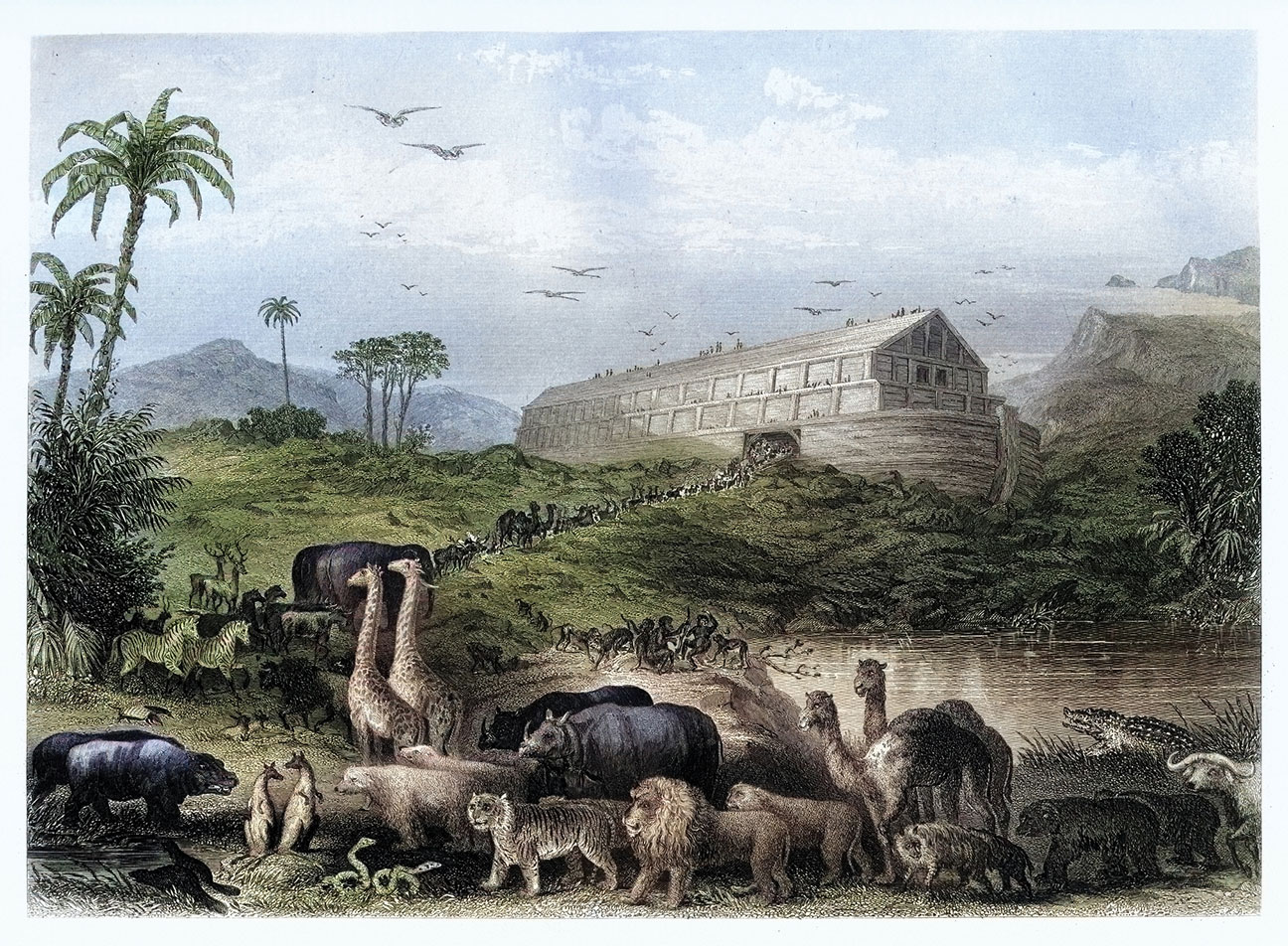
The story of Noah’s Ark is usually understood as a story of destruction and survival. A world corrupted by violence, selfishness and moral decay is swept away by a devastating flood, while Noah, his family and representatives of the animal kingdom are preserved in a floating sanctuary. Yet beneath this familiar narrative lies a profound lesson about the foundations of a healthy society and the secret to living a more meaningful and purposeful life.
The generation of the Flood had become a society dominated by selfishness, greed and the pursuit of personal advantage. The bonds of mutual responsibility that hold civilization together had disintegrated.
God’s response was not simply to destroy the old world and begin again. While the world outside the Ark was undergoing a physical transformation through the waters of the Flood, the world inside was undergoing a moral transformation through the daily practice of chesed, loving-kindness.
For an entire year, Noah and his family were responsible for feeding and caring for an extraordinary variety of animals, each with its own needs and feeding schedules. Their lives were organized not around their own convenience, but around the needs of others. Day and night, they were engaged in the demanding work of giving.
Why was this necessary? Surely the God who miraculously preserved the animals could have provided for their nourishment as well. Perhaps the Ark was never intended to be merely a lifeboat. It was a training ground for the development of character, preparing its inhabitants to become the founders of a new civilization.
Jewish wisdom recognizes that character is shaped not primarily by what we believe or admire, but by what we repeatedly do. We become generous by giving, compassionate by caring and responsible by accepting responsibility. Repeated actions become habits, habits become character and character ultimately determines the quality and direction of our lives. In a world destroyed by taking, the survivors were learning the art of giving.
This lesson is particularly relevant to modern society. Secular civilization places enormous emphasis on rights: human rights, civil rights, individual rights and an ever-expanding catalogue of entitlements. These rights are essential safeguards of human dignity and freedom, but an exclusive preoccupation with what we are entitled to receive can obscure an equally important question: What are we obligated to give?
Judaism approaches the relationship from the opposite direction. Rather than beginning with what others owe us, it begins with what we owe others. The Torah does not merely recognize the poor person’s right to assistance; it obligates us to give tzedakah. It does not simply proclaim the dignity of the stranger; it commands us to love and protect the stranger.
In a society built upon obligations, the rights of others emerge naturally from the responsibilities we accept toward them. My obligation to protect your dignity establishes your right to be treated with dignity. My obligation to deal honestly establishes your right not to be cheated. My obligation to help those in need creates a community in which the vulnerable are not abandoned.
But there is a deeper insight. A society centered on obligations does not merely become more compassionate and cohesive. The individuals within it become more meaningfully alive.
There is a beautiful insight embedded in the Hebrew word for love, ahavah. A traditional homiletic interpretation connects it to the Hebrew root hav, meaning “give.” Love is not simply an emotion that inspires us to give; it is also something that grows through the act of giving. We do not only give to those we love. We come to love those to whom we give.
This turns our conventional understanding of happiness and fulfillment on its head. We often imagine that a satisfying life is one in which our needs are met, our desires fulfilled and our rights respected. Yet a life focused primarily on receiving can become an endless pursuit of satisfaction that remains perpetually out of reach.
Judaism invites us to discover something far richer: a life of magnanimity, generosity of spirit and concern for the welfare of others. Giving connects us to something beyond ourselves. It creates relationships, strengthens our sense of belonging and gives our lives a purpose that personal consumption alone cannot provide.
To live a Judeo-centric life is therefore to become a giver rather than merely a receiver. This is not a call to self-denial, but an invitation to a more expansive form of living, in which our own happiness is enriched by the happiness we create for others. When we become less preoccupied with what life owes us and more concerned with what life asks of us, we discover a deeper sense of joy, meaning and fulfillment.
The waters of the Flood could wash away the corruption of the old world, but they could not create the moral foundations of a better one. That required a transformation of human character through the repeated practice of kindness and responsibility.
The old world had been destroyed by selfishness. The new world would have to be built upon chesed.
The enduring lesson of Noah’s Ark is that a better world is built not simply by insisting upon our rights, but by embracing our responsibilities. In doing so, we enrich not only the lives of others, but our own. The path to a more meaningful and purposeful life begins when we stop asking what the world can give us and start asking what we can give the world.
Selwyn Gerber is Founder and Chief Strategist of RVW Wealth LLC.