When it comes to ignoring the Israeli-Palestinian conflict, it’s fair to say the party’s over.
Actually, I take that back. The Trump administration didn’t exactly ignore the conflict. It’s more that they stopped idolizing it. Above all, they tried to avoid repeating the same tired tropes that have failed decade after decade.
Now, for better or worse, we’re back to those old tropes.
You could Google hundreds of previous statements on the conflict and they would sound similar to what Ambassador Richard Mills, the Acting Representative of the U.S. Mission to the United Nations, said yesterday in a speech to the U.N. Security Council.
He reiterated that the United States supports a two-state solution and rejects “unilateral steps that make a two-state solution more difficult, such as annexation of territory, settlement activity, demolitions, incitement to violence and support of terrorism.”
While cautioning that “Arab-Israeli normalization is not a substitute for Israeli-Palestinian peace,” Mills expressed hope “that normalization can proceed in a way that unlocks new possibilities to advance a two-state solution.” He added that the Biden administration hopes “to start working to slowly build confidence on both sides to create an environment in which we might once again be able to help advance a solution.”
I know, it sounds tediously familiar, but it’s reality. And Israel can no longer afford to ignore that reality. To keep the focus on other crucial issues, such as the Iran nuclear deal, it will have to confront a familiar albatross around its neck: the accusation that any kind of “settlement activity” undermines the revered two-state solution, the holy grail of U.S. and international diplomacy.
The subject of settlement activity sucks up so much oxygen it obscures the obstacles to peace from the Palestinians, such as the rejection of past Israeli peace offers, the division between Hamas in Gaza and the PA in the West Bank, sponsorship of terrorism and incitement to violence, a reluctance to compromise on the right of return and a refusal to recognize a Jewish sovereign presence within any borders.
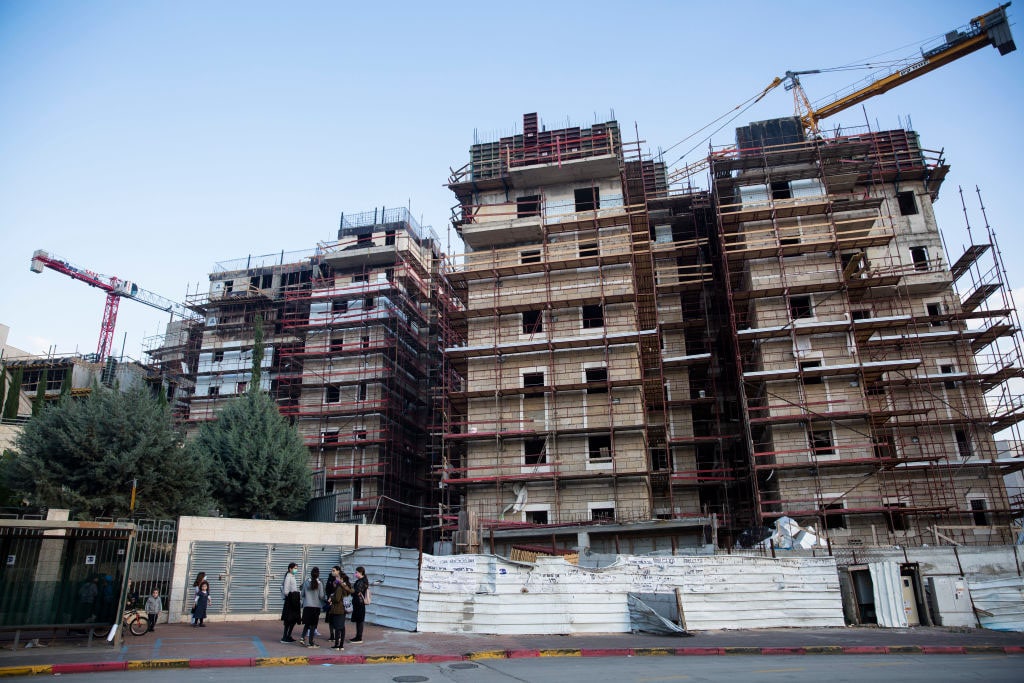
As long as Israel engages in “settlement activity,” the spotlight will be on them. President Joe Biden, in fact, has personal experience with this. As vice president, he was in Israel in 2010 when Israel announced it would further the process of approving a building permit in Ramat Shlomo, a religious Jewish enclave in Jerusalem.
“I condemn the decision by the government of Israel to advance planning for new housing units,” Biden said at the time. It “undermines the trust we need right now and runs counter to the constructive discussions that I’ve had here in Israel.”
If Israel wants to avoid such damaging friction with the new administration, it will need to figure out its red lines. Rejecting the two-state solution, even if it looks like a delusional fantasy at the moment, is out of the question. Most importantly, Israel will need to avoid any unpleasant surprises, especially if such surprises are seen as undermining the two-state solution.
Israel will need to avoid any unpleasant surprises, especially if such surprises are seen as undermining the two-state solution.
One of Israel’s first priorities should be to sit down with new Secretary of State Antony Blinken, who is friendly to Israel, and agree on settlement red lines—what is acceptable and what isn’t. These red lines are sure to be complicated by Israeli politics, but they are worth the effort to delineate.
Otherwise, we’ll just be back to the old days, when a Jewish building permit in Jerusalem becomes an international cause célèbre, and Palestinian leaders celebrate in Ramallah because no one’s looking at them.