
America is in a lousy mood.
Everything is a mess. This is how Matthew Continetti describes the state of the nation in National Review Online:
“Riots and the suppression of freedoms on campus, drug addiction, deadly clashes between white nationalists and left-wing radicals, increasing numbers of hate crimes, mass shootings, bitter arguments over the national anthem … a cascading stream of allegations of sexual impropriety against figures in entertainment and in politics, the slow-motion disintegration of our major parties — it’s as if America itself has been thrown into the midst of a demolition derby, with every one of our prominent figures and major institutions targeted for destruction by Monster Truck.”
Given this chaos, how are we supposed to feel grateful this Thanksgiving?
I have a friend who says you can’t feel grateful until you first take a deep breath. This breath helps us relax so we can meditate on the big picture. So, what’s the big picture?
Well, first, there is our tradition. In Judaism, gratitude is a core virtue. The very root of the word Jewish in Hebrew means gratitude. The Talmud instructs us to say 100 blessings a day. And each morning, no matter how horrible the news is, the first blessing we make is Modei Ani — we thank God for returning our souls to us.
Beyond our tradition, though, there’s also that thing called happiness.
As psychologist and author Melanie Greenberg writes in Psychology Today, “Gratitude is an attitude and way of living that has been shown to have many benefits in terms of health, happiness, satisfaction with life, and the way we relate to others.”
If gratitude is so connected to our happiness and well-being, why doesn’t it come to us more naturally?
Maybe we’re simply not hardwired to seek happiness. “Our brains’ natural tendency,” Greenberg writes, “is to focus on threats, worries and negative aspects of life.”
In a way, that makes sense. How can we improve if we don’t worry about our mistakes? How can we repair the world if we don’t look at what’s broken?
The problem comes when negativity turns into a state of mind. The media have an inherent interest in focusing on the darkness — on the threats, the chaos and the crises. If we allow this negativity to permeate our consciousness, we won’t see much hope. We will wallow in the world’s brokenness rather than working to repair it.
I sense that this is happening in much of the country right now. We have little faith in our leaders. The problems feel endemic, not fixable. We’re hopelessly divided. On top of that, when the media remind us all day long of this brokenness, our brains’ tendency to focus on “threats, worries and negative aspects of life” goes on overdrive. The urge to repair turns into an inclination to despair.
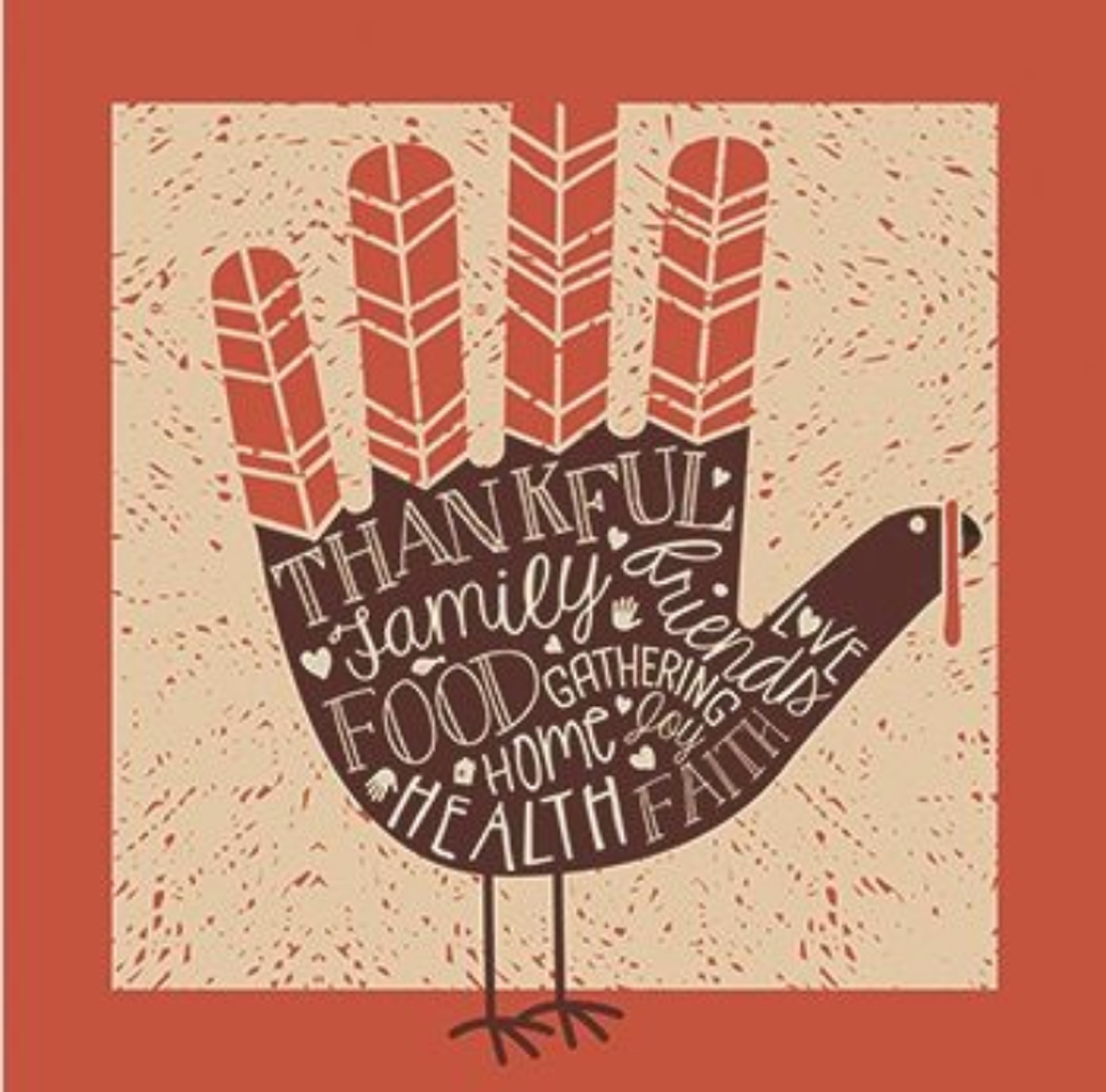
Enter Thanksgiving.
Divided or not, broken or not, once a year America forces us to grapple with gratitude. This is our national “deep breath.” Of course, when the nation is in such bad shape, it can feel awkward to imbue ourselves with gratitude.
The easy thing to do is ignore the darkness and count our blessings, at least for this one day. Many of us like to go around the Thanksgiving table and share the many things we are thankful for — and God knows there are plenty. You can never go wrong doing that.
But this year, because things are in such turmoil, we thought we’d go deeper.
So, we’ve come up with a Thanksgiving Haggadah, put together by Rabbi Zoë Klein Miles working with our community and religion editor Tom Fields-Meyer.
The idea was to borrow from the Passover seder and offer four questions around the theme of gratitude. These are not easy questions. They’re meant to provoke thought and meaningful conversation. In combination with blessings and commentaries, we hope this little discussion guide will elevate your Thanksgiving experience.
One thing I’ve learned in working on this issue is that gratitude is not as simple as it seems. On the surface, it’s such an obviously good idea. Looking at the glass as half full, taking nothing for granted, counting our blessings — all of those clichés are meaningful and true.
All too often, though, life gets in the way. How do we focus on gratitude while also focusing on our mistakes? How do we feel grateful while also feeling outrage at the world’s indignities?
Balancing polarities always has been the great Jewish dance. We don’t pick one imperative over another. We don’t wallow only in gratitude or only in fixing our lives. We don’t look only at the full part of the glass or at the empty part. We look at the whole glass at all times. The full part gives us hope; the empty part gives us the drive to go forward.
Maybe, in the end, the deepest expression of gratitude is to be thankful for the very fact that we are able to move forward, that we have the opportunity to make everything around us just a little bit better.
Happy Thanksgiving.
































