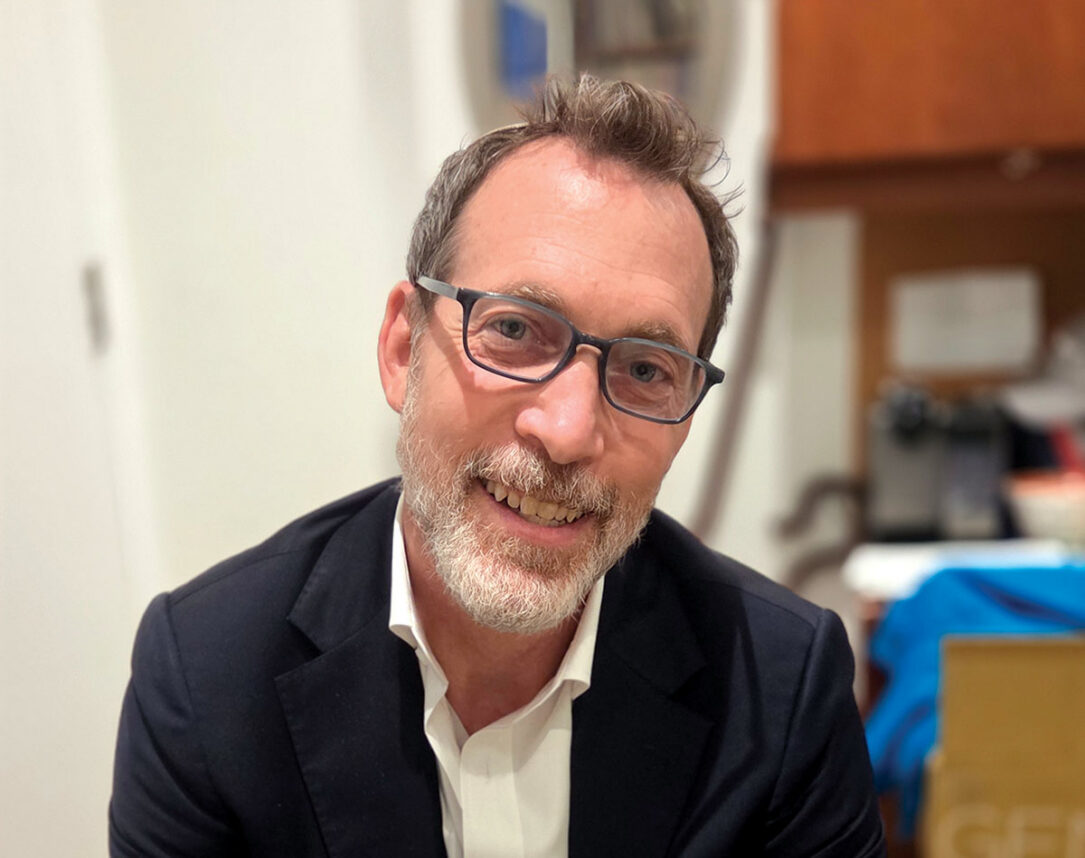
David L. Neale, a prominent bankruptcy attorney and major donor to AIDS Project Los Angeles (APLA), was stunned when the call came from Brazil in late 1999: His younger brother, John (not his real name), then in his mid-30s and previously robust, was gravely ill in Rio de Janeiro.
John had been producing a concert at the famed opera house in the jungle city of Manaus when he collapsed in the throes of a virulent fever and had to be airlifted to the hospital. By the time Neale, his mother and sister flew down to Rio, John was in a coma, the result of a severe case of meningococcal meningitis.
His doctors promptly dropped a bombshell: John was suffering from AIDS and had apparently been in denial about the mysterious fevers that had landed him in bed for weeks at a time over the past year. “I was shocked,” said Neale, who hadn’t previously known that his brother was HIV positive.
Even after John’s condition was stabilized, he refused to return to the United States for treatment until several months later, when Neale received another emergency call from Brazil. “They had had doctors coming to John’s apartment, to do spinal taps for him in his bed,” recalled Neale, who has been consistently named by Los Angeles magazine as one of its 100 “super lawyers” in the bankruptcy field. “They had given him all these steroids, and his skin was waxy and yellow — he really looked awful.”
Neale hustled his brother onto a plane for Los Angeles, “which was in itself an ordeal because he couldn’t walk,” the attorney recalled. After landing in L.A., “I immediately drove him to the emergency room at Cedars-Sinai [Medical Center], where they told me that they hadn’t seen someone this ill with AIDS for years, given the advances in medications, and that I should be prepared for my brother to die.”
John survived, after 12 weeks in the hospital, yet he was weak and debilitated, and the family panicked. “I had no clue about what to do in a situation like this,” Neale said. “And because my brother had lived out of the country for so long, he had no health insurance, no place to live, nothing.”
The situation remained grim until, through Neale’s then-wife, the family was introduced to an official at APLA, which currently helps care for some 11,000 people with HIV in Los Angeles. It was the family’s first stop once John was out of the hospital: “He was literally lying on the floor in an office there,” Neale said. “But APLA was a very comforting influence; it was like we were frantic, but they weren’t. They made things very manageable; otherwise it would have been overwhelming.”
APLA workers calmly helped to set John up on disability and Medi-Cal, so that he could receive the AIDS drug cocktails that cost around $5,000 per month, Neale said; they sent him to the right doctors, arranged for a hospital bed and IVs to be set up in Neale’s living room, and even for John to procure a driver’s license and other documents to get him re-established in the United States. “I was so grateful,” Neale said.
Thus, he immediately agreed when APLA officials asked him to serve on the group’s board for a full six-year term limit; since that ended three years ago, Neale has continued to fund the group, having donated sums in the six figures over the years. John, he said, has now regained his health and is back in Brazil producing concerts and other events.
“Thousands of low-income Los Angeles County residents with HIV/AIDS have benefited and continue to benefit from the vision, leadership and continuing support of David,” said Craig E. Thompson, APLA’s executive director. “Admirably, he built on his personal connection with HIV disease to become a key board leader in the fight against HIV/AIDS.”
Neale, a graduate of Princeton University and Columbia University law school, has also been involved in Jewish causes, such as donating to campus Hillels and serving on the board of the American Friends of Hebrew University — he studied at Hebrew University for a time as a youth. He traces his philanthropy, in part, to the influence of his parents: His late father had been active on the board of the family’s synagogue in Cedarhurst, N.Y., while his mother has run the Head Start program in Williamsburg, N.Y., for the past 40 years, where she encourages low-income children to stay in school. “She’s always been very conscious of people who have less,” Neale said.
The health crisis of HIV/AIDS has also shifted to those who are underprivileged, he added. “It’s no longer a fashionable cause, as people think everyone’s fine now, with the new medications,” he said. “But they don’t think about lower-income people, African-Americans or the Latino community — all these places where AIDS is still a huge problem. It’s like it’s not a white person’s problem anymore.
“In the Jewish community, people often give to Jewish charities, and I’ve done some of that, but I feel like AIDS is a cause that doesn’t have all the support it could use. It’s not like people are fixed and the disease is eradicated. It’s still a continuing and vital issue that we should pay attention to.”