
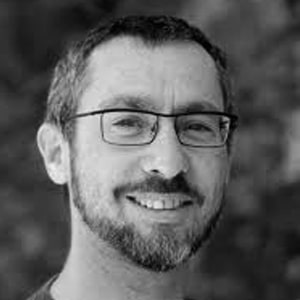
Bonna Devora Haberman is one of the co-founders of Women of the Wall. Since receiving her Phd in Ethics and Education from the University of London, Dr. Haberman has published widely and taught at the Hebrew University, at the Harvard University Divinity School and at Brandeis University where she founded and directed the “Mistabra Institute for Jewish Textual Activism” – addressing difficult texts and social problems using performance arts.
This is the first part of a discussion about Natan Sharansky's recent Western Wall proposal (you can find more info about the issue here, here and here).
Dear Dr. Haberman,
In a television interview not long ago, you expressed your discontent with any possible solution to the WOW situation which would prevent you from being “with the women of Israel who come to the Kotel”. You didn't quite say that you oppose the proposed Sharansky compromise – but clearly such a compromise would come short of making you fully satisfied (and please correct me if I'm wrong).
Let me try to convince you that the compromise is not just something you need to be able to live with but rather something you should openly celebrate, if it eventually materializes. The way I see it, there were three important goals to the Sharansky process:
1. To see to it that WOW and other people could practice Judaism the way they see fit near the Kotel. This goal was met by the suggestion to extend the Kotel and construct a new area in which Jews of all stripes could practice without the interference of the Orthodox establishment.
2. To give other streams of Judaism not just the place to practice but also some measure of official recognition. I think this goal will also be met if the plan is implemented. In fact, I find this to be the most revolutionary part of the new arrangement – an official statement by the state of Israel that Jews other than Orthodox (as Orthodoxy is defined by the rabbinate) have a legitimate claim on the Kotel and on Israel's religious life.
3. Doing all this without having to have a constant and ugly battle between Orthodox and non-Orthodox Jews. This “separate but equal” arrangement is the right one in this case since it can hopefully prevent constant clashes between the two factions of Kotel attendees.
Convinced?
I'm eager to hear your thoughts.
Yours,
Shmuel.
Dear Shmuel,
Thank you for your interest. I am delighted to respond to your questions. I'll begin with a few clarifications about Women of the Wall that will help explain my views.
Women of the Wall have been praying monthly in the women's section at the Kotel, the Western Wall, for nearly 25 years. In addition to Rosh Hodesh, for the first 4 years, we also convened weekly for Friday morning prayers. We have regularly held services on Shavuot, on Purim and Tisha B'Av, chanting the appropriate readings from our sacred texts. Among hundreds of prayer services, there have been about a dozen incidents when private citizens have been physically violent toward us, throwing chairs and dirty diapers. Some people have verbally abused, cursed and slandered us – called us whores, Nazis, witches, non-Jews. Some have screamed, blown shofarot, and shouted in order to overpower us. More often than any other disturbance, the police have pursued a concerted policy of harassment under the orders of the official appointed to administer the site, once Meir Yehuda Getz, and currently Shmuel Rabinovitz. The police have pointed, selected, interrupted, threatened, accused, tear-gassed, dragged, detained, and even arrested us. These events have been widely photographed and publicized by the media.
What has not been widely publicized by the media are hundreds of joyous, songful prayers that we have celebrated. Over these years, thousands have witnessed, participated in, and been initiated into active, empowered women's autonomous public service in sacred space. With and account of us, women have acquired skills in prayer leadership and cantillation. Women of the Wall have even inspired a few to make aliya to Israel, securing and welcoming their religious commitments in Israel. I have held in my arms many women for whom Women of the Wall have healed deep wounds inflicted by rabbis and leaders, by communities that have excluded them and treated them cruelly at vulnerable spiritual moments. I myself have been publicly insulted, threatened and ridiculed when discreetly saying kaddish for parents behind a partition in a women's section of an Orthodox synagogue.
With Women of the Wall, many women have had their first aliya, read from the Torah for the first time, and shed tears of awe and excitement at the experience of direct contact with our sacred text – older women from Iraq and Yemen, and young women, Israel-born, and from abroad. Many of these women spontaneously joined our prayers in the women's section at the Kotel. Women of the Wall have been an integral part of this unfolding custom at the Western Wall for 25 of the 46 years in which the Kotel has been in modern Jewish hands.
Women of the Wall are not a single community; we come from the full spectrum of denominations, from near and far. We uniquely bring together Orthodox, Conservative, Reform, Reconstructionist, Renewal, unaffiliated, and secular Jews. One of our purposes is to make available to every Jewish woman an ongoing opportunity to pray with a religious public, with full freedom to fulfill her religious conscience. This is a privilege which every Jewish man enjoys in the main Kotel plaza at most hours of day and night.
Now directly to your points.
- I agree with you, Mr. Shmuel Rosner, that we need to end the interference of the (ultra)-Orthodox, but not by exiling Jewish women from the main site of the in-gathering of the Jewish People to a “new site”. We need to end interference of the (ultra)-Orthodox by better empowering Israeli civil society. In my book, Israeli Feminism Liberating Judaism: Blood and Ink (p. 118) I discuss Supreme Court rulings about Women of the Wall. Justice Levine emphasizes the responsibility of State officials to create an ambiance conducive to balancing opposing interests in order to maximize the fulfillment of freedom without excessive harm to people’s sensitivities. Women of the Wall uphold the core tenets of Israeli civil society that guarantee access to holy sites, freedom of religious practice and freedom from discrimination on the basis of sex. We pray with respect alongside every woman. We will not learn to live together in dignity by increasing division and further exclusion of women from public space.
- Legitimate claims of the many denominations of Judaism definitely need formal and full recognition at the Kotel and in Israel's religious life. We will better achieve this revolution by acting on the basis of the recent Jerusalem District Court decision of April 25, 2013 interpreting “tradition of the site” more broadly, in terms that are “pluralistic-secular-nationalist” rather than purely ultra-Orthodox.
- As I have explained, the prayers of Women of the Wall are far from “a constant and ugly battle” and “constant clashes”. Women of the Wall are a joyous and uplifting part of the symbolic homecoming at the Wall, a transformation from wailing to celebration.
Are you convinced yet?

































