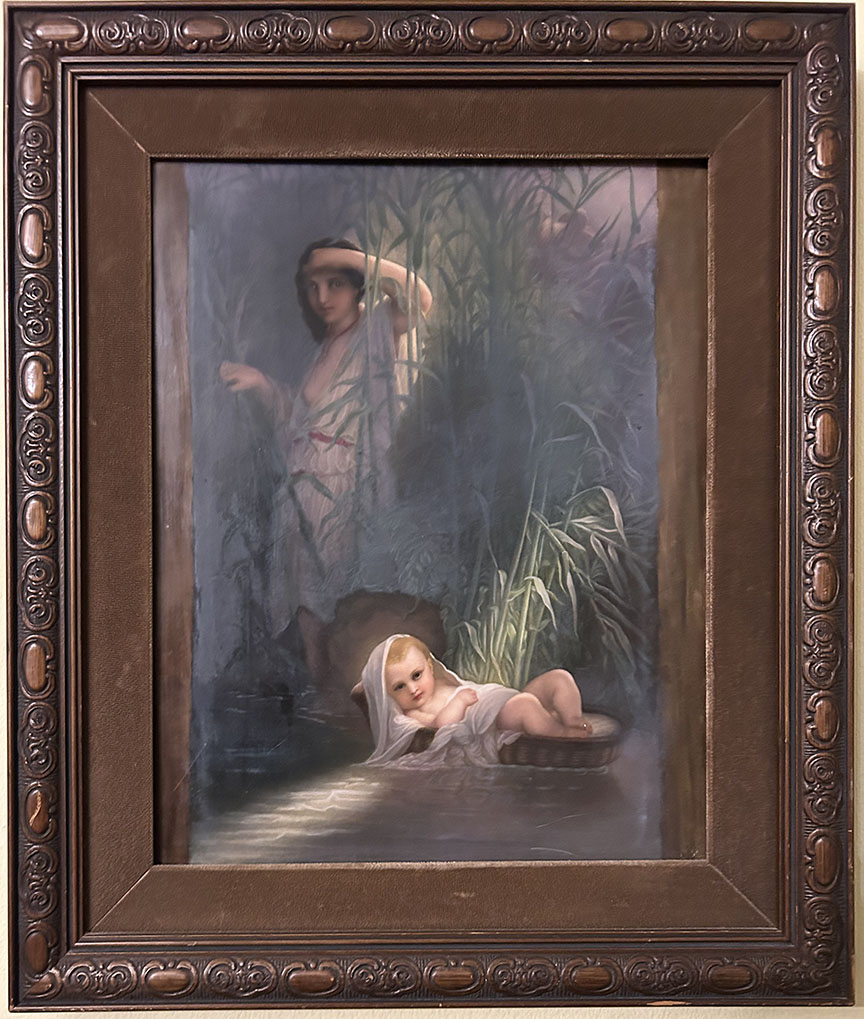
Moses’ mother wove a basket,
and put her infant into it,
and put it in the Nile, a task it
thought by many not legit.
They feared the babe might drift and drown;
it happened alas to those parents
who’d done the same, and — watered-down —
had not like Miriam’s and Aaron’s
young sibling managed to survive,
as Aaron clearly had without
the very risky step that I’ve
explained completely freaks me out,
and probably freaked out the friends
of Moses’ mother, and his dad,
since other babes had reached dead-ends,
not safely sailing like Sinbad.
Abarbanel wrote Torah blogs
implying what I wrote above,
explaining that the plague of frogs,
the one that surely kids most love,
occurred because the loud noise they
made echoed bitter wails of woe
wept by sad parents in dismay
when suffering the dreadful blow
caused when their little children drowned,
unlike the baby Moses who,
when by a miracle was found,
survived since Pharaoh’s daughter drew
him from the Nile.
When you read what
I’ve chosen in this verse to tell,
remember its midrashic plot
is by a Don, Abarbanel,
famous partly for composing
a brilliant Torah commentary,
convivencia opposing
what priests preached in Spain’s promontory,
prioritizing laws that Moses
received on Sinai before breaking
two tablets, prescribed in two doses,
because most people were forsaking
God’s Is One, and tolerated
convivencia with what’s forbidden,
a golden calf, idolerated,
against the laws in Torah written.
Anti-Aaron, ironically,
Moses smashed what God prescribed,
but then restored harmonically
the laws God had on stones inscribed.
Convivencia is a Spanish word that means “coexistence” or “living together”. It’s used to describe the period in medieval Spain when Christians, Muslims, and Jews lived together and exchanged ideas.
Gershon Hepner is a poet who has written over 25,000 poems on subjects ranging from music to literature, politics to Torah. He grew up in England and moved to Los Angeles in 1976. Using his varied interests and experiences, he has authored dozens of papers in medical and academic journals, and authored “Legal Friction: Law, Narrative, and Identity Politics in Biblical Israel.” He can be reached at gershonhepner@gmail.com.