The most unusual pair of lovers of this last century are my wife’s parents, Mirek and Blanka Friedman. They met, courted and pledged themselves to each other in a Nazi camp: Dachau 3 b, also known as Muhldorf.
Dachau-Muhldorf was perhaps the only camp in Germany where men and women were not strictly segregated at work — the Nazis were building a jet attack plane there which they hoped would “turn the war around.” Men and women had to work together, but under penalty of death if they made personal contact. At the time, the heroes were budding young — she was 19, he 24. Not even death could discourage their romance. Their story is filled with the most incredible gentleness, depth of feeling, and romanticism mixed with constant danger. The young lovers exchanged notes written on paper torn from cement stacks. Blanka gave Mirek a pair of mittens she knitted from yarn pilfered from the camp’s effects room, and he brought her a flower one night — an artificial flower he stole from the Munich radio station where he was loaned out from the camp to work as an electrician.
There is a “Romeo and Juliet” twist to this love story: Mirek, a member of the Czech underground, had fake papers, and was deported not as a Jew but as an enemy of the Reich. For fear that their liaison might be discovered and Blanka might be tortured, Mirek did not tell her his secret until they reunited after the war — he escaped from camp one month before the collapse of Germany, while Blanka and other Muhldorf prisoners were liberated by the U.S. 99th Infantry Division in April 1945.
“I thought Mirek wasn’t Jewish, which mattered a lot, for I was raised in a very religious family — and yet it mattered not at all,” Blanka said.
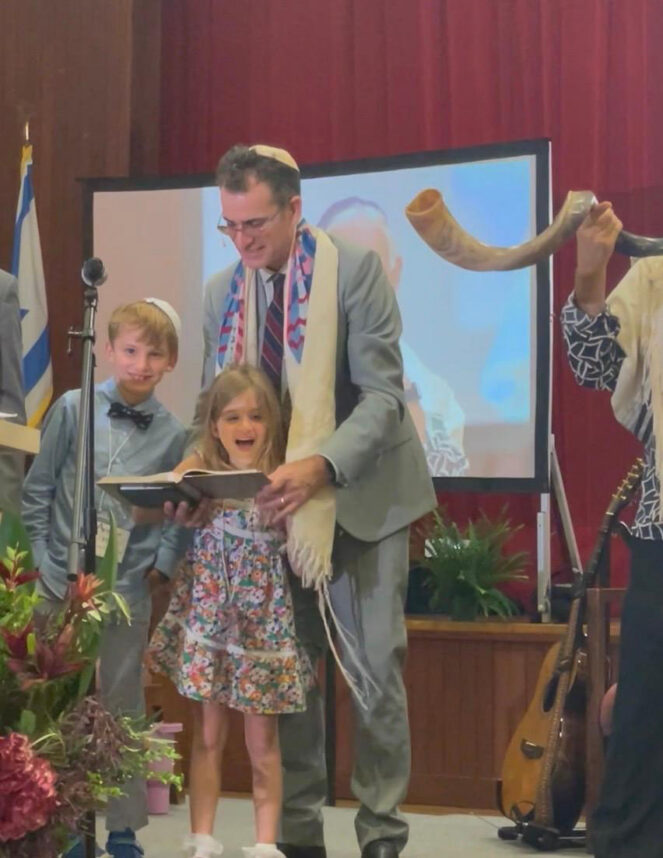
Paradoxically, their daughter, Iris, married a man of different faith, me; thus, the “Romeo and Juliet” theme seems to continue from one generation to another. We raise our kids Jewish to honor the lost blood; but the truth is, deep at the core, just as in Mirek and Blanka’s story, we were never different.
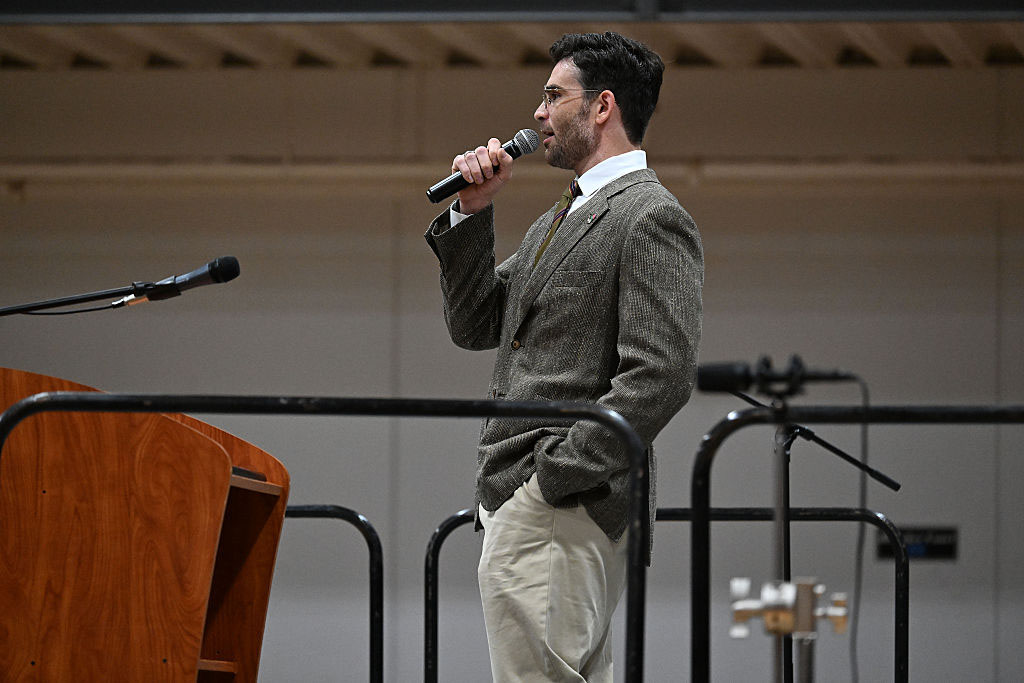
After exactly 18 years of knowing them, Blanka and Mirek allowed me to tell their story in the form of a book. I just finished writing it — “The Oasis.”
That oasis was their love, of course, in the parched desert of the camp. I feel so grateful, almost chosen by fate to be the writer of such a story, meant for everyone. Love equalizes people, if it is real love; its tests of mutual understanding and trust can be as challenging in peace as they are in war.