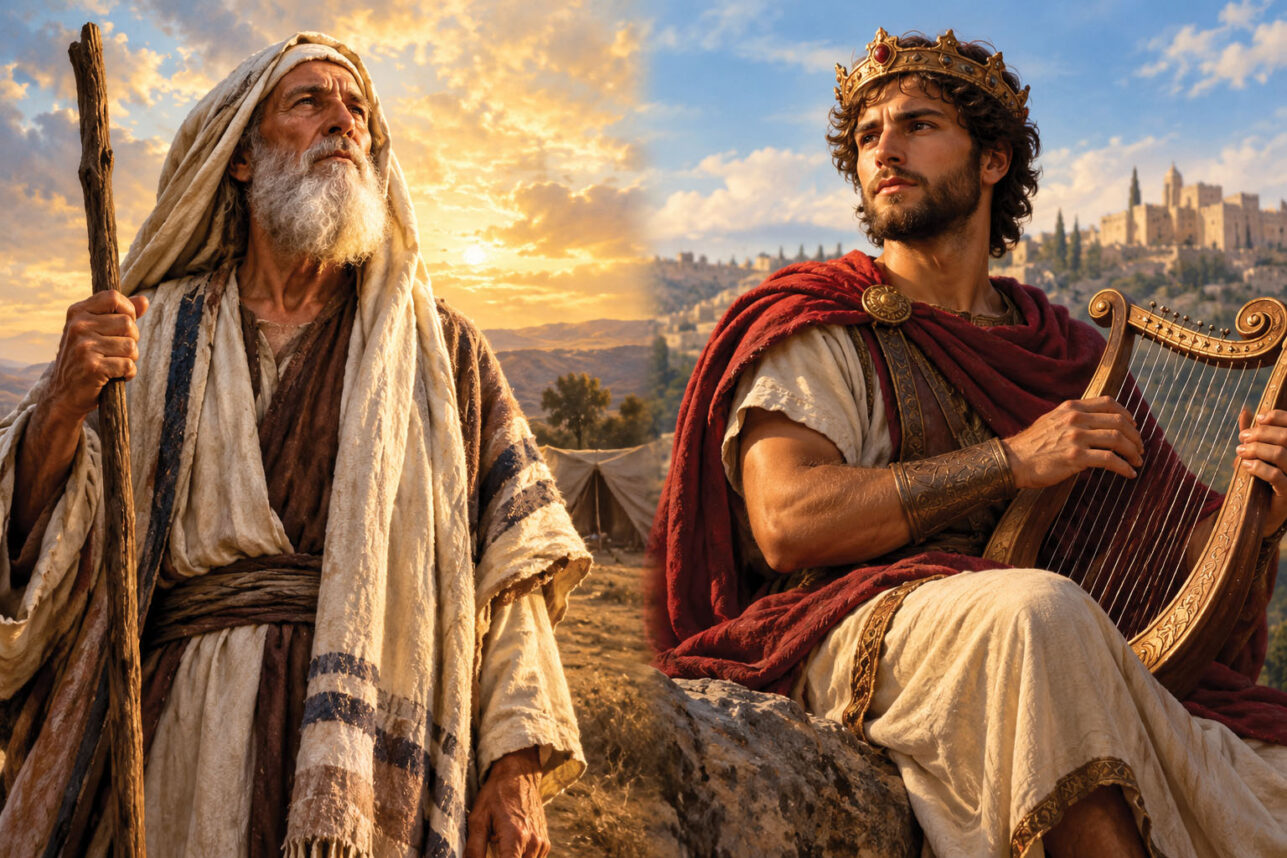
When Mendel Moscowitz is transported from Brooklyn to ancient Egypt, the juxtaposition of a whiny New Yorker on the eve of the Exodus is supposed to create the setting for campy high jinks and musical hilarity.
Billed as “Fiddler on the Roof” meets “The Ten Commandments,” original musical “Mendel & Moses” feels more like “The Little Rascals” meets Soupy Sales. It has an amateurish “let’s put on a show” quality with an overabundance of shticky one-liners that even Sales might be embarrassed to use.
The action begins after a Passover seder, when Mendel questions God about the meaning of the holiday. Gabriel, straight out of the Bible and dressed in full Egyptian regalia, takes Mendel back to Egyptian slave days.
“How far is Egypt? Do I get frequent-flier miles?” asks Mendel, played by veteran actor Ciro Barbaro.
“Here I am in Egypt without my Mylanta,” he says. And the canned music kicks in. Oy.
The warmed-over Catskills schlock appeared to leave the audience at Sunday’s performance a little queasy as well.
Written by Jeremiah and Wendy Ginsberg, the show is a misguided hodgepodge of styles. In the opening scene, Mendel’s family is singing about Passover while three women dressed in red are inexplicably rendering Bob Fosse-esque dance moves. In another scene, a slave sporting a goofy burlap outfit attempts to deliver a serious monologue about the brutality of slavery — a moment that is misplaced among the wacky musical numbers.
And when I say wacky, I mean lyrics such as “lice aren’t nice, so take my advice, avoid the lice.” And perhaps the most egregious example: “eenie-meenie-minie Moses, catch the Pharaoh by his toes-es.” Even the Little Rascals might have come up with something less grating.
The cast, most of whom have a list of impressive credits, do their best to compensate for the material. Still, in the intimate Century City Playhouse, their acting has the overblown feel of bad childrens’ theater.
While the creators of the musical are attempting to teach us about Jewish history, they are also feeding us a full course of unpleasant Jewish stereotypes, including a squealing Jewish American Princess as Eve and even Mendel himself, who convinces Moses that he should help alleviate slavery because he’s a good businessman.
The only audience members who seemed to enjoy the broad humor were those in the under-10 set. Not marketed as a play for children, “Mendel & Moses” could ramp up the silliness, cut many of its songs and offensive stereotypes, and perhaps find new life as a holiday show for children.
After all, there was something charming about a stern Moses dancing a duet with a befuddled Mendel. But the joke gets old for those of us who are well past our Barney years.
Mel Brooks gave us biblical parodies with as much sophistication as slapstick. “Mendel” gives us only the urge to shout “let my people go” by intermission.
“Mendel & Moses” is playing on Wednesdays, Thursdays, Fridays and Saturdays at 8 p.m., Sundays at 3 p.m., at the Century City Playhouse, 10508 Pico Blvd., in West Los Angeles. Tickets are $20 and $22. Call (888) 566-8499.