U.S. Secretary of State Hillary Clinton heads to Cairo this weekend for a two-day visit that aims to give a hearty handshake to the new Islamist president and move to temper any radical moves by his government.
Clinton will be the highest American official to visit Egypt since President Mohamed Morsi was sworn in as president last month, ending six decades of rule by former military strongmen. She will then fly to Israel for a two-day visit, her first in two years.
Clinton has dispatched her deputy William Burns to Cairo and Jerusalem ahead of her visits. State Department officials stressed on Thursday that Burns had set the scene for Clinton’s meeting with Morsi by confirming the American commitment to a partnership with the “new, democratic Egypt,” a statement said.
In Israel on Thursday, Burns was leading a high-level security delegation to the U.S.-Israel Strategic Dialogue. The dichotomy of the topics revealed just how different Washington’s relationship is between Egypt and Israel.
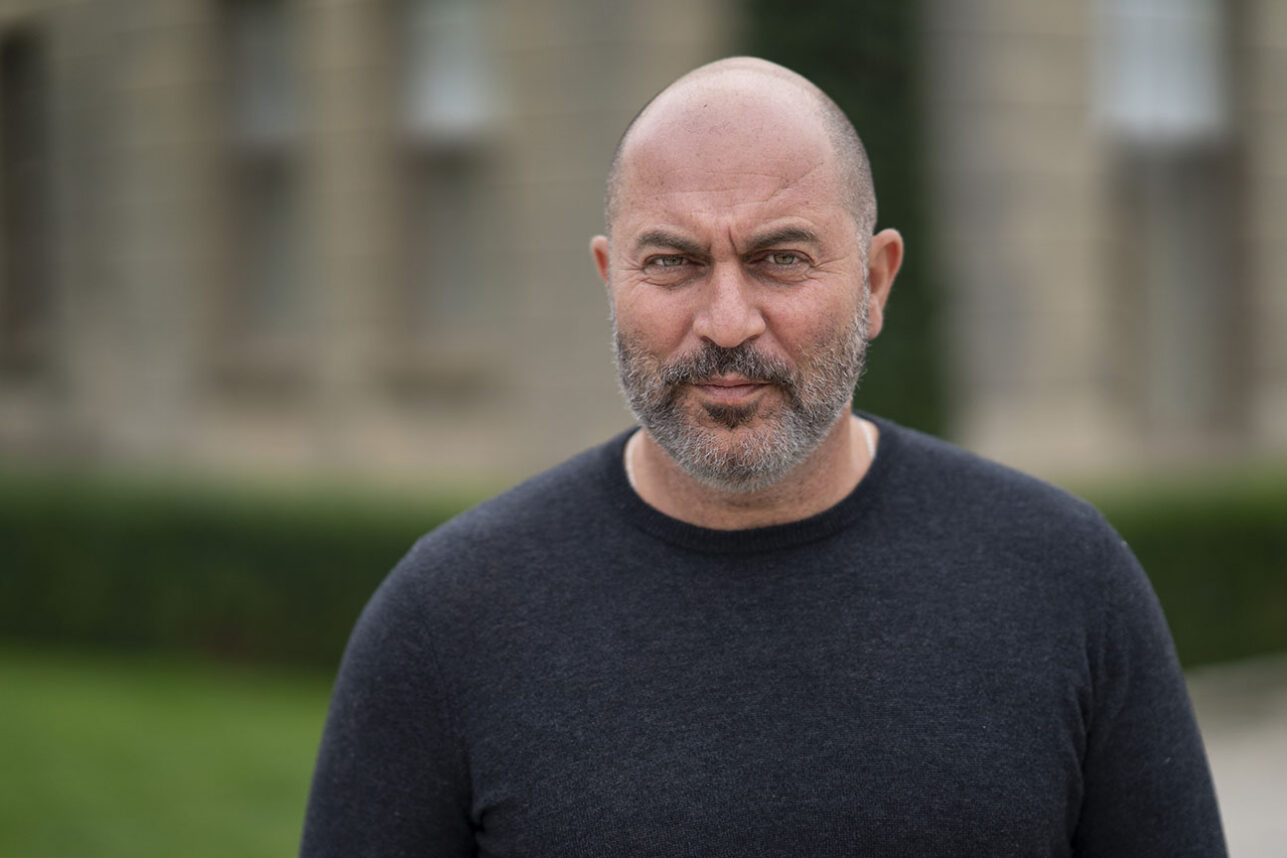
“Clinton’s visit to Egypt is going to be a significant one because it represents a major, maybe desperate effort, to salvage American efforts in Egypt,” Prof. Eytan Gilboa, who teaches political science at Bar-Ilan University near Tel Aviv, told The Media Line.
“Clinton wants to make sure that Egyptian foreign policy will be compatible with American interests and I think she will press on the new Islamist president of Egypt to provide assurances that he would not temper with the peace agreement with Israel,” Gilboa added.

In contrast, the U.S. Secretary of State’s visit to Israel, coming just weeks before a tour by presumed Republican presidential nominee Mitt Romney, will be more of a political visit rather than a diplomatic one.
“This close to the election in this part of the world there is always a little bit of both,” Ari Fleischer, a former spokesman for President George W. Bush and today senior strategist for the Republican Party, told The Media Line.
“When she’s over here, she’ll of course talk about what she’ll describe as President Obama’s unshakable commitment to Israel, so I think you’ll hear the usual platitudes,” Fleischer said.
“President Obama has a real weakness in the Jewish community… He has been weak in his support for Israel and he’s suffering from it,” Fleischer said.
U.S. President Barack Obama has formally invited president Morsi to visit Washington in the fall. This move reportedly came in contrast to promises Obama gave to American Jewish leaders who met with him recently. Some present claim they said Obama assured them that an invitation to Morsi was contingent on the Egyptian leader’s public affirmation of his country’s commitment to the peace treaty with Israel.
So far, Morsi has not specifically mentioned the peace treaty with Israel but has moved to gain credibility as he sets a statesman-like tone, assuring his “commitment to international treaties and agreements.”
He will be meeting Clinton after making his first trip as president abroad, to Saudi Arabia on Wednesday. The former Muslim Brotherhood leader sought to assure Saudi leaders that Egypt’s new government was interested in stability and not exporting revolution.
So far, Clinton has been cautious in taking sides in public in the current dispute between Morsi and the Egyptian military, the latest over whether the country’s legislature should reconvene after a court ruling last month dissolved it.
“We strongly urge dialogue and concerted effort on the part of all to try to deal with the problems that are understandable but have to be resolved in order to avoid any kind of difficulties that could derail the transition,” Clinton said during a visit to Vietnam on Wednesday.
Meanwhile, the Israeli-Palestinian issue remains on the back burner. This was obvious following the meeting last week in Paris between Clinton and Palestinian Authority President Mahmoud Abbas. Even though Clinton said at a press conference afterwards that resolving the Palestinian-Israeli conflict was of “critical importance,” no one in the media asked any questions relating to it and all the focus was on other issues, like Syria.
“The Israeli-Palestinian issue has been put in the right place in the last year because other issues are more significant, including Iran’s quest for nuclear weapons and the so-called Arab Spring,” said Gilboa, an expert on U.S.-Israeli relations.
“(Clinton) will repeat standard American requests from Israel and from the Palestinian side simply because this is needed to show the Palestinians that the United States is doing something at least verbally to promote negotiations. But everybody knows nothing will happen on the negotiations until after the (U.S.) elections,” said Gilboa.
Still, some analysts foresee a collision course between Egypt and Israel, particularly due to the Palestinian issue.
“Israel is interested in maintaining the status quo with Egypt, which would help it to carry on with its colonial military schemes in Palestine and its aggressive policies in Lebanon and throughout the region. Egypt is unlikely to allow that reality to continue for much longer, particularly once the power struggle within Egypt is settled and a new political discourse is fully articulated,” Ramzy Baroud, editor of PalestineChronicle.com, wrote in Foreign Policy Journal.
Still, after more than three-decades of close cooperation with Egypt’s authoritarian leadership, Washington’s close ties with Egypt’s military have been tested somewhat by its persistent demands for seeing through the much championed democratic changes, while trying to safeguard American interests.
“The United States is making many mistakes, because the only body in Egypt that would be interested in maintaining close relations between Egypt and the United States is the military and yet we hear time and again how the United States is condemning the military council and military leaders for doing one step or another. Somehow, there is this naive American belief in elections and parliamentarian politics and they equate elections with democracy and of course this is false,” Gilboa said.