
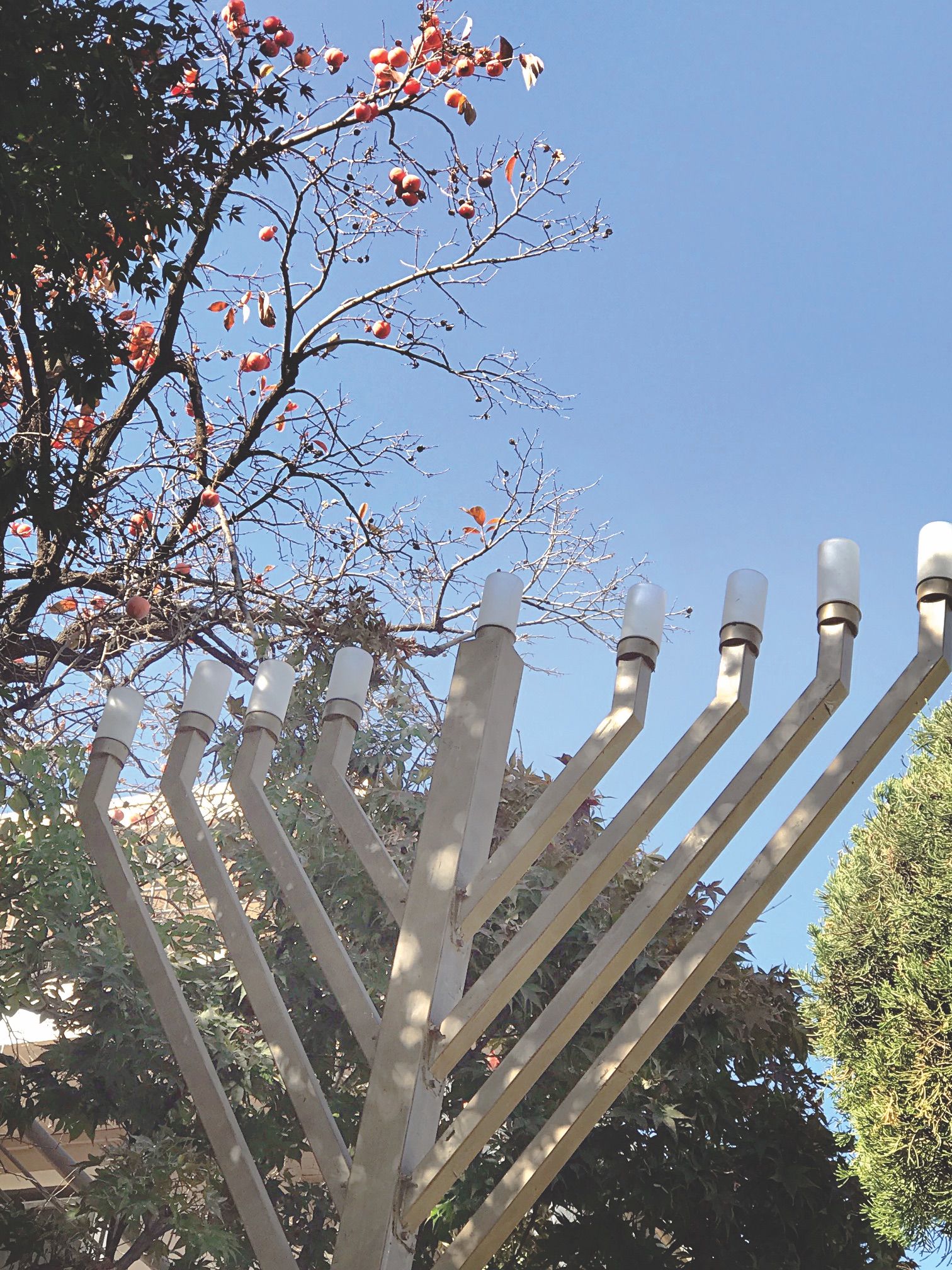
Not far from Seoul’s Han River, off the main thoroughfare in the city’s Itaewon neighborhood, is a hilly residential section of roads so narrow that only one car at a time can safely travel on them. A block from the excellent Leeum Samsung Art Museum, which houses the founder of Samsung’s private collection, is an enormous persimmon tree bearing multiple branches of the orange-colored fruit. Right below its lowest-hanging fruit, seemingly as out of place as a fish with a bicycle, is a large, gray menorah above an iron-gated entry. A large faux Tudor-style house is home to Chabad’s Jewish Community Center, where Rabbi Osher Litzman — South Korea’s only rabbi — and his wife, Mussy, tend to the needs of Seoul’s Jewish community.
Korea’s Jewish community is small, numbering somewhere between 500 and 1,000, and most reside in Seoul. In 1950, about 200 American Jewish soldiers came to serve in the Korean War. American author and Rabbi Chaim Potok also served with the U.S. Army in Korea as a chaplain. Potok’s experiences in Korea, a place where anti-Semitism was seemingly non-existent, so transformed him that they impacted two of his later novels.
Since the end of the Korean War, a few Jewish families settled permanently. But for the most part, the Jewish community in Korea is a transient one.
“[Koreans are] completely fascinated by Jews and Jewish success in the world.” — Rabbi Osher Litzman
Originally from Israel, Rabbi Litzman has been in Seoul since April 2008. The small downstairs shul normally gets about 25 people for weekly Shabbat services, with about the same number at Yongsan Garrison, the U.S. military headquarters in Seoul, just a 15-minute walk from Chabad Seoul. On Yom Kippur last September, it was standing room only at Chabad, with 75 people attending and another 75 attendees at Yongsan. And over the years, both locations often get 120 attendees each during Passover and Rosh Hashanah.
Tourists routinely pop in for a kosher meal. While I was there, four such middle-aged guests arrived, all later complimenting Mussy’s home-cooked meal. Rabbi Litzman said, “This is a spiritual slice of Israel here at Chabad; no politics and no business is discussed. It’s about the Jewish family.”
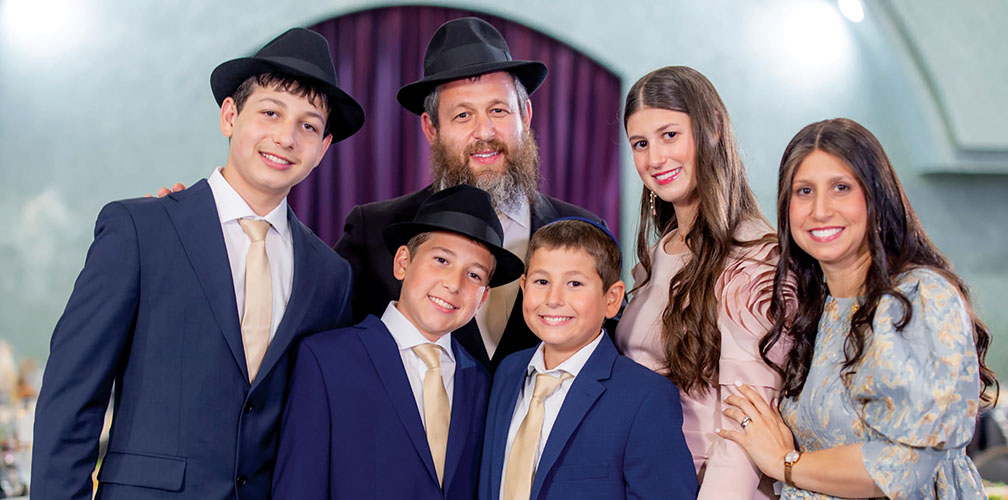
Indeed, with seven children between the ages of 2 months and 11 years, Chabad Seoul is a busy place. But Rabbi Litzman and his wife appear to have endless energy. They currently are in the final planning stages with a Seoul-based, Israeli-French chef and a New York couple to open a pop-up kosher restaurant at the 2018 Winter Olympics at Pyeongchang, South Korea, about 90 minutes from Seoul. Litzman and his team expect to feed between 2,000 and 3,000 people a day during the games from Feb. 9-25.
Koreans are “[very] kind by nature and completely fascinated by Jews and Jewish success in the world, and this has been the case for over 50 years. They are philo-Semitics,” Litzman said. Koreans often note with respect how many Jews have won Nobel Prizes and are very cognizant of the fact that Koreans have been lacking in this regard.
The rabbi also noted that he receives emails daily from Koreans, some who speak Hebrew fluently, to learn more about Jews. “Not necessarily about cultural Jewish aspects, but more to learn how to emulate our success. And nearly every Korean household has a Korean book version of talmudic stories,” he said. The vast majority of these books had their genesis from writings by Rabbi Marvin Tokayer, long a well-known and respected fixture in Japan.
Litzman notes Koreans’ interest and fascination with Jews continues to increase. However, he said most Koreans know very little about Jews historically.
“The vast majority don’t know the most basic aspects of the Holocaust,” he said. “Their educational system trains them not to ask questions but to absorb information they are given. Analytical thinking is not promoted, so connections between historical events often can’t be made.” Chabad plans to establish a Jewish educational center in Seoul, which will hopefully “connect those dots.”

As I left the JCC and looked up to see the large menorah overhead, I was reminded that while my work often takes me far and wide around the world, and regardless of what political or religious leanings one may have, it is always comforting to know I can find a place, often in the most unlikely locale, that will seem just a little bit like home.
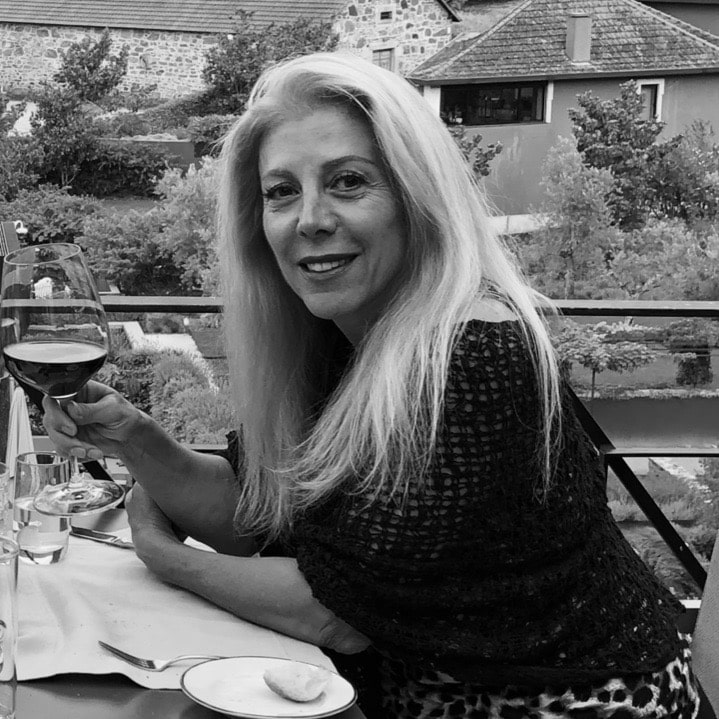
Julie L. Kessler is an attorney, legal columnist and travel writer based in Los Angeles, and the author of the book “Fifty-Fifty, The Clarity of Hindsight.”