On a wall at Beit T’Shuvah’s sanctuary there are plaques with the names of those connected with Beit T’Shuvah who have passed away. One of those names is that of Josh Lowenthal, a former resident who died on June 11, 1995.
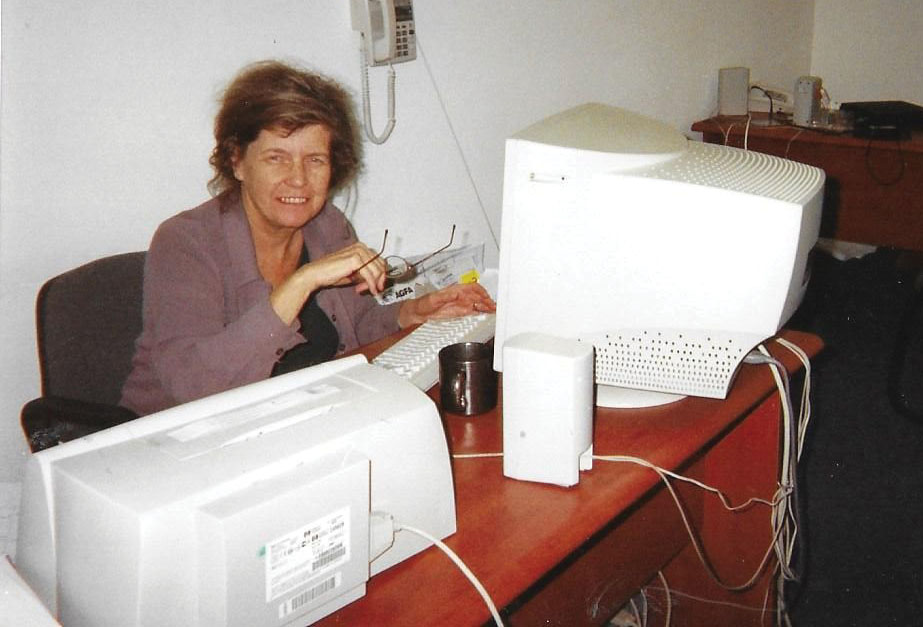
The Jewish Journal recently ran a story about “One-Way Ticket,” Rita Lowenthal’s memoir about her son, Josh, who was addicted to heroin from the age of 13 until his death from a self-administered overdose 25 years later. Lowenthal’s moving account of her son’s life punctures the myth that addiction can’t happen to Jews. It can, and it does.
Another myth that Lowenthal would like to puncture is that if addicts only had enough willpower, they could kick the habit — that only weak-willed people can’t pull themselves out of the addiction abyss.
A recent Newsweek cover story is called, “The Hunt for an Addiction Vaccine.” The article says that science views addiction not as a failure of willpower, but as a “chronic, relapsing brain disorder to be managed with all the tools at medicine’s disposal,” and that the National Institute for Drug Abuse (NIDA) is developing and testing compounds that could prevent or treat addiction.
NIDA scientists have concluded that there are three kinds of self-control: putting off present gratification for a later reward, processing sufficient information before making a decision and being able to change responses that have become automatic.
It should come as no surprise that addicts score poorly in all these categories. In other words, addicts’ brains are wired to opt for immediate rewards, to leap before they look, and to keep repeating accustomed behavior in a rote manner. The medicines in development would change the addict’s responses in all three areas.
Ethan Nadelmann, founder and executive director of the Drug Policy Alliance, has a different focus: He objects to what he calls the massive failure of the global war on drugs. Like a growing number of responsible voices, Nadelmann argues for drug legalization, or at least decriminalization.
In a recent article in Foreign Policy magazine, Nadelmann makes the case that the war on drugs cannot be won — he cites “mountains of evidence documenting its moral and ideological bankruptcy.” He writes that U.S. administrations have let rhetoric and ideology drive policy, and that in countries that have adopted a different way of dealing with drugs and addicts — Britain, Canada, Germany, the Netherlands and Switzerland — the result has been “a reduction in drug-related harms without increasing drug use.”
When asked about this, Beit T’Shuvah staff and residents uniformly say that legalization and pharmacological addiction treatments are beside the point. Their attitude is that addiction — defined in their Web site as the “obsessive pursuit of drugs, alcohol, food, sex, money, property and/or prestige” — is not about drugs, it’s about the issues that lead to drug use, issues that also lead to other self-destructive behavior.
One long-time Beit T’Shuvah resident, a middle-age man with an MBA and a background in the entertainment industry, said that “you can solve your drug problem and still not be any closer to an effective life. The point is to find out what the problems underneath are: not living your life effectively, not living it with truth. The problem is not the drugs.
“You can legalize drugs, you can find chemical ways of neutralizing the effects of drugs, but the end result will be the same: the root problem will still be there, and the person who has that problem will suffer in a different way. If it’s not drug addiction, if it’s not incarceration, it’ll be family dysfunction or abuse or other issues. These are all manifestations of a deeper problem, just as drug addiction or alcoholism is a manifestation of a deeper problem. And it’s that deeper problem that has to be treated.”
Lowenthal agrees that addiction’s deeper problems should be addressed: “Anyone who has been shamed and punished for addiction needs understanding and support.” But she points out that the situation with illegal drugs, as opposed to alcohol or prescription drugs, makes users subject to the law: Her son was in and out of San Quentin and other prisons because he stole in order to maintain his addiction. “Try getting a student loan, a job, or sympathetic in-laws after serving time in prison,” Lowenthal says.
If her son had lived in a society where heroin use is not a crime and where it’s cheaply available, then he probably wouldn’t have stolen, she believes. He probably wouldn’t have gone to prison over and over, and he might not have chosen to take his own life at the age of 38.