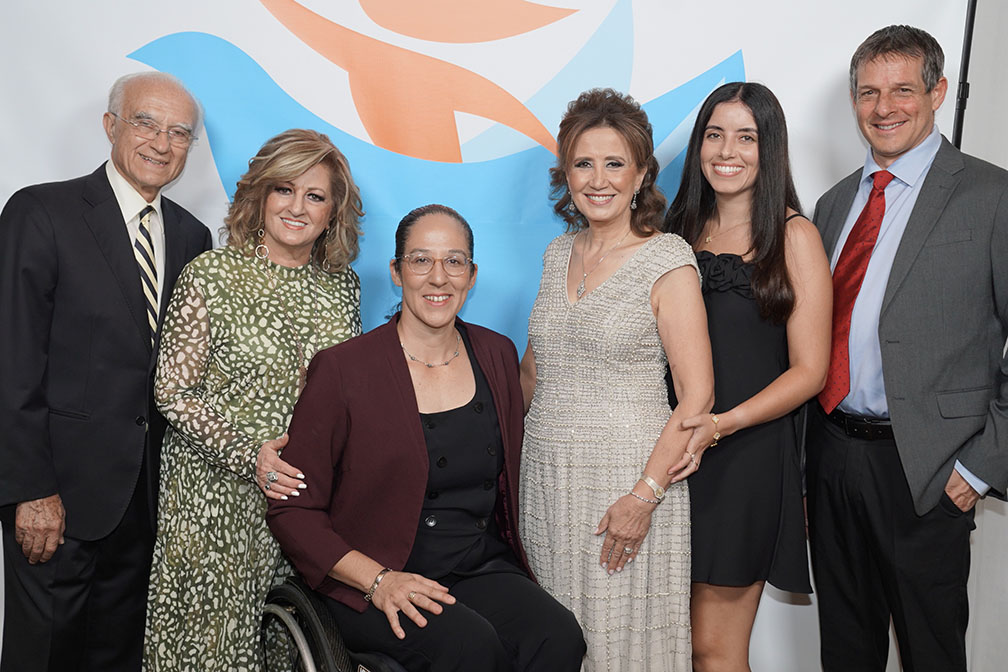
Los Angeles resident George Giles, 26, Has been looking for a job in marketing ever since he was laid off five months ago. With the economy continuing to falter following Sept. 11 and a child on the way, George is hoping that his job search will be more fruitful in Israel.
The Los Angeles Israel Aliyah Center recently gave George and his Israeli-born wife, Tirtza, the green light to make aliyah (immigration to Israel), two months after the couple opened a file with the agency.
“Employment is more of a concern for me now than the issue of security,” he said.
Tirtza and George are part of a growing number of North America Jews considering moving to Israel. In Los Angeles, New York and other cities, first-time aliyah inquiries are booming.
Tehilla, the organization for religious aliyah, attributes the increase to a “reality check” following the Sept. 11 terrorist attack.
“Our membership has doubled compared to the same period a year ago,” said Chavi Eisenberg, Tehilla’s North American director.
But Larry Tishkoff, director of the Los Angeles Israel Aliyah Center, a program of The Jewish Agency for Israel and a beneficiary of The Jewish Federation of Greater Los Angeles, cautions that while the events of Sept. 11 may have influenced some people, the reasons for the growing interest in aliyah are more complex and difficult to pinpoint.
“There are no two stories that are similar,” he said. “Everyone has a different reason for going.”
North American immigration to Israel averages 1,500 annually. While the number of North Americans who made aliyah in 2001 was down 5 percent from the year before, the trend is expected to experience a dramatic reversal by the middle of 2002.
Initial inquiries at the Los Angeles Israel Aliyah Center in November, compared with the year before, were up 413 percent; people who have opened a file with the office rose 130 percent. Inquiries in New York, a population that accounts for 45 percent of all North American olim (immigrants to Israel), rose 100 percent, and Miami experienced a 600 percent increase.
“In all the big cities, the numbers have increased dramatically,” said Dan Biron, executive director of Israel Aliyah Center of North America. “We have more people who are seriously checking into it. It’s an indication that in six months, we’ll see an increase [in aliyah].”
Even though Jews can immigrate to Israel without the assistance of an aliyah agency, it can be a “confusing bureaucratic process,” said Rabbi Yochanan Kirschenboim, Tehilla’s executive director.
Tishkoff, an Encino native who made aliyah in 1977, recommends that people “get their feet wet before they jump into the deep end.” He cites the rude awakening many North Americans experienced in the 1970s when they immigrated to Israel after the Six-Day War.
“A person who comes back oftentimes is embittered, incomplete,” said Eddie Friedman, Israel Aliyah Center’s lay chair, stressing the importance of counseling to prepare for the psychological impact. “Unsuccessful aliyah hurts everybody.”
Aliyah agencies offer a variety of programs, including pilot trips, internships and volunteer opportunities, and ulpans (an intense Hebrew-immersion program) to help prospective olim test the water. The programs can last anywhere from one week to one year.
Bruce and Sharon Schraer, a 50-something San Diego couple, have already been approved for aliyah. The intifada has cooled their enthusiasm a little, but they’re still interested.
“We’ve been trying to do this for two years,” Bruce said.
“We’re taking our time to check things out a little more and do a pilot trip,” said Sharon, referring to a program that gives potential olim the opportunity to investigate housing and employment opportunities.
Nicole Schuller, who did a double master’s in Jewish communal work and nonprofit management at Brandeis University, recently decided to go ahead with aliyah after completing a five-month ulpan in Israel.
“It’s the greatest place to be young and single,” said the 27-year-old from Studio City.
Schuller, who would like to land a job doing Jewish communal work, possibly in absorption services, knows that she won’t earn as much working in Israel.
“Once I do find a job, which might be harder these days, you just have to be willing to live with a lower standard of life as far as material needs,” she said. “It’s a sacrifice I’m willing to make.”
For more information about Israel Aliyah Center, call
(323) 761-8915 or visit www.aliyah.org
. For more information about Tehilla,
visit www.tehilla.com .