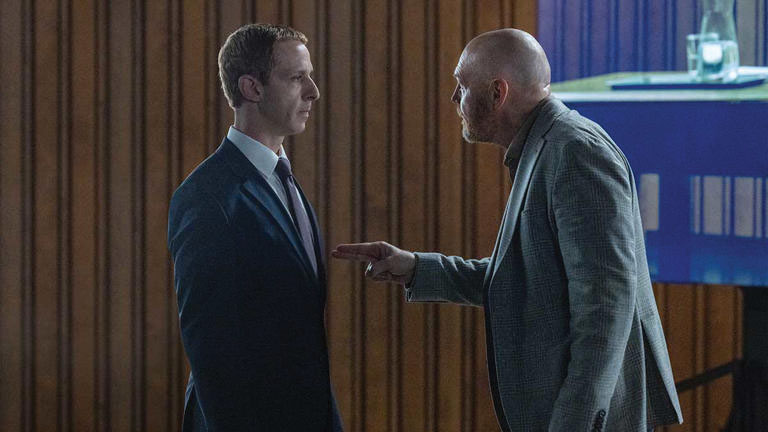
Bernard Madoff, the Ponzi schemer whose story is the subject of a TV miniseries airing this week, is “doing as well as can be expected,” according to his lawyer.
Ira Sorkin, who represented Madoff when he pleaded guilty in 2009 to defrauding investors of tens of billions of dollars, said the 77-year-old — who according to another source is a regular at Jewish worship services in prison — has a “little bit of a heart problem,” ABC News reported Tuesday.
Madoff is serving a 150-year sentence at the same North Carolina federal prison from which American Jewish spy Jonathan Pollard was recently released on parole.
Citing Sorkin and other inmates, ABC News said Madoff is upset that none of his family members, including his wife and grandchildren, visit him. His wife, Ruth, stopped visiting “years ago,” according to ABC News. Both his sons died after he was imprisoned: Mark Madoff committed suicide in 2010 at 46; Andrew Madoff died of cancer in 2014 at 48.
Madoff has “regret at what he put his family through,” Sorkin told ABC.
John Mancini, a fellow inmate released in 2010, told ABC that the prisoners locked up with Madoff treat him with “great respect” and admire his criminal accomplishments.
Mancini told ABC News that some inmates came to Madoff for financial advice and stock tips, and that Madoff attended Jewish services in the prison chapel.
“He felt pain, a lot of pain,” Mancini said. “I would walk the track with him almost every day and I see tears out of his eyes.”
Madoff’s crime was the largest financial crime in U.S. history. Many of his victims were Jewish and Israel-related philanthropies, as well as individual American Jews.