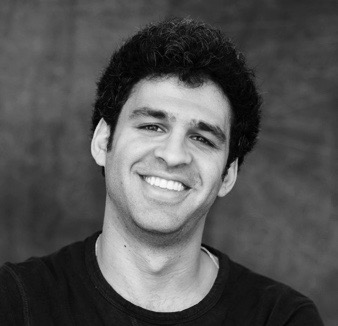
On a rainy weekday in December, Shmulie Hauptman wore a reflective Hatzolah of Los Angeles jacket. A two-way radio was clipped to his belt. His car, a Lexus hybrid, was parked outside the Starbucks at Pico and Robertson, where he met with the Journal. Inside the car were a spare oxygen tank, burn kits, a defibrillator and other emergency supplies.
“The biggest lesson we learn in this field is empathy,” Hauptman, 37, said, emphasizing that his job as Hatzolah of Los Angeles’ director of operations requires more than nifty gear. “We get to see people at their best and at their worst. Without a healthy dose of empathy, it’s not a job you can do well.”
Hauptman oversees more than 60 active responders and more than 20 dispatchers for the local Hatzolah chapter, which was founded around 1999 as a means of providing first-aid services to synagogues and today functions as a supplementary organization for existing emergency response programs in the heavily Jewish communities of Pico-Robertson, Hancock Park and Valley Village.
Hauptman was among the inaugural class of trainees for the all-volunteer group.
He manages to balance his work for Hatzolah with a family life that includes five children, ages 2 to 17 — Hauptman described his marriage at the age of 18 as the “single best decision I ever made in my life”— and a day job. As the CEO of European Specialties, a food manufacturing business, he splits his time between Los Angeles and Newark, N.J.
The support of his wife, Samantha, a faculty member at Yeshiva High Tech, helps make the juggling act possible, he said, especially as she understands that emergencies occur at all times of the day. It is supportive spouses who make the work of Hatzolah possible, Hauptman said.
“Our strength is from our families, who are ready to give up their Shabbat meals, their family time,” he said.
David Bacall, deputy director of operations at Hatzolah, said Hauptman is able to communicate with a wide cross-section of people, including the many Orthodox Jews who live in the areas Hatzolah serves, but also, as Hatzolah does not discriminate on the basis of religion, to non-Jews as well.
“He’s really able to understand different people’s points of view and bridge the gap between them,” Bacall, managing director of Capstone Partners, said. “Coming from the corporate world, that’s the sign of a good leader.”
Hauptman is the son of a rabbi, and he describes his work for Hatzolah as a “calling,” just as one might describe the rabbinate.
“That’s my calling. I didn’t join this organization to sit behind a desk. When you’re a leader, you lead from the front lines. You don’t lead from behind the scenes. You can’t get a feel for what your guys are doing unless you are there with them,” he said. “Sometimes you need to step in.”