
Imagine downtown Los Angeles more than 150 years ago: dirt streets, rancheros in town picking up supplies, donkeys carrying sacks of cattle feed.
Over there, at the corner of Aliso and Los Angeles streets, in a stretch of two-story adobes known as Bell’s Row, is a dry-goods business and a tailor shop. The proprietors sell merchandise out front and live in the back with their families.
What makes this noteworthy? They’re Jewish immigrants from Prussia.
Census records show that, by 1860, when Los Angeles’ population was 4,385, nearly 6 percent of those residents were Jewish. That’s at a time when the Jewish population of the United States overall was 0.5 percent.
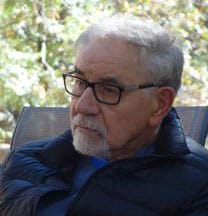
It’s also a time that has become a passion for Gladys Sturman and David W. Epstein, co-creators of the Jewish Museum of the American West (JMAW). Sturman, 84, of Calabasas, hopes those who visit the virtual museum (jmaw.org) will come away feeling equally inspired.
“This museum is aimed at young Jewish students, and what we would like to have them get from it is that in an era and an area where there was freedom and very little anti-Semitism, [Jews] could and did accomplish a lot,” she said. “They had the opportunity to grow and develop and could become business leaders, political leaders, community leaders. They could spread out their wings and really accomplish something in the West.”
Epstein, 77, curates JMAW from his Woodland Hills home. That’s possible because the museum is online only, which allows for the posting of a nearly limitless amount of information.
“It’s been a little over a year, and we’re still accessing information. … We’re not one-fiftieth of the way through the information that we eventually hope to put on here,” Sturman said. She has produced “Western States Jewish History,” a journal that is the source of most of the museum’s information, with Epstein since 1992.
JMAW bills itself as “the most entertaining telling of Jewish history in history,” and the site is filled with largely unknown stories of Jews in the Old West. The cybermuseum is divided into webpages that Epstein calls “exhibition halls.” Single halls are devoted to New Mexico, Nevada, Oregon and other areas west of the Mississippi, but California has the lion’s share — nine halls, including ones devoted to Los Angeles, Orange County and the Inland Empire.
In a webpage called “Why the Jews?” the case is made that the Wild West was a “golden age” for Jews, when “almost everything went right” for those hardy enough to risk the perilous trip and frontier setting.
“The external conditions in the Old West were right for Jews to succeed,” Epstein said. “A huge area west of the Mississippi; sparse population; little, if any, anti-Semitism. Once they were liberated from restrictions that had limited their horizon in Europe, or even in the Eastern U.S., Jewish pioneers became whatever their skill, intelligence and hard work permitted.”
Predictably, Jews often were merchants and bankers. But JMAW proudly points out that Jews also became sheriffs and saloon-keepers, miners and ranchers, judges and politicians. Even an Indian chief.
After going to New Mexico to join his family’s business, Solomon Bibo approached the Acoma Indians to sell them dry goods. He grew friendly with the tribe, learned their language and helped them settle land-grant issues. When their chief died, members of the tribe signed a petition asking for Bibo to represent them; he was re-elected to that position for 13 years.
On the website, Epstein identifies five Jewish values that led to their success out West. The first was integrity, meaning how much a person was trusted by others. Consider the example of Solomon Lazard, who came to Los Angeles in the 1850s and opened a dry-goods store.
“He developed a reputation for honesty, so miners and others kept their valuables in Lazard’s safe,” Epstein said.
Lazard became a prosperous retailer, philanthropist and member of the City Council, and he was instrumental in having Los Angeles develop water-and-power infrastructure.
Then there was Isaias W. Hellman, who showed a knowledge of history. While still in his 20s, he founded L.A.’s first banking institution, which eventually became Farmers & Merchants Bank.
“Hellman knew that if a bank charged exorbitant interest, both the bank and the people the bank lent money to would fail,” Epstein said. “But if the bank lent money at a reasonable rate, everyone would profit. Hellman charged a reasonable rate because he knew financial history.”
Another factor was education. In the Old West, a common signature on documents was “X,” but not for Jews, who knew how to read and write. Jews also arrived with language skills. Many of them, having come from Europe, spoke several languages, and Sephardic Jews knew Ladino, a Judeo-Spanish dialect.
No doubt Jewish civic and philanthropic contributions helped as well. Jews founded and funded hospitals, libraries, schools, orphanages and other institutions that benefited the community. The cybermuseum presents this as arising from Jews’ commitment to justice, tzedakah.
JMAW isn’t a website that focuses on scandals, but there is a notable exception. Bernard Cohn, originally from Prussia, settled in Los Angeles in the 1850s, when he was 21. He became a successful merchant, then politician, serving on the L.A. City Council. He was even interim mayor for a couple of months. Then, after his death, it was revealed that he had two families: his Jewish family on one side of town, and a Catholic family on the other side of town.
Because much of the information used by JMAW comes from public records as well as personal histories from members of prominent families, the cybermuseum has certain gaps: What was daily life like? What about Jews who weren’t prominent? What about women?
Epstein is aware of those gaps, and the website urges readers to submit stories of their own Jewish ancestors, if they lived in the Western states in the 19th century.
“The museum is for everyone, of any religion and any age,” Epstein said. “But, most of all, it’s for coming generations of young Jews who don’t know about this chapter in Jewish history and will be inspired by these stories of risk-taking and success. It’s the young people, young Jews — I’d like to see them read these stories and be motivated toward accomplishment and success.”

































