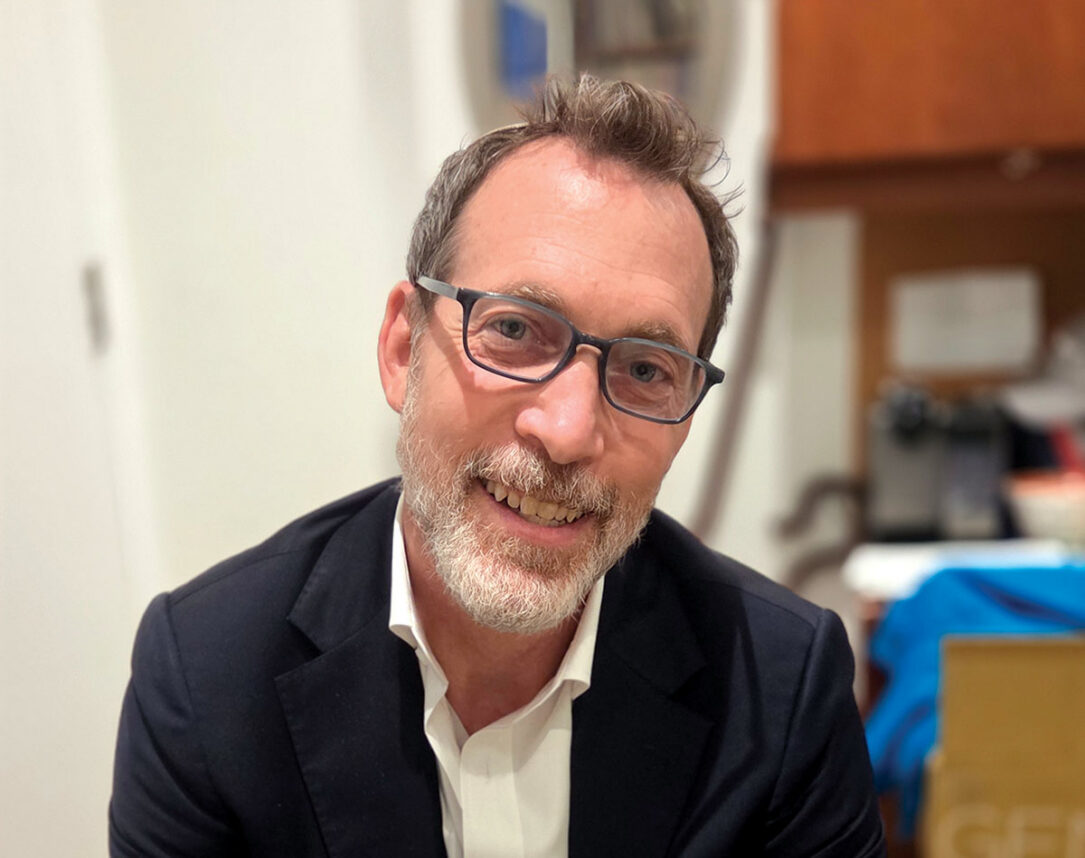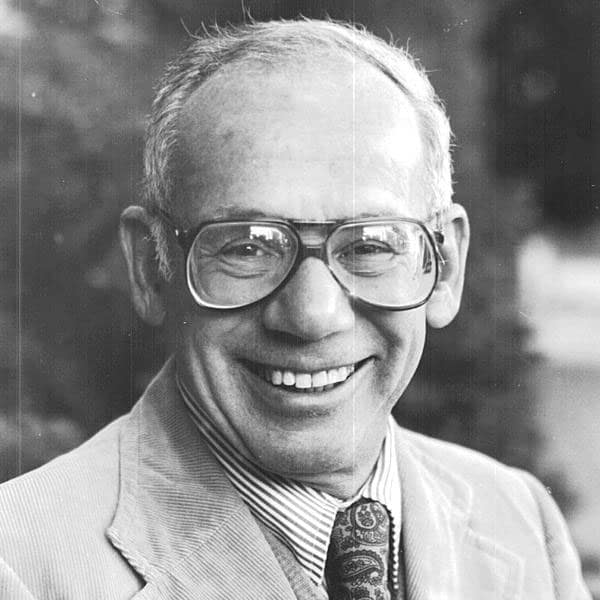
Gordon Davidson, the Brooklyn-born director and producer who played a key role in transforming Los Angeles from a perceived cultural backwater into a creative center for innovative and controversial plays, died Oct. 2.
He was 83 and died after collapsing at dinner in his Santa Monica home, according to his wife, Judi.
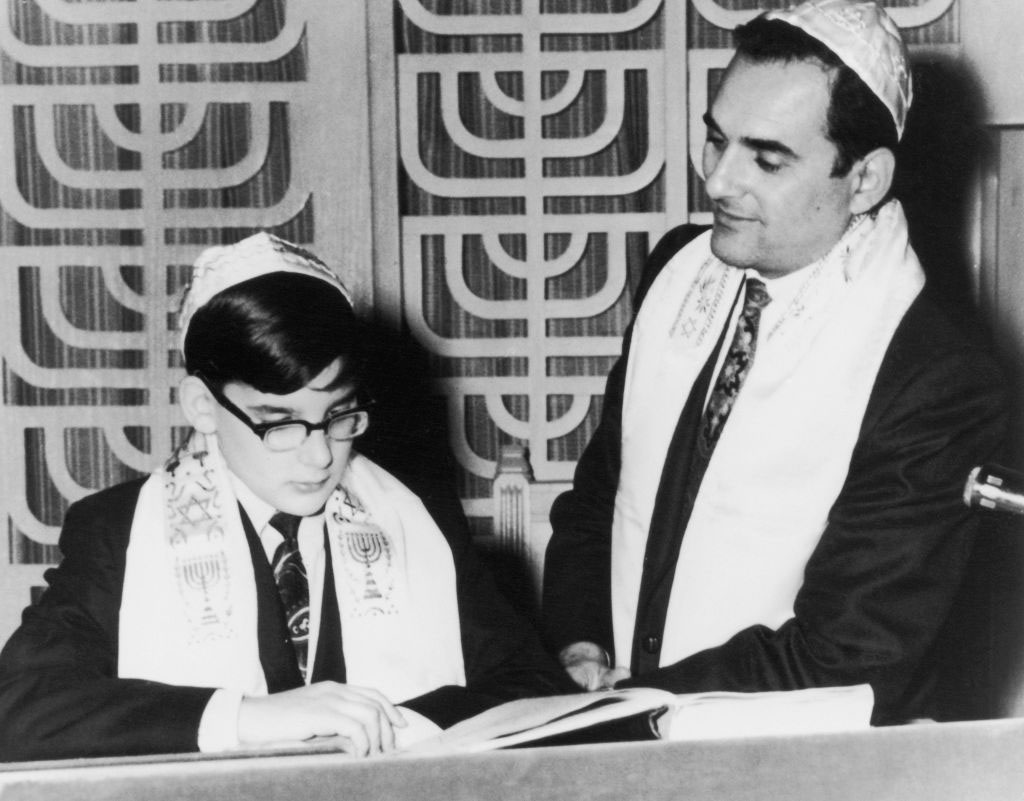
In both his personal and professional lives, Davidson drew frequently on his Jewish heritage.
“I guess we are the prototype of the American Jewish family,” he said during one of a series of interviews with this reporter over a quarter of a century. “My paternal grandfather, born in a small town near Kiev, was Orthodox; my father was Conservative; and I’m Reform.”
Initially set on an engineering career, Davidson changed his mind during college and in 1964 moved to Los Angeles as assistant to John Houseman. The following year, he succeeded his mentor as managing director of the Theatre Group at UCLA.
In a daring decision, the novice director set as his first production “The Deputy” by Rolf Hochhuth, which indicted Pope Pius XII for his silence during the Holocaust, raising the ire of many of the city’s most influential Catholics.
In 1967, the Theatre Group, with Davidson at the helm, moved from the UCLA campus to the nearly completed Mark Taper Forum in downtown Los Angeles. To inaugurate the new venue, Davidson decided to stage and direct “The Devils” by John Whiting, centering on a libertine priest, a nun and their sexual fantasies. This choice almost ended the director’s career, with the Catholic Archdiocese and Davidson’s bosses at the L.A. County Board of Supervisors demanding his scalp. Thanks to the intervention of some of the most influential names in Los Angeles and Hollywood, Davidson survived.
In subsequent years, Davison also took charge of the Ahmanson and Kirk Douglas theaters and to a large extent reversed the flow of theatrical hits from Broadway to Los Angeles.
The banner years of the early 1990s saw the production of the six-hour landmark dramas “The Kentucky Cycle” by Robert Schenkkan and Tony Kushner’s “Angels in America.”
The two plays won back-to-back Pulitzer prizes. Even more remarkably, in 1994, three out of four plays vying for the Tony Award were Taper productions.
Other Davidson artistic successes included “In the Matter of J. Robert Oppenheimer,” “The Trial of the Catonsville Nine,” “The Shadow Box,” “Children of a Lesser God” and “QED.”
Davidson showed less of an affinity for Shakespeare plays and among his rare flops were productions of “Hamlet” and “Julius Caesar.”
By the time he retired in 2005, Davidson had directed more than 40 plays and produced more than 300 works for the Center Theatre Group. He also earned such plaudits from often critical actors and colleagues as “The Moses of theater in Los Angeles,” “He does theater from the breakfast table all the way through to the midnight snack,” and “Gordie is just a huge mensch. He is what the word means. And he’s haimish (homey).”
Core support for Davidson’s plays came from Jewish audiences, and throughout his career he directed or produced such Jewish-themed works as “Dybbuk,” “Number Our Days,” “Tales from Hollywood,” “Green Card,” “The Immigrant” and “Ghetto.”
Not every subscriber was happy with Davidson’s choice of plays. “Every group wants to see itself reflected on the stage, but it doesn’t work this way,” he said. “The best plays may be about a specific group but evoke universal identification.”
In a 2007 interview, Davidson mused about his Jewish connections and identity — both strongly re-enforced by his wife, who was raised in an observant and Zionist family.
Another major influence was his affiliation with Leo Baeck Temple, a liberal Reform congregation, led by a succession of socially active rabbis. From the examples set by these rabbis, he drew a parallel to his own work as artistic director.
“In some ways, both deliver sermons,” he said. “Sometimes a rabbi has to ask disturbing questions which his audience may not want to hear. The artist has the same function.”
During the same interview, Davidson recalled how he and his wife had been moved during a recent trip to Russia by a visit to a school in St. Petersburg where Jewish kids, with no background in their heritage, were learning the rudiments of celebrating Shabbat.
“What defines a Jew?” Davidson asked rhetorically. “I am still trying to absorb the mystery.”
Davidson is survived by Judi, his wife of 57 years; their children, Adam Davidson and Rachel Davidson Janger; brothers Michael and Robert; and five granddaughters.