Someone would probably be labeled a hippie if he or she were to use the English word “peace” as a greeting or an expression when parting. Yet in Hebrew, the standard “hello” or “goodbye” is shalom (peace), and the word carries no modern cultural or political connotation.
What is it about the word “shalom” that has enabled it to become the standard Hebrew salutation? A small sampling of its place in Jewish tradition will reveal that “shalom” is far more than a greeting.
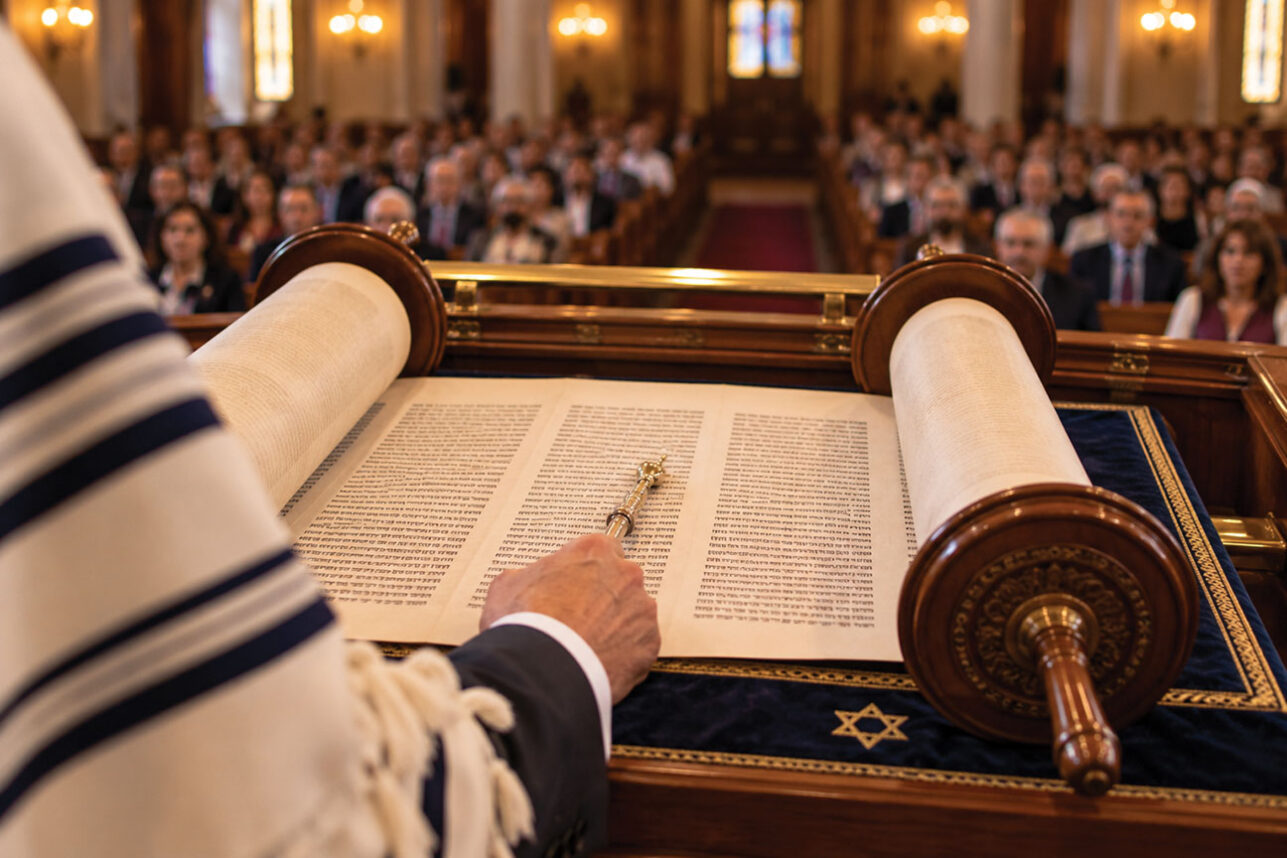
In the Hebrew Bible, the word “shalom” appears 237 times, including in this week’s Torah portion, Naso. In the Birkat HaKohanim (Priestly Blessing), which is part of our daily Jewish liturgy, the concluding line reads, “Yisa HaShem Panav Elekha, V’Yasem Lekha Shalom” (May God direct his favor upon you, and grant you peace) (Numbers 6:26).
Commenting on the word “shalom,” the Netziv, the 19th-century rosh yeshiva of Volozhin, says, “Now that the previous blessings have been pronounced, we recite a blessing that is the vessel which contains the other ones, for without peace one cannot derive gratification from any blessing.”
The “previous blessings” referred to by the Netziv are the first two parts of the Priestly Blessing — “May God bless you and protect you,” and “May God deal kindly and graciously with you” (Numbers 6:24-25). In a beautiful metaphor, the Netziv refers to “shalom” as a vessel that contains “blessing, protection, kindness and grace” from God, and further remarks that without peace, one cannot truly enjoy these or any other blessings.
The great Torah commentator Rashi, in his typically brief yet packed comments, says, “Without peace there is nothing.”
Is peace only a blessing from heaven, or can human beings participate in creating peace?
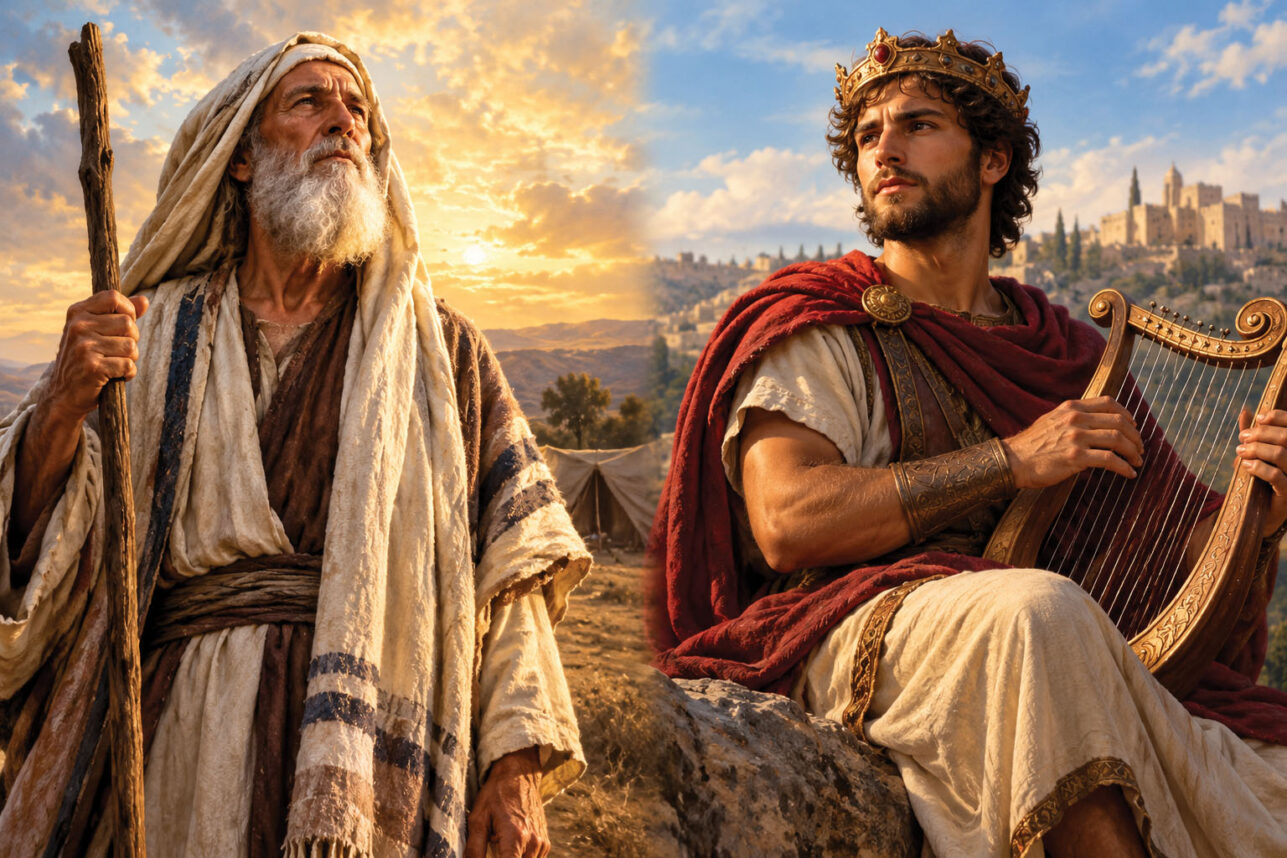
The Book of Psalms teaches: “Seek peace and pursue it” (Psalms 34:15). Based on this injunction to actively seek peace, the rabbinic tradition brings to light an aspect of Aaron’s life that complements his ritual duties as high priest. Pirkei Avot teaches: “Hillel says: ‘Be a student of Aaron, lover of peace [ohev shalom] and pursuer of peace [rodef shalom]’” (Pirkei Avot 1:12).
For Aaron, who was commanded to recite the Priestly Blessing, its simple recitation was not enough. Aaron was the ultimate creator of peace within the community, reconciling differences between married couples and disputes between friends. From Aaron we learn that prayers are not mere words we recite, but, especially with peace, a lifestyle we must create for ourselves.
How far must one take the pursuit of peace? In an interesting numerological calculation (known as gematria), the Baal HaTurim commentary remarks that the numerical value of the letters that spell “shalom” (376 — shin=300, lamed=30, vav=six, and mem=40) is equivalent to the letters of the name “Esau” (376 — ayin=70, shin/sin=300, vav=six).
Esau was Jacob’s twin brother, and there was hardly “shalom” between the two. Furthermore, in later rabbinic tradition, Esau, the father of the Edomite nation, came to be equated with the Roman Empire, Christian Rome and all of the persecution of Jews that came with it. Despite all of this, the Baal HaTurim says that the numerical equivalence of “shalom” and “Esau” teach us that “one should always be first in inquiring after the peace of all men, even the peace of a non-Jew.” Where this may seem like “no big deal” for the Jew in the modern world, it was quite bold of the Baal HaTurim to make such a statement, especially in light of the atmosphere toward Jews in medieval Europe. Perhaps we can draw from his teaching today by remembering that “Esau” was symbolic for “enemy of the Jews,” and therefore, “being first to inquire after the peace of all men” — including Esau — serves as food for thought in the debate of whether it is wise for the Jews to make the first overture for peace toward our enemies.
It is no wonder that we greet one another with the blessing “shalom.” It is, as the minor Talmudic tractate’s Perek HaShalom (Chapter of Peace) puts it, “The greatest of all blessings, for all blessings and prayers conclude with peace.”
I therefore conclude with a prayer that “shalom” become more than just a greeting. Oseh shalom bimromav. Hu ya’aseh shalom aleinu. V’al kol Yisrael, v’imru amen.
Daniel Bouskila is the rabbi of Sephardic Temple Tifereth Israel, a nondenominational modern/traditional Sephardic synagogue located in Westwood. You can read his blog at rabbidanielbouskila.blogspot.com.