
Passover is the most family-oriented of the Jewish holidays, the ultimate dinner party, the Thanksgiving of the Jewish community.
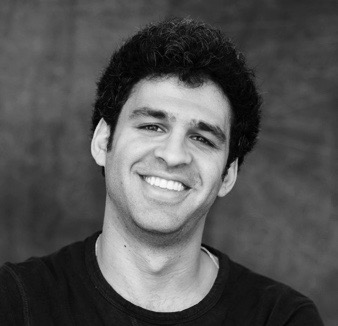
That is the belief, anyway, of Michael Hebb, creator of Seder2015, an interactive smorgasbord of Passover-related audio clips of famous thinkers discussing seder memories, downloadable haggadot, recipes, playlists and more.
Click through the website, seder2015.org, to find an array of material, including an audio clip of Rabbi Abraham Joshua Heschel’s daughter, Susannah Heschel, describing a Passover in 1968 spent with Martin Luther King Jr.; a haggadah companion about human trafficking that compares it to the slavery of the Israelites; and a recipe — the website has lots of recipes, many of them also at jewishjournal.com — for Martha’s Excellent Matzah Ball Soup, courtesy of Eric and Bruce Bromberg of Blue Ribbon Restaurants.
Hebb said he created seder2015.org for people who want to have a seder experience but aren’t sure how to do it.
“The fact that it will be one of the first comprehensive digital Passover resources — that, right there, will capture people’s attention: the quality of the content, recipes from leading chefs, anecdotes from leading thinkers, even playlists from musicians [all with the aim of] how to host a modern seder,” Hebb, 39, who is a teaching fellow at the University of Washington’s Digital Media Department and a self-described “food provocateur,” said during a phone interview.
To fund the project, Hebb launched an Indiegogo campaign that raised more than $20,000 for the website. The Charles and Lynn Schusterman Family Foundation matched every crowd-funded dollar.
The site launched on March 13 during the 2015 SXSW Interactive Festival. As of press time, recipes, sound clips and haggadot were available, while some features — such as the playlists and a link to jewishjournal.staging.wpengine.com, which will host a repository of cutting-edge seder recipes from a new generation of chefs, including Ari Taymor of Alma — are still being finalized.
Recent surveys show that Passover seder participation is on the decline nationally. A 2013 Pew Research Center survey, “A Portrait of Jewish Americans,” reported that 70 percent of American Jews said they had participated in a seder in the past year. In the 1990s, that number was around 90 percent.
To reverse the trend, Hebb has garnered a wide array of support. The Reed College Calligraphy Initiative, Seattle artist Cathy Shiovitz and the cutting-edge design firm Civilization all are involved.
Additionally, jewshjournal.com will serve as a growing repository of Seder2015's Passover recipes, Tablet Magazine’s website will host stories about Passover that can be used during a seder in partnership with Seder2015, and the Journal’s publisher and editor-in-chief, Rob Eshman, and its president, David Suissa, are members of the Seder2015 advisory board. Jewish Sound editor and publisher Joel Magalnick is a contributor to the project, as well. Significant initial funding for the effort came from the Los Angeles-based Guilford and Diane Glazer Foundation.
Artist Eileen Levinson, 34, founder of haggadot.com, a website that encourages people to create their own personalized Passover prayer books, is one of Seder2015’s many partners. She believes the Seder2015 website provides tools to create interesting conversations around the seder table.
“Passover is an opportunity to have a giant conversation at dinner,” Levinson said. “Any other time of year, you maybe would not have the courage to bring friends together to have a nice dinner and talk about modern-day slavery or talk about Ferguson [Missouri] or civil rights. This gives you permission to choose some reading and inspiration and gather people together to have a conversation about the bigger picture.”
Beyond wanting to reinvigorate Passover for new generations, Hebb, a non-practicing Jew, cites his fascination with the dinner table and its role in society as additional motivation. Hebb previously spearheaded a campaign to bring people together around a dinner table to confront and discuss the topic of death. The initiative was called “Death Over Dinner.”
“I’ve been on an almost 20-year trek-inquiry-adventure to understand the role that the table has played historically in shaping culture and how it can have a transformative effect going forward, the basic context being that we have forgotten how to eat together,” he said.
“My father got ill when I was young and scattered our family into various parts of the house,” he said, when asked if he had had family dinners as a child. “Dinners were not an important part until later.”
Meanwhile, Hebb delivered a talk at the 2013 TEDMED conference on his previous national campaign, “Death Over Dinner,” and told the Journal that “70,000 people or more have had these experiences, ‘death dinners,’ in under a year and a half.”
The success of that project made him confident that he can also change how we observe Passover.
“ ‘How can we use that same thinking around Passover?’ ” he said, recalling his thoughts at the start of the project, last September. “What happens when you apply the process we went through with ‘Death Over Dinner,’ bringing in leading experts in the field, artists, designers and thoughtfully producing a digital platform?” he asked.
“Could it deepen and make more transformative the Passover experience? Could it speak to teenagers? Could it speak to Gen-Y and millennials? Could it make them feel like they had more agency and more voice?”
Meanwhile, Levinson sees Seder2015 as a way to make this year’s Passover different — but not too different — from all other Passovers.
“We’re just trying to offer something compelling and cool,” Levinson said, “while also being true to the traditions of Passover.”

































