
As the Dodgers seek to repeat as World Series champions, it’s little known that one of their stars is an alumnus of a collegiate summer league team named for a Pilgrim who, some believe, drew inspiration from the Hebrew Bible in creating what has been called the first American Thanksgiving.
In 2015, before he was drafted by LA, catcher Will Smith, then a junior at the University of Louisville, played 10 games for the Brewster Whitecaps in Massachusetts. He batted .259. Though even the most devoted baseball fans likely have never heard of the team, part of the Cape Cod Summer League, its notable other alumni include the Yankees’ Aaron Judge, the Athletics’ Brent Rooker, and the Mets’ Jeff McNeil.
The town that hosts the Whitecaps is named for William Brewster. Brewster was born in 1566 or 1567 in Nottinghamshire, England. He and his family fled to Holland due to religious persecution at the hands of the Church of England, and later continued to Leiden in the Netherlands. From there, after narrowly escaping being shipped by the authorities to England for execution, Brewster set sail on the fateful Mayflower journey. He then served as Plymouth Colony’s religious leader for almost a decade, and continued to preach until his death in 1644.
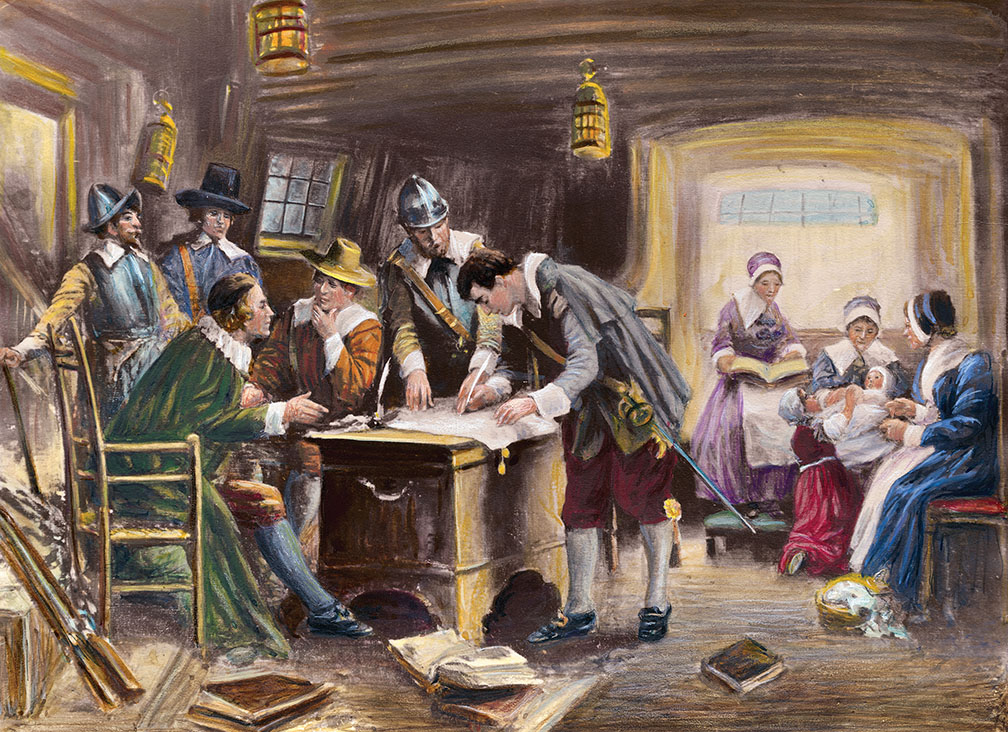
Though the veracity of the details of the Pilgrims’ experience has long been subject to debate, legend has it that on Nov. 9, 1620, after 65 days at sea, the Pilgrims aboard the ship had spotted the American coast at Cape Cod. It was then that Brewster is said to have read Psalm 100 as an expression of the group’s collective desire to offer thanksgiving to God. He likely used a copy of the Bible prepared by Henry Ainsworth (1571–1622), the Separatist English clergyman.
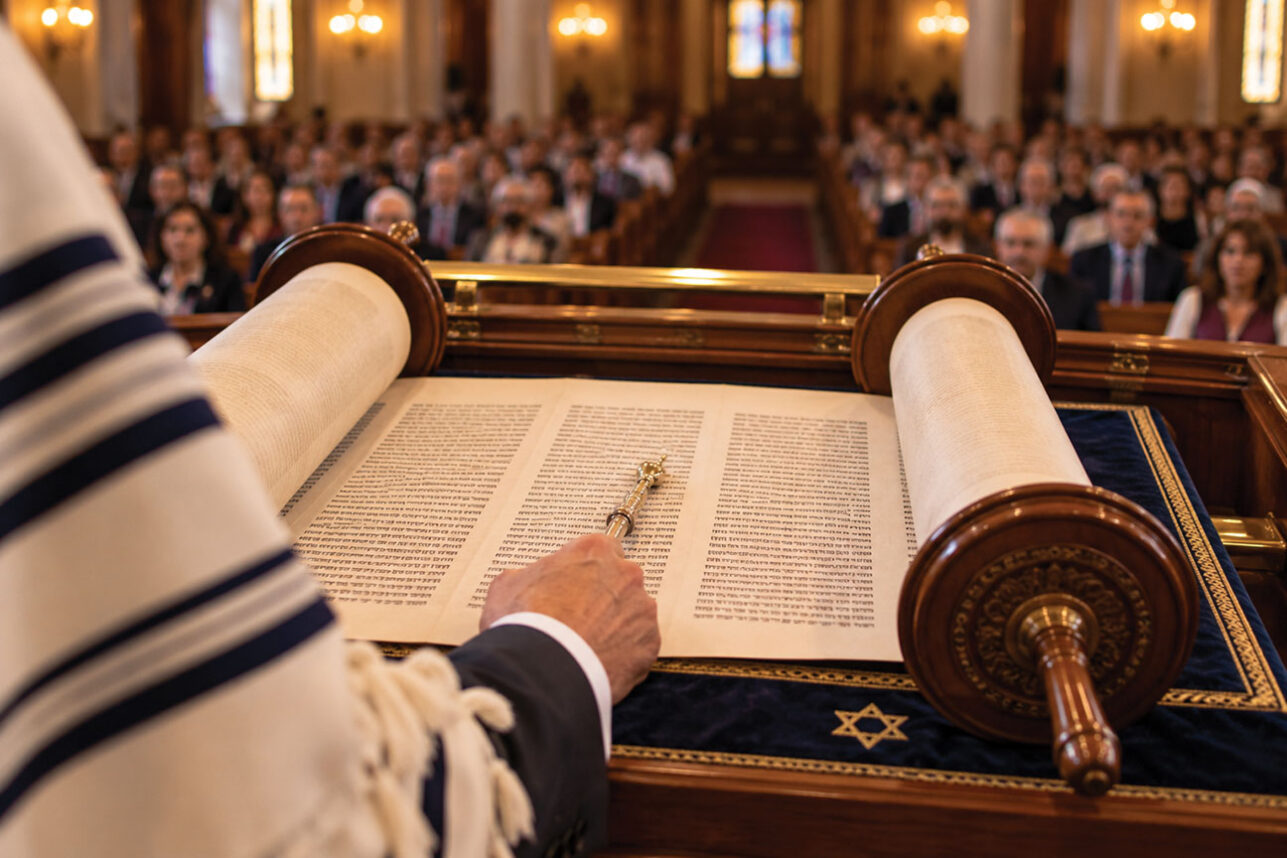
As the writer Nick Bunker describes in his “Making Haste from Babylon: The Mayflower Pilgrims and their World,” the Ainsworth translation sought to be faithful to Jewish interpretation. As Bunker puts it, “Inspired by the work of the rabbis, Ainsworth made new translations of the Psalms and the Torah. He wrapped around them a commentary, verse by verse and word by word, trying to distill every drop of meaning conveyed by their authors.”
Psalm 100, known as “Mizmor le-todah” in the Jewish tradition, is recited every weekday as part of the morning prayers. Ainsworth’s rendering, slightly modified, reads: “A Psalm for confession. Show ye triumphantly to [the Lord] all the earth. Serv[e] ye [Lord] with gladness: come before him with singing joy. Know ye, that [the Lord] he is God; he made us and not we: his people and sheep of his pasture. Enter ye his gates with confession; his courts with praise: confess ye to him, bless his name. For [the Lord] is good, his mercy is for ever: and his faith, unto generation and generation.”
Brewster’s purported prayer thus marked the Pilgrims’ project, despite its difficulties and the arduousness of their journey, as being graced by God. Though he of course could not have known what the future had in store for his fellow settlers, Brewster hoped that like Israel’s covenant with the Lord, his new community would endure. Whether the tale of his recitation is true or a myth, without a doubt in Brewster and the Pilgrims’ new Promised Land, the faith expressed in the words of the Hebrew Bible would serve as a model for the burgeoning American experiment.
The late Senator Joe Lieberman (D-Conn.) told the story of Brewster’s recitation of Psalm 100 often, including in his last book, “Faith’s Answers to America’s Political Crisis: How Religion Can Help Us Out of the Mess We’re In.” He saw it as representative of the country’s covenantal character from its initial stages. Lieberman noted, “Our history has been a journey to realize, generation to generation, the ideals and promises of our founding generation … It is in the broadly shared faith and values of the American people, and the sense of unity and common action so many of us derive from the direction we find, the guidance and values we find, in our respective houses of worship.”
Brewster’s legendary expression of thanksgiving would eventually evolve, years later, into the beloved holiday celebrated by millions of Americans, independent of their faith, for centuries. Melanie Kirkpatrick, in her “Thanksgiving: The Holiday at the Heart of the American Experience,” includes Ainsworth’s translation of Psalm 100 under “Readings for Thanksgiving Day,” as “one of the great songs of Thanksgiving as the Pilgrims would have spoken them.”
Whether or not Whitecaps alum Will Smith and the Dodgers emerge victorious once more, then, all Americans have reason to cheer for William Brewster – a fascinating figure whose biblically-infused impact on America continues to inspire.
Rabbi Dr. Stuart Halpern is Senior Adviser to the Provost of Yeshiva University and Deputy Director of Y.U.’s Straus Center for Torah and Western Thought. His books include the newly released “Jewish Roots of American Liberty,” “The Promise of Liberty: A Passover Haggada,” “Esther in America,” “Gleanings: Reflections on Ruth” and “Proclaim Liberty Throughout the Land: The Hebrew Bible in the United States.”