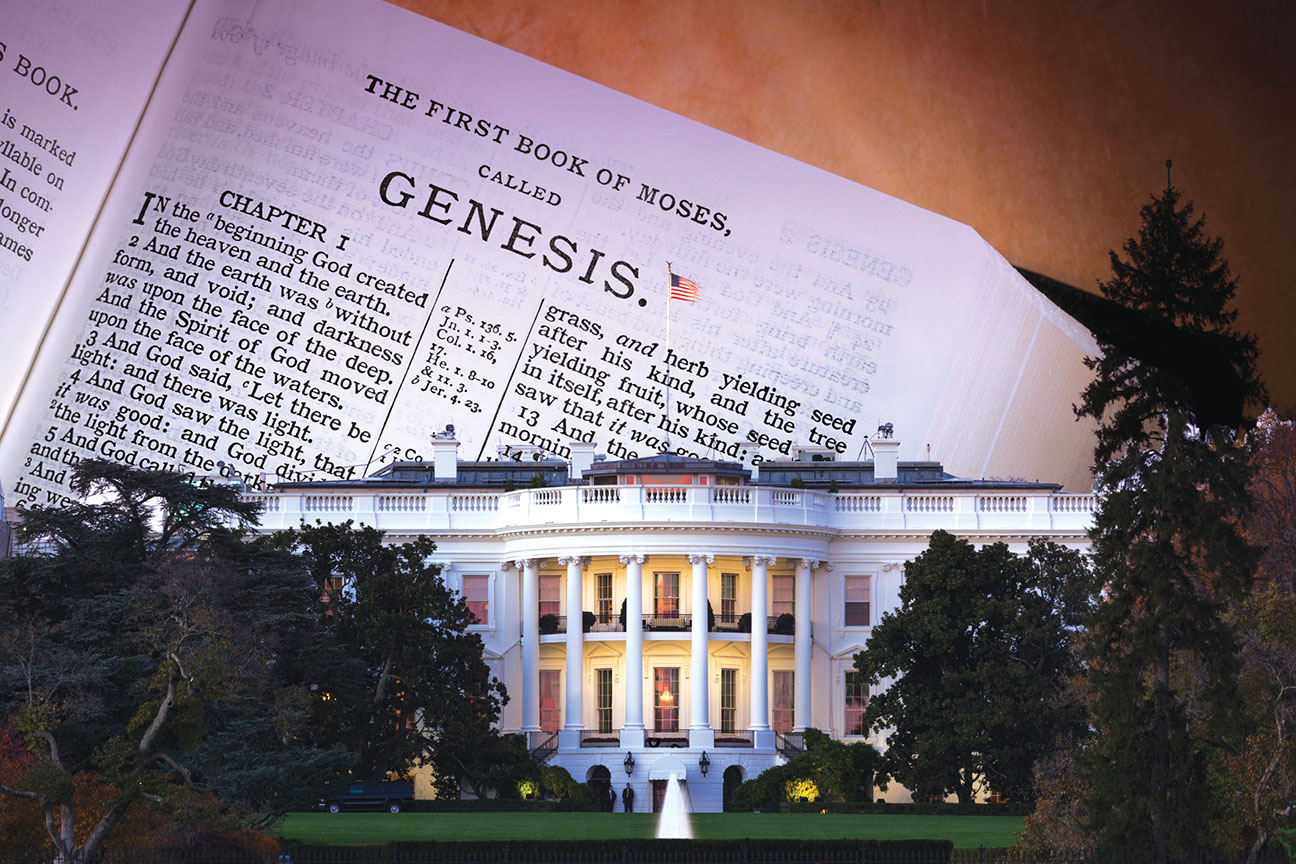
“We gather on a day of profound joy, of soaring hope, of renewed faith, and above all, a day to give our deepest thanks to the Almighty God of Abraham, Isaac and Jacob,” President Trump said in beginning his recent address to Israel’s Knesset. The invocation of the biblical patriarchs, whose story is told in Genesis – which we have recently begun reading in the weekly parsha cycle – is not surprising. American leaders have long had an affinity for that first of the Five Books of Moses.
John Adams mined Genesis for meaning throughout his life. In 1787, he wrote to Thomas Jefferson regarding the propensity of people to be ruled by their unrestrained passions. “Lessons, my dear Sir, are never wanting. Life and History are full. The Loss of Paradise by eating a forbidden apple has been many Thousand years a Lesson to Mankind, but not much regarded.”
Decades later, the 84-year-old former president wrote to the Jewish former diplomat Mordecai Manuel Noah, “Your God of Abraham, Isaac and Jacob is our God. … I really wish the Jews again in Judea an independent nation.”
Adams’ son, John Quincy Adams, also cited the Bible’s opening stories. Lamenting a series of British newspaper articles that rejoiced over George Washington’s decision to retire after two presidential terms, John Quincy, in a 1796 letter to his friend Johan Luzac, decried “the calumny of English spirits beholding the felicity of the Americans as Satan,” who led astray “our first parents in the Garden of Eden.”
In 1854, Andrew Johnson, a former tailor, wrote that he was not ashamed of his pre-presidential profession, since “Adam, our great father and head, the lord of the world, was a tailor by trade, for in the history of Adam and Eve as given by Moses, we get the original idea of sewing.” Johnson was alluding to Genesis 3:7’s description of the first couple covering their nakedness with fig leaves fashioned into makeshift clothes.
Abraham Lincoln also picked up this thread. In an April 1858 “Lecture on Discoveries and Inventions,” which he subsequently repeated multiple times throughout the U.S. prior to being elected president, he noted how “Abraham mentions ‘thread’ in such connection as to indicate that spinning and weaving were in use in his day – Gen. 14.23… The above mention of ‘thread’ by Abraham is the oldest recorded alusion to spinning and weaving; and it was made about 2,000 years after the creation of man, and now, near 4,000 years ago. Profane authors think these arts originated in Egypt; and this is not contradicted, or made improbable, by any thing in the Bible; for the alusion of Abraham, mentioned, was not made until after he had sojourned in Egypt.”
In addition to Adam and Abraham, American leaders have turned to another one of Genesis’ central figures, Noah, in appreciating how history’s early heroes allowed humanity to flourish. Grover Cleveland, in 1891, expressed his admiration for how “the construction of the ark was the turning-point in the scheme for the perpetuation of the human race. The builder’s work in that emergency saved mankind from a watery grave.” Almost a century later, in 1976, Jimmy Carter effused over the ark constructor’s conviction. “You can imagine what Noah went through living back in the mountains building his ship. You can imagine what the neighbors said to him. The ridicule [over his warnings of a flood] must have been unbearable, but his faith let him survive.”
Adam and Abraham’s presidential popularity, in the meantime, has continued.
Herbert Hoover, in 1931, made reference to Adam’s sons when he declared, “Modern society cannot survive with the defense of Cain, ‘Am I my brother’s keeper [Genesis 4:9]?’ no governmental action, no economic doctrine, no economic plan or project can replace that God-imposed responsibility of the individual man and woman to their neighbors. That is a vital part of the very soul of a people.”
Commenting on the nuclear arms race in 1960, John F. Kennedy ruefully noted “We and the Russians now have the power to destroy with one blow one-quarter of the earth’s population – a feat not accomplished since Cain slew Abel.”
In Washington, D.C., on April 29, 1964, President Lyndon B. Johnson invited civil rights leaders to band together to ensure a more equal society. He invoked the story of Abraham and his nephew Lot’s dwelling together in the Promised Land in harmony. “Inspire us with renewed faith …” Johnson appealed. “Inspire and challenge us to put our principles into action. For the future of our faith is at stake, and the future of this Nation is at stake. As the Old Testament pleads, ‘Let there be no strife, I pray, between you and me, and between my herdmen and your herdmen, because we are brothers.’ So do we plead today. Yes, we are all brothers, and brothers together must build this great Nation into a great family, so that a hundred years from now in this house every man and woman present today will have their name pointed to with pride because in the hour of our greatest trial, we were willing to answer the roll and to stand up and be counted for morality and right.”
Bill Clinton cited the same story at a 1995 signing ceremony for the Israeli-Palestinian West Bank Accord. Clinton declared, “You, the children of Abraham, have made a peace worthy of your great forebear. Abraham, patriarch of both Arabs and Jews, sacrificed power for peace when he said to his nephew Lot ‘Let there be no strife …’ Clinton then continued: “Patience and persistence, courage and sacrifice: these are the virtues, then, as now, that set peacemakers apart.”
More recently, President Joe Biden, in his remarks in Israel 11 days after Hamas’ Oct. 7, 2023 attack, offered comfort by evoking the Jewish practice of, after reading the end of the Torah, returning to the story of Creation in Genesis’ opening verses. In this initial scriptural passage, God proclaims, “Let there be light” and Adam and Eve are formed. “After reading the story of Moses’ death, those who observe the holiday begin reading the Torah from the very beginning,” Biden remarked. “The story of creation reminds us of two things. First, that when we get knocked down, we get back up again and we begin anew. And second, when we are faced with tragedy and loss, we must go back to the beginning and remember who we are. We are all human beings created in the image of God with dignity, humanity and purpose. In the darkness, to be the light unto the world is what we’re about.”
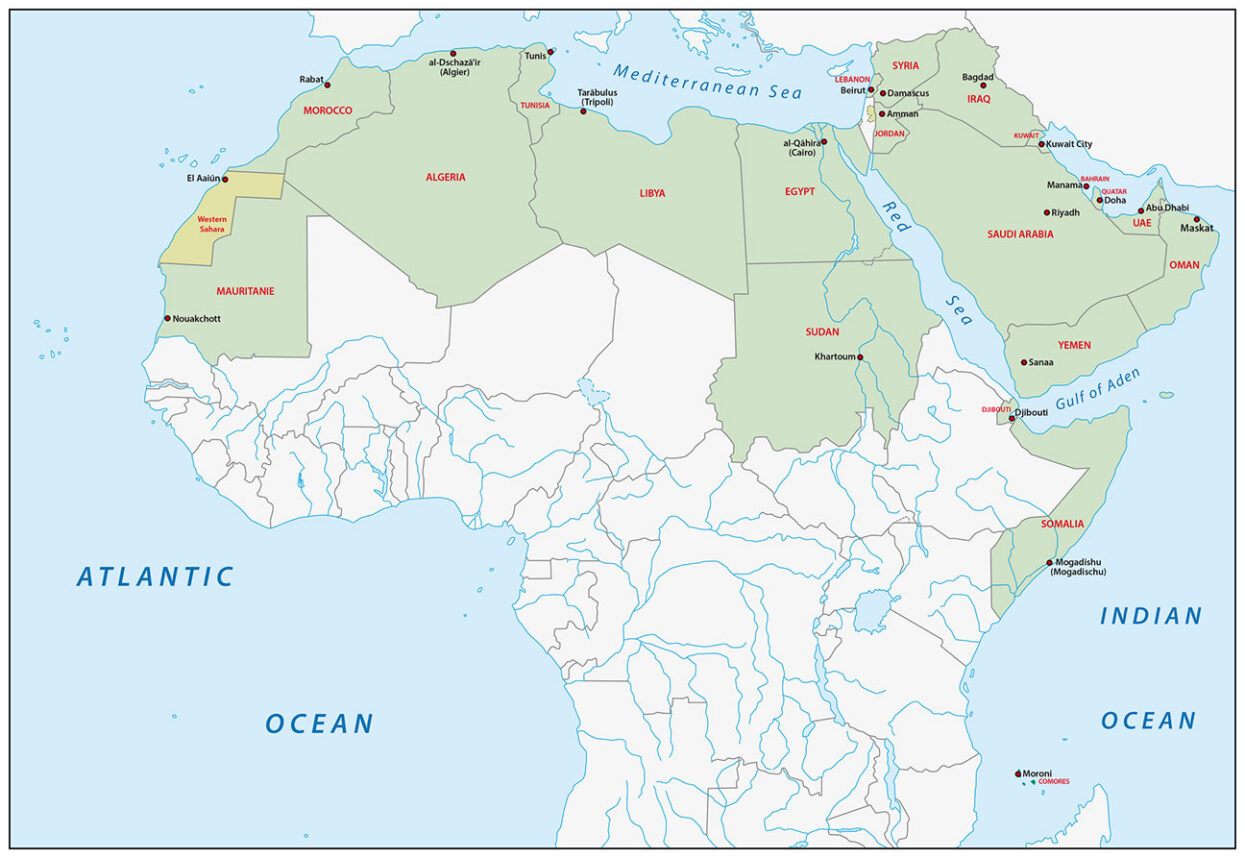
During this era of refreshed hope for the expansion of the fittingly-named Abraham Accords in the weeks ahead – while Genesis continues to be read in synagogues worldwide – the Bible’s first book carries on as a customary fountain of wisdom for the White House.
Rabbi Dr. Stuart Halpern is Senior Adviser to the Provost of Yeshiva University and Deputy Director of Y.U.’s Straus Center for Torah and Western Thought. His books include the newly released “Jewish Roots of American Liberty,” “The Promise of Liberty: A Passover Haggada,” “Esther in America,” “Gleanings: Reflections on Ruth” and “Proclaim Liberty Throughout the Land: The Hebrew Bible in the United States.”