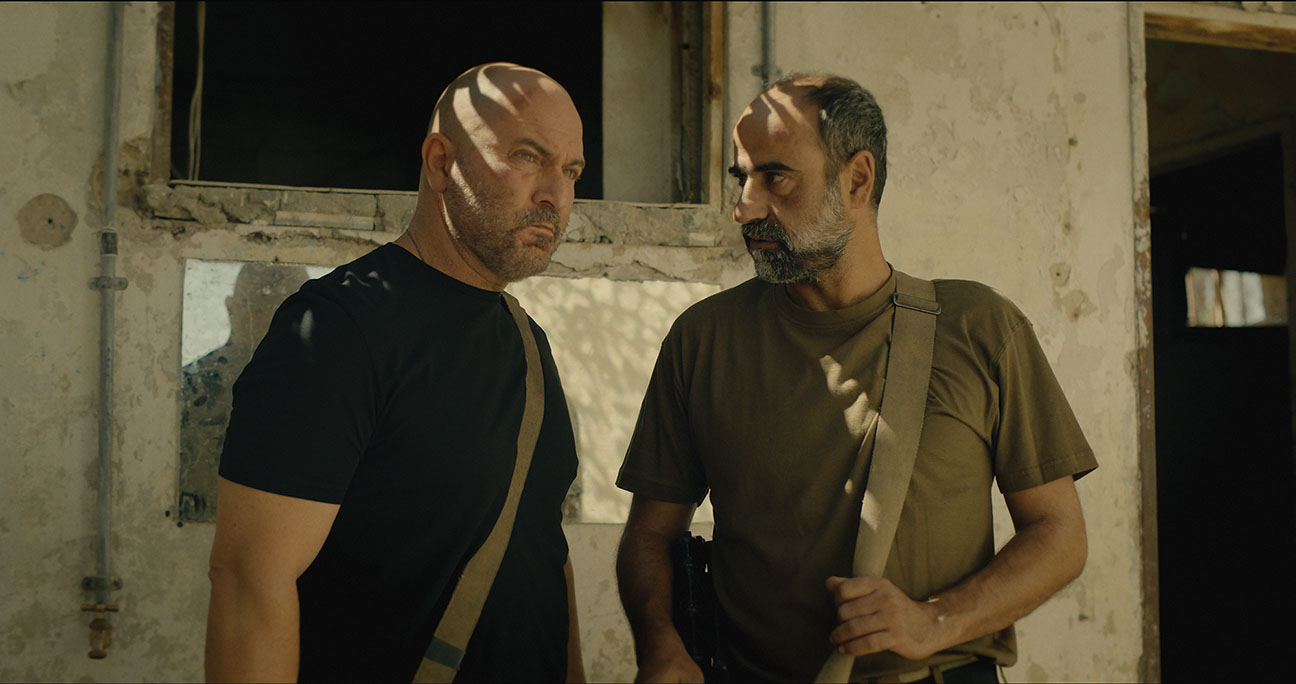
Two prominent filmmakers, one Israeli and the other Iranian, sat down together on the same stage on Feb. 25, and nothing happened.
So no news made for good news, to the relief of the Academy of Motion Picture Arts and Sciences. The organization had invited the five directors vying for the Oscar in the best foreign-language film category to discuss their craft at a symposium.
In light of Tehran’s policy of no contact between its citizens and Israelis, there was some quiet concern that an incident might mar the occasion.
Only last week, for instance, an Iranian soccer team had pulled out of a match with a Serbian team, because the latter was managed by Avram Grant, an Israeli.
Before a full house at the academy’s Samuel Goldwyn Theater, the directors faced the audience in a single row, flanking producer Mark Johnson, chair of the selection committee.
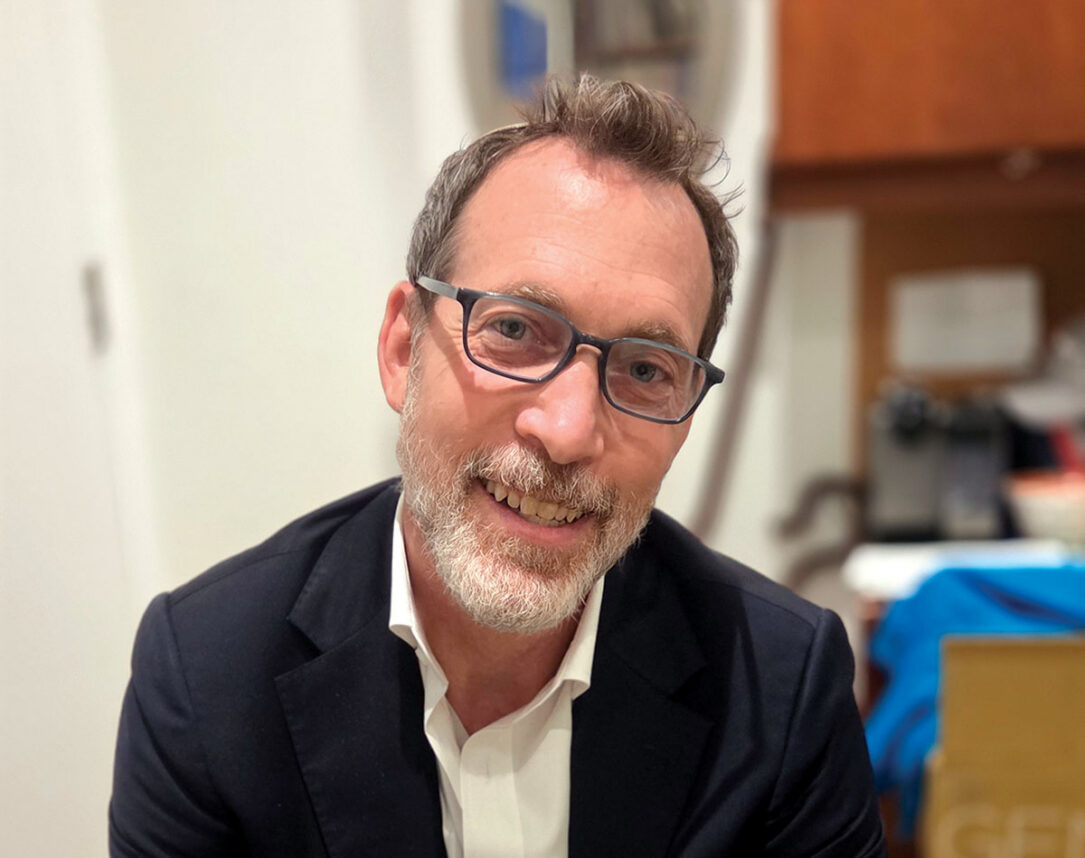
Fortuitously, they were seated in alphabetical order according to their film titles. So the lineup, left to right, was “Bullhead’s” Michael R. Roskam (Belgium), “Footnote’s” Joseph Cedar (Israel), “In Darkness” director Agnieszka Holland (Poland), “Monsieur Lazhar’s” Philippe Falardeau (Canada) and “A Separation’s” Asghar Farhadi (Iran), the latter accompanied by a translator.
So, by chance, Israel’s Cedar sat second to the left and Iran’s Farhadi on the far right. In response to a reporter’s question, moderator Johnson said that the Iranians had not requested any special seating arrangement.
During the two-hour panel discussion, Cedar and Farhadi did not speak to each other directly but joined their colleagues in chuckling at each other’s jokes and politely applauding their respective remarks.
The same applied when Holland discussed her film about a dozen Jews hiding in underground sewers during the Nazi occupation of Poland, a theme directly contradicting Iranian President Mahmoud Ahmadinejad’s insistence that the Holocaust never happened.
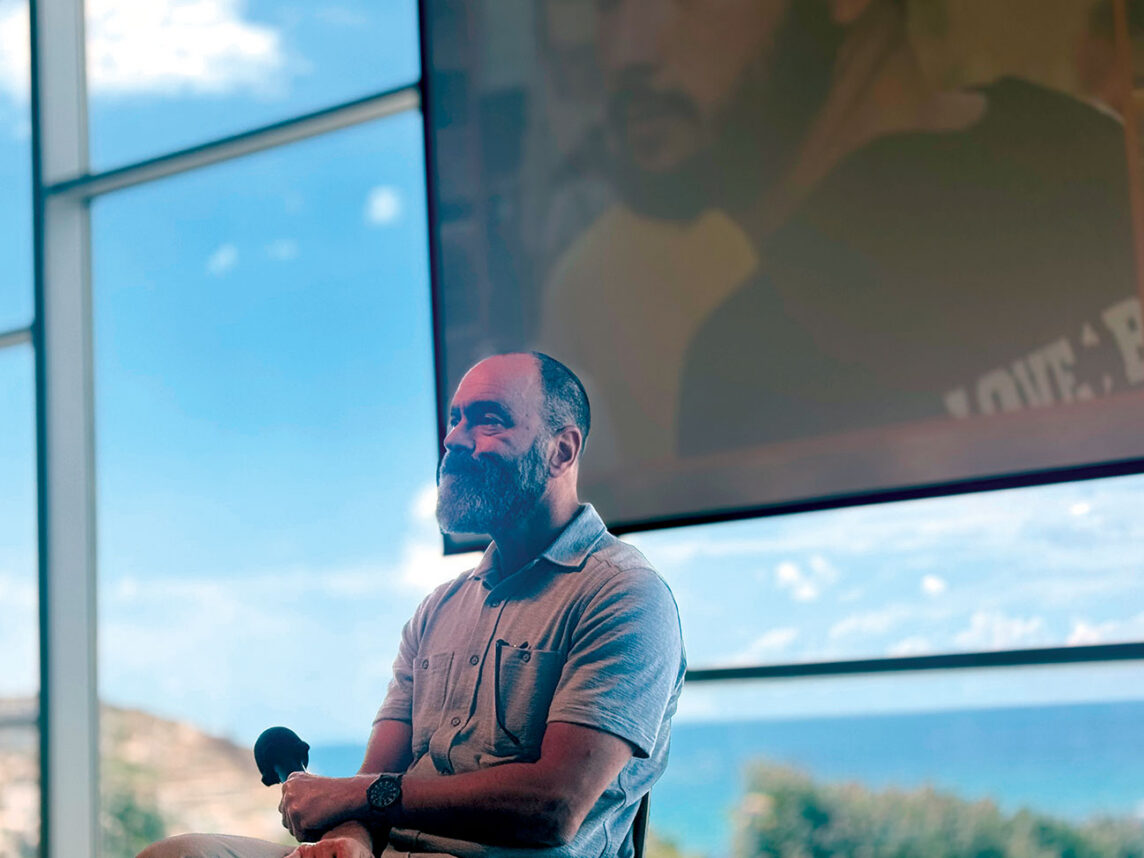
All the panelists used hand-held microphones, except for Cedar, whose stationery mic was fastened to the armrest of his chair.
The symposium is always held on the Saturday before the Sunday Academy Awards, and Cedar, who is Shabbat observant, walked two miles from his hotel to the theater, something almost unheard of in motorized Los Angeles.
In 2007, when Cedar’s war film “Beaufort” was also among the five finalists, he consulted his rabbi and was told that he could not use a microphone during the symposium. As a result, only those in the first few rows could catch his remarks.
This time, Cedar consulted a different authority, who advised that the director could speak into a mic, as long as he did not actually hold it in his hand. That solved the problem.